Showing posts with label Science Fiction. Show all posts

Saturday, October 1, 2022

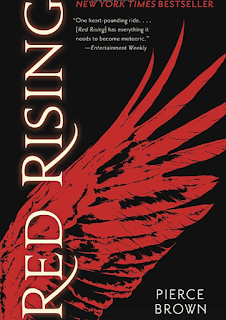
Talking In Obscurity, "Red Rising," by Pierce Brown

Pierce Brown


I love this novel and talking about it with Steven, but to say it's a happy story would be, we'll say, disingenuous. Often a grim story, it contemplates the idea that the fascists will take over in the future after all, and thank god that isn't likely in today's world. ...Oh, I just made myself sad. Anyway, you should listen to Steven and me discuss "Red Rising." 


This preview is an Amazon Affiliate link; 
as an Amazon Associate, I earn from qualifying purchases.

Author's Website: https://www.piercebrown.com/
Saturday, September 17, 2022

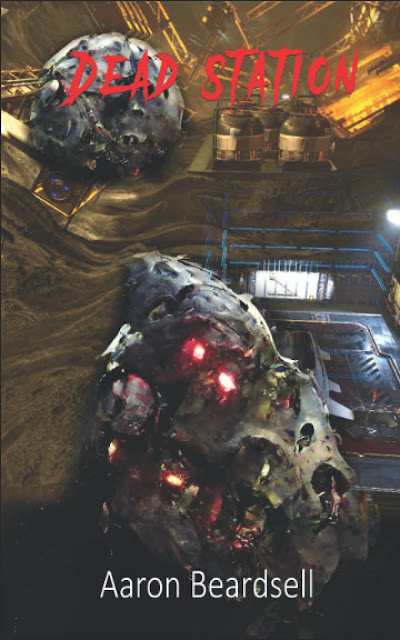
"Dead Station" by Aaron Beardsell--Fiction Review

Tonight Obscurists, things go bump in the stars! Gear up for a sci-fi horror story with Aaron Beardsell’s “Dead Station.”


Aaron Beardsell


What I love about this book:

“Dead Station” was pitched to me as a mix between “Alien,” “Event Horizon,” and “The Thing,” three sci-fi horror stories I absolutely adore—and Beardsell, one hundred percent, hits those notes pitch perfect. For better or worse, a lot of genre fiction is marketed by what it’s like. A lot of the time, the first question about a story is, “what is it like?” And to be honest, it’s usually an interpretation of whether or not a story is “like” another story or not. So it’s genuinely impressive how laser-like accurate Beardsell is on what “Dead Station” is like.

What “Dead Station” is, is a short story collection. And as with any talented short story writer, I’m jealous. In my fiction, my attempts at short fiction tend to balloon on me. I’m often reminded of the Abraham Lincoln quote, “I could write shorter sermons, but when I get started, I’m too lazy to stop,” never mind if he actually said that or not, I like it, and it reminds me of my plight. Beardsell pulls off all the essential qualities of a plot in each story and does it with brevity and style. 

This next point is minor spoiler-esque, not anything to spoil the plot, but more character motivation that I need to bring up. I have often said that I like my human antagonists to have motivations and my Lovecraftian nightmare monsters to be unknowable. That’s the rule I live by, and “Dead Station” flat out defies that preference of mine, and god damn it if I didn’t fucking love it. We get a peek into the ultimate-terror-from-beyond-the-stars’ mind, and, from its perspective, it feels like it’s being friendly. It’s bringing people together—making friends—and that childlike exuberance is terrifying. “Dead Station” is an object lesson that rules are great to know, but if you’ve got a good angle on something—break whatever rule you need to achieve that effect.


What I don’t love about this book:

The human characters we follow through these short stories are great quick sketches, but that’s all they are, partly due to the short story form, so there isn’t much that could be helped there. Every time I felt I was getting in a groove with a character, learning who they were and how they thought, that story was about over. The ultimate effect is none of the human characters achieve much of an emotional response from me.

It’s eluded to that there is a company a lot like Weyland-Yutani in this universe, and I never understand how these companies grew to such power to supposedly control everything. These sci-fi horror story companies choose evil at each step, even when it doesn’t make sense. It’s the Umbrella Corporation conundrum, as I call it. For instance, how does Umbrella keep getting investors? Because their primary preoccupation seems to always be; to build a secret illegal bioweapons lab underneath everything, have the laxest laboratory procedures to guarantee an accident, and get 99 percent of their workforce killed. Repeat. Not the most effective business model. And sure, real companies can be evil too, but they’re typically much better at least pretending they’re not. So it’s not my favorite trope.


This preview is an Amazon Affiliate link; 
as an Amazon Associate, I earn from qualifying purchases


Analysis:

“Dead Station” is an extremely quick read, a fantastic time burner if you need one. Beardsell clearly has bigger ideas for this universe, but don’t expect them to be fully fleshed out in this collection.

Overall, these stories know what they are and embrace their core concept. There aren’t any sub-plots, extraneous detail, or character study—it is a straight arrow of high concept. Each story rolls out precisely on message. The first is a mysterious dead station from which a desperate crew needs to get supplies; horror ensues. The second is another station from a child’s perspective while the initial horror is ongoing. The third is a dogfight in space against a Lovecraftian-style horror. There is also a bonus story. 

Like the stories it’s compared to, expect quick and terrible violence. Beardsell’s distinctly clinical style makes his narrative especially sharp, which serves his overall aesthetic of to-the-point storytelling.


Parting thoughts:

I love sci-fi horror. It might be my favorite sub-genre. So I’m easily sold on stories like “Dead Station.” But it’s a hard sub-genre to pull new readers into; usually, they will be recruited from people who are already fans of sci-fi or horror.

Fans of such macabre stories tend to be enthusiastic about their favorite stories and love talking about them. But the community is rather insular, which I think is a holdover tradition from both parent genres of science fiction and horror.

If you want to write a sci-fi horror story, great! I think Beardsell proves that with keen insight and clarity, these kinds of stories can be quick successes with a cult audience.

The appeal to the broader mainstream, though, is, and always has been, even back to Lovecraft’s day—rare. 

I’ve often lamented this issue with horror stories in general, and it feels all the more true for the sub-genre. There are no actual examples of stories or authors in this subgenre that have lit the world on fire like Tolkien did for high-fantasy with “The Lord of the Rings.” “Alien” or “The Terminator” might come close. Also, I think a pretty good argument can be made for “Godzilla,” but they’re still not as iconic as, say, “Batman” in superhero fiction or “Harry Potter” in children’s Fantasy. Also, each of my examples are movies with a whole visual component to them that a novel—at least at first—lacks.

It’s not that I think it’s impossible to do—fear and the drive to survive are perfectly valid core emotional structures to build a narrative off of since they’re universal. I just don’t think it’s ever been done before. It is interesting to imagine what a sci-fi horror story that reaches cultural saturation would look like.


Saturday, June 25, 2022

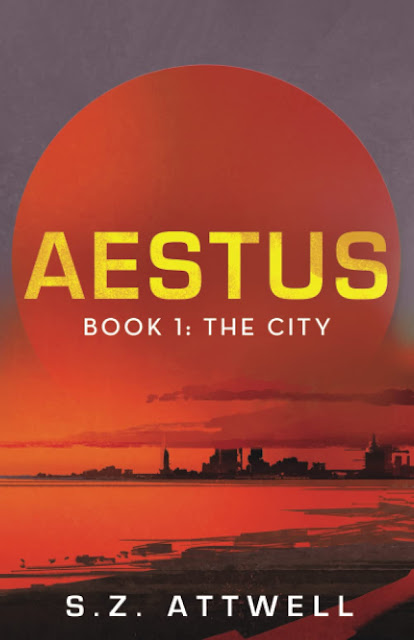
"Aestus Book 1: The City" by S.Z. Attwell--Fiction Review

Today, Obscurists, we’re traveling to the city—in S.Z. Attwell’s “Aestus Book 1: The City.” It’s a post-apocalyptic story where the status quo isn’t what it seems, and it underlines that in nearly every conflict, there are heroes and villains on all sides.


S.Z. Attwell


***The Non-Spoiler part of this review***


What I love about this book:

That ending! A lot goes down quickly, and it was like getting a jolt. The energy and tension suddenly crescendo at the end of the plot, and it’s been in my head since I finished reading “Aestus: Book 1: The City.” I’m of more than one mind about the end, but I’ll get into more later. Overall, I’d say I loved it.

I’ve brought this up in a prior review, but I like my post-apocalypse(s), in fiction, unexplained, hinted at, but never spelled out. This book pulls that effect off well. The end of the world probably came about because of runaway global warming, but the exact causes, timeframes, et cetera are left up to the reader’s imagination. The world is this way now, and the characters that inhabit that world don’t ever digress or pine for a long-lost world. They’re too busy surviving. No one has time to break into a soliloquy about the folly of humankind and bemoan the paradise lost.

Even though there were many of them, I enjoyed the characters in this novel. Attwell pulls off so many characters so well because there is clearly a defined core group and major and minor characters supporting that group’s story. This is partly achieved because “Aestus: Book 1: The City” is a long book.


What I don’t love about this book:

To reiterate from above. It is a really long book. And sure, there were a lot of characters to flesh out and give them their moment in the sun, but it also felt like every scene was at least twice as long as it should have been.

Also, I hated the uncle character from the jump. Nobody says “my dear” that much and isn’t awful. I don’t care—you get four or five “my dear(s),” and then you’re officially a wackadoo—yes, that’s the clinical term for it.

I like Jossey, our protagonist in this story. She’s intelligent, resourceful, and not afraid to take action. But she has some Katniss Everdeen levels of obliviousness when it comes to anyone—literally anyone—showing even a modicum of romantic interest in her. I get it’s an intentional character flaw that rounds the character and makes her seem more like a real person to give her this insecurity, but from a taste perspective, it’s an eye roller for me.


This preview is an Amazon Affiliate link; 
as an Amazon Associate, I earn from qualifying purchases

Author’s Website: https://szattwell.com/


***The Spoiler part of this review***
***Ye be warned to turn back now***


The quick and dirty synopsis:

We’re introduced to our protagonist, Jossey, through a childhood memory—not a good one. It was the day she was attacked when visiting the surface to see the moon. Her brother also disappeared during the attack.

Tuesday, May 31, 2022

Talking In Obscurity, "Who Goes There?," by John W. Campbell


John W. Campbell


I had a lot of fun talking about this horror novella by John W. Campbell, "Who Goes There?" It's the arch shapeshifter story that inspired my absolute favorite horror movie, John Carpenter's "The Thing."

Speaking of true selves, my true self is revealed about ten minutes in when I suddenly forgot, "don't speak like you'd normally speak, Kevin. Keep the use of profanity down to PG-13." Sorry, it's a rated R sort of day. In my most natural state, I'm foul-mouthed.  

Wednesday, May 18, 2022

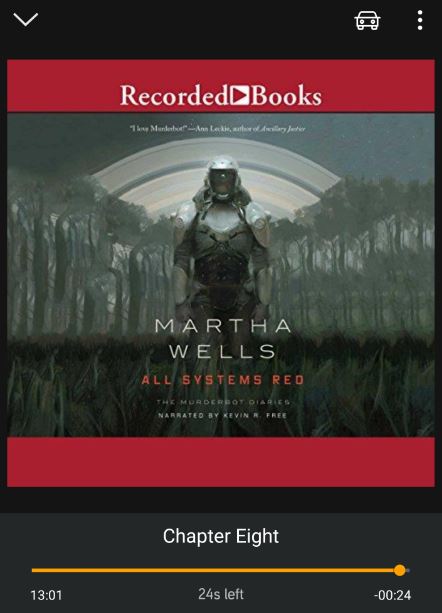
Micro Mention "All Systems Red"

Martha Wells


“All Systems Red” by Martha Wells might be short, but it’s incredible. The main character, a murder-bot, is a charmingly hilarious killing machine who frankly is more interested in watching soap operas than death and destruction.

The concept of this story tickled me, a self-aware, unshackled AI that is honestly just too much of a slacker to be a mass murderer of humans. Also, one that is good at his job, which is protecting people, in all irony, is hilarious considering what he is, a murder robot. So I don't think I can put more of a fine point on this; I loved this story.


This preview is an Amazon Affiliate link; 
as an Amazon Associate, I earn from qualifying purchases.

Author's Website: https://www.marthawells.com/

Thursday, May 12, 2022

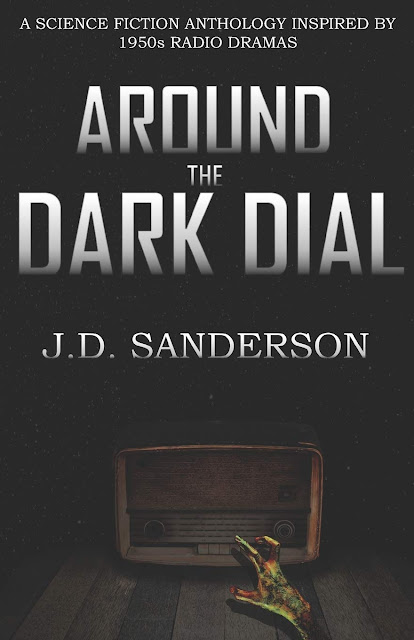
Micro Mention "Around the Dark Dial"

J.D. Sanderson


“Around the Dark Dial” by J.D. Sanderson genuinely surprised me more than once. And sure, I was precisely the right kind of target audience, but it taps right into one of the most incredible qualities of Sci-Fi, which is the demand for introspection from the audience. 

In my full review, I talked about how this short story collection reminded me often of my favorite formative sci-fi series, "Star Trek," and with the new show "Strange New Worlds," out—I recently had a conversation with someone that baffled me. Their complaint was essentially summed up as, and I'm paraphrasing, "ugh, remember when Star Trek wasn't about commenting on politics?"

My answer was no, of course. I also contend that what this person was terming "politics" was actually a commentary on society and further contend that all good sci-fi is in one form or another is social commentary. This has been true all the way back to Mary Shelley. It's what I love about Sanderson's book and the genre. That idea that things don't have to be the way they are and could be different, possibly even better. The arguments are baked right into the rhetoric of the stories.


This preview is an Amazon Affiliate link; 
as an Amazon Associate, I earn from qualifying purchases.


Monday, May 2, 2022

Micro Mention "Who Goes There?"

 
John W. Campbell


Sure, “Who Goes There?” by John W. Campbell might be a rip-off of another favorite story of mine, “At the Mountains of Madness,” but I still love it to pieces because it ultimately gave us John Carpenter’s “The Thing,” my favorite horror film, ever.

Having read the novella more than once, I still prefer the 1980s creature feature that uses all too disturbingly realistic and gross practical effects. Still, it's fascinating as a fan of Carpenter's movie to see the backbone of what made that movie possible.


Monday, April 25, 2022

Micro Mention "Ready Player Two"

 
Ernest Cline


I really wanted to love “Ready Player Two” by Ernest Cline, and I did legitimately like the ending a lot. But much like playing as player two back in the day, it doesn’t quite have the same magic as one.

With a bit of time and distance from this novel, my sentiment regarding this story has only hardened after I wrote my full review here. Despite having read it more recently, I couldn't as quickly describe the plot of this novel as opposed to "Ready Player One." There are memorable moments I can still recall, but overall the feeling I have with this kind of story is: that lightning rarely strikes twice.


This preview is an Amazon Affiliate link; 
as an Amazon Associate, I earn from qualifying purchases.

Author's Website: https://ernestcline.com/


Friday, April 8, 2022

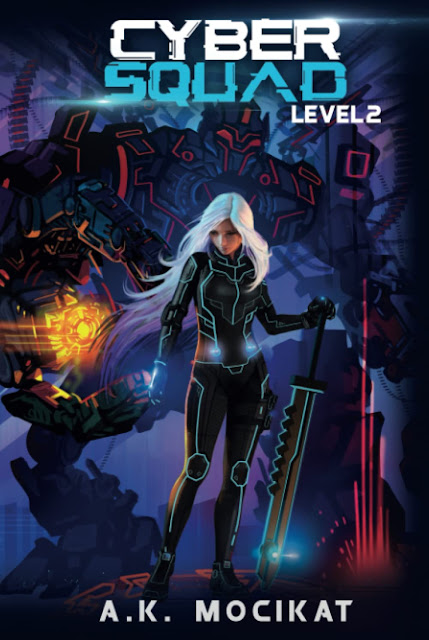
"Cyber Squad Level 2" by A.K. Mocikat--Fiction Review

Today Obscurists, we’re returning to one of A.K. Mocikat’s worlds with “Cyber Squad Level 2.” Oh, boy, I hope nothing goes wrong in virtual reality this time. I’m sure Kai and his friends test awesome games, and everything is just grand in this cyberpunk LitRPG.


A.K. Mocikat


***The Non-Spoiler part of this review***


What I love about this book:

Things nearly immediately go wrong in virtual reality.

Anyway, I said something similar in my review of the prior “Cyber Squad” book in this series, but I’m even more impressed with Mocikat’s ensemble cast of characters in this novel. Sure, I’m engaged with what the protagonist is doing and his struggles with life, love, and work, but I really appreciate the depth Mocikat gives her supporting characters. I was genuinely worried when something terrible would happen to one of Kai’s coworkers.

The mystery of what is going on at Heltek intensifies nicely in the book. As the story progresses, it often feels like Kai is just an unfortunate critter caught in the most insidious pitcher plant in human history. He’s even tacitly aware of it, I think, but torn by a loyalty to his friends, his love of the job, and an unattainable girl—keep him rooted in the trap. It’s an interesting dilemma to watch a young man try to navigate.

Mocikat, per usual, shines in her intense and varied fight scenes in this action-packed sci-fi story. As that action was playing out in this novel, though, I became aware of how much I enjoyed her aesthetics for settings in this book. Kai and the rest of Cyber Squad work and play in some of the most exciting VR scenarios, which helps. It’s when shit starts going wrong, though, that the awesome environmental effects happen. A lot of the imagery, such as a sky ripping open, for example, has a biblical flavor of terror behind it that I enjoyed.


What I don’t love about this book:

I’m not sold on Kai’s main obsession—Alice. She seems nice enough, but when Kai works himself up into a good and frothy pout about not being with this woman whilst building yet another level to the pedestal he’s put her on—I often think, “kid, there are other girls. Nice ones too.” I think, though, why I don’t like these bits is more about me than any defect in the story because it uncomfortably reminds me of myself in my early twenties. The only part of this primarily one-sided attraction where I’m totally on Kai’s side in this endeavor is that I also don’t like Alice’s boyfriend because I hate bullies.

I wish I understood the evil AI’s motivations a little better other than it’s an evil AI and does evil AI stuff. It doesn’t quite fit my criterion for enjoying unknowable malicious entities because one would have to assume it’s at least made in part by human-designed systems. Sure, humans can be malicious dickheads for little to no reason, but for a supposedly vast machine intellect to be bad for—well, because it makes it happy, I guess, isn’t too satisfying an answer.


This preview is an Amazon Affiliate link; 
as an Amazon Associate, I earn from qualifying purchases

Author’s Website: https://www.annamocikat.com/


***The Spoiler part of this review***
***Ye be warned to turn back now***


The quick and dirty synopsis:

Kai, fresh from the first novel and barely surviving his encounter with a malicious AI in the dark web of VR, returns to work at Heltek after a lengthy hospital stay—clearly a glutton for punishment. In any case, he gets a promotion, a swanky new apartment, and a brand spanking new VR implant. So there were some incentives, which were all gifted to him by one of the cofounders of Heltek, who seems to have taken a particular interest in Kai’s career.

Wednesday, March 30, 2022

Micro Mention "Babylon's Ashes"

James SA Corey


"Babylon's Ashes" by James S.A. Corey has my absolute favorite moment in all of the expanse—and that's the moment when Avasarala is screaming at her personal trainer. I remember saying that if Shohreh Aghdashloo didn't get a similar moment to it in the final season, I would be supremely disappointed.

Sadly, as much as I liked the show's final season, we didn't get the personal trainer scene, which is the real tragedy, in my opinion. Well, you know, other than there is no more show and still a good number of novels of material to cover. Too soon?


This preview is an Amazon Affiliate link; 
as an Amazon Associate, I earn from qualifying purchases


Monday, March 28, 2022

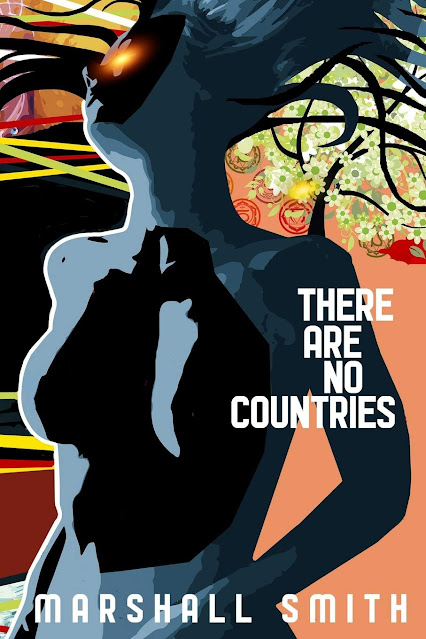
Micro Mention "There Are No Countries"

Marshall Smith


"There Are No Countries," by Marshall Smith, is the kind of weird sci-fi story that keeps you on your heels. It starts with a living statue telling you the story of how he became a statue, and I honestly could say I didn't anticipate most of the twists that story entails.

It's been a fair amount of time since my full review of Smith's book, and upon further reflection, I still can't say it was one of my favorites, but what I respect about the experience is I still remember it pretty well. It has this sticking power to latch on in your mind and memory that genuinely impressed me. I've read a few books since this one, as you might imagine a book blogger might, and a lot of them I don't remember half as well as the enigmatic "There Are No Countries." 


This preview is an Amazon Affiliate link; 
as an Amazon Associate, I earn from qualifying purchases.


Wednesday, March 23, 2022

Micro Mention "Project Hail Mary"

Andy Weir


"Project Hail Mary" by Andy Weir absolutely scratches that same itch as "The Martian." If that book was about how the world showed up to save one man, then this novel is the inverse and is the story of how one man shows up to save the world.

Even though there are many differences between this novel and "The Martian," Weir maintains the same sort of atmosphere. It's a mix of danger and excitement combined with exploration and intelligence. Plus, his writing is often unexpectedly funny, which is a quality I never fail to appreciate.

If you'd like to read my full review of this novel, you can find it here.


This preview is an Amazon Affiliate link; 
as an Amazon Associate, I earn from qualifying purchases


Friday, March 11, 2022

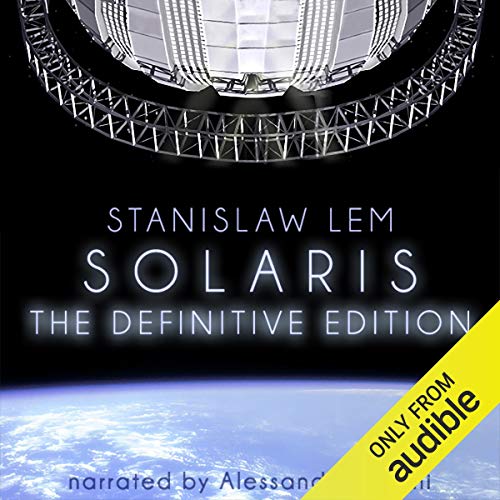
"Solaris" by Stanislaw Lem--Fiction Review

What do you think extraterrestrial life would be like? What would it be like to try and communicate with it? Clearly, Stanislaw Lem has given it a lot of thought in his book, “Solaris,” which is the science fiction story we’re talking about today, Obscurists.


Stanislaw Lem


***The Non-Spoiler part of this review***


What I love about this book:

“Solaris” is a weird story, and I love a good, weird story. Ultimately it’s a story about first contact, but how Lem goes about first contact with an alien species or—in this story’s case—with a single vast sentient entity is he throws out pretty much all of our expectations. If we ever do make first contact with an extraterrestrial form of life, I’m sure the supreme frustration of attempting it, like in this book, will be true to life.

The sentient ocean of “Solaris” is one of those few exceptions to my prohibition on unknowable characters—rarely do I like them. Typically I ascribe this quality to malevolent or at least unscrupulous characters, but the living ocean of Solaris just is. 

For an old sci-fi novel, “Solaris” not only does atmosphere very well but character too, which is often not what the genre is known to focus on, typically those elements get sacrificed for big ideas. I should temper that praise, though, mainly I found Dr. Kelvin and his “visitor,” to not spoil too much, to be the most compelling characters in the story. The atmosphere and setting are always uncanny, so there is no higher praise from me—I love uncanny settings like I love a good haunted house.


What I don’t love about this book:

There is a listlessness to this book at times. It sometimes feels like things are just happening to happen and then to be discussed by the characters. A lot. 

While I find its peculiarities interesting and the characters engaging, the plot isn’t, well, much of anything. It can be summed up as; an odd planet with an odd living ocean is visited by waves of baffled scientists, who remain baffled after studying the planet with great interest and vigor. One day our protagonist visits Solaris and is likewise baffled. The end.

So we ultimately start and end in the same position, and while the marking time in place might be interesting and compelling in its own way, the story doesn’t progress anywhere.

There are also themes of self-harm in this book, so if that’s going to be a problem, I’d suggest skipping this novel. I believe those themes are legitimate things to talk about in a story, and even some of my favorite stories bring it up, but still, not my favorite bits of any story.


***The Spoiler part of this review***
***Ye be warned to turn back now***


The quick and dirty synopsis:

Dr. Kelvin, our main character, arrives at Solaris Station, which researches primarily the vast living ocean present on the planet Solaris. Right from the jump, things are weird. One of the crew, an old mentor of Kelvin’s, had killed himself right before Kelvin arrived. The two surviving crew members of the station don’t seem all that broken up about it. 

Friday, March 4, 2022

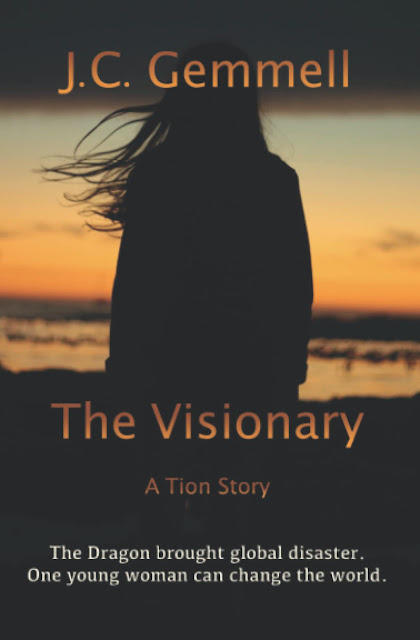
"The Visionary" by J.C. Gemmell--Fiction Review

Today Obscurists, we’re talking about a fairly unsettling dystopian sci-fi by J.C. Gemmell called “The Visionary.” And it’s a no thanks from me on the vision of the future that visionary comes up with in this story. 


J.C. Gemmell


***The Non-Spoiler part of this review***


What I love about this book:

It’s a deeply unsettling and scary story when you get right down to it. I like things that can get under my skin because most stories don’t fill me with dread anymore; often, the best they can do is startle me. “The Visionary,” though, isn’t scary because of the all-too-real sounding natural disaster that takes place, or even the raw violence and disarray that inevitably happens when a dark age kicks off during an apocalypse. No, it’s the society that “builds back better,” if you will—that is cold and alien—that creeps me out.

There is a lot of intrigue in this story, more so than I expected when I started reading it. Most scenes have at least two layers to them, what is happening and being said on the surface and what people’s actual intentions are underneath all of that.

I listened to this novella in its audiobook format because, well, naturally, I did if you’re a repeat reader of this blog. In any case, Jennifer Aquino has a subtle trick to her narration that I absolutely adored, and that is staying true to the sound of her characters’ voices while simultaneously demonstrating how they’ve aged throughout the story. Part of it is the material Gemmell gave her to work with, but there is also that performer’s flourish of how, especially, Xin-yi sounds as a girl vs. as a woman. Many narrators go wrong here by exaggerating, but Aquino uses the same voice with only modest modifications to tone and pacing, which I feel is way more impactful.


What I don’t love about this book:

I don’t love Xin-yi, and I don’t mean this as a criticism or that she’s poorly written as a character. I think she’s written wonderfully—I just don’t like her much as a person. As a protagonist, she has an arc and grows as a person, and who she comes out as—when everything is said and done—is someone I don’t like all that much. I suspect, Xin-yi herself doesn’t like Xin-yi all that much toward the end, but I can’t get too much into it in the non-spoiler side of things.

Stylistically, I think this story is as ambitious as any other big sci-fi story, but I don’t have a real good grasp of the rules of this world—or even a well-defined concept of how the super science of this universe works. For instance, despite reading a whole novella about them, I still don’t precisely understand what is it that visionaries do exactly or how their powers work.

There are explanations for things and technology, but they are primarily just surface-level stuff that ranges from the mysticism of “Star Wars” to the technobabble of “Star Trek.” It’s a minor complaint because the story’s point isn’t necessarily to focus on the technology featured but how an engineered society rebuilds. 


This preview is an Amazon Affiliate link; 
as an Amazon Associate, I earn from qualifying purchases

Author’s Website: https://jcgemmell.com/


***The Spoiler part of this review***
***Ye be warned to turn back now***


The quick and dirty synopsis:

Mount Erebus erupts, which kicks off the worst climate disaster in human history. Combined with an already warming planet, this latest major eruption in just the wrong place causes the ice caps to completely melt and sea levels to rise dramatically.

Wednesday, March 2, 2022

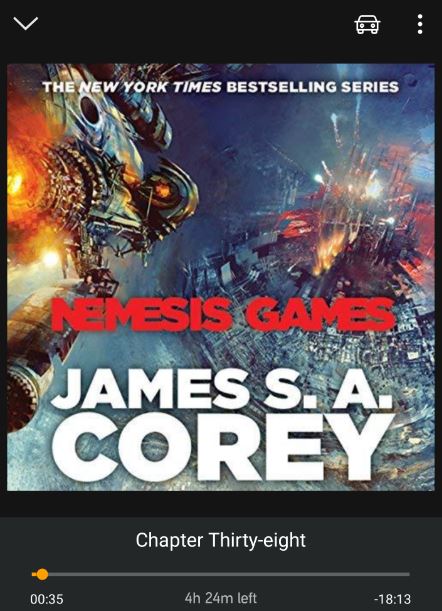
Micro Mention "Nemesis Games"

James SA Corey


"Nemesis Games" by James S.A. Corey represents yet another seachange moment in The Expanse series, a series of stories known for those moments. It's a story about how a little bit of vainglorious stupidity mixed with a lot of anger can get a lot of people killed.

This is the story that, in my opinion, sets the tone and contributes the most to how the latter half of this excellent series would be shaped. The earlier novels are certainly related and flow from one to the next, but they still feel like self-enclosed containers. Each book has its own story that is distinct in time and place. Starting with "Nemesis Games," though, the macro, overall story, becomes the A plot, and that feeling of discreet, individual stories strung together fades away.


This preview is an Amazon Affiliate link; 
as an Amazon Associate, I earn from qualifying purchases.

Author’s Website: https://www.jamessacorey.com/


Monday, February 21, 2022

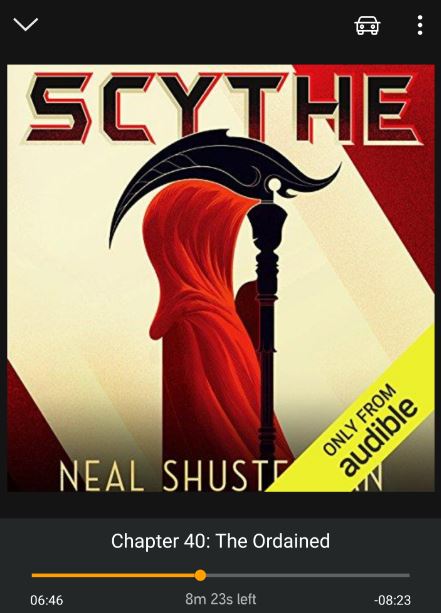
Micro Mention "Scythe"

Neal Shusterman


"Scythe" by Neal Shusterman is a young adult novel that deals with the usual YA concerns, first loves, first heartbreaks, coming of age, et cetera, but it's also wrapped around an interesting sci-fi question of: "what are humans like as functional immortals?"

The answer, somewhat predictably, is pretty awful. 

I don't exactly mean this as a criticism of the book because if everything was hunky-dory, then it would be pretty hard to tell a compelling story about the subject. After all, a story requires conflict in some form to be engaging. If there's no conflict, well, it's more of a recitation of events than a narrative.

Overall, if you like YA novels, "Scythe" will serve you well.


This preview is an Amazon Affiliate link; 
as an Amazon Associate, I earn from qualifying purchases.

Author’s Website: http://www.storyman.com/


Wednesday, February 2, 2022

Micro Mention "Cibola Burn"


If "Abaddon's Gate" told us why "The Expanse" series is called "The Expanse," then "Cibola Burn" by James S.A. Corey gives us a glimpse of what that means.

I think I'm a minority opinion on this one, but I liked that this story was a bit of a detour from the main action of the series. We get to explore an alien world with the Rocinante crew. And sure, there was still the geopolitical struggle going on between the belters and inners, in miniature. But what really took me in is the creepy setting of a colony on a world with a dead civilization. Ever since I played "Mass Effect," that shit has been my jam.


This preview is an Amazon Affiliate link; 
as an Amazon Associate, I earn from qualifying purchases


Friday, January 28, 2022

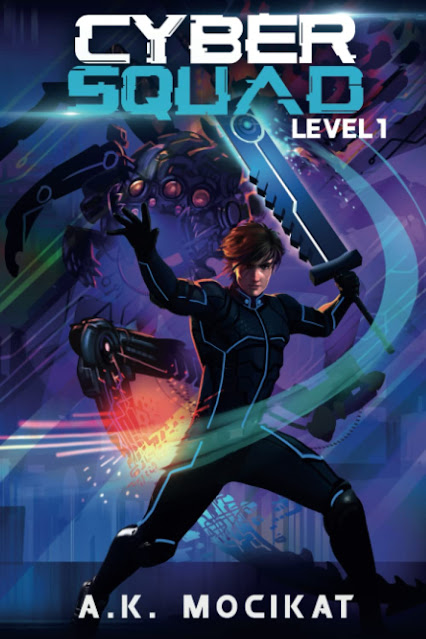
"Cyber Squad" by A.K. Mocikat--Fiction Review

Strap in Obscurists, we’re going to a new world in today’s book—a virtual one—with A.K. Mocikat’s fast-paced sci-fi novel “Cyber Squad.”


A.K. Mocikat


***The Non-Spoiler part of this review***


What I love about this book:

“Cyber Squad” is a really fun book, especially compared to Mocikat’s “Behind Blue Eyes” series, which may be more intellectually engaging and is a kind of fun built upon complexity—but “Cyber Squad” is a more straightforward sort of fun. It’s a Lit-RPG that poses the concept of, “Hey, wouldn’t ‘The Matrix’ level authentic VR video games be fun?” As a gamer, to which I respond, “of course!” And then we set out on that adventure, with Mocikat whispering in the subtext nearly immediately, “but they might also nuke your brains.”

So, it’s an easy and engaging concept to get your mind around, and that’s what I mean by straightforward fun.

The supporting cast of characters, major and minor, see an upgrade in this book. Compared to my prior experience with her work, in this novel, Mocikat doesn’t reserve her talents in character voice to just her principles—i.e., the protagonist, the antagonist, and major supporting characters. I believed every minor character, no matter how quickly sketched, and they didn’t ever feel samey.

As always, Mocikat delivers many exciting fight scenes in this book, and because of the nature of this subgenre, she gets to shine in multiple different settings and modes of conflict. Since we’re talking about hyper-realistic video games, there can be a high fantasy sword and sorcery battle followed by a sci-fi shoot-em-up only a couple of pages later in the story.


What I don’t love about this book:

This is my third Mocikat book, and I just realized the true nightmare in these books that I’ve been missing all along—everyone seems to live at work. It’s worse than that! Everyone seems to want to live at work. This isn’t an element that I dislike in the novel per se; it just gives me the willies. The collapse of traditional society? Sure whatever. The rise of corporatocracy over democracy? Scary, but sure, got you. Living on the same campus as my boss—never!

“Cyber Squad” reminded me of exactly why I don’t like MMORPGs—and yes—I realize this is more of a me problem than the book’s problem. This has to do with who I am in a video game, which is, in my mind, the hero—because I have a hero complex. When I’m playing a game, I want to be immersed in the story of that game, which is difficult in multiplayer games because my suspension of disbelief keeps getting snapped by some mouth breather on a microphone ordering me about—on how best to do “a raid.” Maybe that makes me anti-social, but it also makes it my least favorite part of books like this—reading about people playing these sorts of games. I don’t get the appeal with first-hand experience, even less so experiencing them vicariously. 

I know—weird—in a book about characters playing super-realistic video games, my favorite parts were almost always when the characters interacted outside of that context. I did appreciate the whole testing angle to this story, though.


This preview is an Amazon Affiliate link; 
as an Amazon Associate, I earn from qualifying purchases

Author’s Website: https://www.annamocikat.com/


***The Spoiler part of this review***
***Ye be warned to turn back now***


The quick and dirty synopsis:

Our adventure begins with Kai also on an adventure of his own—in VR, that’s virtual reality for you Luddites. Anyway, Kai is playing a fantasy game with his guild that includes all of his closest online friends. They’re playing a defend the base situation against other teams of players, who end up ganging up on Kai’s guild. After a valiant struggle, Kai is killed.

Monday, January 24, 2022

Micro Mention "Old Man's War"

John Scalzi


"Old Man's War" by John Scalzi blew me away. I've been a Scalzi fan since reading "Red Shirts," and I thought I knew his writing pretty well, but man, this book was next level and took me by surprise. I'm kinda kicking myself now since it's been in my library for a couple years before reading it.

What bums me out is that I've read a few books from Scalzi, which were published later in his career than this novel, and I liked them, a lot even. However, I didn't love them like I did with this book. For example, I can remember John Perry, in clear detail, even after months after putting this novel down and writing my full review here. But I can't actually name any of the protagonists of "Red Shirts," which was a funnier book, sure. Also, I can't remember any of the protagonists' names from "The Collapsing Empire," either. That's a disturbing trend. 

This makes me wonder, is it really accurate for me to call myself a "fan" of Scalzi's fiction, or do I just like it a lot in the moment? Because there is a difference.


This preview is an Amazon Affiliate link; 
as an Amazon Associate, I earn from qualifying purchases.

Author’s Website: https://whatever.scalzi.com/


Monday, January 17, 2022

Micro Mention "Dawn"

Octavia E. Butler


I haven't read the rest of the "Xenogenesis" trilogy yet. Excuse me if this is addressed later—but I found the humans' distrust for the aliens wearying in "Dawn" by Octavia E. Butler. Like, yinz all destroyed yourselves, these nice aliens didn't need to pull over to help.

Sorry, my Pittsburghese slips out when I'm frustrated.

But the gist of this story is humanity destroyed the Earth in a cataclysmic war, and essentially the planet was rendered unlivable. This is related to us via the principal protagonist, a human woman rescued by aliens. The aliens even have a plan to help the survivors.

What follows is an entire novel complaining about the aliens and how they choose to help, mainly along the petty lines of it is "icky" and "that's not how humans do things."

I'm sorry, but beggars can't be choosers, and people who just destroyed their own planet don't get an equal place at the table to lecture everyone about, "well, this is how people do things."

So yeah, in this first novel, at least, I'm on the aliens' side of this argument—humans are quarrelsome and dumb.


This preview is an Amazon Affiliate link; 
as an Amazon Associate, I earn from qualifying purchases.