Showing posts with label Writing in Obscurity. Show all posts

Friday, September 30, 2022

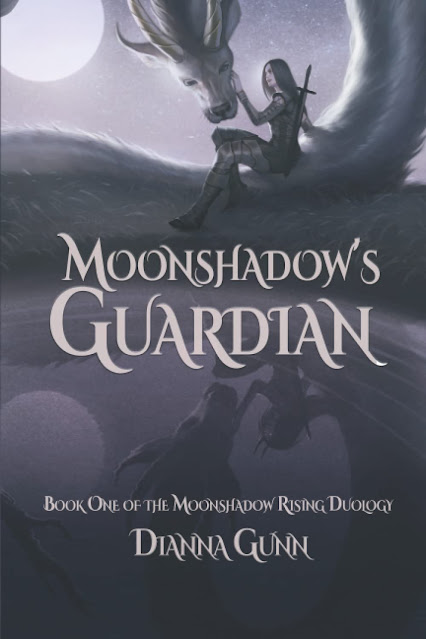
"Moonshadow's Guardian" by Dianna Gunn--Fiction Review

Today Obscurists, we’re taking on a fantasy horror story, “Moonshadow’s Guardian” by Dianna Gunn.

Dianna Gunn


What I love about this book:

The first thing I love about this book is that Gunn’s main character Riana is a super long-lived character, and there are several other similarly long-lived characters in this story that I think Gunn depicts uncommonly well. I’ve said on this blog before that it’s tricky to depict a character who has lived for centuries or even millennia—and make them feel as though they’ve lived for thousands of years. Gunn, though, without bringing the narrative to an absolute standstill, makes it clear that Riana has lived multiple lives over the long years.

I rather enjoy the moral complexity in this story. None of the principal characters are pure good or evil—even the story’s chief antagonist. Mind you, straight-up evil shit does happen in this story, but the perceived correctness or wrongness of the character’s actions are subject to debate, and the morality of their choices, combined with their motives, is a matter of point of view. No one in this story holds a moral high ground above the other characters. 

The consequences in this story are sudden and harsh, which takes a bit of fearless writing to not just hurt one’s darlings but murder them, and I appreciated that quality in Gunn’s writing. Punches are definitely not pulled in this story.


What I don’t love about this book:

I often say that using a first-person perspective is a bold choice, and this novel is in first person. Other than a few key emotional moments that could be argued justified the creative choice—I didn’t feel it added much. To play devil’s advocate, though, the first-person perspective certainly facilitated people reminiscing about the past. Building off that point, if you’re not a fan of flashbacks, well, tough news, lots of flashbacks in this story.

I appreciate an excellent dark and brutal story as much as the next person. What I often find to be wearying are drawn-out torture scenes. There are a few of those in this story, too, especially when it comes to Riana’s memories of the demon realm or the compulsion. It’s not the violence that gets me. I’m just bored by anything that feels like a kid with a magnifying glass and an ant hill.


This preview is an Amazon Affiliate link; 
as an Amazon Associate, I earn from qualifying purchases

Author’s Website: http://authordiannagunn.com/


***The Spoiler part of this review***
***Ye be warned to turn back now***


The quick and dirty synopsis:

Our story begins with a little girl and her mother on a mysterious journey. It doesn’t go well after the mother tells her daughter that she is actually the daughter of a god and is, in fact, a demon. Soon she will transform into her true form. Despite her mother’s best magical efforts, her daughter breaks loose from the binding and kills her mother after transforming.
Saturday, August 27, 2022

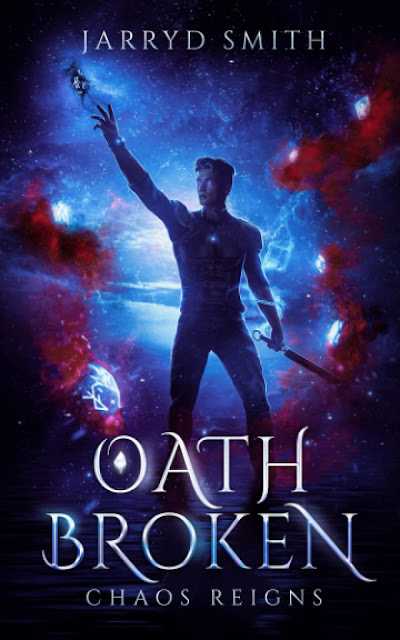
"Oath Broken" by Jarryd Smith--Fiction Review

This evening Obscurists, we’re diving into an urban fantasy novel with Jarryd Smith’s “Oath Broken.” It’s a fantasy story with a big central mystery and a lot going on in the outskirts. 


Jarryd Smith


What I love about this book:

“Oath Broken” has a distinct urban fantasy style that should appeal to anyone who likes books like “The Dresden Files.” Magic and fantastical creatures are just on the fringes of society, blending into everyday life. It’s a cool atmosphere, in my opinion. 

Smith does an excellent job at making the world of “Oath Broken” feel big, with many entities with their own agendas going about their business. I appreciate the sense that the world of this novel doesn’t seem to pivot on the main character or his problems, which I think is a subtle art a lot of storytellers get wrong. Kaleb is the protagonist of this story, but he isn’t the alpha and omega of this universe. He’s just another guy who lives in the world, a talented guy, sure, but one among many.

In other posts, I’ve mentioned this numerous times—I’m a sucker for a good action scene, and Smith doesn’t disappoint in this book. The various fantasy-style showdowns in this novel are all distinct in what’s going on. The ebb and flow of the battles that take place have their own character, so they never become repetitive or uninteresting.

Also, I appreciate Kaleb’s meticulous approach to what sorts of gear and equipment he brings into any situation—as a consummate wizard player in D&D, I value preparation over spontaneity any day.


What I don’t love about this book:

Everyone’s default communication style in this book is sarcastic disdain. Nobody seems to like each other or even can have a conversation without someone being utterly dismissive. It’s all—“that’s impossible,” “you’re a liar,” “you are useless,” and “why don’t you just leave?” 

That last one, I actually started to agree with thinking, “Kaleb, buddy, budgie, boopy, these people suck; why are you trying so hard?” At no point after Kaleb does something extraordinary or saves everyone for the 9th time that day in a heroic or self-sacrificial way does anyone ever say, “hey, thanks, Kaleb. Good Job. I guess I was incorrect in my assessment of you.” No, even right after Kaleb does something altruistic that directly refutes someone’s negative perception of him or his abilities, it’s still on the caliber of, “I hate you, Kaleb. I would say I hope you die in a fire, but I also think that might be too quick a death. Now, if you’ll excuse me, with zero self-awareness, I’m going to rush headlong into a dangerous situation—against your recommendations—that you will inevitably bail me out of later.” 

Other than that, my other dislikes are pretty trivial. There was some disconnect for me regarding what was going on with the prologue and epilogue characters and the main story. It was all ominous things are afoot and how that relates to anything is unclear and ambiguous.

Also, Smith could get stuck in explain mode for certain things: how they look, act, work, et cetera, et cetera. I get the explanations as world-building material, but I’m also disenchanted by world-building when it comes at the expense of the plot or its pacing.


This preview is an Amazon Affiliate link; 
as an Amazon Associate, I earn from qualifying purchases


***The Spoiler part of this review***
***Ye be warned to turn back now***


The quick and dirty synopsis:

After a prologue with death and various deities associated with death, doing—well, death stuff—the story opens with Kaleb going to a wedding. The bride-to-be is less than thrilled about Kaleb’s choice of wardrobe and makes it clear. But Kaleb is at the wedding as his friend Sam’s plus one and so makes the best of it. He even hits it off with a beautiful redhead at the reception named Alex, and they have quite the evening together…

Saturday, August 13, 2022

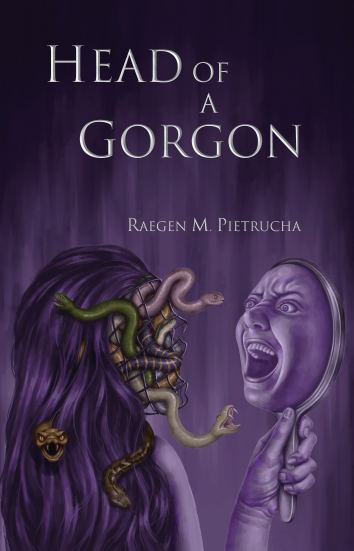
"Head of a Gorgon" by Raegen M. Pietrucha--Fiction Review

Today Obscurists, we’re diving into another book on poetry. Full disclosure—these poems and the overall narrative of this book touch on violence, sexual and otherwise. It also involves mental health, including straying into the realm of suicide ideation, so it’s worth keeping that in mind before picking it up. Besides that, “Head of a Gorgon” by Raegen M. Pietrucha is thought-provoking and visceral.


Raegen M. Pietrucha


What I love about this book:

Succinctly put, “Head of a Gorgon” is an incredible read—it’s short, so I flew through it in one sitting, but I also felt compelled to re-read portions of it again, more than once. 

I’m a sucker for anything touching on Greek myth ever since I read Madeline Miller’s “Circe,” which I’ve also reviewed. Pietrucha’s work hits in the same vein as that novel—reimaging a female character from classical myth as someone more complicated than a straight villain—while approaching the subject from a wildly different angle.

I found myself enjoying the structure of this book—a narrative told through poems—it got me to do two things I seldom do; first, I read a physical paper book with my terrible eyes, and second I read a poetry book which is always a challenge for me. Overall, still a rewarding experience. 

From start to finish, it’s hard to put down or even take a break from because each bit is laser-focused and leads right into the next one. So quickly, I would find myself on the treadmill of, “well, I’ll just read one more poem,” and then it would be another one after that, and after that, and so on and so forth.


What I don’t love about this book:

As much as I enjoyed this narrative approach to poetry—it’s still poetry. So it’s a stretch for me, and I need to be in the right frame of mind to enjoy any poetry. I’m constantly battling the feeling when reading it that I just don’t get it, and it’s going over my head. 

Poetry is one of those creative forms of writing I wish I were better at writing and enjoying, but people can also hope for wings. My attempts all come off as artificial to myself. So really, these are more things I’m disappointed in myself than “Head of a Gorgon.” Ultimately, I found the experience of this book sublime, even with its darker moments. Since it slots into a section of literature I’m not all too familiar with, it’s difficult for me to grasp onto anything to critique. My experience was pretty uniform from start to finish; I was pleasantly surprised.


Author’s Website: https://raegenmp.wordpress.com/


Analysis:

While I’m sure almost everyone in the world knows who Medusa is, still knowing a bit about Greek mythology adds immeasurably to the experience of these poems. For instance, when the conversations between M and P are happening, it’s obviously helpful to know Medusa’s story to deduce who P is in this context. But less obvious is—there are a lot of references to water in these poems, and at first, that might seem confusing because Medusa isn’t the same snake-like monster as Scylla, who spent her time munching on sailors like Odysseus’s men. But, if you know Medusa’s parents and how prominently M’s parents play a role in these poems, especially at the beginning and the end—the references to water make much more sense.

I also liked the shedding skin sections—in theme and style. It’s a clever call back to earlier poems in the narrative of this collection presented through deconstruction to change the meaning of those earlier poems. It had to have taken some serious planning to execute.


Parting thoughts:

In literature, there are a lot of women who get short shrift, especially in myths. For as much as I find Greek mythology fascinating, women had few roles, and in Scylla, Circe, Medusa, and Calypsos cases—to create a short list—they are often antagonists our male heroes have to overcome. If they aren’t dutiful wives—then they’re witches, seductresses, or straight-up monsters, with no in between.

The real power of a narrative like in “Head of a Gorgon” is to take that negative persona and flip it on its ear. It wasn’t until the modern era—as far as I know—that anyone considered the qualia of what it was like to be in Medusa’s head, or any of them for that matter.

I believe that context matters—with context comes understanding and empathy. Redefining these ancient characters’ context is creative and breathes new and better life into them. I think that is the heart of what I liked the most about this book and others like it.

Friday, August 5, 2022

"Sidney Crosby The Rookie Year" by Sidney Crosby--Nonfiction Review

Today’s “book” is an audible original on one of the best to play the game of hockey, “Sidney Crosby the Rookie Year.”


Sidney Crosby


What I love about this book:

It’s a short book that gets you right into it; introductions are made, and then—bam—we’re back vicariously living out the day Sidney Crosby was drafted to the Pittsburgh Penguins.

How this program is presented, through some narration by Joe Manganiello and interviews with Sid himself and those closest to him during his rookie year, creates an intimate atmosphere. I found it interesting to see what this moment in time looked like from Crosby’s point of view because to say he was kind of a big deal in the league then and today—is a major understatement.

You get to learn what his life was like, to be one of the best to play the game from the very beginning, and to play with and live under Lemieux’s roof, literally. That mentor dynamic between Crosby and Lemieux is unique because—while I’m not an expert in the subject—how often does a sports phenomenon get to apprentice under one of the last generation’s phenoms?


What I don’t love about this book:

The pressure we put on people like Sidney Crosby to be “on” all the time is shitty and unfair. When he was drafted by the Penguins, he was still a teenager, and many of the city’s sports fans put their hopes and dreams squarely on Crosby’s shoulders. They were all counting all of the Stanley Cup wins before even that first playoff game—and when that did not pan out, Sid got a lot of the blame. As if one player, and one player alone, could change the trajectory of a team’s winning or losing season. That isn’t to knock the influence one player can have; leadership has a tangible effect on performance. I’m merely stating that the group is more important than the individual in a team sport. If the group can’t perform, that extra edge by having a few ringers can’t make up for the deficit.

This is more a thing I don’t like about the game of hockey than this book, and that is how often fights break out and aren’t immediately stopped. Which, I get, is an unusual stance for me to take because of all sports; boxing is probably my favorite. I don’t like it in hockey, though, because it tacitly makes it ok to counter someone skilled at the game, maybe even the best on the ice, like Sid, by just hurting him. I get that there is a difference between a hard hit and a fight. But think about any time anyone hauls off and straight up punches a guy in football, baseball, and basketball. It’s rare, and it isn’t tolerated.


Parting thoughts:

I’m not much of a sports guy—I know, shocking, right? So as exciting as some of this book is, a lot of it is wasted on me. Actually, I’ve been to a lot of hockey games over the years. I’m always excited to go, and I enjoy myself when there, that atmosphere, seeing incredible athletes be effortlessly amazing on the ice, and the concession stand… I might have an unhealthy relationship with food. In any case, of the several dozen games I’ve been to over the years, with one friend or another, I’ve probably only ever “watched” the Penguins game on TV, maybe just as many times over the years as I’ve been to games in person.

Anyway, the point I’m making here is that hockey just isn’t in the orbit of my life regularly. That’s important because I still remember the day Sidney Crosby was drafted by the Pittsburgh Penguins all these years later. I remember the conversations I had that day in 2005. Pittsburgh is that much of a sports town. It was the only conversation happening before and after it was confirmed that Sidney Crosby was coming to Pittsburgh.

Everyone was saying, “Sid is the next Super Mario,” and nobody was confused about who they meant, and it wasn’t the video game character.

I find it fascinating how the passion for some things, like when this Canadian kid about my age came to town, is so transcendent that it doesn’t matter who you are—you’re aware.

Saturday, July 30, 2022

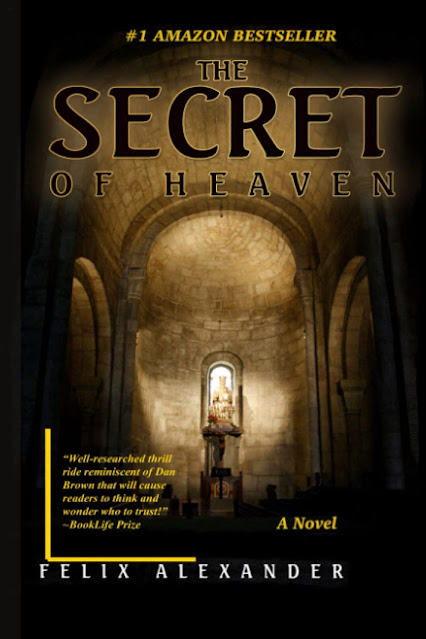
"The Secret of Heaven" by Felix Alexander--Fiction Review

Today’s book, Obscurists, is “The Secret of Heaven” by Felix Alexander, a historical religious thriller that revolves around theological controversies that span thousands of years.


Felix Alexander


***The Non-Spoiler part of this review***


What I love about this book:

Despite not being a religious person myself, I enjoy theological lore, albeit from a strictly literary and historical perspective. Right off the bat with his writing, it’s easy to tell that Alexander is well versed in this subject—more so than I am, at least. Which is one of the chief things I liked about this book because, even though it’s fiction, I got to learn new things. 

Undoubtedly a bit of Dan Brown in this book’s DNA, with even a sly nod and wink at Brown’s titular protagonist. Typically, I’m not the biggest fan of that kind of thriller/historical fiction and have to be in an odd humor to pick up such a book. Still, though, I’m glad I picked up “The Secret of Heaven” because it managed to surprise me by grabbing my attention early on and holding it all the way to the end.

There is no denying that it’s an exciting book. The characters are almost always on the move, and even in the rare moments they aren’t, the tension gets ramped up with every scene as more-and-more revelations come to light. This only makes the antagonists of this story even more deadly as they become increasingly desperate to find the lost bible.

Supernatural elements are present in this book, but I really liked how Alexander primarily played them off stage from the main plot.


What I don’t love about this book:

This world is lousy with secret societies doing—whatever secret societies do with their endless amount of free time and resources. I’m skeptical of secret societies in fiction that control the whole worldwide economy because—to put it delicately—people suck at keeping anything secret. So skeptical, in fact, that I find a secret society that has been masterfully kept to the shadows for centuries to be more fantastical than angels or dragons. That’s how little of an opinion I have of people being able to keep a secret.

At the beginning of this novel, which sort of just trails off, amnesia is introduced as a story element, and, yeah, like I said in my “Project Hail Mary” review, it isn’t one of my favorite story devices. In “The Secret of Heaven,” other than obscuring the details of how precisely Aiden’s mentor Lazzaro de Medici died, it doesn’t add much to the story. Basically, it goes, “ugh, who am I?” “You’re Aiden Leonardo, respected Professor of Biblical Studies, and this is your fiancé, who is also a doctor of archaeology, is incredibly beautiful, incredibly talented, incredibly smart, and incredibly fit with martial arts training.” “Oh, yeah, I guess I am Aiden Leonardo.”


This preview is an Amazon Affiliate link; 
as an Amazon Associate, I earn from qualifying purchases


***The Spoiler part of this review***
***Ye be warned to turn back now***


The quick and dirty synopsis:

Our story begins with the aforementioned amnesia-riddled Aiden finding out from his fiancé that he is the prime suspect in the murder of Lazzaro de Medici, Aiden’s mentor, and adoptive father.

Saturday, July 23, 2022

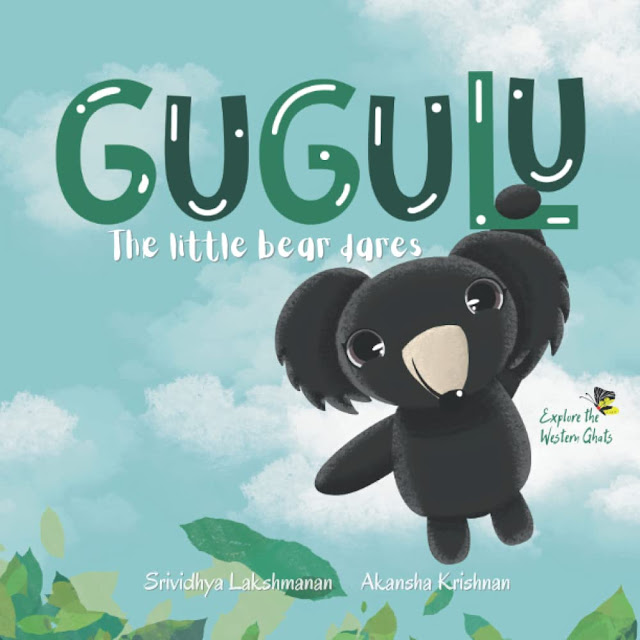
"Gugulu" by Srividhya Lakshmanan & illustrated by Akansha Krishnan--Fiction Review

We’re doing a new first today, Obscurists. Today I’m reviewing a Children’s book by Srividhya Lakshmanan and illustrated by Akansha Krishnan.


Srividhya Lakshmanan & Akansha Krishnan


What I love about this book:

So for this review, I’m eschewing my longer format with its likes and dislikes, analysis, and so on and so forth.

I’m only going to talk about what I liked about this kid’s book marketed for ages 4 through 8. Clearly not my typical demographic, and I don’t have any children, but if I did, I like to think it’s precisely the sort of book I’d read to them before bed.

“Gugulu” appeals to my love of animals because it’s a story about a naughty little sloth bear named Gugulu who really ought to listen to his parents. There is an explicit moral being taught here. Of course, he doesn’t and then finds out that the wild is no place for a baby—anything—to be out in alone.

I watch a lot of nature shows and documentaries, but I didn’t even know what a sloth bear was until I read this little book. Also, I should mention they’re primarily found in India, where I’ve never been. Sloth bears are shaggily cute animals that seem like a virtual no-brainer to be featured as protagonists of a fable. It’s hard to think of an animal more tailored to be a picture book protagonist—if you will excuse the anthropocentric bent of that statement.

But sloth bears aren’t the only animals we’re introduced to in this picture book. We get to see a pleasing number of animals that live in that habitat throughout the story. There is even a key at the end that gives some basic information about each animal.

A minimalist at heart, I found the illustrations to be of a simple and beautiful style which I enjoyed a lot. They’re bright and colorful. They also clearly convey what everything is and pair nicely with the cadence of the story.

Overall, “Gugulu” is a wonderful, albeit brief, experience. 


Author’s Website: https://www.andbooks.in/

Friday, July 15, 2022

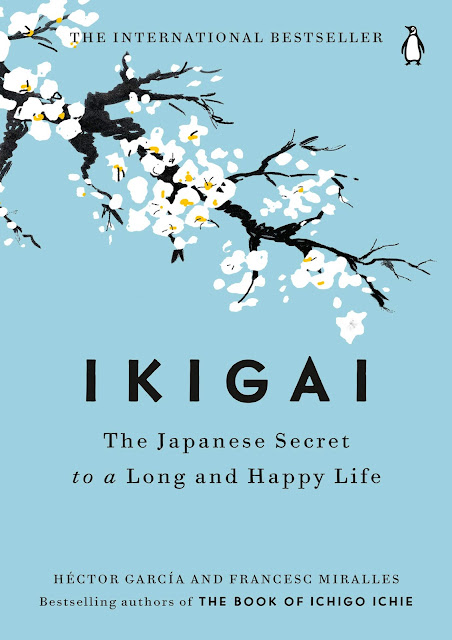
"Ikigai" by Hector Garcia and Francesc Miralles--Nonfiction Review

Today Obscurists, we’re finding our purpose with “Ikigai” by Hector Garcia and Francesc Miralles. It’s a book about the Japanese way of living a long and happy life by discovering your purpose in life and how to recognize it.


Hector Garcia and Francesc Miralles


What I love about this book:

“Ikigai” is a relatively short book that doesn’t outstay its welcome. I appreciated the brevity and straightforwardness of the book’s message—that the secret to happiness is ultimately to have a purpose. 

Like many Americans, I harbor a particular fascination for Japanese culture. While that isn’t specifically this book’s goal, “Ikigai” also gives an enjoyable look into this specific eastern mindset. I found it interesting to learn how aging is viewed in Japanese culture.

Finally, the practicality of this book’s advice appealed to my sensibilities. I like tangible, achievable advice that eschews mystical concepts. Never have I been impressed by the “positive vibes” people or those seeking to communicate with the “universe.”


What I don’t love about this book:

This is a bit of a petty start here, but I don’t like the long chapter titles. Mainly, I don’t like them because each chapter seems like just a continuation of the primary thesis behind this book. It’s good that the main point is reiterated, despite the attempt to break it down by subtopic though it still feels like there isn’t much rhyme or reason for why one point is presented here and why one thought is presented there. It all feels kind of the same.  

Also, while Japanese culture is far—far more collectivist than western cultures in nature, the Japanese aren’t nearly as monolithic as this book presents. Japanese people, like any subgroup of humans, have various traits, predispositions, and opinions that differ from others within that culture. They’ve not all found their “Ikigai” and are some wise super society. This book feels like it views them with more than a little rose-tinted glasses.

I’m prepared to accept that, on average, especially compared to the West, the Japanese tend to live longer, happier lives, as this book asserts. That ultimately just comes down to statistics. And those who live longer probably have better than average coping strategies, like defining themselves by the goals they profess.


This preview is an Amazon Affiliate link; 
as an Amazon Associate, I earn from qualifying purchases.

Author’s Website: https://hectorgarcia.org/


Parting thoughts:

To carry on my point from the prior section, I think this is one of those situations in which statistics can—well, not lie so much—as omit specific qualifying details. Like I said before, I accept, on average, that the Japanese probably live longer, healthier, and happier lives than in, say—my culture. But that’s only for the ones it works out for because while the national suicide rate in the United States isn’t great, it isn’t in the same ballpark as it is in Japan.

It’s a major societal issue for them with many complex factors. One of those factors is that Japanese society is incredibly demanding, with stratospheric standards to live up to and a preoccupation to avoid shame wherever possible.

So my point is that it seems to me that cultural values in Japan, when they work out, really work out overall for people. But when they don’t, they really don’t.

Also finally, a significant stressor in Japan right now is that its population is aging, and there are more and more older people with fewer younger people to support them. So there is that double-edged sword. Great success in one area typically means neglect in another.

Saturday, June 25, 2022

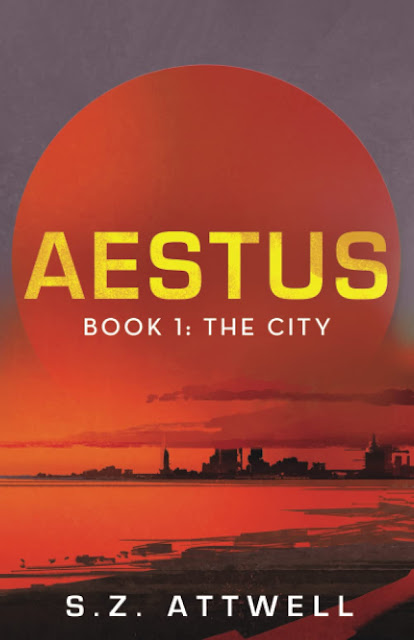
"Aestus Book 1: The City" by S.Z. Attwell--Fiction Review

Today, Obscurists, we’re traveling to the city—in S.Z. Attwell’s “Aestus Book 1: The City.” It’s a post-apocalyptic story where the status quo isn’t what it seems, and it underlines that in nearly every conflict, there are heroes and villains on all sides.


S.Z. Attwell


***The Non-Spoiler part of this review***


What I love about this book:

That ending! A lot goes down quickly, and it was like getting a jolt. The energy and tension suddenly crescendo at the end of the plot, and it’s been in my head since I finished reading “Aestus: Book 1: The City.” I’m of more than one mind about the end, but I’ll get into more later. Overall, I’d say I loved it.

I’ve brought this up in a prior review, but I like my post-apocalypse(s), in fiction, unexplained, hinted at, but never spelled out. This book pulls that effect off well. The end of the world probably came about because of runaway global warming, but the exact causes, timeframes, et cetera are left up to the reader’s imagination. The world is this way now, and the characters that inhabit that world don’t ever digress or pine for a long-lost world. They’re too busy surviving. No one has time to break into a soliloquy about the folly of humankind and bemoan the paradise lost.

Even though there were many of them, I enjoyed the characters in this novel. Attwell pulls off so many characters so well because there is clearly a defined core group and major and minor characters supporting that group’s story. This is partly achieved because “Aestus: Book 1: The City” is a long book.


What I don’t love about this book:

To reiterate from above. It is a really long book. And sure, there were a lot of characters to flesh out and give them their moment in the sun, but it also felt like every scene was at least twice as long as it should have been.

Also, I hated the uncle character from the jump. Nobody says “my dear” that much and isn’t awful. I don’t care—you get four or five “my dear(s),” and then you’re officially a wackadoo—yes, that’s the clinical term for it.

I like Jossey, our protagonist in this story. She’s intelligent, resourceful, and not afraid to take action. But she has some Katniss Everdeen levels of obliviousness when it comes to anyone—literally anyone—showing even a modicum of romantic interest in her. I get it’s an intentional character flaw that rounds the character and makes her seem more like a real person to give her this insecurity, but from a taste perspective, it’s an eye roller for me.


This preview is an Amazon Affiliate link; 
as an Amazon Associate, I earn from qualifying purchases

Author’s Website: https://szattwell.com/


***The Spoiler part of this review***
***Ye be warned to turn back now***


The quick and dirty synopsis:

We’re introduced to our protagonist, Jossey, through a childhood memory—not a good one. It was the day she was attacked when visiting the surface to see the moon. Her brother also disappeared during the attack.

Saturday, June 18, 2022

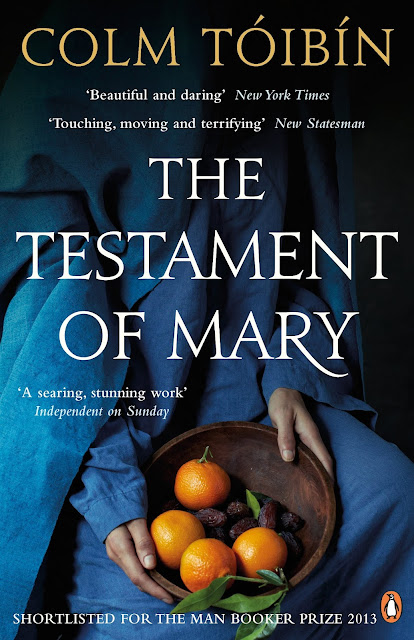
"The Testament of Mary" by Colm Tóibín--Fiction Review

Today Obscurists, we’re going to dip our toes into a new field of fiction I’ve not covered a whole lot, a religious, historical novel about the life of Mary, mother of Jesus Christ. The novella is “The Testament of Mary” by Colm Tóibín.


Colm Tóibín


***The Non-Spoiler part of this review***


What I love about this book:

This book, in my opinion, takes a rather agnostic view on the divinity of Jesus of Nazareth. While the character of his mother, Mary, might doubt his divinity, it’s never exactly refuted. It’s undoubtedly challenged throughout the plot but never wholly suppressed. 

To get a completely different view of the life of Jesus and from his mother’s perspective was very interesting to me. It feels grounded in the world that Mary and her life and perceptions were of our flesh and blood world.

This is also one of those times I feel a first-person perspective really works and sells the story. The entire story is relayed to us by Mary herself. It’s an incredibly intimate experience of this woman’s life, who loves her son while doubting his purpose and the reasons for his demise. At no point does the narrative romanticize what happened to Jesus. It was brutal, vicious, bloodthirsty, and done out of blood lust.


What I don’t love about this book:

It’s challenging to grasp how much time passes in “The Testament of Mary.” The narrative seems to start at the end with the crucifixion of Jesus, and then it dives into Mary’s story, but it didn’t start where I assumed it would, the beginning. It begins when Jesus was already a man and had followers, but it’s unclear how long this has been happening.

As much as I like the intense character study of a doubting Mary, all the other characters in the novella are mere wisps of characters compared to her. Even Jesus, the larger-than-life figure he was, is barely characterized. This may be an intentional choice, given the brevity of this story. Still, if you don’t immediately latch on to Mary’s story and perspective, there really isn’t anything else in this story. 

Ultimately, given its succinctness, “The Testament of Mary” feels like part of a larger work. We get allusions to Jesus’s childhood but no explicit scenes of that childhood. A lot of the goings on around Mary rely heavily on the reader having a secondary insight of the gospels and other Christian historical understanding, which is a long tradition in the western literary canon, but still, it’s a limiting factor for the audience.


This preview is an Amazon Affiliate link; 
as an Amazon Associate, I earn from qualifying purchases

Author’s Website: http://www.colmtoibin.com/


***The Spoiler part of this review***
***Ye be warned to turn back now***


The quick and dirty synopsis:

“The Testament of Mary” starts with Mary talking about her lonely existence after her son’s death. How she is kept—like a pet—by his followers who bring her food and money but expect her to go along with and support their version of Jesus’s life. Her recollection, however, doesn’t particularly jive with the “authorized” version of events told by presumably the apostles. They typically react to her non-canonical asides with exacerbation and scorn.

Saturday, June 11, 2022

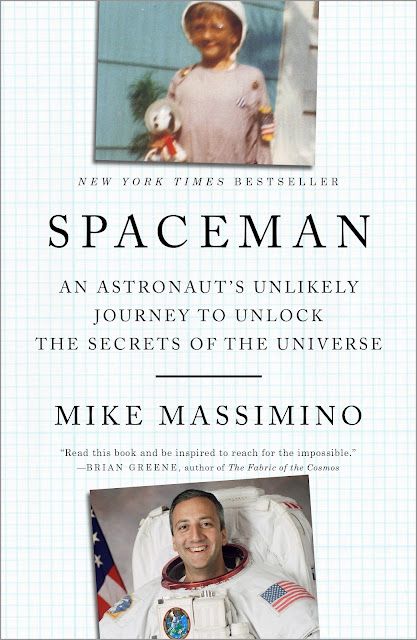
"Spaceman" by Mike Massimino--Nonfiction Review

So I’ve been pretty clear on this blog before about how much I love space, which is why today we’re talking about Mike Massimino’s “Spaceman.”


Mike Massiminio


What I love about this book:

Clearly, the space stuff is my top love for this book. Massimino was part of the tail end of the generation of astronauts who flew in the space shuttle, which I’m not too proud to admit I don’t know as much about as the earlier programs. So it was nice to get to know the names and missions that happened during his time at NASA.

Most of this book is about his journey to become an astronaut. I hadn’t realized this before he pointed it out, but, unlike most career paths, there are no well-known tracts to take to become an astronaut. So it’s nice that he put it down how he did it, for all the advice he provides.

Massimino is a charmingly warm and often funny guy. I went in for the audiobook version—per usual—and it’s read by him. I know I belabor this point a lot, but especially in this, hearing the tone of his voice as he relates some of his personal disappointments and some of the tragedies to befall NASA immeasurably adds to the experience.

Getting his first-hand account of what it was like to work on the Hubble telescope was endlessly fascinating to me. It cannot be adequately expressed how much that orbiting telescope has given us, so it’s incredibly important. Working on it in space sounded equally amazing as it was terrifying.


What I don’t love about this book:

There isn’t much I didn’t love about this memoir. It’s firmly in my wheelhouse, after all. If I had to say something, maybe an argument could be made that it dithers a little bit too much before getting into the meat of the NASA stuff. That isn’t too serious of a criticism, though, because I enjoyed Massimino’s journey becoming an astronaut almost as much as I enjoyed him as an astronaut.

The Space Shuttle Columbia disaster was hard to read about and thus relive. When the Challenger exploded during the launch, that disaster happened before I was born, but I was in middle/high school when Columbia happened. So the tragedy of that event when it happened still sticks in my mind, and the old feelings of disappointment that NASA, an organization I idolized, didn’t do enough to keep that crew safe resurfaced. That they dropped the ball on the dangers of free-falling foam debris from launch and how it could damage the orbiting vehicle.


This preview is an Amazon Affiliate link; 
as an Amazon Associate, I earn from qualifying purchases.

Author’s Website: https://www.mikemassimino.com/


Parting thoughts:

Space exploration is inherently dangerous and expensive. There are many solid arguments for why we shouldn’t bother with this exercise. How to justify the cost monetarily and, more importantly, in lives lost is tricky. Why spend billions of dollars on space exploration to send a handful of people to space while millions of people are starving right here on Earth.

What Space exploration is ultimately about is investing in the next step for our species, for the next generation’s future. It’s about the billions and billions of people yet to be born who could one day lead a better existence beyond the confines of the Earth. 

The Earth, as wonderful and beautiful as it is, is a closed system. We keep adding more and more humans to that closed system without increasing the fixed amounts of resources and livable area. The idea that we’re somehow going to collectively agree to stop creating too many people globally and then create rigidly sustainable utopias out of our various bickering and competing cultures in the near future demonstrates a lack of awareness of human history in my mind.

At this point in our societal and social evolution, we should do what we have always done collectively when faced with shortages of livable space, opportunity, and resources. We should move on and spread out.

Crossing the oceans at one point seemed like an impossible technical feat to our ancestors, yet, they eventually managed it. It wasn’t safe, and it wasn’t cheap. Many people died for the dream of seeing over that next horizon. But in the end, it was necessary.

Let’s be clear about this point: our shameful legacy of appalling poverty, sickness, famine, and war wasn’t caused by NASA’s budget. Our poorest citizens, again globally, are so poor because we’re still collectively beholden to a wealthy and privileged ruling caste. We might not call our billionaires princes, princesses, dukes, or duchesses anymore in the United States, but that doesn’t mean they don’t exist. 

Most of the world’s wealth belongs to a few individuals—a lot of it is inherited wealth that wasn’t earned in any meaningful way by the so-called elites of our various human societies but is merely passed down. That is the real insidious reason most of us toil from the cradle to the grave.

I wish that we were collectively wise enough to conserve the Earth and do so in a way that we could all live reasonably equitably on it and happily. But wishing reality was different doesn’t make it so, and realistically what I believe our next step is—is to chase that next frontier, the last and final one above us all. 

Friday, May 27, 2022

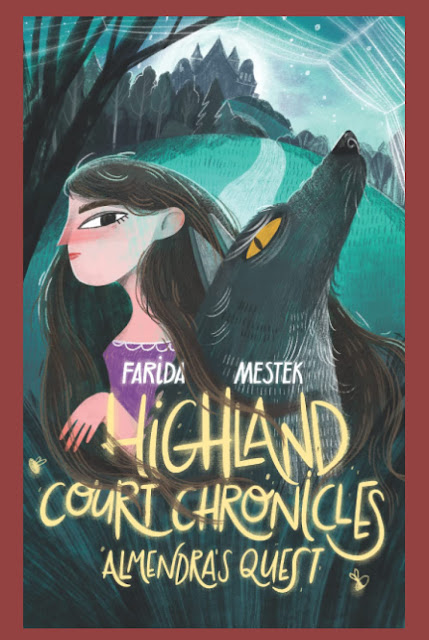
"Highland Court Chronicles: Almendra's Quest" by Farida Mestek--Fiction Review

Today, Obscurists, we’re plunging into a magical fantasy world where one young woman must step-up to save her kingdom—prophecy or no prophecy. We’re discussing Farida Mestek’s “Highland Court Chronicles: Almendra’s Quest.” 


Farida Mestek


***The Non-Spoiler part of this review***


What I love about this book:

I’m not giving away anything here that isn’t already in the sales copy synopsis on Kindle—but I like that the princess in this fairy tale with modern sensibilities isn’t content to just sit around and wait for her happily ever after. When Almendra is finally given a chance, she takes off from the enchanted castle on her own initiative to see what is wrong with the Prince, who the prophecy strongly suggests is supposed to be the one to save her. I like Almendra because she faces her problems head-on and accepts the consequences of her actions and shortcomings.

Mestek has a gift for whimsical locales that are typically equal parts charming as they are dangerous. While still at the enchanted castle early on, Mestek makes every place feel infused with magic, and even when the story moves to the Lowland kingdom, where magic is forbidden, magic still seems to slip in on every occasion.

I also liked the recurring lesson that decisions made in a moment of passion without forethought often have dire consequences, be that moment rage or panic. This sort of thing happens with protagonists and antagonists alike.

Also, as a sucker for dogs and really any cuddly-looking animal, I liked the animal companion aspect of this story that Almendra has with Woo.


What I don’t love about this book:

Speaking of Almendra and Woo, though, the nature of their relationship changes toward the end of the story in a way that would have pleased Ovid to no end. For me, though, my dog has seen me do many an unflattering thing, and now the idea that I might have to have a conversation with him one day about why I pick up so many objects off the ground with my feet—well, no thanks.

The shawlweavers as villains are certainly frightening enough, and motivation for power for its own sake is regrettably understandable, but that said, I don’t precisely get their bone-deep hatred for the high ladies. It’s the old they’re antagonistic because they’re antagonistic, self-fulfilling prophecy. 

This isn’t much of a complaint, but still, I found myself enjoying a lot of the early scenes in this book where Almendra and her Granny would but heads. You don’t quite get that in any other form through the middle to the end of the book. 


This preview is an Amazon Affiliate link; 
as an Amazon Associate, I earn from qualifying purchases


***The Spoiler part of this review***
***Ye be warned to turn back now***


The quick and dirty synopsis:

Our story begins with Almendra, her ever faithful wolf companion Woo, and her Granny going about their lives as the only inhabitants of an enchanted castle—waiting for a prophecy to be fulfilled. Almendra hates being idle, waiting for some prince to come to rescue her and her magical kingdom. Her Granny insists that their enemies, the shawlweavers, must have laid a terrible curse on the Upper Kingdom, which is why it is shrinking, and all the people have disappeared. And for all they know, if Almendra tries to leave, it might strike her down too, and as the last High Lady of the Upper Kingdom, she is too precious to risk.

Saturday, May 21, 2022

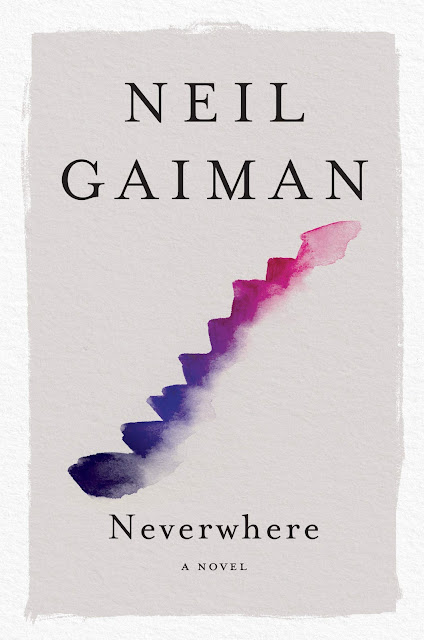
"Neverwhere" by Neil Gaiman--Fiction Review

We’re going in for some fantasy and a little bit of horror with this one, Obscurists. Today’s review is on Neil Gaiman’s “Neverwhere.”


Neil Gaiman


***The Non-Spoiler part of this review***


What I love about this book:

The first thing that I love about this book is you never quite manage to get your bearings before it’s on to another weird and uncanny location. Like the protagonist, Richard Mayhew, as the audience follows him along throughout London below, we’re never sure what the next location will bring. 

Also, this book is way creepier than I thought it would be, which keeps happening to me with every Neil Gaiman book I read. I think it’s because of how whimsically he writes everything with a dash of dry humor that always suckers me. It’s hard to explain what Gaiman’s stories feel like, but the closest I can think of is someone in an Easter Bunny costume. Soft and fluffy, joyfully playful, until you finally realize there is no one in the bunny costume, just a sentient swarm of bees somehow controlling it.

So yeah, a bit like that.

I love the inherent weirdness of that feeling, and when he makes the shift into threatening with his menacing characters, you absolutely believe they’re capable of anything.


What I don’t love about this book:

I like all of the characters in this novel, even our everyman protagonist Richard Mayhew. I don’t get why Mayhew wants to get back to his boring life so bad, other than the fact that London below is a pretty dangerous place. His fiancé was pretty heartless, and his job seemed stressful and unrewarding.

The motivations for all of the characters were fleshed out, and you understood why they were doing what they were doing—except for the two evil henchmen characters. They were just sadists and creepy because they like being sadists and creepy, which is uninteresting to me. 

Without spoiling anything, the ending didn’t really happen where I thought, which seems to be another Gaiman thing that I could take or leave. In this, the end feels like it went on too long to get to its point.


This preview is an Amazon Affiliate link; 
as an Amazon Associate, I earn from qualifying purchases


***The Spoiler part of this review***
***Ye be warned to turn back now***


The quick and dirty synopsis:

Richard Mayhew is living a perfectly ordinary life in London. He’s engaged to an ambitious, beautiful woman, and his job is firmly middle of the road. On their way to dinner—a very important dinner for Richard’s fiancé’s career—they encounter a badly injured young woman. Richard’s fiancé essentially just wants to leave her, but Richard, after hearing the young woman doesn’t want to go to a hospital for mysterious reasons, doesn’t hesitate. He scoops up the injured girl and takes her home to tend to her wounds, leaving his flabbergasted ex-fiancé on the sidewalk.