Showing posts with label Weird Fiction. Show all posts

Wednesday, April 27, 2022

Micro Mention "The Wine Dark Sea"

Rovert Aickman


“The Wine Dark Sea,” by Robert Aickman, is named as such as a reference to Homer. Knowing what Homer meant when he coined the term foreshadows what these stories are like in this collection—weird and stormy.

Aickman as a writer, has a style that is just as uncanny as the plots of his stories. While reading this collection of stories, I often felt as if I'd slipped into someone else's fever dream. For me, it's hard to elucidate much more than that.


This preview is an Amazon Affiliate link; 
as an Amazon Associate, I earn from qualifying purchases.


Monday, March 28, 2022

Micro Mention "There Are No Countries"

Marshall Smith


"There Are No Countries," by Marshall Smith, is the kind of weird sci-fi story that keeps you on your heels. It starts with a living statue telling you the story of how he became a statue, and I honestly could say I didn't anticipate most of the twists that story entails.

It's been a fair amount of time since my full review of Smith's book, and upon further reflection, I still can't say it was one of my favorites, but what I respect about the experience is I still remember it pretty well. It has this sticking power to latch on in your mind and memory that genuinely impressed me. I've read a few books since this one, as you might imagine a book blogger might, and a lot of them I don't remember half as well as the enigmatic "There Are No Countries." 


This preview is an Amazon Affiliate link; 
as an Amazon Associate, I earn from qualifying purchases.


Friday, March 11, 2022

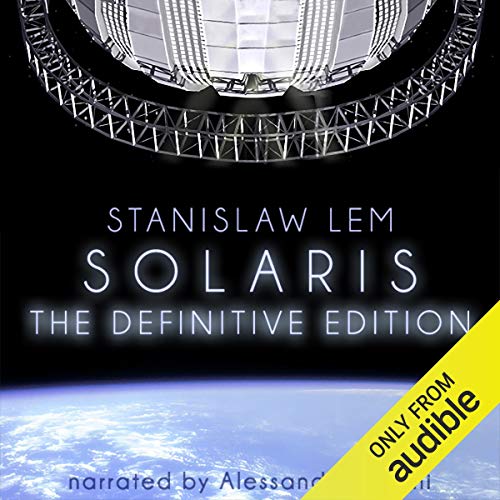
"Solaris" by Stanislaw Lem--Fiction Review

What do you think extraterrestrial life would be like? What would it be like to try and communicate with it? Clearly, Stanislaw Lem has given it a lot of thought in his book, “Solaris,” which is the science fiction story we’re talking about today, Obscurists.


Stanislaw Lem


***The Non-Spoiler part of this review***


What I love about this book:

“Solaris” is a weird story, and I love a good, weird story. Ultimately it’s a story about first contact, but how Lem goes about first contact with an alien species or—in this story’s case—with a single vast sentient entity is he throws out pretty much all of our expectations. If we ever do make first contact with an extraterrestrial form of life, I’m sure the supreme frustration of attempting it, like in this book, will be true to life.

The sentient ocean of “Solaris” is one of those few exceptions to my prohibition on unknowable characters—rarely do I like them. Typically I ascribe this quality to malevolent or at least unscrupulous characters, but the living ocean of Solaris just is. 

For an old sci-fi novel, “Solaris” not only does atmosphere very well but character too, which is often not what the genre is known to focus on, typically those elements get sacrificed for big ideas. I should temper that praise, though, mainly I found Dr. Kelvin and his “visitor,” to not spoil too much, to be the most compelling characters in the story. The atmosphere and setting are always uncanny, so there is no higher praise from me—I love uncanny settings like I love a good haunted house.


What I don’t love about this book:

There is a listlessness to this book at times. It sometimes feels like things are just happening to happen and then to be discussed by the characters. A lot. 

While I find its peculiarities interesting and the characters engaging, the plot isn’t, well, much of anything. It can be summed up as; an odd planet with an odd living ocean is visited by waves of baffled scientists, who remain baffled after studying the planet with great interest and vigor. One day our protagonist visits Solaris and is likewise baffled. The end.

So we ultimately start and end in the same position, and while the marking time in place might be interesting and compelling in its own way, the story doesn’t progress anywhere.

There are also themes of self-harm in this book, so if that’s going to be a problem, I’d suggest skipping this novel. I believe those themes are legitimate things to talk about in a story, and even some of my favorite stories bring it up, but still, not my favorite bits of any story.


***The Spoiler part of this review***
***Ye be warned to turn back now***


The quick and dirty synopsis:

Dr. Kelvin, our main character, arrives at Solaris Station, which researches primarily the vast living ocean present on the planet Solaris. Right from the jump, things are weird. One of the crew, an old mentor of Kelvin’s, had killed himself right before Kelvin arrived. The two surviving crew members of the station don’t seem all that broken up about it. 

Friday, June 4, 2021

"There Are No Countries" by Marshall Smith--Fiction Review

Today’s review is on a bit of weird fiction with an incredible sci-fi setup, throwing you right into a tale told by a living human statue located in a castle discovered on an alien planet. “There Are No Countries” is an enigmatic book written by Marshall Smith.


Marshall Smith


***The Non-Spoiler part of this review***


What I love about this book:

Aesthetically, I like the setting and setup of this novel. It reminds me a lot of Area X in “Annihilation.” How our main character Doug gets to the planet Dandros is only thinly explained—something to do with universe splicing, whatever that is—and it adds to the mystery of the novel, but it isn’t super important. He’s there now, and there is no going back. He’s stranded on this vast uncultivated world, filled with pristine environments which are all just a little uncanny.

As for Doug himself, I’m not entirely sure the man turned into a living statue at the beginning of the novel, which endlessly tells the story of his arrival on Dandros and his life there was ever actually a human being like you or me. Or, at the very least, he’s not a human from our universe. Just like the setting of the story, there is something Uncanny Valley-Esque about him. 

Maybe I’m thinking way too much into it, but it’s little things at first, where he refers to everyday objects in a slightly off manner. Early on, he refers to a device that he has on him that does everything you’d expect a typical smartphone to do, but he calls it an almanac. He also occasionally refers to one of his favorite shows, involving a survivalist and adventurer that, at first blush, you can recognize as Bear Grylls—but Doug refers to him as Bare Gryllz—close but off, again. Early on, he refers to a coworker who worships a “Goddess” as though this faith, while a bit unorthodox, should be common knowledge to us as the reader like we have a shared cultural history. But we don’t. It also occurs to me that Doug is a talking statue that has been self-admittedly trapped that way for hundreds of years, and maybe his memory is just a bit faulty. Still, it really made me suspicious of him right out of the gate and made me think of, unreliable narrator.


What I don’t love about this book:

I don’t like Doug. He’s a vicious, manipulative weasel, and to boot, he’s the worst kind of vicious manipulative weasel—one that thinks he’s not that bad a guy. Also, since he’s the protagonist, we spend all of our time with him.

I’m really not a fan of how terrible Doug is to Annie. Annie, while I’m not exactly certain what a preform is—other than a living machine of some sort—seemed to be really nice and devoted. Well, you know, except for the part where it’s implied that Annie might be murdering other women out of jealousy in her devotion to Doug.

After the strong opening of the book, and unrelenting weirdness to everything, including the guy telling us the story, the rest of the plot just seems to mark time and meander. There is some kind of conflict between the preforms, who are terraforming Dandros, and this Goddess, but it all feels distant and without stakes. It feels without stakes because I couldn’t emotionally latch on to anything or anyone in the book. It’s kinda like watching multiple rival anthills do battle. It can be interesting at times, but it’s hard to emotionally invest in our main character—a narcissist with an unwarrantedly high opinion of himself—or the preforms and melted people, who are equally strange and always a bit unknowable. So plot-wise, things just happen, and they aren’t predictable developments, but every event in Doug’s long, long life hits with the same emotional off-key note of, so what?

Also, like I mentioned before in my review on “Ink and Bone,” the synopsis of this book gave me false impressions of this novel’s plot. The synopsis gives you the impression that this story is from the perspective of the people who find Doug and have to reconcile with his extremely odd story that left him a statue when really it’s pretty much just his weird story. It’s got a real, blink and you miss it sort of context that Doug is even telling the story to someone or someones else, and not just the walls of his empty castle.


This preview is an Amazon Affiliate link; 
as an Amazon Associate, I earn from qualifying purchases

***The Spoiler part of this review***
***Ye be warned to turn back now***


The quick and dirty synopsis:

“There Are No Countries” starts off with Doug telling someone his story of how he ended up on Dandros and his life there up until being turned into a living statue. It nearly immediately smash transitions from that interesting setup to his first day on Dandros. He and part of his office building were somehow transported to this pristine wilderness.

Friday, April 30, 2021

"Annihilation" by Jeff VanderMeer--Fiction Review

In today’s review, we’re visiting Area X in Jeff VanderMeer’s “Annihilation,” which is one of my absolute favorite examples of modern-day weird fiction/cosmic horror.


Jeff VanderMeer


***The Non-Spoiler part of this review***


What I love about this book:

The first thing I want to talk about—that I love about this book—is the fact that none of the characters have names in the traditional sense. Everyone is just identified by their role on the team during the expedition, and our protagonist is the Biologist. It really adds to the whole weirdness of the story.

As cosmic horror, “Annihilation” is a high-water mark of the subgenre. I’ve heard VanderMeer called the weird-Thoreau before, and I can tell you it’s deserved high praise. More than anything, “Annihilation” is an atmospheric book to such a finely honed degree that I found myself getting lost in VanderMeer’s lush descriptions of Area X.

There is a pervasive feeling of dislocation throughout the narrative of this book that mocks any form of human intent or investigation. Area X is determinedly unknowable in every sense of the word. It’s a kind of horror that is constant pressure, unlike the jump scare sort, which is all short, intense bursts. Everything—every element of this story—serves that feeling from the human characters not having names but titles, to the bizarre environment of Area X, and how the characters investigating it even got there, or why.


What I don’t love about this book:

“Annihilation” is a short book, and typically, I enjoy a good short book—I’m addicted to hearing, “Audible hopes you’ve enjoyed this program,”—but in this case, it leaves me wanting more, a little more time in Area X. This is what makes the next book in the “Southern Reach Trilogy,” so frustrating for me because it takes place just outside of Area X. The third book scratches that same itch as the first one but there feels like something missing from the whole formula so, it’s only nearly as good. This is more a critique of the series as a whole, but if “Annihilation” had a bit more to it, I don’t think I would be left wanting more.

Half of the expedition team isn’t as fleshed out as the other half. VanderMeer spends all this time creating subtle character development and hints of back story for the Biologist and the Psychologist that the character work for the Surveyor and the Anthropologist suffers noticeably. It isn’t clear why they’re there in the first place. As for the Biologist, or Ghost Bird, as her husband calls her, she’s there, you discover, because she’s an odd bird—sorry, it had to be done. 


This preview is an Amazon Affiliate link; 
as an Amazon Associate, I earn from qualifying purchases.


***The Spoiler part of this review***
***Ye be warned to turn back now***


The quick and dirty synopsis:

We start “Annihilation” with four women, the Biologist, the Psychologist, the Surveyor, and the Anthropologist. Beyond their titles, we’re never told their names. Everything starts shortly after they enter the mysterious Area X, a coastal location that has been quarantined and studied for the last thirty years. This is the twelfth expedition into Area X. The Biologist, our protagonist, is the wife of one of the members of the eleventh expedition. That expedition was thought lost, but mysteriously, members of the eleventh expedition returned home with no memory of how they got out of Area X. They all soon died of terminal cancer, including the Biologist’s husband.