Showing posts with label Supernatural Fiction. Show all posts

Saturday, July 30, 2022

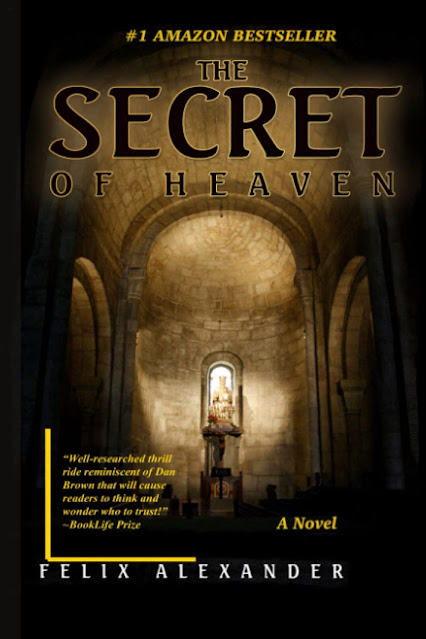
"The Secret of Heaven" by Felix Alexander--Fiction Review

Today’s book, Obscurists, is “The Secret of Heaven” by Felix Alexander, a historical religious thriller that revolves around theological controversies that span thousands of years.


Felix Alexander


***The Non-Spoiler part of this review***


What I love about this book:

Despite not being a religious person myself, I enjoy theological lore, albeit from a strictly literary and historical perspective. Right off the bat with his writing, it’s easy to tell that Alexander is well versed in this subject—more so than I am, at least. Which is one of the chief things I liked about this book because, even though it’s fiction, I got to learn new things. 

Undoubtedly a bit of Dan Brown in this book’s DNA, with even a sly nod and wink at Brown’s titular protagonist. Typically, I’m not the biggest fan of that kind of thriller/historical fiction and have to be in an odd humor to pick up such a book. Still, though, I’m glad I picked up “The Secret of Heaven” because it managed to surprise me by grabbing my attention early on and holding it all the way to the end.

There is no denying that it’s an exciting book. The characters are almost always on the move, and even in the rare moments they aren’t, the tension gets ramped up with every scene as more-and-more revelations come to light. This only makes the antagonists of this story even more deadly as they become increasingly desperate to find the lost bible.

Supernatural elements are present in this book, but I really liked how Alexander primarily played them off stage from the main plot.


What I don’t love about this book:

This world is lousy with secret societies doing—whatever secret societies do with their endless amount of free time and resources. I’m skeptical of secret societies in fiction that control the whole worldwide economy because—to put it delicately—people suck at keeping anything secret. So skeptical, in fact, that I find a secret society that has been masterfully kept to the shadows for centuries to be more fantastical than angels or dragons. That’s how little of an opinion I have of people being able to keep a secret.

At the beginning of this novel, which sort of just trails off, amnesia is introduced as a story element, and, yeah, like I said in my “Project Hail Mary” review, it isn’t one of my favorite story devices. In “The Secret of Heaven,” other than obscuring the details of how precisely Aiden’s mentor Lazzaro de Medici died, it doesn’t add much to the story. Basically, it goes, “ugh, who am I?” “You’re Aiden Leonardo, respected Professor of Biblical Studies, and this is your fiancé, who is also a doctor of archaeology, is incredibly beautiful, incredibly talented, incredibly smart, and incredibly fit with martial arts training.” “Oh, yeah, I guess I am Aiden Leonardo.”


This preview is an Amazon Affiliate link; 
as an Amazon Associate, I earn from qualifying purchases


***The Spoiler part of this review***
***Ye be warned to turn back now***


The quick and dirty synopsis:

Our story begins with the aforementioned amnesia-riddled Aiden finding out from his fiancé that he is the prime suspect in the murder of Lazzaro de Medici, Aiden’s mentor, and adoptive father.

Wednesday, April 27, 2022

Micro Mention "The Wine Dark Sea"

Rovert Aickman


“The Wine Dark Sea,” by Robert Aickman, is named as such as a reference to Homer. Knowing what Homer meant when he coined the term foreshadows what these stories are like in this collection—weird and stormy.

Aickman as a writer, has a style that is just as uncanny as the plots of his stories. While reading this collection of stories, I often felt as if I'd slipped into someone else's fever dream. For me, it's hard to elucidate much more than that.


This preview is an Amazon Affiliate link; 
as an Amazon Associate, I earn from qualifying purchases.


Sunday, April 24, 2022

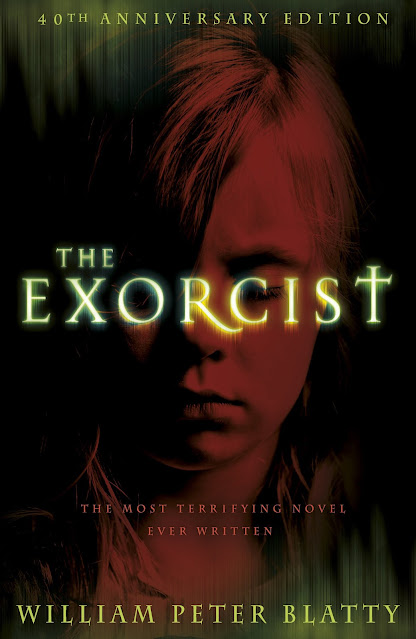
"The Exorcist" by William Peter Blatty--Fiction Review

Time for some more horror of the supernatural bent, my dear Obscurists. Make sure to read this review late at night and in a dark room because we’re talking about “The Exorcist” by William Peter Blatty.


William Peter Blatty


***The Non-Spoiler part of this review***


What I love about this book:

I’m a sucker for any horror story, and “The Exorcist” is one of those arch horror stories that stick in people’s minds. This novel has a threatening atmosphere that just keeps ratcheting higher and higher. The fact that this is all happening to an innocent little girl makes it all the scarier, especially when the body horror starts.

Despite being a book about religious terror and demon possession, it feels grounded in reality—mostly. The characters’ concerns and doubts are all authentic, which is nice. If everyone was too quick to jump to “must be demons in that little girl,” it would cheapen the story. 

The consequences are real and tragic in this story. Despite this being a story of faith vs. a demonic presence, Blatty never resorts to deus ex machina.


What I don’t love about this book:

It presents things like telekinesis and telepathy as being known and real phenomena. I get that it’s fiction, so why not? But the thing is, since the rest of the story tries to make itself feel grounded in reality, it goes out of its way actually, but when it comes to the more fantastical elements, its messaging is very “well, maybe?” But no, not maybe, people don’t move things with their minds. That’s a clever magic trick.

Shifting gears dramatically on this point, I’m also annoyed by Father Karras’s reticence about accepting that Regan is possessed by a demon. Blatty overcommits to this idea that Karras can be just as skeptical as any scientist, which, yeah, sure, I appreciated at first. But there comes the point when the evidence is so overwhelming that it becomes ridiculous to still be holding out on the idea that there has to be a rational explanation for what is happening. I don’t disbelieve in magic and whatnot in my day-to-day life because I want to; I’ve just never been convinced to the contrary with what I would consider verifiable, repeatable, testable evidence. It’s always someone telling me their anecdotal story, which the furthest I will accept with that is that person believes in what they’re saying. But if a girl’s head goes all the way around, then she does clearly other magical shit right in front of me, then yeah, I’d change my mind.


This preview is an Amazon Affiliate link; 
as an Amazon Associate, I earn from qualifying purchases


***The Spoiler part of this review***
***Ye be warned to turn back now***


The quick and dirty synopsis:

The novel opens with a short vignette of an old priest, Father Merrin, The Exorcist, returning to the United States from an archeological dig in Iraq. Before he concluded his business, he had discovered a small statue of a demon known as Pazuzu. 

Monday, April 18, 2022

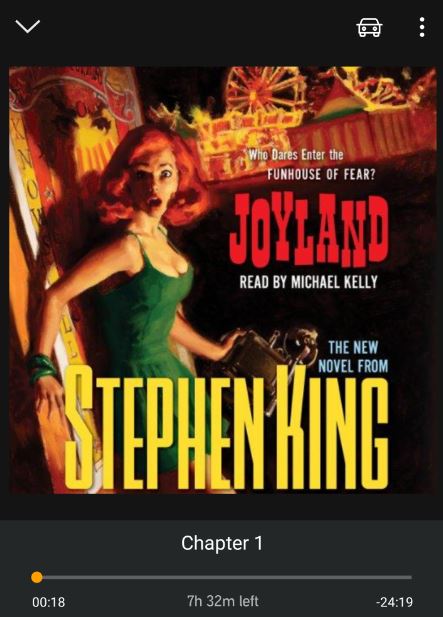
Micro Mention "Joyland"

Stephen King


Sure, when Stephen King’s protagonist gets a summer job at a tourist destination in “Joyland,” they embark on solving a neat murder mystery involving ghosts. All I got when I did something similar was the knowledge that 2-day-old popcorn doesn’t taste right.

But upon reflection, given a choice between the two, I'd probably take the stale popcorn, at least it doesn't try to murder you. Much like an actual funhouse hall of mirrors, King throws some serious misdirection in this novel, more than once.


This preview is an Amazon Affiliate link; 
as an Amazon Associate, I earn from qualifying purchases.

Author's Website: https://stephenking.com/


Monday, November 1, 2021

Micro Mention "The Turn of the Screw"

Henry James


The scariest thing about "The Turn of the Screw" is the governess's inappropriate relationship with those kids. I think the ghosts were there because they were like, "someone should call child services from beyond the grave. Oh, it's 1898? Someone should invent child services."

I found her relationship with the young boy in her charge to be the most disturbing because this story is all from her point of view. It's just that some of the things she says about him don't fit for what is essentially a nanny/teacher relationship with this kid. Maybe I'm bringing too much modern suspicion, colored by countless news stories about teachers having inappropriate relations with their students, into my reading of this old ghost story. But I've read this novella twice now and still can't shake off the perception.

"The Turn of the Screw" is just old enough of a story that its language is just out-of-date to the point before being antiquated that it requires extra focus to understand the story. It was the reading equivalent for me of watching movies in standard definition instead of HD. So overall, the experience was more frustrating than frightening for me.


This preview is an Amazon Affiliate link; 
as an Amazon Associate, I earn from qualifying purchases.


Thursday, September 30, 2021

Talking In Obscurity, "The Outsider," by Stephen King

Stephen King


Or Download This Episode Here:


We're at the end of September, Obscurists! So Steven and I thought since we're heading into the spooky season, we'd kick things off right with a Stephen King book.

"The Outsider" is a mix between police procedural, murder mystery, and straight-up horror. We hope you enjoy hearing our thoughts on it!


This preview is an Amazon Affiliate link; 
as an Amazon Associate, I earn from qualifying purchases.

Author's Website: https://stephenking.com/

Friday, April 23, 2021

"The Picture of Dorian Gray" by Oscar Wilde--Fiction Review

For today’s review, I thought we would go old school and talk about a classic supernatural horror story by Oscar Wilde, “The Picture of Dorian Gray,” and despite the rumors, I don’t have my own portrait moldering away in some locked room. It’s in my parlor. I like to look at that shit. 


Oscar Wilde


***The Non-Spoiler part of this review***


What I love about this book:

“The Picture of Dorian Gray” has that Victorian-era gothic aura about it that you can also get a taste of in Charles Dickens, Henry James, and Emily Brontë’s work. It’s a quality that is probably my favorite thing about writers of this period—their predilection for evoking the supernatural. Unlike the famous works of those writers, the narrative of this story doesn’t involve ghosts but rather revolves around a Faustian bargain the protagonist makes regarding a portrait of him. 

Wilde makes some deep meditative points regarding Victorian society’s philosophy on the world in this novel. And if ever there was a group of people who didn’t take to criticism well, it was the Victorians—so I admire the bravery of that since they were also his primary audience.

Plus, on a far baser level, there is just something fun about the idea of you can do anything, and none of the consequences of your actions will touch you. They’ll just jack up some portrait of you. 


What I don’t love about this book:

For a guy who might be immortal—or at least doesn’t suffer consequences—not a lot happens on stage in this book. There are a lot of conversations about Dorian Gray’s wild behavior and a lot of allusions to what he gets up to as a functional immortal, but precious little action. This is really just true of the era stylistically. Novels and stories of his time tend to be sedate even when they involve supernatural monsters.

Dorian Gray is really one of those archetypical characters who, when granted eternal youth, nearly immediately goes full dickhead. Why does nobody who gets one of these bargains ever just live a life of quiet, industrious virtue? Probably the devil—well, I guess I answered my own question there.


This preview is an Amazon Affiliate link; 
as an Amazon Associate, I earn from qualifying purchases.


***The Spoiler part of this review***
***Ye be warned to turn back now***


The quick and dirty synopsis:

At the beginning of the story, Dorian Gray is modeling for Basil Hallward, a painter painting Dorian’s portrait. Through this painter, Dorian becomes acquainted with Lord Henry Wotton, the consummate hedonist, and in many ways, the antithesis of the moralizing Hallward. Somewhere amidst the conversation between the three, Dorian expresses a wish that the painting should suffer the effects of time in his stead, and he should remain forever youthful.

Friday, October 23, 2020

"The Outsider," by Stephen King--Fiction Review

I’m a huge Stephen King fan—I know, shocker—so I’ve resisted doing the obvious thing and jumping in on a review of one of his books early on after starting this blog. However, we’re closing in on Halloween, and I feel like now is the time. So today, we’re talking about “The Outsider” by Stephen King. 


Stephen King


***The Non-Spoiler part of this review***


What I love about this book:

Stephen King has mastered a variety of small American townie voices that always seem to populate his novels. It’s genuinely impressive, and one of his literary talents I don’t think gets enough praise, and sure—he’s thought of as the master of the macabre and horror, but his skill with character voice is nearly peerless.

King, in my experience, is a master at setting up a story. He develops that plot through the middle with fascinating and diverse characters, ramping up the tension—then introduces elements at the end like a giant cosmic space turtle or we’re going to defeat the evil clown with tongue biting, metaphorically, or maybe not. What I’m trying to get at is endings are not really known as his thing. It’s a cliché to point that out—so why go on about this in this section? Because “The Outsider” has an actual end, one that I found satisfying, too. 

This book isn’t just a partnership between Detective Ralph Anderson and Holly Gibney—a character he established in other books of his—but none-the-less I enjoyed their inverse X-files partnership a whole lot. I was always a big fan of that show, and this novel really scratches that itch, unlike many actual X-files novels that feel vaguely parody-like to me.   


What I don’t love about this book:

Speaking of X-files, at a certain point, just like in that show, I became wearied by Detective Anderson’s agent Scully-Esque constant insistence on there being a “rational” explanation even after some serious supernatural shit has gone down. I know this is a seemingly weird position for me to take because often I’ve written about how I am such a person who is always seeking a rational answer to things, and decrying magical thinking or reasoning is bullshit. I, however, have never claimed that I would make a good fictional character. I would be that smug jerk who dies right at the beginning of the horror story saying something like, “c’mon guys, demon vampire ghosts aren’t real!” 


This preview is an Amazon Affiliate link; 
as an Amazon Associate, I earn from qualifying purchases.

Author's Website: https://stephenking.com/

***The Spoiler part of this review***
***Ye be warned to turn back now***

The quick and dirty synopsis:

The book begins bouncing between scenes of various witnesses being interviewed by the police and Detective Ralph Anderson and his team on their way to arrest a popular little league coach Terry Maitland. Maitland is a family man and a local school teacher in addition to being a little league coach and is beloved and respected around the community. Now he is suspected of raping and murdering a little boy.

Friday, August 7, 2020

"Devolution," by Max Brooks--Guest Fiction Review By: James Reinhardt

In 2003, author Max Brooks burst onto the scene with “The Zombie Survival Guide.” Right at the perfect cultural moment, catching a wave of revived interest in the zombie sub-genre after the release of “28 Days Later” and just before Zack Snyder’s “Dawn of the Dead” remake and Edgar Wright’s “Shaun of the Dead” revitalized the zombie movie for the 21st century. In 2006, in the middle of this renewed interest in zombies, Brooks published “World War Z,” an instant success spawning countless imitators and, like every successful book, eventually a movie. While most zombie media before WWZ took a smaller approach mostly focusing on a small group of survivors, WWZ looked at a zombie apocalypse on a global scale, offering multiple points of view as a UN employee gathered first-hand accounts of the zombie war.

Now, Max Brooks returns with a new horror novel, but this time decides to follow up zombies with something entirely different...


Max Brooks

 
If you remember from my last post on this blog, I’m a sucker for the paranormal and Cryptozoology, and in the world of Cryptids, there’s nothing—ahem—bigger than the big guy himself, Bigfoot, or Sasquatch, as some call him.

Bigfoot has grown beyond being a figure of the paranormal and fringe-science and has become something of a staple of American folklore, a sort of new world version of the European Green Man legend symbolizing both harmony with nature but also nature’s wrath. The big, hairy guy has also carved out a nice niche for himself in pop-culture, figuring in commercials, TV shows, and films. Depending on what you watch, Bigfoot is either depicted as a kindly gentle giant or a raging monster, with nothing in between, and there’s an entire sub-genre of straight-to-VOD “Bigfoot attacks” movies.

So when I found out that Max Brooks’ next novel would be a Bigfoot story, I couldn’t wait to see what the man who revolutionized zombie literature would do for Bigfoot. Bigfoot has quite a... spotty literary history, to say the least. There’s no shortage of pseudo-scientific Bigfoot books out there, most of which are just rehashes of Bigfoot eyewitness accounts mixed in with the author’s own theories, as well as outlandish “true” stories which read like lousy fiction that the author was hoping to pass off as real (much like “The Mothman Prophecies.”) There have been a few attempts at Bigfoot horror fiction, with mixed results, and of course, there’s an entire section of Amazon dedicated to Bigfoot erotica for the Kindle, if you’re into that sort of thing (no judgment here if you are).

So anyway, a respected author like Max Brooks taking a stab at Bigfoot was a big deal for me. Apparently, Brooks first developed this story as a film for Legendary pictures but then decided that he wanted to do it as a novel first (Legendary announced that it was once again developing “Devolution” as a film just days after the book was released). So how did Brooks’ fair at writing a horror novel about Bigfoot?


***The Non-Spoiler part of this review***


What I love about this book:

Brooks paints a good picture of city folk who like the idea of getting back to nature but have no idea what that actually entails. This is a story about modern people looking to get in touch with nature while also enjoying all of the conveniences of modern life, only to find out how merciless nature can be. I really enjoyed how the characters in this book had not only to learn how to survive and adapt but also fight against an enemy that no human has ever faced before. Two of my favorite horror movies, Wes Craven’s “The Hills Have Eyes” and Neil Marshall’s “The Descent,” are about normal people who must revert to their most primal nature in order to survive against enemies that have avoided the influence of society, and that’s very much the crux of this story as well. The title of the book, “Devolution,” very much refers to the characters in the story and how they must shed the trappings of modern society, and their own humanity, to survive.

I’ll also give it to Max Brooks—he did his Bigfoot research. The Sasquatches in this novel exhibit behavior that’s commonly detailed in eyewitness accounts like rock throwing, tree knocking, howling, and having an overpowering stench. “Devolution” also contains references to Teddy Roosevelt’s book “The Wilderness Hunter,” in which Roosevelt recounts tales he’s heard of Bigfoot. There are also references to the Ape Canyon incident, something that Brooks seemingly drew a lot of inspiration from, where allegedly miners shot a Bigfoot in an area around Mount St. Helens known as “Ape Canyon.” Then later that night, their cabin was set upon by a group of giant, angry gorilla-like beasts.

The big, hairy invaders are also all given distinctive looks and personalities, which I appreciated, though the Bigfoot in this book fall more into the “raging beast” category of Bigfoot. Brooks made a worldwide zombie plague seem plausible in “World War Z,” and he does the same with Bigfoot in this novel, taking great pains to make his Sasquatches seem like something you could encounter in the woods if you went hiking too far off the beaten path...


What I didn’t love about this book: 

While the Bigfoot in this book are given some depth and personality, I feel like the human characters could have used a little more of that. Most of this story is told through the POV of the character of Kate, detailing the events in her journal, and I feel like the choice to tell this story through one character’s eyes hinders it because a lot of the supporting characters get very little development. Horror stories only work if you’re scared for the characters in the story, and we get plenty of insight into the mind of Kate since she’s the one telling most of the story, but we only get her view of the rest of the characters. Dan, her partner, gets the most development after Kate, followed by Mostar, an artist with a past that gives her unique insight into having to survive.

Sadly, some of the additional side characters all blended together, to the point where I found myself having to refer to earlier in the book to remind myself who a certain character was. We never really get to know a lot of the supporting cast beyond surface-level character traits. While I feel like Brooks wanted some of his characters to come off as shallow and vapid, it leaves the reader uninvested in the story, when bad things start to happen. 

I also could have used a little more growth in Kate and Dan’s relationship. When we first meet them, Dan has grown emotionally distant, which has put a strain on their relationship, but as the story goes, Dan finds new purpose as the town’s “handyman.” Sadly, we don’t really see how this impacts their relationship as the latter half of the book focuses mostly on the conflict with the Bigfoot. Granted, a fight for survival against 7-foot tall apes takes precedent, but I would have liked a few more moments between the main characters growing either closer because of this conflict or it driving a bigger wedge between them.


This preview is an Amazon Affiliate link; 
as an Amazon Associate, I earn from qualifying purchases.

Author's Website: https://www.maxbrooks.com/

***The Spoiler part of this review***
***Ye be warned to turn back now***