Showing posts with label mad scientist. Show all posts

Monday, January 3, 2022

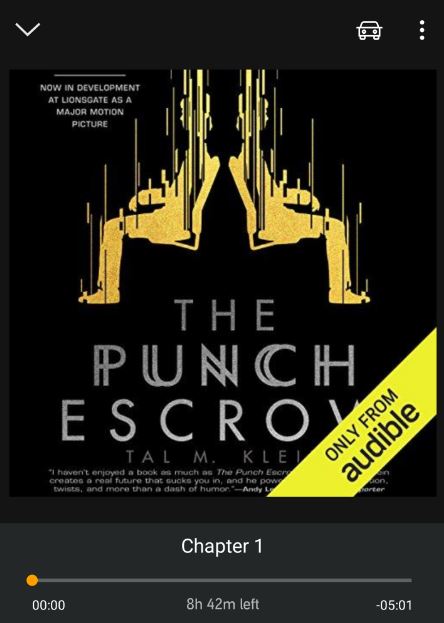
Micro Mention "The Punch Escrow"


Though I've heard it before, "The Punch Escrow" by Tal M. Klein probably cemented the concept of the ship of Theseus paradox in my mind better than anything else. The book is a fun sci-fi invention gone-wrong adventure, but it also doesn't shy away from more profound metaphysical questions. 

A couple of Star Trek the Next Generation episodes deal with a topic similar to what is central to this novel's plot. In the interest of not spoiling this novel, I won't say which, but if you're a true Trek fan, you'll probably be able to work it out just from the publisher's summary.

Suffice to say, "The Punch Escrow" and those Star Trek episodes take on the maddening question of what are we, really. Are we nothing more than the matter and energy that makes up our bodies? Or is there some sort of soul assigned to that matter, and only it, specifically? Or is it a third option, that fundamentally, what we are is a story that we tell ourselves, an unbroken chain of continuity that doesn't require either one body or a soul?

Anyway, you can read my full review of this novel here.


This preview is an Amazon Affiliate link; 
as an Amazon Associate, I earn from qualifying purchases.


Monday, October 18, 2021

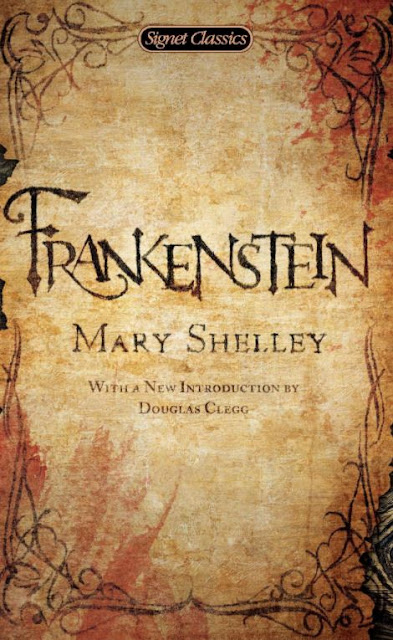
Micro Mention "Frankenstein"

Mary Shelley


"Frankenstein," by Mary Shelley, is the quintessential scientist playing god horror story and is still disquieting over two hundred years later. A lot of the "mad scientist" tropes got their start in this novel. As a scientifically minded person, I don't particularly enjoy that story beat, but I understand why it was so effective. In Shelley's day, there were many men of "science" and "doctors" who were dangerous quacks and butchers.

Grave robbing was a particularly ghoulish problem in Shelley's day because it was on unguarded corpses that a lot of medical students of the era practiced on. So the idea of an unscrupulous Dr. Frankenstein taking it even farther—to try and defeat death itself and create life was a ripe conclusion for Shelley to make; the association is obvious.

At all points of this book, however, I'm more on the Monster's side of this argument because he didn't ask to be made after all. Sure, I'm less so in his corner when he goes on a murdering streak, especially when he'd learned better, but still.


This preview is an Amazon Affiliate link; 
as an Amazon Associate, I earn from qualifying purchases.


Friday, July 16, 2021

"The Punch Escrow" by Tal M. Klein--Fiction Review

In today’s review, we’re going teleporting—just like in “Star Trek.” But unlike that show most of the time, we’re really going to dive into the ramifications of that kind of technology with Tal M. Klein’s “The Punch Escrow.”


Tal M. Klein


***The Non-Spoiler part of this review***   


What I love about this book:

I’ve heard of “The Ship of Theseus” thought experiment before, but this book managed to cement it in my mind better than anything else because it directly ties into the plot’s central conflict. In sum—the paradox is—Theseus’s ship was kept in port as a monument for generations. Over the years, planks, ropes, et cetera would rot and need to be replaced, and they’d be replaced with carefully crafted replicas to match the original components. Eventually, every piece of the ship is replaced in this manner. The ship in the harbor is the same in every regard, but is it still Theseus’s ship? If not, when did it stop being Theseus’s ship? 

As any good sci-fi should, “The Punch Escrow” tackles big questions and invites the audience to examine them from every angle. The ever revelatory question of; what does it mean to be human? Is a question that recurs throughout literature—not just sci-fi. The question might be the same, but the answers change based on the context in my experience. Since this is a story about teleportation, the human question and what makes you—you question are intertwined. Are you just the matter that makes up your body? Or are you a pattern of thoughts, a continuity of experience? There is a lot to consider in this book, and I love that.

The pacing in “The Punch Escrow” is quick—in my opinion. Klein never meanders too long in any one spot, and his characters are constantly in motion to the next thing. It’s not that I’m against slower-paced stories, but I always feel initial stories in a series or standalone novels are better served by not resting too much and being a more kinetic experience. For me, you have to earn those slow moments. They can be great for character development, but if I don’t know enough about why I should be interested in a character, I’m wary of the idea of sitting around waiting for them to tell me who they are.


What I don’t love about this book:

I don’t know why exactly, but I thought there would be more to this story—more locations, more conflicts, and more characters. With its quick pacing, which I like, it nevertheless felt like a third or maybe half of a longer story. The big cliffhanger ending felt less like a tease into another story and more like part of the rising action to me.  

Okay, so there is a trope in sci-fi—cliché really—where the protagonist is oddly obsessed with something in our contemporary time. “Star Trek” did it, that terrible “I, Robot” movie with Will Smith did it, and all of “Ready Player One (and Two)” are stories built around it. And I get the function—create a character who can seem contemporary, in knowledge at least, to short circuit the audience into identifying with them. “The Punch Escrow” does it with Joel’s love of 1980’s new wave music—it comes up more than once. As for if this element works in this story, I’d say it works fine, but personally, I’m skeptical of nostalgia, which is a big part of why as time has gone on, stories that feature an homage to the ‘80s or— heaven forbid—the ‘90s, creep me out.


This preview is an Amazon Affiliate link; 
as an Amazon Associate, I earn from qualifying purchases


***The Spoiler part of this review***
***Ye be warned to turn back now***


The quick and dirty synopsis:

“The Punch Escrow” starts with Joel Byram, our protagonist, jumping around in his story—and creating an excuse, narratively speaking, to dump some info about the world he lives in. After a bit with a framing story, where Joel is telling some mysterious Turkish strangers why he thinks the company responsible for teleportation is trying to kill him, we jump back to before Joel had serious problems.

Monday, February 22, 2021

Micro Mention "The Island of Dr. Moreau"

HG Wells


In the area of classic science fiction that reads more like horror, “The Island of Dr. Moreau” by HG Wells is hard to beat. Some of the jungle scenes, at night, when the beast folk are chasing Prendick is the stuff of nightmares. The whole island and Dr. Moreau's methods all feel like a waking bad dream Prendick can't escape.

There is a theme running through Victorian-era literature when it comes to science and its distrust. This novel comes in toward the middle of the golden age of the mad scientist, in my estimation, firmly rooting it in that tradition. I expect that part of the reason this theme resonated so much with people was because of the world they were living in at the time. Think about the scientific advances from the 18th to the 19th and then the even more profound technological changes around the turn of the 20th century. Change creates anxiety, and anxiety is a hop, skip, and a jump away from full-blown terror.


This preview is an Amazon Affiliate link; 
as an Amazon Associate, I earn from qualifying purchases.


Friday, November 6, 2020

"The Invisible Man," by H.G. Wells--Fiction Review

So we’ve all had that conversation, “what would you take, invisibility, or the ability to fly?” The subtext always being, which of us are perverts and who has road rage? What—that isn’t how everyone else thinks about it? Oh, it’s just me. Yinz guys are just a bunch of liars! I’m sorry—I let my Pittsburgh show there for a moment. Anyway, today’s review is “The Invisible Man” by H.G. Wells, a classic in science fiction and a bit of horror too.


H.G. Wells


***The Non-Spoiler part of this review***


What I love about this book:

One of the reasons I love Science Fiction is because often it can help you look at some topic in a new and novel way. Sometimes, though, exactly what you think would happen is what happens, and that’s satisfying too—such as in this novel—a guy finds a way to become invisible and quickly becomes a criminal. Despite what Harry Potter might argue, let’s be real, there are very few applications for the power of invisibility that are moral.

That said, this is one of those unusual books where the plot’s protagonist is also the story’s villain, which certainly isn’t unheard of, but it’d be hard to argue that most protagonists aren’t the heroes of their stories. I like this uncommon form of plotting, simply because it isn’t used all that often. My favorite book to do this is Richard Matheson’s “I am Legend,” and don’t you go thinking that the Will Smith movie can work as a substitute. That movie misses the whole point of the novel.

Griffin, the Invisible man himself, pioneered this particular character of “The Invisible Man,” and the concept remains popular even today. Certainly, Hollywood has created several movies inspired by the character. There is a certain amount of fun to be had imagining for a moment if you could be invisible. 


What I don’t love about this book:

Griffin is also a mad scientist, something that was popular in the era H.G. Wells was writing, and again is still popular today. I don’t like the “mad scientist” archetype. You know what scientists are mostly? Nerds who just want to figure out how things work. They aren’t generally nefarious people seeking to destroy or conquer the world—not to say that there haven’t been examples to the contrary.

To build on this point, I’m generally not a fan of any plot device that rests on the existential fears that can be summed up as, “look at what the evils of SCIENCE have brought down upon us!” I don’t like this because that’s what real anti-science people are always arguing, sidestepping the history that before we approached life and society from a more scientific approach, most of us tended to live short and miserable lives. So while a classic science experiment gone amok story, like “The Invisible Man” can be fun, it also has that unpleasant odor of, “see, if that man was less curious about the mysteries of the universe, we wouldn’t be in this mess.”   


This preview is an Amazon Affiliate link; 
as an Amazon Associate, I earn from qualifying purchases.


***The Spoiler part of this review***
***Ye be warned to turn back now***