Showing posts with label Gothic Horror. Show all posts

Friday, April 29, 2022

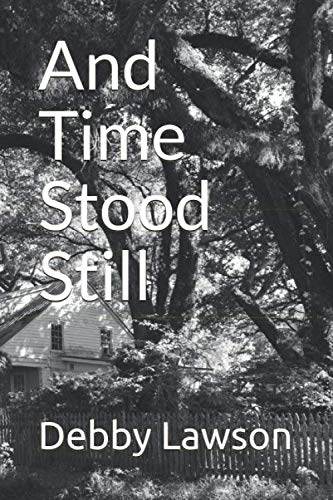
"And Time Stood Still" by Debby Lawson--Fiction Review

Time for a bit of a spooky story that is also a compelling narrative of a really dysfunctional family with Debby Lawson’s “And Time Stood Still.” 


Debby Lawson


***The Non-Spoiler part of this review***


What I love about this book:

I love gothic horror and family dramas—I really love a family drama blended with gothic horror, like Lawson’s book. It scratched an itch for me that hasn’t been satisfied for quite a while, and it reminded me a lot of the book that specifically made me love this particular sub-subgenre, which is “Blackwater” by Michael McDowell.

Like that story, Lawson can lull you into the drama of these characters’ lives to the point where you start to forget that supernatural shenanigans are afoot, and then bam! There’s a scary ghost in the bathroom.

To pull off that effect, though, the character work has to be excellent to draw you into their lives to the point you can fully realize them for who they are as people. And to that end, “And Time Stood Still” carries it off superbly. The enduring mysteries and challenges of Ms. Carine’s life had me pretty well absorbed from start to finish.


What I don’t love about this book:

Rarely do I find myself enjoying framing stories as a literary device all that much—I know, I know, I love “The Princess Bride” too, but the actual frame story in that movie doesn’t do anything for me. So, like that, this novel uses a significant frame story where most of it is Ms. Carine telling Danielle the story of her life.

Further, it’s disappointing to me that all the spooky stuff happens in the frame story and not the meat of the story. Still, it would have cut out a lot of the immediacy of the horror if all the supernatural stuff happened in the story being framed.


This preview is an Amazon Affiliate link; 
as an Amazon Associate, I earn from qualifying purchases


***The Spoiler part of this review***
***Ye be warned to turn back now***


The quick and dirty synopsis:

Our story starts off with Danielle reluctantly meeting a mysterious old woman at a medical center, and the two women strike up a conversation. Soon Danielle warms up to the conversation with the older woman, Ms. Carine, which eventually leads to an invitation for Danielle to visit Ms. Carine in her palatial old home.

Monday, November 1, 2021

Micro Mention "The Turn of the Screw"

Henry James


The scariest thing about "The Turn of the Screw" is the governess's inappropriate relationship with those kids. I think the ghosts were there because they were like, "someone should call child services from beyond the grave. Oh, it's 1898? Someone should invent child services."

I found her relationship with the young boy in her charge to be the most disturbing because this story is all from her point of view. It's just that some of the things she says about him don't fit for what is essentially a nanny/teacher relationship with this kid. Maybe I'm bringing too much modern suspicion, colored by countless news stories about teachers having inappropriate relations with their students, into my reading of this old ghost story. But I've read this novella twice now and still can't shake off the perception.

"The Turn of the Screw" is just old enough of a story that its language is just out-of-date to the point before being antiquated that it requires extra focus to understand the story. It was the reading equivalent for me of watching movies in standard definition instead of HD. So overall, the experience was more frustrating than frightening for me.


This preview is an Amazon Affiliate link; 
as an Amazon Associate, I earn from qualifying purchases.


Sunday, October 31, 2021

Talking In Obscurity, "The Elementals," by Michael McDowell

Michael McDowell


Or Download This Episode Here:


Happy Halloween, Obscurists! Clearly, Steven and I are sticking with horror for today's book. It just wouldn't be right if we didn't.

"The Elementals" is a southern gothic horror that is also a generational family drama, a kind of story McDowell seemed to specialize in when he was alive.


This preview is an Amazon Affiliate link; 
as an Amazon Associate, I earn from qualifying purchases.

Wednesday, October 20, 2021

Micro Mention "The Strange Case of Dr. Jekyll & Mr. Hyde"

Robert Louis Stevenson


"The Strange Case of Dr. Jekyll and Mr. Hyde" is a classic meditation on people's duality. Even if you doubt it, the idea that there might be a Mr. Hyde buried under the surface of our personality is unnerving.

There is a perception that Mr. Hyde represents an evil persona and Dr. Jekyll is the "good" side of the same person. I'd argue, however, that Jekyll is just as amoral as Mr. Hyde, just more repressed. After all, it was Jekyll who set this all into motion in the first place and doesn't seem all that troubled by his alter ego's antics until later in the story.


This preview is an Amazon Affiliate link; 
as an Amazon Associate, I earn from qualifying purchases.


Monday, October 18, 2021

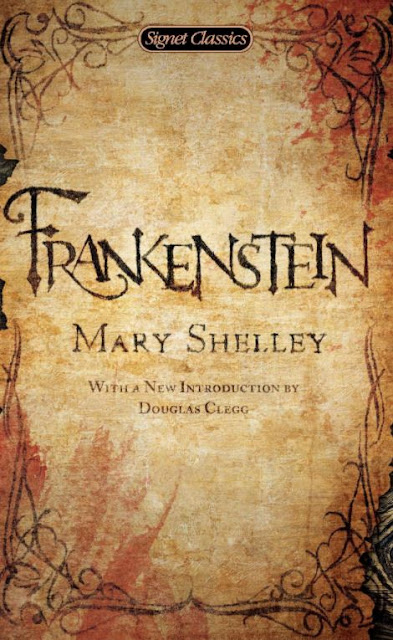
Micro Mention "Frankenstein"

Mary Shelley


"Frankenstein," by Mary Shelley, is the quintessential scientist playing god horror story and is still disquieting over two hundred years later. A lot of the "mad scientist" tropes got their start in this novel. As a scientifically minded person, I don't particularly enjoy that story beat, but I understand why it was so effective. In Shelley's day, there were many men of "science" and "doctors" who were dangerous quacks and butchers.

Grave robbing was a particularly ghoulish problem in Shelley's day because it was on unguarded corpses that a lot of medical students of the era practiced on. So the idea of an unscrupulous Dr. Frankenstein taking it even farther—to try and defeat death itself and create life was a ripe conclusion for Shelley to make; the association is obvious.

At all points of this book, however, I'm more on the Monster's side of this argument because he didn't ask to be made after all. Sure, I'm less so in his corner when he goes on a murdering streak, especially when he'd learned better, but still.


This preview is an Amazon Affiliate link; 
as an Amazon Associate, I earn from qualifying purchases.


Monday, October 11, 2021

Micro Mention "The Legend of Sleepy Hollow"

Washington Irving


Let's be clear here, the gist of "The Legend of Sleepy Hollow" by Washington Irving is Ichabod Crane is just trying to get his wick… lit… we'll say—by the local beauty, and then, failing in that is chased out of town by a ghostly headless horseman.

So it's weird when a movie makes Crane out to be anything but a pompous dickhead, which he was and not a hero. I'm not suggesting the Headless Horseman is the hero of the story, but sometimes it's nice to see bad things happen to bad people, even if it isn't an enlightened attitude. I'm sure it would be scary and all that jazz, but the scene where Crane is actually being chased out of Sleepy Hollow by the Headless Horseman read as funny to me. Maybe, that really just speaks to who I am as a person more than anything.


This preview is an Amazon Affiliate link; 
as an Amazon Associate, I earn from qualifying purchases.


Monday, August 30, 2021

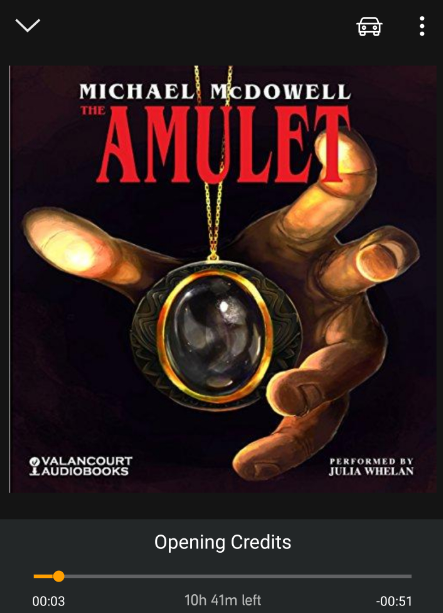
Micro Mention "The Amulet"

Michael McDowell


Michael McDowell is one of those authors that I just stumbled upon one day, and I can’t thank Valancourt Books enough for breathing a second life into his books. For me, he’s the master of Southern Gothic Horror, and “The Amulet” doesn’t disappoint.

Admittedly, "The Amulet" has a stronger setup and start than finish, but it's still a fantastic horror story. McDowell captures the time and place of when and where the story is set perfectly. He also has a tremendous gift for character voice as well.

If you'd like to read my full review of this novel, you can find it here.


This preview is an Amazon Affiliate link; 
as an Amazon Associate, I earn from qualifying purchases.


Friday, January 29, 2021

"The Amulet," by Michael McDowell--Fiction Review

One month down, Obscurists, and for today’s review, I thought we’d revisit Michael McDowell and take a look at his debut novel, “The Amulet,” a cross somewhere between occult horror and southern gothic, leaning more toward the occult.


Michael McDowell


***The Non-Spoiler part of this review*** 


What I love about this book:

I love a good commercial horror story, which this is, and was all McDowell had said he aspired to be as a writer when he was alive. I’ve said this before, but I’m a big believer in fiction for fiction’s sake. And while I think the art side of writing is important too, it feels like sometimes we can get into spirals of who can out sophisticate each other. I’d feel remiss not to point out that sophisticate or sophisticated are words related to the word sophist, which when you boil it down basically means clever-sounding idiot. The more you know, as brought to you by this clever-sounding idiot.

In the first two-thirds of the book, the core story is tightly told about a cursed object that Sarah Howell is trying to retrieve to prevent it from causing any more death and destruction. I admire the simplicity, directness, and how easily understood the plot is from the beginning through the middle. The amulet is cursed. It drives anyone who wears it to murder, and then an untimely accident kills the bearer. Then after someone else inevitably picks it up, it moves on.

The scenes with Sarah’s husband—a victim of a horrible accident that has left him in a vegetative state—and his mother—possibly a witch—are some of my favorite scenes in this book. This isn’t so much a spoiler but the inciting action of the story because it’s Sarah’s mother-in-law who introduces the amulet in this narrative in the first place. So it was interesting for me when Sarah would confront her to see how much she knew about this cursed piece of jewelry.


What I don’t love about this book:

The plot is fast-paced, but toward the end, it felt like McDowell was just looking to write more and more outlandish death scenes with little contribution to the plot. I know I’m boring, but I like it when a story adheres to the rules and modes of action it establishes early on. If the plot in “The Amulet” is a car McDowell is driving, then towards the end, it feels like he turns to us in the audience to say, “rules are for losers,” only to then drive us off a cliff. So—I didn’t like the end, which is a bummer for me because endings are my favorite parts of stories.

Additionally, if you think the end will answer any questions or tie up some loose plot threads, I hate to break it to you, but no. This is fine if the story’s point is for you to question the reality constructed in the story, or there will be a sequel building off those loose ends, but again, no such luck here.


This preview is an Amazon Affiliate link; 
as an Amazon Associate, I earn from qualifying purchases.


***The Spoiler part of this review*** 
***Ye be warned to turn back now*** 


The quick and dirty synopsis:

In the prologue, we meet Dean Howell, recently drafted into the army to fight in Vietnam, but before he’s deployed, his job is to test rifles at Fort Rucca. It’s especially galling to him because he feels he was supposed to get a job at the factory that manufactures the rifles. After all, they come from his hometown of Pine Cone. A job at the factory would have exempted him from the draft. He never has to worry about getting shot in Vietnam because one of the rifles he was testing explodes in his face, horribly injuring him and leaving him in a vegetative state.

Friday, July 17, 2020

"Kill Creek," by Scott Thomas--Fiction Review

Hello obscurists, why don’t we slip into something spooky? I was thinking for today’s review we’d discuss “Kill Creek” by Scott Thomas, and since this is my blog, you’ll have to humor me on that… please. Please humor me on this. It’s so lonely here in the Obscure Dome. 

Scott Thomas


***The Non-Spoiler part of this review***


What I love about this book:

That first chapter after the prologue, man—I still go back and re-read it every few weeks. It feels like auditing part of a master class on horror writing. It feels that way, because well, it is in a way, Sam McGarver is a best-selling horror author teaching a college class on the subject of horror writing. I’ve never been more jealous of college kids. Why I especially like it is, from the little bit of his class, we as the audience get to see, Sam seems like a great teacher and I found it all very engaging.  

"Kill Creek," is a book about writers, specifically horror writers, experiencing a haunted house together, which is a concept that I find infinitely amusing—a model that’s been working for Stephen King for more than half a century, so it ain’t broke.  

As such, when the bestselling authors show up at the creepy mansion, the tone and sense of fall weather, and Halloween style horror is palpable. For me, that’s like a mental warm and cozy wingback chair next to the fireplace, blazing with hellfire. So the whole concept is really in my wheelhouse. 

The fact that these famous authors are all at this haunted house for an interview as a publicity stunt for a wealthy playboy website owner devoted to anything and everything in the horror genre—especially tickles me. I have a website. I talk about horror a lot. Why not Kevin? I like Wainwright, the rich kid who owns the website, as a character, and his earnest endeavor to make all things horror more mainstream, even though the success of his fictional website seems—well, let’s say unlikely. 


What I don’t love about this book:

Sam McGarver isn’t a real person and doesn’t have a freshman-level class I can take, and this book reminds me again that life is just truly unfair.

Back on the topic of the book, and with less melodrama, T.C. Moore, the female author of the group, is problematic as a character. On a side note, I didn’t see this aspect of her character until after I finished the book and a friend pointed it out to me, which goes to show when you like the overall product as much as I did with this book, you can be blind to its faults.  

As a deuteragonist, she has her positives, she’s undoubtedly a very strong-willed woman, but they’re overshadowed by her negatives, which cause her to fall into stock-character parody at times. T.C. Moore falls into that super serious badass woman trope, who isn’t afraid to use her sexuality as a weapon—which is an overcorrection from the weak-willed damsel in distress cliché. Being a badass and having a strong sexual identity aren’t bad things, but they’re literally all of her things, she has no more qualities to round her out. Now given a choice between her or the damsel in distress, I’d pick the super-serious badass woman every time.       


This preview is an Amazon Affiliate link; 
as an Amazon Associate, I earn from qualifying purchases.


***The Spoiler part of this review***
***Ye be warned to turn back now***

Friday, April 17, 2020

"The Elementals," by Michael McDowell--Fiction Review

Happy Friday, my dear obscurists—tomorrow is my birthday, and thank you for giving me the gift of visiting my website, cajoled, or otherwise. Since it’s my birthday, I think we’ll dive right under the covers, made from the vellum of tanned screaming faces, of something warm and comforting to me—horror—specifically gothic horror.

Today’s book is “The Elementals” by Michael McDowell, one of my favorite authors who I don’t feel is remembered or recognized as much as he should be—so we’re all going to do that now.

Michael McDowell


***The Non-Spoiler part of this review***


What I love about this book:

McDowell was an absolute genius when it comes to gothic horror, and this book, which is essentially a haunted house story—the bread and butter of this subgenre—practically eerily glows with that talent. The elementals aren’t traditional ghosts in a sense everyone would think of, and it’s implied heavily that they are aware of this and use it to their advantage. It gives them an almost alien feel—but that theory is never explored in this story.

The setting is unique, taking place on a coastal island and in three houses—not just one. At the beginning of the story, Beldame—the island—seems like a really sweet vacation spot. In fact, it had been the McCrays and the Savages vacation home for decades. So it isn’t like most haunted house stories where the characters aren’t familiar with the place they are staying. The “island” is only actually an island during high tide; during low tide, it can be driven to easily enough. A feature that can sound neat until—you know—the running and the screaming starts.

McDowell, in another novel series, actually the masterpiece of his life, “Blackwater,” made me a fan of family dramas, and this novel is similar. The tension of the story isn’t just that the family vacation spot is haunted, it’s that the two wings of the family, the Savages and the McCrays, fresh from a funeral, are dysfunctional as all hell. Putting them on a little haunted island and watching them cope is wildly entertaining. 


What I don’t love about this book:

On the minor side of things that make me a little uncomfortable with—and immediately dates—this novel; it does engage in the magical negro trope. While she is a valued and major character throughout the novel, she is also the family servant—paid servant—but still uncomfortable. Since the novel is southern gothic horror, to drill down further into the subgenres, and was published in 1981, it’s about as progressive as a story set in Alabama at that time could be with that setting.

This next point is hard to make without spoiling too much, but here goes without much context. There is a part in the later story where characters have left the site of the haunting, and they know something supernatural is happening, and it’s scary. Yet, they calmly discuss how they’re going to go back, anyway. It’s loosely explained that they suspect something supernatural is happening to them that lessens the horror to convince them to go back. None of that works for me. It’s clunky, and it feels a bit like cheating because the plot demands they return. This is really the only major black spot on the banana for me regarding the plot of this book.

In any horror story, there are always a couple of questions that need to be addressed to maintain the status quo with the audience and get them to maintain their suspension of disbelief. Chief among these questions is, why don’t they just leave? So when your characters have left, and then go back, there needs to be a hell of a compelling reason for why they made that choice—and it kind of gets hand waved in this novel.


This preview is an Amazon Affiliate link; 
as an Amazon Associate, I earn from qualifying purchases.

***The Spoiler part of this review***
***Ye be warned to turn back now***

Friday, January 31, 2020

"The House with a Clock in Its Walls," by John Bellairs--Fiction Review


Good morning dear internet strangers, we’re closing out January with “The House with a Clock in Its Walls” by John Bellairs. Full disclosure upfront—I read this book because I loved the Jack Black movie and was pleased to find out I like the book too, it’s YA fantasy/gothic horror.

John Bellairs
   

***The Non-Spoiler part of this review***


What I love about this book:

I love the atmosphere of this novel and the people who inhabit it—the mansion Lewis and Jonathan live in is a bit creepy, but it also has a lighthearted charm that is somehow relaxing. Personally, I think everyone wishes deep down, they had a mysterious magical uncle like Jonathan. I also really enjoy every conversation between Jonathan and Mrs. Zimmerman, they’re usually bickering like an old married couple, but you can tell there is real affection there.

This is clearly a young adult novel, with the classic fears of growing up—fears like insecurity and making friends in a strange new place, et cetera, et cetera, but I appreciate that it doesn’t pull its punches. The stakes are genuine and deadly, I like that it doesn’t sugar coat for its young audience. So for every charming scene where Mrs. Zimmerman bakes them all cookies, and they play cards or fiddle with some magical doodad or whatnot, there is still the looming threat of the clock in the walls. They aren’t sure initially what its ill purpose is, given to it by its evil creator, but they all know it’s terrible.

The story feels like a period piece because while that probably wasn’t exactly the intention when it was published in 1973, the plot starts in 1948. To explain why I like this, we need a little history, at that time in America—immediately after world war two—optimism in the United States was at an all-time high. Collectively, we just escaped from not only the horrors of the worst war in modern human history but also an economic depression. As a country, we could take pride in the idea that, for the most part, we were heroic—on the right side of history.

So reading this novel is like stepping back in time and wrapping that moment in history comfortingly around you like a warm blanket. Nevermind, perceptions aside, that objectively speaking, it wasn’t that great a time for everybody or even most people. For instance, if you were a woman who was a riveter during the war, you got to experience all of the joy of losing your job, probably to a less qualified man, and return to unpaid kitchen and babymaking duties. If you were a minority—you could just multiply all the usual stressors, but this is a topic for another day.   


What I don’t love about this book:

The magic in the novel is a little unfocussed, you never really get a sense of the rules and limitations on what the warlocks and witches can or can’t do with their magic. At one point, a warlock and a witch are being chased by a car while in their car, and their solution isn’t to turn it to dust or vanish it away—they just drive faster. Subsequently, one of the two that were being chased, during a later scene, has to deal with an evil sorceress and marches across the street and gives her what for, so clearly, these people aren’t helpless.

My instinct is part of the undefinable nature of the magic in the story comes from when this book is published. Rigorously detailed and internally consistent systems of magic, where there are rules and whatnot, is more a modern taste than anything. I’m sure there are contrary examples, but consider something like Brandon Sanderson’s Mistborn books or J.K. Rowling’s Harry Potter—how the magic in those stories work is talked about in great detail. Now compare that with the Wicked Witch of the West or Gandalf, they just do magic and how they do it doesn’t need to be understood by us mere mortals. It’s a little point, but I prefer the modern approach with internally consistent magic systems in stories.


***The Spoiler part of this review***
***Ye be warned to turn back now***


The quick and dirty synopsis:

Lewis Barnavelt is traveling to New Zebedee to live with his uncle Jonathan Barnavelt because his parents are dead—fantasy is a tough genre on parents just ask Harry Potter. Lewis doesn’t really know his Uncle Jonathan because Jonathan has always been regarded as the black sheep of the family. When Lewis arrives in New Zebedee, he meets his kindly but odd uncle right away and is whisked off to Jonathan’s gigantic house.

Soon after arriving, Lewis meets Jonathan’s equally eccentric—if different—friend Mrs. Zimmerman who has an antagonistic friendship with Jonathan. Shortly after meeting Mrs. Zimmerman, Lewis starts to notice some odd things about his uncle, Mrs. Zimmerman, and especially the house. Jonathan then reveals to Lewis that the former owner of the house was an evil warlock, and furthermore, Jonathan himself is a warlock, and Mrs. Zimmerman is a witch—though they aren’t evil. Jonathan further explains that he has so many clocks in the house to drown out the ticking from a clock the previous owner put somewhere in the walls of the house, which despite his best efforts, Jonathan hasn’t been able to find.

After a couple weeks, Lewis starts school at New Zebedee, and as a new kid who isn’t particularly athletic, he has trouble fitting in with his new classmates. Luckily, another boy, Tarby, who is the most popular kid in school, takes Lewis under his wing because, like Lewis, Tarby can’t join in and play baseball either, but only because he has a broken arm. The two become friends, and Tarby even tries to teach Lewis how to hit a baseball. As Tarby’s arm heals though, the two become more-and-more estranged as Tarby returns to his normal life.

Afraid to lose his new friend, Lewis tries to impress Tarby by proving to him that his uncle Jonathan is a real-life warlock. Jonathan agrees to put on a little actual magic show in his backyard for Lewis, Tarby, and Mrs. Zimmerman, and at first, everyone is impressed. Tarby, however, eventually decides that the whole thing was a fake, and Jonathan must have just hypnotized them all. Lewis decides to up the ante by doing something irrefutably magical, something like raising the dead, always a good idea to which nothing has ever gone wrong before in fiction. It, of course, goes wrong, who could have seen that coming, because it turns out Lewis resurrected the wife of the evil warlock who previously owned Jonathan’s house.

This sets off a series of events where Lewis, Jonathan, and Mrs. Zimmerman need to battle the resurrected sorceress before she likewise raises her late husband. The two evil sorcerers apparently created the clock in the walls of Jonathan’s house to cause doomsday. In the end, Lewis is the one who saves everyone by helping them find the evil clock with his magic eight ball, then smashes the clock, preventing the evil warlock from returning and causing the end of the world.


Analysis:

The plot of this novel isn’t in any hurry to get anywhere, so be prepared for a relaxed pace. I believe at least some of this is because of the era in which its portraying, leisure was becoming a highly valued thing then. The other reason I think is the author wanted to marinate the reader in the setting.

The setting is essential in this novel because like any good gothic horror, the evil of the story emanates mainly from one location. The twist with this novel is that the place the evil emanates from is the very house the main characters live. This in itself isn’t odd for gothic horror—à la Amityville Horror—but there is a dissonance with this story because the house with a clock in its walls, seems like a cool place to live from start to finish. It never seems to become sinister—not for very long, at least. Lewis certainly admires the house several times, even though he thinks it’s more than a bit scary. It is creepy because the house, while charming and inviting, also hides secrets, secrets about a dark past, or possibly things forbidden—elements that are also important to the gothic tradition of horror.

All of these atmospherics juxtaposed with a conventional young adult story, make it a special experience. I’d also argue that the plotting of this YA novel may be traditional, but the characters weren’t for its time, which only adds to its uniqueness. Remember this novel was published in 1973, that’s a year before Dungeons and Dragons was a thing, a couple years before even Star Wars, and nearly twenty years after the Lord of the Rings or the Chronicles of Narnia. Wizards, witches, and warlocks weren’t typical traditional heroes for Americans at the time.

You could make a counter-argument that Bewitched came out in 1964 and ran until 1972. To which, I’m going to point out that Bewitched isn’t a novel, it’s a television show—and it was a show primarily about, “well have you ever tried not being a witch?” So the messaging of that show is problematic. Additionally, I Dream of Jeannie was the exact same show, this time with a blonde lady and the added horror in the synopsis that describes her as the man’s slave.      


Parting thoughts:

Like I said at the beginning of the review, I really did pick up this book because I liked the Jack Black movie. Movie reviews aren’t really my thing, but I felt it was a great introduction to this oft-forgotten little universe of books that came out way before Harry Potter.

Why I bring this up is—while I don’t write movie reviews, I do often read them, and I feel that a lot of the critical reviews are unduly harsh toward this movie. One I read—and I’m paraphrasing here—that the film had reduced John Bellairs’ masterpiece to nothing more than a series of fart jokes and that it loses all of the finer details of the novel. I find this to be an incredibly unfair assessment. Are their fart jokes? Sure, it’s a movie targeting ten-year-olds as the target demographic. Is the movie just one after another, after another? Of course, not, that is nothing more than hyperbole. Are some details lost? Yes, of course, it’s a movie, movies are a different medium possessing less time to tell a story.

In a novel, you can meander, get lost in the story—it’s one of the reasons I love books. If you do that in a movie, then you’ve just created the Ten Commandments with Charlton Heston. Do I think that’s a great movie? Absolutely—but I’m not going to lie, I typically fall asleep every Easter when it’s on at about the time Moses gets banished to the desert during the nineteenth thousandth hour of its run time. My point is—this isn’t an excellent fit for a young audience, a few details need to get trimmed.
Finally, I find that these negative reviews of the movie miss a few acting moments brought out by its cast. Jack Black is surprisingly good at not just being a comedic actor, but as just an actor as well. His version of Jonathan hits all the major points of his literary counterpart, but he also adds a level of insecurity and vulnerability as a new guardian to his nephew, which I don’t feel comes across as well in the book.