Showing posts with label survival story. Show all posts

Friday, January 7, 2022

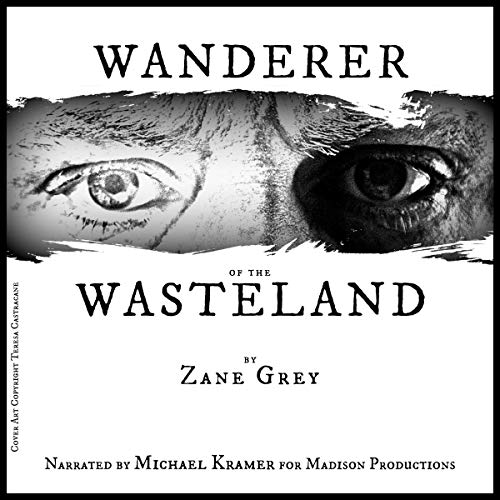
"Wanderer of the Wasteland" by Zane Grey--Fiction Review

We’re heading out to the old west today, Obscurists. Today’s book is Zane Grey’s “Wanderer of the Wasteland,” which was suggested to me by Kate Reading—no joke—that Kate Reading for those of you who are audiobook fans. Kate Reading, who has actually done tons of real stuff and narrated a mountain of awesome books! 

She also took the time to suggest to some obscure blogger—who primarily talks to himself on the internet—a book, this book, read by her husband Michael Kramer, another fantastic narrator. Sure, this interaction happened because I miss-attributed another book read by Michael Kramer on Twitter to @Kramer_Reading their joint account, which is primarily managed by Kate. Still, lesson learned, and by apologizing, I got to read this book, so it was a great mistake to make.

Zane Grey


***The Non-Spoiler part of this review***


What I love about this book:

Something about the desert is fascinating—I’ve never actually been to one, but I’ve read many stories and nonfiction books that feature them. It’s one of those archetypical foreboding landscapes. The land where no one belongs. Right off the bat, I was drawn in by this novel’s setting, even though I can’t begin to count how many westerns in one form or another I’ve consumed over the years. So far, I’ve never grown sick of them.

Ultimately, “Wander of the Wasteland” is a survival story—but not just in the sense of the body. It’s also a survival story of how the main character retains his humanity, even in the starkest wilderness imaginable, despite it, or maybe because of it.

This next point is a minor spoiler, but it’s also really inciting action that gets the story rolling and is in most summaries of the novel. So I feel it’s fair game. Ok? Ok. 

“Wander of the Wasteland” takes a famous biblical story plotline—that of Cain and Abel—and turns it on its ear. It imagines a story of, what if Abel killed Cain instead of the other way around? It makes for an exciting thought experiment, and I thoroughly enjoyed the concept.


What I don’t love about this book:

This is a novel published originally in 1923 about the old west, and Grey certainly had—let’s say—thoughts about women. Some good, some romantic, others were weird, but mostly his views about women were just ignorant. When he wrote the novel, I don’t think back then he would have been considered controversial for his views or even was considered to have poor taste. Still, the world moves on, and it certainly moved on from the cultural reference frame he lived in while creating his classic stories.

As you might guess, since Grey’s novel has some antiquated views on women, it also features some out-of-date opinions on anyone who isn’t white. The noble savage routine is used a few times in this book, which probably seemed progressive when it was published. You can almost hear someone say in old-timey racist talk, “see here now, fellas, some of these Mexicans and Natives are like people—they’re the good ones.” That flavor of racism.

So I’m odd because I like biblical allusions in stories or events in a novel seemingly informed by scripture, but as for actual bible talk—pretty bored. It’s not even talking specifically about the bible that loses me. I can do that just fine. It’s the constant reading of God’s intentions in everything, no matter how mundane. As if that person knows. I’m not sure when this belief that God is like our own personal invisible friend became popular, but I’ve never got it. What I’m getting at is there are some preachy moments in this book, and outside of character building—it was fine—I guess.


This preview is an Amazon Affiliate link; 
as an Amazon Associate, I earn from qualifying purchases


***The Spoiler part of this review***
***Ye be warned to turn back now***


The quick and dirty synopsis:

The novel starts with Adam Larey taking off, swearing that he’ll have nothing further to do with his brother Guerd. Adam is going to go make his own way out west.

Monday, April 26, 2021

Micro Mention "The Martian"

Andy Weir


While I loved R.C. Bray’s narration of Andy Weir’s “The Martian,” I am also a big fan of Wil Wheaton—so now I own both versions, and if I’m honest, I think Bray did it a little better… sorry, Wil.

I think what's happened is I'm so biased by how much I enjoyed the initial audio version of "The Martian" with Bray as narrator that I was unconsciously prejudiced against Wheaton's performance before it even started. So, I've considered that there is a possibility that if I had heard the Wheaton version first, maybe it would be my preferred version of this audiobook. 

But! To play devil's advocate against that point, Wil Wheaton is an immensely talented guy who does many different things. Primarily, though, I'd say he's an actor, which certainly gave him a leg-up voice acting out this book, but RC Bray's whole bread and butter is his talents as a voice actor. To me, at least, there seems to be a whole depth of skills when just using your voice to act out a story that Wheaton hasn't quite sharpened yet to the same level. In short, Wheaton's acting skills are more generalized while Bray's are more specialized to this task.

If you'd like my full review of "The Martian" you can find it here.


This preview is an Amazon Affiliate link; 
as an Amazon Associate, I earn from qualifying purchases.


Friday, April 9, 2021

"The Martian" by Andy Weir--Fiction Review

Like with my “Red Rising” review, let’s return to Mars, obscurists! Today I’m talking about Andy Weir’s fantastic hard science fiction novel, “The Martian.” 


Andy Weir


***The Non-Spoiler part of this review***


What I love about this book:

“The Martian” might be the greatest hard sci-fi I’ve ever read—sorry, Arthur C. Clarke—because Weir is excellent in a dimension that most authors within the subgenre struggle with, and that’s character development. His protagonist, Mark Watney, isn’t just a guy you’re rooting for but is also really funny along the way—kinda impressive considering the whole being stranded on Mars thing.

Weir goes above and beyond on the technical details of how everything works on a Mars mission, which is what you would expect for this subgenre. Watney has a way of explaining material that could have been presented incredibly dry and makes it interesting in his own mixture of serious yet goofy style.

Clearly, I’m partial to space stuff, and this book is so—so much fun as an interplanetary adventure/survival story. Think “Hatchet” but with an adult and on Mars, which I guess is kinda like saying think, “Robinson Crusoe,” but on Mars—and fun fact “Robinson Crusoe on Mars” is actually a Sci-Fi movie from the 1960s. Anyways, Robinson Crusoe, the literary character, always came off to me as a bit of a dickhead, so I prefer the “Hatchet” but on Mars comparison. In any case, the high concept is: an uncommonly self-reliant person has to use their wits to survive in a hostile environment for a long, long time with limited tools. It’s a story archetype I’ve always liked.  


What I don’t love about this book:

So I’m an audiobook fan—as I’ve mentioned ninety billion times—and I love this book so much I actually own two different audiobook editions of this book. The latest version, and the only one currently available in English on audible.com, is read by Wil Wheaton—who I love, yes even when he was Wesley Crusher—I’ve listened to many an audiobook narrated by him. He’s got talent, which makes this next part awkward for me, but R.C. Bray—who read the older edition—did a better job. I think that performance really adds an extra dimension to audiobooks, which is why I like them so much. The fact that unless you already own that version, you can’t buy it today, while it doesn’t impact me personally, still kinda irks me. But who am I to question almighty Amazon.

I have few complaints about the story’s narrative—the pirate-ninjas thing garners a chuckle the first few times you read it but quickly becomes tedious.

I noticed that while Weir’s character work with Mark Watney was excellent, and the NASA administrators/engineers back on Earth were compelling. Mark’s crewmates on the Hermes shined a little duller than the others. Martinez was great, but Dr. Beck and Commander Lewis were OK. Lewis’s big trait is she likes old music, and Dr. Beck is the guy who fell in love with his crewmate, and he’s also the professional other-guy on the team. I’m forgiving of this shortcoming, though, because it’s hard to hit home runs on every single character, especially when there are so many of them. 


This preview is an Amazon Affiliate link; 
as an Amazon Associate, I earn from qualifying purchases.


***The Spoiler part of this review***
***Ye be warned to turn back now***


The quick and dirty synopsis:

The book starts with us reading Mark Watney’s Mars log right after he’s stranded on Mars when the crew had to abort the mission because of a storm. Mark was thought killed in the storm when he was hit by an antenna and lost in the sand. His crew tried their best to find him, but the sensors said his vitals had ceased, and their assent vehicle, and the only way off Mars, was about to tip over in the wind at any moment.