Showing posts with label Circe. Show all posts

Saturday, August 13, 2022

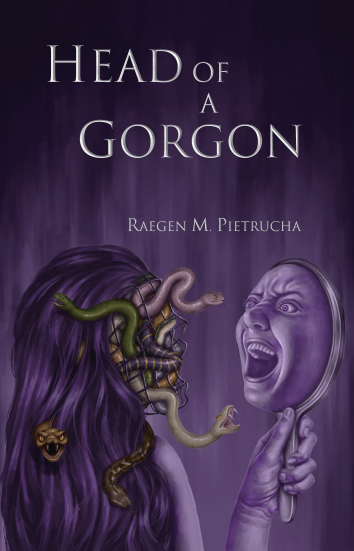
"Head of a Gorgon" by Raegen M. Pietrucha--Fiction Review

Today Obscurists, we’re diving into another book on poetry. Full disclosure—these poems and the overall narrative of this book touch on violence, sexual and otherwise. It also involves mental health, including straying into the realm of suicide ideation, so it’s worth keeping that in mind before picking it up. Besides that, “Head of a Gorgon” by Raegen M. Pietrucha is thought-provoking and visceral.

Raegen M. Pietrucha


What I love about this book:

Succinctly put, “Head of a Gorgon” is an incredible read—it’s short, so I flew through it in one sitting, but I also felt compelled to re-read portions of it again, more than once. 

I’m a sucker for anything touching on Greek myth ever since I read Madeline Miller’s “Circe,” which I’ve also reviewed. Pietrucha’s work hits in the same vein as that novel—reimaging a female character from classical myth as someone more complicated than a straight villain—while approaching the subject from a wildly different angle.

I found myself enjoying the structure of this book—a narrative told through poems—it got me to do two things I seldom do; first, I read a physical paper book with my terrible eyes, and second I read a poetry book which is always a challenge for me. Overall, still a rewarding experience. 

From start to finish, it’s hard to put down or even take a break from because each bit is laser-focused and leads right into the next one. So quickly, I would find myself on the treadmill of, “well, I’ll just read one more poem,” and then it would be another one after that, and after that, and so on and so forth.


What I don’t love about this book:

As much as I enjoyed this narrative approach to poetry—it’s still poetry. So it’s a stretch for me, and I need to be in the right frame of mind to enjoy any poetry. I’m constantly battling the feeling when reading it that I just don’t get it, and it’s going over my head. 

Poetry is one of those creative forms of writing I wish I were better at writing and enjoying, but people can also hope for wings. My attempts all come off as artificial to myself. So really, these are more things I’m disappointed in myself than “Head of a Gorgon.” Ultimately, I found the experience of this book sublime, even with its darker moments. Since it slots into a section of literature I’m not all too familiar with, it’s difficult for me to grasp onto anything to critique. My experience was pretty uniform from start to finish; I was pleasantly surprised.


Author’s Website: https://raegenmp.wordpress.com/


Analysis:

While I’m sure almost everyone in the world knows who Medusa is, still knowing a bit about Greek mythology adds immeasurably to the experience of these poems. For instance, when the conversations between M and P are happening, it’s obviously helpful to know Medusa’s story to deduce who P is in this context. But less obvious is—there are a lot of references to water in these poems, and at first, that might seem confusing because Medusa isn’t the same snake-like monster as Scylla, who spent her time munching on sailors like Odysseus’s men. But, if you know Medusa’s parents and how prominently M’s parents play a role in these poems, especially at the beginning and the end—the references to water make much more sense.

I also liked the shedding skin sections—in theme and style. It’s a clever call back to earlier poems in the narrative of this collection presented through deconstruction to change the meaning of those earlier poems. It had to have taken some serious planning to execute.


Parting thoughts:

In literature, there are a lot of women who get short shrift, especially in myths. For as much as I find Greek mythology fascinating, women had few roles, and in Scylla, Circe, Medusa, and Calypsos cases—to create a short list—they are often antagonists our male heroes have to overcome. If they aren’t dutiful wives—then they’re witches, seductresses, or straight-up monsters, with no in between.

The real power of a narrative like in “Head of a Gorgon” is to take that negative persona and flip it on its ear. It wasn’t until the modern era—as far as I know—that anyone considered the qualia of what it was like to be in Medusa’s head, or any of them for that matter.

I believe that context matters—with context comes understanding and empathy. Redefining these ancient characters’ context is creative and breathes new and better life into them. I think that is the heart of what I liked the most about this book and others like it.

Tuesday, November 30, 2021

Talking In Obscurity, "Circe," by Madeline Miller

Madeline Miller


Or Download This Episode Here:


Ok, Obscurists, we're at the end of another month, so it's podcast time. For this one, Steven and I talk about "Circe" by Madeline Miller. This book is a wonderful modern reimagining of a minor character from "The Odyssey."

I am proud that at no point in this podcast did I fall back on my over-used explanation that it's like "Wicked" but with Greek Myth. Of course, I just did that here, so... clearly, I can't help myself. In any case, if you'd like to read my full review of this book, you can find it here.


This preview is an Amazon Affiliate link; 
as an Amazon Associate, I earn from qualifying purchases.

Author's Website: http://madelinemiller.com/

Wednesday, February 17, 2021

Micro Mention "Classical Mythology"

Elizabeth Vandiver


I have been on a whole mythology kick for a while now, and I've found that "Classical Mythology" from the Great Courses lectured by Professor Elizabeth Vandiver was very useful for background information when I was reading "Circe."

This course is a great place to get a boilerplate understanding of myth in the western literary canon. The Greek and then Roman traditions would help shape later luminaries such as Shakespeare, Milton, Alighieri, and too many more to list here. So if your aim is to enhance your understanding of the earliest works of the western literary canon, like those writers, this course might be a good start.

Monday, February 15, 2021

Micro Mention "Circe"

Madeline Miller

"Circe" by Madeline Miller was the greatest book I read last year. I even wrote a full review of it here in case you missed it.

This cannot be an original observation, but it works and tugs at the heartstrings much in the same fashion as Wicked. Circe, by far, isn't one of the most celebrated goddesses of Greek Myth. Often she's referred to as a clever womannot a compliment in ancient Greek societyand an evil sorceress who famously turns men into pigs.

Miller, much in the same spirit as Gregory Maguire in his novel, explores the why of Circe's seemingly "evil" actions. Without giving too much away, it's unsurprisingly because people are douchebags to her, and she's defending herself. This is a clever story beat because it underscores the depressingly common narrative of blaming the victim.


This preview is an Amazon Affiliate link; 
as an Amazon Associate, I earn from qualifying purchases.

Author's Website: http://madelinemiller.com/


Friday, December 25, 2020

"Circe," by Madeline Miller--Fiction Review

Merry Christmas! Did I review a book relevant to the season? No, of course not! Instead, let’s talk about Madeline Miller’s “Circe,” a reimagining of Greek myth from the witch of Aiaia’s perspective.  


Madeline Miller


***The Non-Spoiler part of this review***


What I love about this book:

This was my favorite book I read all year. It’s part of the reason why I selected it for my final review this year. “A Song of Achilles” was good, but Miller blew me away with “Circe.” 

My favorite part—and this is a tiny bit of a spoiler here—are all the early scenes with the goddess Circe as a single mother. Not inherently a funny book, Miller presents the shock of raising a mortal son for a goddess as something both breathtakingly sweet and funny, because Circe who requires no food or rest to live, is still exhausted by motherhood. 

Circe, like a lot of women—even goddesses—in Greek mythology, gets a pretty bad rap. To see her image reimagined and rehabilitated by Miller in “Circe” is a really cool update. I’ve said this before, but for me, it hits all the same notes as Elphaba’s story in “Wicked.” We learn through the course of this book that Circe isn’t just some witch who turned men into pigs, and Odysseus shacked up with for a while—I mean, she is those things—but also so much more. 


What I don’t love about this book:

Circe’s family because they all range from apathetic to malevolent pricks. This is a bit of a cop-out here because I wouldn’t change a thing here with their characterizations; them being awful is what creates the contrast for us to see how Circe is different. 

Miller can be wryly funny, in that dry sort of way as underscored in Circe’s adventures in motherhood, and once I read that chapter, I thought, why isn’t every chapter like this? Ok, maybe that’d be a bad idea because this story is more of a drama about finding oneself and the nature of a life well-lived—but still, a bit more of that humorous tone could have found its way into this story. I was surprised by it because I don’t remember Miller exercising those muscles at all in “The Song of Achilles.” 


This preview is an Amazon Affiliate link; 
as an Amazon Associate, I earn from qualifying purchases.

Author's Website: http://madelinemiller.com/


***The Spoiler part of this review***
***Ye be warned to turn back now***


The quick and dirty synopsis:

Circe begins her story with a brief introduction of who and what the Greek Gods are and who her parents are—the great Titan of the sun Helios and the nymph Perse. She also explains the war between the second-generation gods—the Olympic gods—and the Titans. Like Circe’s father, some of the Titans threw their lot in with Zeus in the war. In doing so, they were spared the rest of the Titans’ fate, namely, being banished to the underworld. After the war, there was distrust between the gods, and in the society of gods, the Olympics were firmly the ruling caste. That means the remaining Titans were just as solidly second class, and the tension between the groups was constant.