Showing posts with label Gay. Show all posts

Friday, January 21, 2022

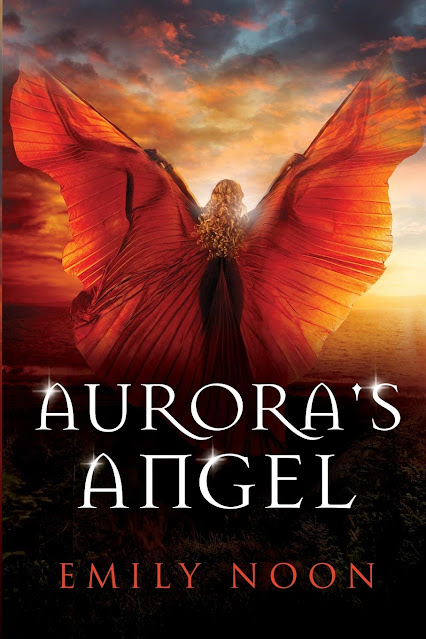
"Aurora's Angel" by Emily Noon--Fiction Review

What a way to start this year off with Indie reviews! “Aurora’s Angel” by Emily Noon is a dark fantasy romance novel that is revelatory. It’s also an LGBTQ+ sort of novel, so it’s nice to see a good book serving an underserved audience.

Emily Noon


***The Non-Spoiler part of this review***


What I love about this book:

Right from the beginning, this book is intense. There is an escape scene with lots of shooting, and then it shifts quickly into a survival story. Noon leans into the dark descriptor of her fantasy pretty hard, and there is a visceral quality to her combat scenes that is equal parts satisfying and disquieting. That intensity isn’t just present in the fantastic elements of this dark fantasy romance, either. The romance is a real grip you by the heart—claws first sort.

It’s worth mentioning it’s a romance between two women, and if that’s going to be a problem like I said in my review of “The Song of Achilles,” how about—try growing up? Ok? Ok. 

How Noon realizes her principal two characters of Aurora and Evie is sublime. They’re deeply complex women with distinct character voices who have many admirable qualities. But they also have defects and blind spots to their characters that make them feel authentic. It’s effortless to fall into the suspension of disbelief with them and mentally treat their story as if it were happening to a real person that you know. Plus, they make for exciting chemistry in a romance.

There are virtually no introduced elements—no detail so small—that aren’t impactfully used in the plot of this story. Overall the plot is very tightly organized. Story problems are introduced in immediate, short-term, and long-term flavors, and solutions are then rendered at the appropriate times.

A lot of attention to detail was given to the dialogue in this novel—and each conversation shines with that effort. When the characters talk, it feels as natural and intimate as any good conversation I’ve had in my life.


What I don’t love about this book:

So there is something that I call the cotton candy effect—or well, there is now, I now call this the cotton candy effect—and the surmise is simple. There is such a thing as too much of a good thing. Which yes, I get that I just added an extra layer to a cliché, and this seems like stalling because it is—but there is a lot of talking in this book—like—a lot, a lot. 

I know I just said I like the dialogue in this book, but I wish there was less of it. Let me explain; much like my favorite carnival confection—after funnel cake and deep-fried Oreos—I love cotton candy but only for about a third of the bag, maybe half if I’m going wild. I’m not saying that half of the dialogue could be dropped, that would be too detrimental, but still, it feels like there could have been more streamlining. This isn’t just with the talky bits, either. There are plenty of elaborately detailed meal scenes, too, more than enough. Other elements get overused beyond those examples, but I feel that the point has been made: there is a lot of indulgence in this novel. 

This leads me to the length of this book—for a twenty-hour experience, there are actually very few locations explored by the characters. To use another fantasy author as an example, Noon has a very Brandon Sanderson-Esque meander about her. If you like that quality for its intimacy, then this is great. I, on the other hand, am very much the kind of fantasy story reader that is constantly asking, “Hey, what’s over there? Are we done here now?” 

While the protagonists of this book, and their orbit, are fleshed out with nuanced and sometimes contradictory motivations and backstories—the antagonists are not. They’re all mustache-twirling dickheads. Except for one avian woman, who, lacking a mustache to twirl—an assumption—is given more of a treatment and, while still eighty percent villain, manages to be sympathetic.


This preview is an Amazon Affiliate link; 
as an Amazon Associate, I earn from qualifying purchases

Author’s Website: https://www.emilynoonbooks.com/


***The Spoiler part of this review***
***Ye be warned to turn back now***


The quick and dirty synopsis:

Aurora discovers a band of black market traders in a mine, known as cutters, that do precisely what they sound like they do. They cut people up and sell their body parts. Well, specifically, they chop up shapeshifters. Aurora, a powerful shapeshifter, has a special hatred for cutters, the details of which are revealed later in the story. Anyway, she exacts some vengeance and frees some captives, including an avian woman named Evie.

Friday, June 5, 2020

"The Song of Achilles," by Madeline Miller--Fiction Review

Hey, it’s June, it’s probably warm out, I don’t know I wrote all of these reviews prophetically during the last ice age some 12,000 years ago. Anyway, why don’t we talk about today’s book, “The Song of Achilles” by Madeline Miller, which is a reimagining of the Greek classic “The Iliad.” The novel is from the perspective of Patroclus, who in “The Iliad “ is Achilles’ “friend.” 

Madeline Miller


***The Non-Spoiler part of this review***


What I love about this book:

Madeline Miller might be one of the best writers I’ve ever read. Her language choice is precise in a manner that is so sharp you feel cut by it as if it were a scalpel. The prose of the story has a hypnotic quality that she uses more to paint the story rather than tell it. 

Her use of the first-person perspective is bold, but it also evokes the feeling of an oral tradition like how “The Iliad” and “The Odyssey” were originally presented in Homer’s day. This, although every translation of either of those two stories, is always done in third-person. Even “The Odyssey,” which is named after Odysseus, isn’t really from any one character’s perspective like Miller’s “The Song of Achilles.”

I also enjoy her take on the characters of this classic Greek mythos. She does justice to Odysseus, who is only a minor character in this story, but if you’ve read my “The Odyssey” review, then you know I’m ride or die with my boy Odysseus. Where Miller shines in her character work is her use of irony when developing the character of Achilles—or at least through the eyes of Patroclus, who is passionately in love with the man. So there may be some tint there.

Sidebar: Achilles and Patroclus are in an intense homoerotic relationship throughout this novel, so if that’s going to be a problem for you as a reader, then maybe bow out of this one, or I don’t know, grow up. Gay people are real people too, who have equally valid intense love affairs as heterosexuals.

Anyway, back to irony and how it applies to Achilles, the most obvious of his ironies is how we remember the Aristos Achaion—best of the Achaians as Miller stylizes him—in the contemporary idiom Achilles’ Heel. Achilles is supposed to be the mightiest, fiercest warrior, and his name evokes weakness—a specific kind of weakness sure, one that is both singular and unexpected, but still a weakness. Everyone who speaks English as a first language has used or heard the idiom Achilles’ heel, and Miller does the interesting thing and almost completely doesn’t address that aspect of him. No, the ironies she explores in this novel are more profound. Achilles, as a man, is gentle, soft-spoken, honest to a fault, and before the Trojan war, was rarely violent. In fact, he seems to respect life genuinely. The irony is he’s also the greatest killer ever.      


What I don’t love about this book:

Lots of lead time before the events of “The Iliad” in this retelling of “The Iliad.” We spend time with Patroclus as a baby. Then as a boy with a simpleton for a mother and a tyrant for a father. Further along, but still mired in Patroclus’ past, as a slightly older boy, we see him as a suitor at the gathering where Helen chooses her husband. Minor spoiler here, it’s not Patroclus as you might have guessed. Finally, there is a scene where some boy decides to take something of Patroclus,’ and a fight ensues where Patroclus stands up for himself and accidentally kills the boy. Then he gets banished from his father’s kingdom—all that has to happen first before we ever really meet Achilles, the guy the novel is named after. Then there are even more goings-on until we finally get to the bit where it picks up with the goings-on of the “The Iliad” at about halfway through the book.

My point is, “The Song of Achilles” takes a bit to get to the main action of the story. While the preceding scenes are excellent character building—for the main characters—it does also involve a lot of characters you’ll never see again once the boys head off to Troy. So you have to learn another cast of secondary characters as well in the second half of the story.   


This preview is an Amazon Affiliate link; 
as an Amazon Associate, I earn from qualifying purchases.

Author's Website: http://madelinemiller.com/

***The Spoiler part of this review***
***Ye be warned to turn back now***