Showing posts with label Indie Author. Show all posts

Friday, September 30, 2022

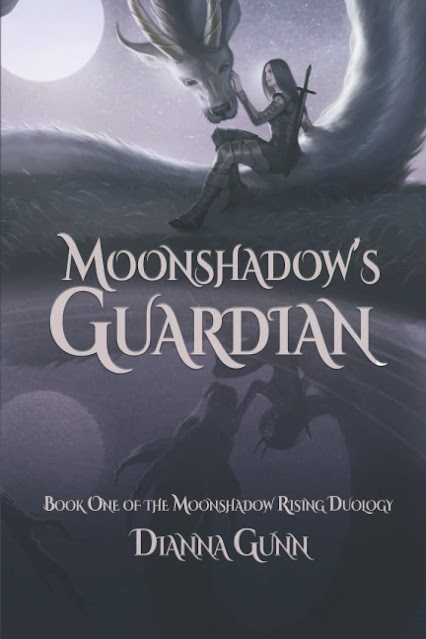
"Moonshadow's Guardian" by Dianna Gunn--Fiction Review

Today Obscurists, we’re taking on a fantasy horror story, “Moonshadow’s Guardian” by Dianna Gunn.

Dianna Gunn


What I love about this book:

The first thing I love about this book is that Gunn’s main character Riana is a super long-lived character, and there are several other similarly long-lived characters in this story that I think Gunn depicts uncommonly well. I’ve said on this blog before that it’s tricky to depict a character who has lived for centuries or even millennia—and make them feel as though they’ve lived for thousands of years. Gunn, though, without bringing the narrative to an absolute standstill, makes it clear that Riana has lived multiple lives over the long years.

I rather enjoy the moral complexity in this story. None of the principal characters are pure good or evil—even the story’s chief antagonist. Mind you, straight-up evil shit does happen in this story, but the perceived correctness or wrongness of the character’s actions are subject to debate, and the morality of their choices, combined with their motives, is a matter of point of view. No one in this story holds a moral high ground above the other characters. 

The consequences in this story are sudden and harsh, which takes a bit of fearless writing to not just hurt one’s darlings but murder them, and I appreciated that quality in Gunn’s writing. Punches are definitely not pulled in this story.


What I don’t love about this book:

I often say that using a first-person perspective is a bold choice, and this novel is in first person. Other than a few key emotional moments that could be argued justified the creative choice—I didn’t feel it added much. To play devil’s advocate, though, the first-person perspective certainly facilitated people reminiscing about the past. Building off that point, if you’re not a fan of flashbacks, well, tough news, lots of flashbacks in this story.

I appreciate an excellent dark and brutal story as much as the next person. What I often find to be wearying are drawn-out torture scenes. There are a few of those in this story, too, especially when it comes to Riana’s memories of the demon realm or the compulsion. It’s not the violence that gets me. I’m just bored by anything that feels like a kid with a magnifying glass and an ant hill.


This preview is an Amazon Affiliate link; 
as an Amazon Associate, I earn from qualifying purchases

Author’s Website: http://authordiannagunn.com/


***The Spoiler part of this review***
***Ye be warned to turn back now***


The quick and dirty synopsis:

Our story begins with a little girl and her mother on a mysterious journey. It doesn’t go well after the mother tells her daughter that she is actually the daughter of a god and is, in fact, a demon. Soon she will transform into her true form. Despite her mother’s best magical efforts, her daughter breaks loose from the binding and kills her mother after transforming.
Saturday, September 17, 2022

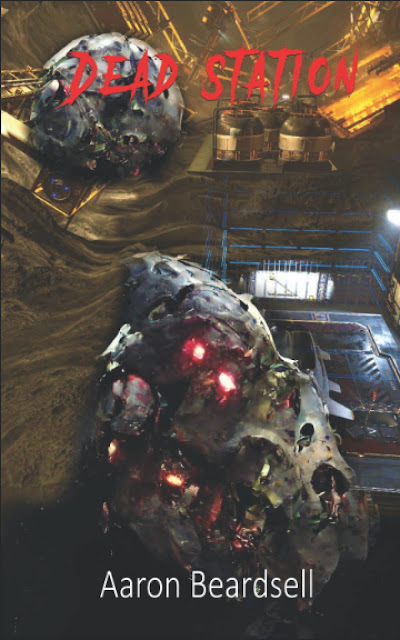
"Dead Station" by Aaron Beardsell--Fiction Review

Tonight Obscurists, things go bump in the stars! Gear up for a sci-fi horror story with Aaron Beardsell’s “Dead Station.”


Aaron Beardsell


What I love about this book:

“Dead Station” was pitched to me as a mix between “Alien,” “Event Horizon,” and “The Thing,” three sci-fi horror stories I absolutely adore—and Beardsell, one hundred percent, hits those notes pitch perfect. For better or worse, a lot of genre fiction is marketed by what it’s like. A lot of the time, the first question about a story is, “what is it like?” And to be honest, it’s usually an interpretation of whether or not a story is “like” another story or not. So it’s genuinely impressive how laser-like accurate Beardsell is on what “Dead Station” is like.

What “Dead Station” is, is a short story collection. And as with any talented short story writer, I’m jealous. In my fiction, my attempts at short fiction tend to balloon on me. I’m often reminded of the Abraham Lincoln quote, “I could write shorter sermons, but when I get started, I’m too lazy to stop,” never mind if he actually said that or not, I like it, and it reminds me of my plight. Beardsell pulls off all the essential qualities of a plot in each story and does it with brevity and style. 

This next point is minor spoiler-esque, not anything to spoil the plot, but more character motivation that I need to bring up. I have often said that I like my human antagonists to have motivations and my Lovecraftian nightmare monsters to be unknowable. That’s the rule I live by, and “Dead Station” flat out defies that preference of mine, and god damn it if I didn’t fucking love it. We get a peek into the ultimate-terror-from-beyond-the-stars’ mind, and, from its perspective, it feels like it’s being friendly. It’s bringing people together—making friends—and that childlike exuberance is terrifying. “Dead Station” is an object lesson that rules are great to know, but if you’ve got a good angle on something—break whatever rule you need to achieve that effect.


What I don’t love about this book:

The human characters we follow through these short stories are great quick sketches, but that’s all they are, partly due to the short story form, so there isn’t much that could be helped there. Every time I felt I was getting in a groove with a character, learning who they were and how they thought, that story was about over. The ultimate effect is none of the human characters achieve much of an emotional response from me.

It’s eluded to that there is a company a lot like Weyland-Yutani in this universe, and I never understand how these companies grew to such power to supposedly control everything. These sci-fi horror story companies choose evil at each step, even when it doesn’t make sense. It’s the Umbrella Corporation conundrum, as I call it. For instance, how does Umbrella keep getting investors? Because their primary preoccupation seems to always be; to build a secret illegal bioweapons lab underneath everything, have the laxest laboratory procedures to guarantee an accident, and get 99 percent of their workforce killed. Repeat. Not the most effective business model. And sure, real companies can be evil too, but they’re typically much better at least pretending they’re not. So it’s not my favorite trope.


This preview is an Amazon Affiliate link; 
as an Amazon Associate, I earn from qualifying purchases


Analysis:

“Dead Station” is an extremely quick read, a fantastic time burner if you need one. Beardsell clearly has bigger ideas for this universe, but don’t expect them to be fully fleshed out in this collection.

Overall, these stories know what they are and embrace their core concept. There aren’t any sub-plots, extraneous detail, or character study—it is a straight arrow of high concept. Each story rolls out precisely on message. The first is a mysterious dead station from which a desperate crew needs to get supplies; horror ensues. The second is another station from a child’s perspective while the initial horror is ongoing. The third is a dogfight in space against a Lovecraftian-style horror. There is also a bonus story. 

Like the stories it’s compared to, expect quick and terrible violence. Beardsell’s distinctly clinical style makes his narrative especially sharp, which serves his overall aesthetic of to-the-point storytelling.


Parting thoughts:

I love sci-fi horror. It might be my favorite sub-genre. So I’m easily sold on stories like “Dead Station.” But it’s a hard sub-genre to pull new readers into; usually, they will be recruited from people who are already fans of sci-fi or horror.

Fans of such macabre stories tend to be enthusiastic about their favorite stories and love talking about them. But the community is rather insular, which I think is a holdover tradition from both parent genres of science fiction and horror.

If you want to write a sci-fi horror story, great! I think Beardsell proves that with keen insight and clarity, these kinds of stories can be quick successes with a cult audience.

The appeal to the broader mainstream, though, is, and always has been, even back to Lovecraft’s day—rare. 

I’ve often lamented this issue with horror stories in general, and it feels all the more true for the sub-genre. There are no actual examples of stories or authors in this subgenre that have lit the world on fire like Tolkien did for high-fantasy with “The Lord of the Rings.” “Alien” or “The Terminator” might come close. Also, I think a pretty good argument can be made for “Godzilla,” but they’re still not as iconic as, say, “Batman” in superhero fiction or “Harry Potter” in children’s Fantasy. Also, each of my examples are movies with a whole visual component to them that a novel—at least at first—lacks.

It’s not that I think it’s impossible to do—fear and the drive to survive are perfectly valid core emotional structures to build a narrative off of since they’re universal. I just don’t think it’s ever been done before. It is interesting to imagine what a sci-fi horror story that reaches cultural saturation would look like.


Saturday, August 27, 2022

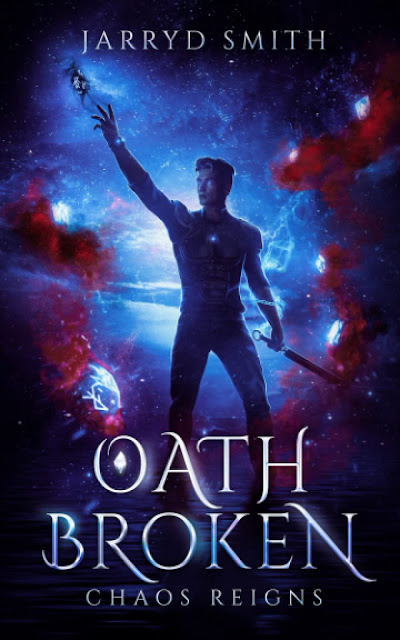
"Oath Broken" by Jarryd Smith--Fiction Review

This evening Obscurists, we’re diving into an urban fantasy novel with Jarryd Smith’s “Oath Broken.” It’s a fantasy story with a big central mystery and a lot going on in the outskirts. 


Jarryd Smith


What I love about this book:

“Oath Broken” has a distinct urban fantasy style that should appeal to anyone who likes books like “The Dresden Files.” Magic and fantastical creatures are just on the fringes of society, blending into everyday life. It’s a cool atmosphere, in my opinion. 

Smith does an excellent job at making the world of “Oath Broken” feel big, with many entities with their own agendas going about their business. I appreciate the sense that the world of this novel doesn’t seem to pivot on the main character or his problems, which I think is a subtle art a lot of storytellers get wrong. Kaleb is the protagonist of this story, but he isn’t the alpha and omega of this universe. He’s just another guy who lives in the world, a talented guy, sure, but one among many.

In other posts, I’ve mentioned this numerous times—I’m a sucker for a good action scene, and Smith doesn’t disappoint in this book. The various fantasy-style showdowns in this novel are all distinct in what’s going on. The ebb and flow of the battles that take place have their own character, so they never become repetitive or uninteresting.

Also, I appreciate Kaleb’s meticulous approach to what sorts of gear and equipment he brings into any situation—as a consummate wizard player in D&D, I value preparation over spontaneity any day.


What I don’t love about this book:

Everyone’s default communication style in this book is sarcastic disdain. Nobody seems to like each other or even can have a conversation without someone being utterly dismissive. It’s all—“that’s impossible,” “you’re a liar,” “you are useless,” and “why don’t you just leave?” 

That last one, I actually started to agree with thinking, “Kaleb, buddy, budgie, boopy, these people suck; why are you trying so hard?” At no point after Kaleb does something extraordinary or saves everyone for the 9th time that day in a heroic or self-sacrificial way does anyone ever say, “hey, thanks, Kaleb. Good Job. I guess I was incorrect in my assessment of you.” No, even right after Kaleb does something altruistic that directly refutes someone’s negative perception of him or his abilities, it’s still on the caliber of, “I hate you, Kaleb. I would say I hope you die in a fire, but I also think that might be too quick a death. Now, if you’ll excuse me, with zero self-awareness, I’m going to rush headlong into a dangerous situation—against your recommendations—that you will inevitably bail me out of later.” 

Other than that, my other dislikes are pretty trivial. There was some disconnect for me regarding what was going on with the prologue and epilogue characters and the main story. It was all ominous things are afoot and how that relates to anything is unclear and ambiguous.

Also, Smith could get stuck in explain mode for certain things: how they look, act, work, et cetera, et cetera. I get the explanations as world-building material, but I’m also disenchanted by world-building when it comes at the expense of the plot or its pacing.


This preview is an Amazon Affiliate link; 
as an Amazon Associate, I earn from qualifying purchases


***The Spoiler part of this review***
***Ye be warned to turn back now***


The quick and dirty synopsis:

After a prologue with death and various deities associated with death, doing—well, death stuff—the story opens with Kaleb going to a wedding. The bride-to-be is less than thrilled about Kaleb’s choice of wardrobe and makes it clear. But Kaleb is at the wedding as his friend Sam’s plus one and so makes the best of it. He even hits it off with a beautiful redhead at the reception named Alex, and they have quite the evening together…

Saturday, July 30, 2022

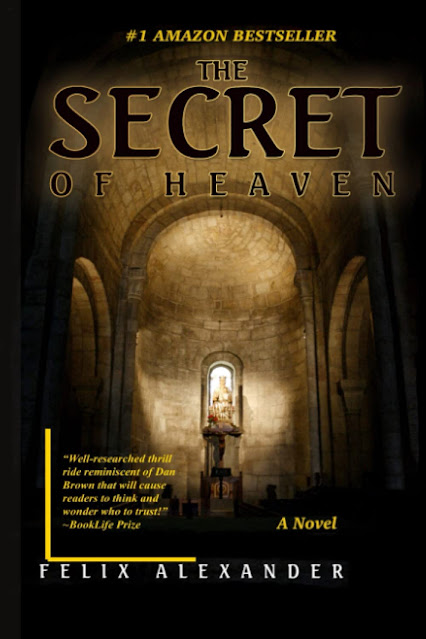
"The Secret of Heaven" by Felix Alexander--Fiction Review

Today’s book, Obscurists, is “The Secret of Heaven” by Felix Alexander, a historical religious thriller that revolves around theological controversies that span thousands of years.


Felix Alexander


***The Non-Spoiler part of this review***


What I love about this book:

Despite not being a religious person myself, I enjoy theological lore, albeit from a strictly literary and historical perspective. Right off the bat with his writing, it’s easy to tell that Alexander is well versed in this subject—more so than I am, at least. Which is one of the chief things I liked about this book because, even though it’s fiction, I got to learn new things. 

Undoubtedly a bit of Dan Brown in this book’s DNA, with even a sly nod and wink at Brown’s titular protagonist. Typically, I’m not the biggest fan of that kind of thriller/historical fiction and have to be in an odd humor to pick up such a book. Still, though, I’m glad I picked up “The Secret of Heaven” because it managed to surprise me by grabbing my attention early on and holding it all the way to the end.

There is no denying that it’s an exciting book. The characters are almost always on the move, and even in the rare moments they aren’t, the tension gets ramped up with every scene as more-and-more revelations come to light. This only makes the antagonists of this story even more deadly as they become increasingly desperate to find the lost bible.

Supernatural elements are present in this book, but I really liked how Alexander primarily played them off stage from the main plot.


What I don’t love about this book:

This world is lousy with secret societies doing—whatever secret societies do with their endless amount of free time and resources. I’m skeptical of secret societies in fiction that control the whole worldwide economy because—to put it delicately—people suck at keeping anything secret. So skeptical, in fact, that I find a secret society that has been masterfully kept to the shadows for centuries to be more fantastical than angels or dragons. That’s how little of an opinion I have of people being able to keep a secret.

At the beginning of this novel, which sort of just trails off, amnesia is introduced as a story element, and, yeah, like I said in my “Project Hail Mary” review, it isn’t one of my favorite story devices. In “The Secret of Heaven,” other than obscuring the details of how precisely Aiden’s mentor Lazzaro de Medici died, it doesn’t add much to the story. Basically, it goes, “ugh, who am I?” “You’re Aiden Leonardo, respected Professor of Biblical Studies, and this is your fiancé, who is also a doctor of archaeology, is incredibly beautiful, incredibly talented, incredibly smart, and incredibly fit with martial arts training.” “Oh, yeah, I guess I am Aiden Leonardo.”


This preview is an Amazon Affiliate link; 
as an Amazon Associate, I earn from qualifying purchases


***The Spoiler part of this review***
***Ye be warned to turn back now***


The quick and dirty synopsis:

Our story begins with the aforementioned amnesia-riddled Aiden finding out from his fiancé that he is the prime suspect in the murder of Lazzaro de Medici, Aiden’s mentor, and adoptive father.

Saturday, July 23, 2022

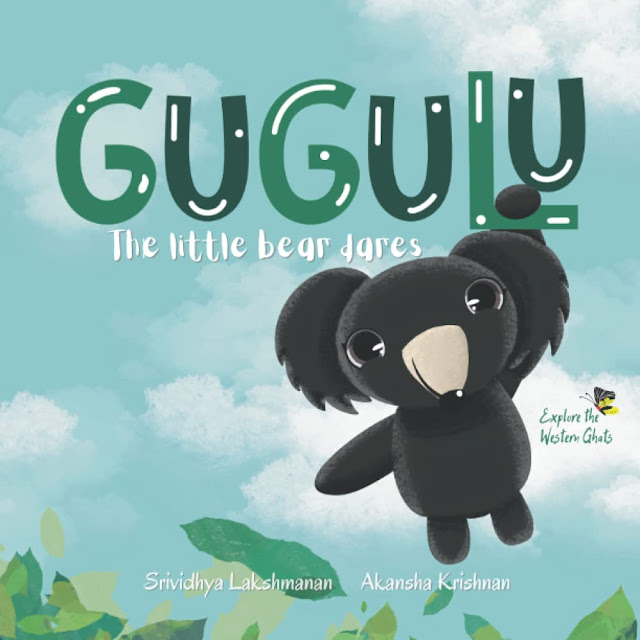
"Gugulu" by Srividhya Lakshmanan & illustrated by Akansha Krishnan--Fiction Review

We’re doing a new first today, Obscurists. Today I’m reviewing a Children’s book by Srividhya Lakshmanan and illustrated by Akansha Krishnan.


Srividhya Lakshmanan & Akansha Krishnan


What I love about this book:

So for this review, I’m eschewing my longer format with its likes and dislikes, analysis, and so on and so forth.

I’m only going to talk about what I liked about this kid’s book marketed for ages 4 through 8. Clearly not my typical demographic, and I don’t have any children, but if I did, I like to think it’s precisely the sort of book I’d read to them before bed.

“Gugulu” appeals to my love of animals because it’s a story about a naughty little sloth bear named Gugulu who really ought to listen to his parents. There is an explicit moral being taught here. Of course, he doesn’t and then finds out that the wild is no place for a baby—anything—to be out in alone.

I watch a lot of nature shows and documentaries, but I didn’t even know what a sloth bear was until I read this little book. Also, I should mention they’re primarily found in India, where I’ve never been. Sloth bears are shaggily cute animals that seem like a virtual no-brainer to be featured as protagonists of a fable. It’s hard to think of an animal more tailored to be a picture book protagonist—if you will excuse the anthropocentric bent of that statement.

But sloth bears aren’t the only animals we’re introduced to in this picture book. We get to see a pleasing number of animals that live in that habitat throughout the story. There is even a key at the end that gives some basic information about each animal.

A minimalist at heart, I found the illustrations to be of a simple and beautiful style which I enjoyed a lot. They’re bright and colorful. They also clearly convey what everything is and pair nicely with the cadence of the story.

Overall, “Gugulu” is a wonderful, albeit brief, experience. 


Author’s Website: https://www.andbooks.in/

Saturday, June 25, 2022

"Aestus Book 1: The City" by S.Z. Attwell--Fiction Review

Today, Obscurists, we’re traveling to the city—in S.Z. Attwell’s “Aestus Book 1: The City.” It’s a post-apocalyptic story where the status quo isn’t what it seems, and it underlines that in nearly every conflict, there are heroes and villains on all sides.


S.Z. Attwell


***The Non-Spoiler part of this review***


What I love about this book:

That ending! A lot goes down quickly, and it was like getting a jolt. The energy and tension suddenly crescendo at the end of the plot, and it’s been in my head since I finished reading “Aestus: Book 1: The City.” I’m of more than one mind about the end, but I’ll get into more later. Overall, I’d say I loved it.

I’ve brought this up in a prior review, but I like my post-apocalypse(s), in fiction, unexplained, hinted at, but never spelled out. This book pulls that effect off well. The end of the world probably came about because of runaway global warming, but the exact causes, timeframes, et cetera are left up to the reader’s imagination. The world is this way now, and the characters that inhabit that world don’t ever digress or pine for a long-lost world. They’re too busy surviving. No one has time to break into a soliloquy about the folly of humankind and bemoan the paradise lost.

Even though there were many of them, I enjoyed the characters in this novel. Attwell pulls off so many characters so well because there is clearly a defined core group and major and minor characters supporting that group’s story. This is partly achieved because “Aestus: Book 1: The City” is a long book.


What I don’t love about this book:

To reiterate from above. It is a really long book. And sure, there were a lot of characters to flesh out and give them their moment in the sun, but it also felt like every scene was at least twice as long as it should have been.

Also, I hated the uncle character from the jump. Nobody says “my dear” that much and isn’t awful. I don’t care—you get four or five “my dear(s),” and then you’re officially a wackadoo—yes, that’s the clinical term for it.

I like Jossey, our protagonist in this story. She’s intelligent, resourceful, and not afraid to take action. But she has some Katniss Everdeen levels of obliviousness when it comes to anyone—literally anyone—showing even a modicum of romantic interest in her. I get it’s an intentional character flaw that rounds the character and makes her seem more like a real person to give her this insecurity, but from a taste perspective, it’s an eye roller for me.


This preview is an Amazon Affiliate link; 
as an Amazon Associate, I earn from qualifying purchases

Author’s Website: https://szattwell.com/


***The Spoiler part of this review***
***Ye be warned to turn back now***


The quick and dirty synopsis:

We’re introduced to our protagonist, Jossey, through a childhood memory—not a good one. It was the day she was attacked when visiting the surface to see the moon. Her brother also disappeared during the attack.

Friday, May 27, 2022

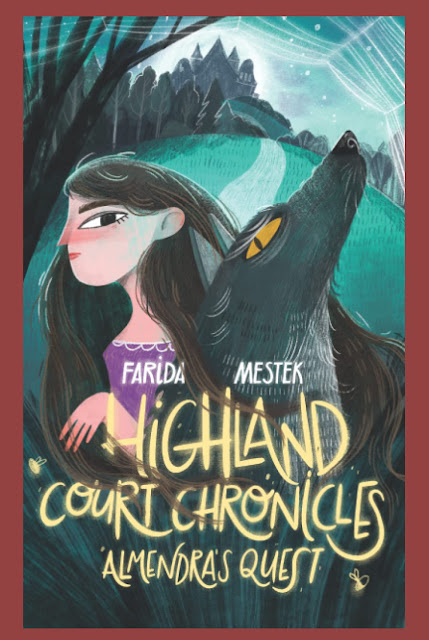
"Highland Court Chronicles: Almendra's Quest" by Farida Mestek--Fiction Review

Today, Obscurists, we’re plunging into a magical fantasy world where one young woman must step-up to save her kingdom—prophecy or no prophecy. We’re discussing Farida Mestek’s “Highland Court Chronicles: Almendra’s Quest.” 


Farida Mestek


***The Non-Spoiler part of this review***


What I love about this book:

I’m not giving away anything here that isn’t already in the sales copy synopsis on Kindle—but I like that the princess in this fairy tale with modern sensibilities isn’t content to just sit around and wait for her happily ever after. When Almendra is finally given a chance, she takes off from the enchanted castle on her own initiative to see what is wrong with the Prince, who the prophecy strongly suggests is supposed to be the one to save her. I like Almendra because she faces her problems head-on and accepts the consequences of her actions and shortcomings.

Mestek has a gift for whimsical locales that are typically equal parts charming as they are dangerous. While still at the enchanted castle early on, Mestek makes every place feel infused with magic, and even when the story moves to the Lowland kingdom, where magic is forbidden, magic still seems to slip in on every occasion.

I also liked the recurring lesson that decisions made in a moment of passion without forethought often have dire consequences, be that moment rage or panic. This sort of thing happens with protagonists and antagonists alike.

Also, as a sucker for dogs and really any cuddly-looking animal, I liked the animal companion aspect of this story that Almendra has with Woo.


What I don’t love about this book:

Speaking of Almendra and Woo, though, the nature of their relationship changes toward the end of the story in a way that would have pleased Ovid to no end. For me, though, my dog has seen me do many an unflattering thing, and now the idea that I might have to have a conversation with him one day about why I pick up so many objects off the ground with my feet—well, no thanks.

The shawlweavers as villains are certainly frightening enough, and motivation for power for its own sake is regrettably understandable, but that said, I don’t precisely get their bone-deep hatred for the high ladies. It’s the old they’re antagonistic because they’re antagonistic, self-fulfilling prophecy. 

This isn’t much of a complaint, but still, I found myself enjoying a lot of the early scenes in this book where Almendra and her Granny would but heads. You don’t quite get that in any other form through the middle to the end of the book. 


This preview is an Amazon Affiliate link; 
as an Amazon Associate, I earn from qualifying purchases


***The Spoiler part of this review***
***Ye be warned to turn back now***


The quick and dirty synopsis:

Our story begins with Almendra, her ever faithful wolf companion Woo, and her Granny going about their lives as the only inhabitants of an enchanted castle—waiting for a prophecy to be fulfilled. Almendra hates being idle, waiting for some prince to come to rescue her and her magical kingdom. Her Granny insists that their enemies, the shawlweavers, must have laid a terrible curse on the Upper Kingdom, which is why it is shrinking, and all the people have disappeared. And for all they know, if Almendra tries to leave, it might strike her down too, and as the last High Lady of the Upper Kingdom, she is too precious to risk.

Thursday, May 12, 2022

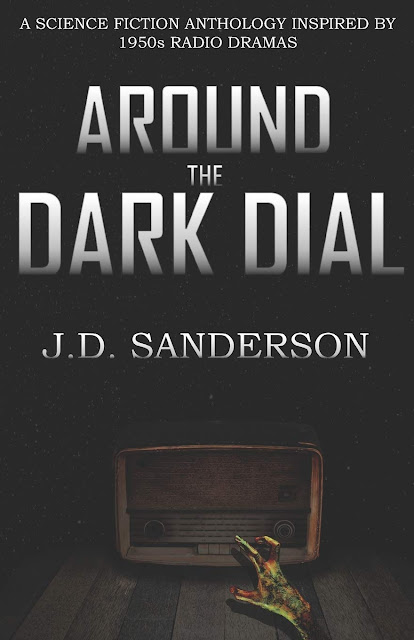
Micro Mention "Around the Dark Dial"

J.D. Sanderson


“Around the Dark Dial” by J.D. Sanderson genuinely surprised me more than once. And sure, I was precisely the right kind of target audience, but it taps right into one of the most incredible qualities of Sci-Fi, which is the demand for introspection from the audience. 

In my full review, I talked about how this short story collection reminded me often of my favorite formative sci-fi series, "Star Trek," and with the new show "Strange New Worlds," out—I recently had a conversation with someone that baffled me. Their complaint was essentially summed up as, and I'm paraphrasing, "ugh, remember when Star Trek wasn't about commenting on politics?"

My answer was no, of course. I also contend that what this person was terming "politics" was actually a commentary on society and further contend that all good sci-fi is in one form or another is social commentary. This has been true all the way back to Mary Shelley. It's what I love about Sanderson's book and the genre. That idea that things don't have to be the way they are and could be different, possibly even better. The arguments are baked right into the rhetoric of the stories.


This preview is an Amazon Affiliate link; 
as an Amazon Associate, I earn from qualifying purchases.


Friday, April 29, 2022

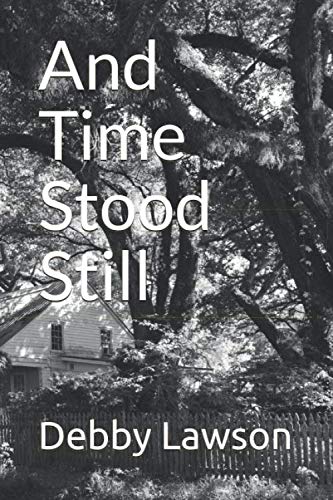
"And Time Stood Still" by Debby Lawson--Fiction Review

Time for a bit of a spooky story that is also a compelling narrative of a really dysfunctional family with Debby Lawson’s “And Time Stood Still.” 


Debby Lawson


***The Non-Spoiler part of this review***


What I love about this book:

I love gothic horror and family dramas—I really love a family drama blended with gothic horror, like Lawson’s book. It scratched an itch for me that hasn’t been satisfied for quite a while, and it reminded me a lot of the book that specifically made me love this particular sub-subgenre, which is “Blackwater” by Michael McDowell.

Like that story, Lawson can lull you into the drama of these characters’ lives to the point where you start to forget that supernatural shenanigans are afoot, and then bam! There’s a scary ghost in the bathroom.

To pull off that effect, though, the character work has to be excellent to draw you into their lives to the point you can fully realize them for who they are as people. And to that end, “And Time Stood Still” carries it off superbly. The enduring mysteries and challenges of Ms. Carine’s life had me pretty well absorbed from start to finish.


What I don’t love about this book:

Rarely do I find myself enjoying framing stories as a literary device all that much—I know, I know, I love “The Princess Bride” too, but the actual frame story in that movie doesn’t do anything for me. So, like that, this novel uses a significant frame story where most of it is Ms. Carine telling Danielle the story of her life.

Further, it’s disappointing to me that all the spooky stuff happens in the frame story and not the meat of the story. Still, it would have cut out a lot of the immediacy of the horror if all the supernatural stuff happened in the story being framed.


This preview is an Amazon Affiliate link; 
as an Amazon Associate, I earn from qualifying purchases


***The Spoiler part of this review***
***Ye be warned to turn back now***


The quick and dirty synopsis:

Our story starts off with Danielle reluctantly meeting a mysterious old woman at a medical center, and the two women strike up a conversation. Soon Danielle warms up to the conversation with the older woman, Ms. Carine, which eventually leads to an invitation for Danielle to visit Ms. Carine in her palatial old home.

Friday, April 8, 2022

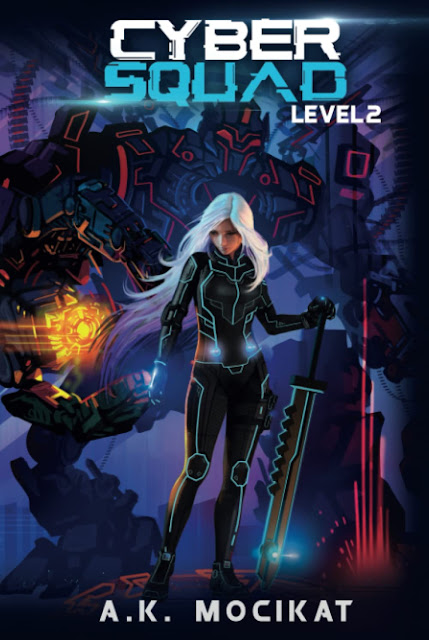
"Cyber Squad Level 2" by A.K. Mocikat--Fiction Review

Today Obscurists, we’re returning to one of A.K. Mocikat’s worlds with “Cyber Squad Level 2.” Oh, boy, I hope nothing goes wrong in virtual reality this time. I’m sure Kai and his friends test awesome games, and everything is just grand in this cyberpunk LitRPG.


A.K. Mocikat


***The Non-Spoiler part of this review***


What I love about this book:

Things nearly immediately go wrong in virtual reality.

Anyway, I said something similar in my review of the prior “Cyber Squad” book in this series, but I’m even more impressed with Mocikat’s ensemble cast of characters in this novel. Sure, I’m engaged with what the protagonist is doing and his struggles with life, love, and work, but I really appreciate the depth Mocikat gives her supporting characters. I was genuinely worried when something terrible would happen to one of Kai’s coworkers.

The mystery of what is going on at Heltek intensifies nicely in the book. As the story progresses, it often feels like Kai is just an unfortunate critter caught in the most insidious pitcher plant in human history. He’s even tacitly aware of it, I think, but torn by a loyalty to his friends, his love of the job, and an unattainable girl—keep him rooted in the trap. It’s an interesting dilemma to watch a young man try to navigate.

Mocikat, per usual, shines in her intense and varied fight scenes in this action-packed sci-fi story. As that action was playing out in this novel, though, I became aware of how much I enjoyed her aesthetics for settings in this book. Kai and the rest of Cyber Squad work and play in some of the most exciting VR scenarios, which helps. It’s when shit starts going wrong, though, that the awesome environmental effects happen. A lot of the imagery, such as a sky ripping open, for example, has a biblical flavor of terror behind it that I enjoyed.


What I don’t love about this book:

I’m not sold on Kai’s main obsession—Alice. She seems nice enough, but when Kai works himself up into a good and frothy pout about not being with this woman whilst building yet another level to the pedestal he’s put her on—I often think, “kid, there are other girls. Nice ones too.” I think, though, why I don’t like these bits is more about me than any defect in the story because it uncomfortably reminds me of myself in my early twenties. The only part of this primarily one-sided attraction where I’m totally on Kai’s side in this endeavor is that I also don’t like Alice’s boyfriend because I hate bullies.

I wish I understood the evil AI’s motivations a little better other than it’s an evil AI and does evil AI stuff. It doesn’t quite fit my criterion for enjoying unknowable malicious entities because one would have to assume it’s at least made in part by human-designed systems. Sure, humans can be malicious dickheads for little to no reason, but for a supposedly vast machine intellect to be bad for—well, because it makes it happy, I guess, isn’t too satisfying an answer.


This preview is an Amazon Affiliate link; 
as an Amazon Associate, I earn from qualifying purchases

Author’s Website: https://www.annamocikat.com/


***The Spoiler part of this review***
***Ye be warned to turn back now***


The quick and dirty synopsis:

Kai, fresh from the first novel and barely surviving his encounter with a malicious AI in the dark web of VR, returns to work at Heltek after a lengthy hospital stay—clearly a glutton for punishment. In any case, he gets a promotion, a swanky new apartment, and a brand spanking new VR implant. So there were some incentives, which were all gifted to him by one of the cofounders of Heltek, who seems to have taken a particular interest in Kai’s career.

Monday, March 28, 2022

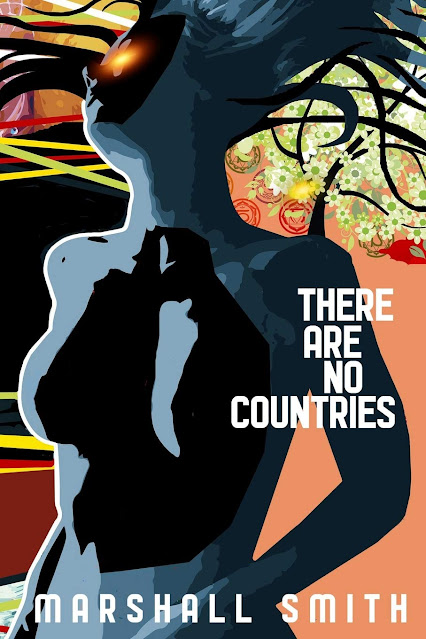
Micro Mention "There Are No Countries"

Marshall Smith


"There Are No Countries," by Marshall Smith, is the kind of weird sci-fi story that keeps you on your heels. It starts with a living statue telling you the story of how he became a statue, and I honestly could say I didn't anticipate most of the twists that story entails.

It's been a fair amount of time since my full review of Smith's book, and upon further reflection, I still can't say it was one of my favorites, but what I respect about the experience is I still remember it pretty well. It has this sticking power to latch on in your mind and memory that genuinely impressed me. I've read a few books since this one, as you might imagine a book blogger might, and a lot of them I don't remember half as well as the enigmatic "There Are No Countries." 


This preview is an Amazon Affiliate link; 
as an Amazon Associate, I earn from qualifying purchases.


Friday, March 25, 2022

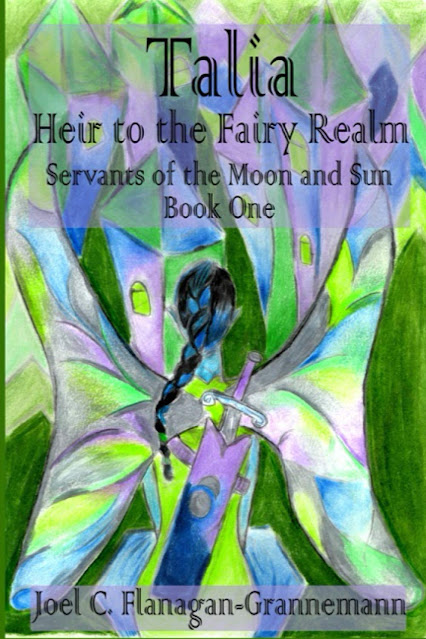
"Talia Heir to the Fairy Realm" by Joel C. Flanagan-Grannemann--Fiction Review

Today Obscurists, we’re going on a magical journey with some fairies—through enchanting vistas and sublime locales. Oh, and there will be blood, murder, betrayal, and mayhem in this fantasy novel about statecraft in “Talia Heir to the Fairy Realm” by Joel C. Flanagan-Grannemann. 


Joel C. Flanagan-Grannemann


***The Non-Spoiler part of this review***


What I love about this book:

At first, I thought this book would primarily be about Talia’s affair with the human prince, Bastile, but it turns out that event is really just inciting action, which surprised me. I liked that the book surprised me, especially because the outsider’s perspective looking into the fairy realm would have been a far easier way to do world-building. But the book is called “Talia Heir to the Fairy Realm” and not “Bastile,” so I appreciate that Flanagan-Grannemann stuck to his guns.

The whole story reads like mythic fiction like “Jason and the Argonauts” or the “Odyssey,” but with fairies, and frankly, in terms of numbers, Talia is much better at keeping her people alive than old Odysseus. What I’m driving at is Flanagan-Grannemann’s story has an episodic quality that I enjoyed regarding Talia and her ladies’ adventures. 

Flanagan-Grannemann manages a large number of protagonists as well or better than anyone else I’ve read. There are 19 fairies in Talia’s traveling group, and it was genuinely amazing, to me at least, that he managed to give most of them their time in the sun with their own little backstories.


What I don’t love about this book:

It’s a long book that still somehow manages to end feeling like it’s in the middle. I get it is part of a series, and there is a bit of a cliffhanger ending, but I expected some of the sub-plots to have seen some resolution as opposed to nearly none of them.

There is also the equivalent of a fairy Auschwitz in this story which was distressing to discover. I assumed that when the characters were visiting this particular location, there would be some sort of moral lesson—you know, other than rape and systematic murder are terrible. I’m not putting this observation here because I dislike per se that Flanagan-Grannemann would discuss such topics in a fantasy story. I think that any topic can be examined within the scope of fiction. It’s here because I’m horrified by the idea of forced labor or concentration-like camps, which is, I believe, the intended effect.


This preview is an Amazon Affiliate link; 
as an Amazon Associate, I earn from qualifying purchases


***The Spoiler part of this review***
***Ye be warned to turn back now***


The quick and dirty synopsis:

Talia, and the fairy court at large, are hosting a contingent of humans led by the human prince, Bastile. There has been a war before between the fairy and human realms, so tensions are high during these diplomatic visits. Despite the apparent strain, Talia manages to forge a connection with Bastile and rapidly falls in love with him.