Showing posts with label Dark Fantasy. Show all posts

Friday, September 30, 2022

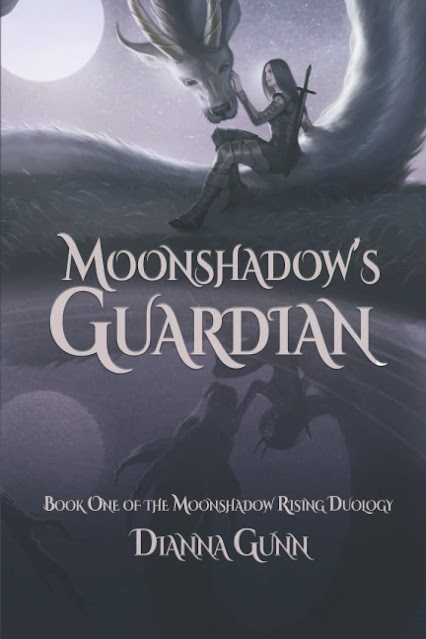
"Moonshadow's Guardian" by Dianna Gunn--Fiction Review

Today Obscurists, we’re taking on a fantasy horror story, “Moonshadow’s Guardian” by Dianna Gunn.

Dianna Gunn


What I love about this book:

The first thing I love about this book is that Gunn’s main character Riana is a super long-lived character, and there are several other similarly long-lived characters in this story that I think Gunn depicts uncommonly well. I’ve said on this blog before that it’s tricky to depict a character who has lived for centuries or even millennia—and make them feel as though they’ve lived for thousands of years. Gunn, though, without bringing the narrative to an absolute standstill, makes it clear that Riana has lived multiple lives over the long years.

I rather enjoy the moral complexity in this story. None of the principal characters are pure good or evil—even the story’s chief antagonist. Mind you, straight-up evil shit does happen in this story, but the perceived correctness or wrongness of the character’s actions are subject to debate, and the morality of their choices, combined with their motives, is a matter of point of view. No one in this story holds a moral high ground above the other characters. 

The consequences in this story are sudden and harsh, which takes a bit of fearless writing to not just hurt one’s darlings but murder them, and I appreciated that quality in Gunn’s writing. Punches are definitely not pulled in this story.


What I don’t love about this book:

I often say that using a first-person perspective is a bold choice, and this novel is in first person. Other than a few key emotional moments that could be argued justified the creative choice—I didn’t feel it added much. To play devil’s advocate, though, the first-person perspective certainly facilitated people reminiscing about the past. Building off that point, if you’re not a fan of flashbacks, well, tough news, lots of flashbacks in this story.

I appreciate an excellent dark and brutal story as much as the next person. What I often find to be wearying are drawn-out torture scenes. There are a few of those in this story, too, especially when it comes to Riana’s memories of the demon realm or the compulsion. It’s not the violence that gets me. I’m just bored by anything that feels like a kid with a magnifying glass and an ant hill.


This preview is an Amazon Affiliate link; 
as an Amazon Associate, I earn from qualifying purchases

Author’s Website: http://authordiannagunn.com/


***The Spoiler part of this review***
***Ye be warned to turn back now***


The quick and dirty synopsis:

Our story begins with a little girl and her mother on a mysterious journey. It doesn’t go well after the mother tells her daughter that she is actually the daughter of a god and is, in fact, a demon. Soon she will transform into her true form. Despite her mother’s best magical efforts, her daughter breaks loose from the binding and kills her mother after transforming.
Saturday, August 27, 2022

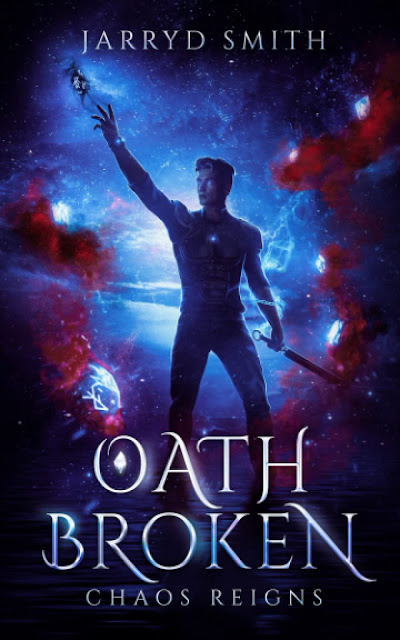
"Oath Broken" by Jarryd Smith--Fiction Review

This evening Obscurists, we’re diving into an urban fantasy novel with Jarryd Smith’s “Oath Broken.” It’s a fantasy story with a big central mystery and a lot going on in the outskirts. 


Jarryd Smith


What I love about this book:

“Oath Broken” has a distinct urban fantasy style that should appeal to anyone who likes books like “The Dresden Files.” Magic and fantastical creatures are just on the fringes of society, blending into everyday life. It’s a cool atmosphere, in my opinion. 

Smith does an excellent job at making the world of “Oath Broken” feel big, with many entities with their own agendas going about their business. I appreciate the sense that the world of this novel doesn’t seem to pivot on the main character or his problems, which I think is a subtle art a lot of storytellers get wrong. Kaleb is the protagonist of this story, but he isn’t the alpha and omega of this universe. He’s just another guy who lives in the world, a talented guy, sure, but one among many.

In other posts, I’ve mentioned this numerous times—I’m a sucker for a good action scene, and Smith doesn’t disappoint in this book. The various fantasy-style showdowns in this novel are all distinct in what’s going on. The ebb and flow of the battles that take place have their own character, so they never become repetitive or uninteresting.

Also, I appreciate Kaleb’s meticulous approach to what sorts of gear and equipment he brings into any situation—as a consummate wizard player in D&D, I value preparation over spontaneity any day.


What I don’t love about this book:

Everyone’s default communication style in this book is sarcastic disdain. Nobody seems to like each other or even can have a conversation without someone being utterly dismissive. It’s all—“that’s impossible,” “you’re a liar,” “you are useless,” and “why don’t you just leave?” 

That last one, I actually started to agree with thinking, “Kaleb, buddy, budgie, boopy, these people suck; why are you trying so hard?” At no point after Kaleb does something extraordinary or saves everyone for the 9th time that day in a heroic or self-sacrificial way does anyone ever say, “hey, thanks, Kaleb. Good Job. I guess I was incorrect in my assessment of you.” No, even right after Kaleb does something altruistic that directly refutes someone’s negative perception of him or his abilities, it’s still on the caliber of, “I hate you, Kaleb. I would say I hope you die in a fire, but I also think that might be too quick a death. Now, if you’ll excuse me, with zero self-awareness, I’m going to rush headlong into a dangerous situation—against your recommendations—that you will inevitably bail me out of later.” 

Other than that, my other dislikes are pretty trivial. There was some disconnect for me regarding what was going on with the prologue and epilogue characters and the main story. It was all ominous things are afoot and how that relates to anything is unclear and ambiguous.

Also, Smith could get stuck in explain mode for certain things: how they look, act, work, et cetera, et cetera. I get the explanations as world-building material, but I’m also disenchanted by world-building when it comes at the expense of the plot or its pacing.


This preview is an Amazon Affiliate link; 
as an Amazon Associate, I earn from qualifying purchases


***The Spoiler part of this review***
***Ye be warned to turn back now***


The quick and dirty synopsis:

After a prologue with death and various deities associated with death, doing—well, death stuff—the story opens with Kaleb going to a wedding. The bride-to-be is less than thrilled about Kaleb’s choice of wardrobe and makes it clear. But Kaleb is at the wedding as his friend Sam’s plus one and so makes the best of it. He even hits it off with a beautiful redhead at the reception named Alex, and they have quite the evening together…

Saturday, April 30, 2022

Talking In Obscurity, "The Sandman," by Neil Gaiman And Dirk Maggs


Neil Gaiman Dirk Maggs


So during this episode, where Steven and I talk about Neil Gaiman and Dirk Maggs's excellent radio drama version of "The Sandman." I used the word "adjective," where I meant to say "adverb," and the shame will be carried on by my descendants. I have since fallen on my grammar sword, but it was pretty blunt, so it was just mildly inconvenient. 

Anyway, if you're interested in an audio experience about a DC comics character, "The Sandman" is awesome.

Author's Website: https://www.neilgaiman.com/
&
Author's Website: http://www.dirkmaggs.com/

Wednesday, March 16, 2022

Micro Mention "Exile"

R.A. Salvatore


"Exile" by R.A. Salvatore is a wonderful story of taking off into the great unknown for Drizzt. He has struck out from Menzoberranzan with no clear destination or place to call home.

The balance of this story is almost entirely set in The Underdark, the mythic subterranean homeland of not just the dark elves, such as Drizzt, but also fun-filled people like the mind flayers, also pictured on this cover. They hug you with their faces and suck your brains. It's often an intense book is what I'm saying. Drizzt discovers that freedom and principles often require profound sacrifices in safety and comfort.


This preview is an Amazon Affiliate link; 
as an Amazon Associate, I earn from qualifying purchases

Author's Website: http://rasalvatore.com/


Monday, February 28, 2022

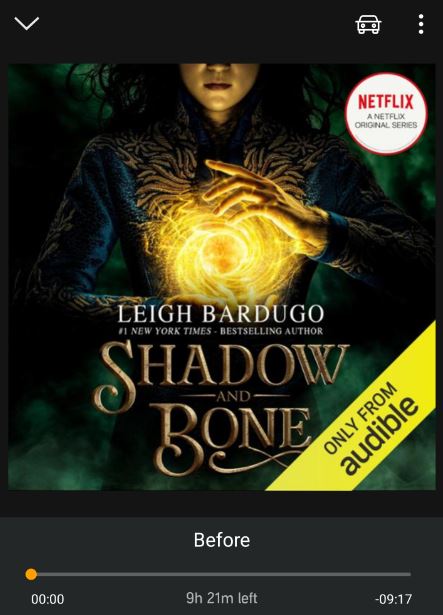
Micro Mention "Shadow and Bone"

Leigh Bardugo


After reading "Six of Crows" and "Crooked Kingdom" by Leigh Bardugo and starting the new Netflix show Shadow and Bone based on Bardugo's Grisha universe, I decided to go back to where it began and read the novel where it all started—"Shadow and Bone."

I enjoyed this novel, but I didn't love it, like "Crooked Kingdom," which I reviewed here. I think mostly this is because this first novel is just that, the first in this universe. Even though it was only a few years, by the time Bardugo wrote "Six of Crows," which directly preceded "Crooked Kingdom," she was already a very different and better writer. Ultimately, it's a serviceable fantasy story if you're looking for something to read, but the best stuff comes in later books.


This preview is an Amazon Affiliate link; 
as an Amazon Associate, I earn from qualifying purchases.


Friday, February 18, 2022

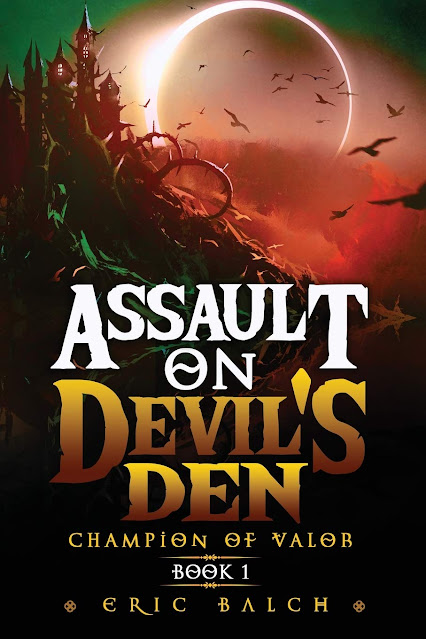
"Assault on Devil's Den" by Eric Balch--Fiction Review

We’re on a road trip to hell today, Obscurists—or, well, hell adjacent. In any case, today’s book is Eric Balch’s “Assault on Devil’s Den,” a sword and sorcery hack and slash fantasy adventure.


Eric Balch


***The Non-Spoiler part of this review***


What I love about this book:

This will come as a complete shock, but I’ve been known to play a little Dungeons and Dragons here and there—nearly every week. So, “Assault on Devil’s Den,” which reads exactly like the setup and execution of a D&D campaign, is right up my alley. I love the adventuring, the sword and sorcery aspect, and generally the whole aesthetic. It’s important to note that“Assault on Devil’s Den” is like D&D in many ways, but it isn’t officially a D&D book, and it very much does its own thing with its own lore.

One of the things I really liked about this novel is how Balch dealt with one of the queasier aspects of old D&D, which is how it dealt with race. Spoilers it didn’t do it well. The central problem is in any Dungeons and Dragon’s setting, a lot like Tolkien’s Middle Earth setting, there are various intelligent races other than humans, like elves, dwarves, orcs, and so on. That in itself isn’t bad, but, both in Tolkien’s fantasy world and the game inspired by it, there is also the conceit that there are goodly races and not so goodly races—which is a fictional form of racism. Balch eschews all of that in his novel. There are plenty of trolls, orcs, and goblins who aren’t evil because of genetics. In his fantasy world, whether a person is good or evil depends largely on individual personal character traits, not inherited by race, you know, like the real world. There are even examples of demons who aren’t evil just because they’re born a demon.

Also, as a fan of a good old-fashioned fantasy dust-em-up, that last fight at the end of this book was a real knock-down-drag-out fight that the story had been building the entire novel. After the wait of nearly the whole book, I found it very satisfying.


What I don’t love about this book:

It is exactly like reading a D&D campaign setting. I know, I just praised this, and I pulled a somewhat similar trick in a review recently about another independent author. Part of the problem this time around is how involved Balch gets into his world-building. A story device I’ve become less and less enchanted with the more books I read. Suppose story should be primary, followed then by characterization. In that case, world-building is third in elements—maybe—but when it’s the primary element of a book, you get into odd moments where you know more about things and places in a story than the people going to those places to retrieve those things. 

For instance, a whole aside in this story takes place at a blacksmith’s shop in a town where the heroes buy new equipment. It’s lovingly rendered down to such fine detail of how much the equipment costs, how long it will take to create, the materials used, et cetera, et cetera. How much does this impact the narrative? Very little. The time and words could have been used to develop the characters more through interaction, or maybe we could have got more background on them with insight into why they are who they are. 

The thing that grounded on me the most, though, was the combat dialogue. There are rarely any good conversations during a pitched battle for nearly exactly the same reason there are seldom any good interviews with players immediately post-football game. The same things get said—a lot. Balch’s word is “impressive” or “impressed,” and it happens in nearly every fight scene if not all of them—there are also a lot of “final form(s)” and “you have no chance(s).”


This preview is an Amazon Affiliate link; 
as an Amazon Associate, I earn from qualifying purchases

Author’s Website: https://ericbalch.com/

***The Spoiler part of this review***
***Ye be warned to turn back now***


The quick and dirty synopsis:

Pelagius, an old adventurer, sits despondently in a tavern with his best friend, a bird person hybrid, and a powerful sorcerer named Bojan. Why Pelagius is despondent is because after a long adventuring career, he fears he’s lost his mojo after freezing up in a fight, and it might be time to hang up the old adventurer cloak. Bojan tries to cheer him up and shake him from his melancholy but what really snaps Pelagius back is the town he and his friend are resting in gets attacked by some notorious soul hunters led by a green-eyed man.

Friday, January 21, 2022

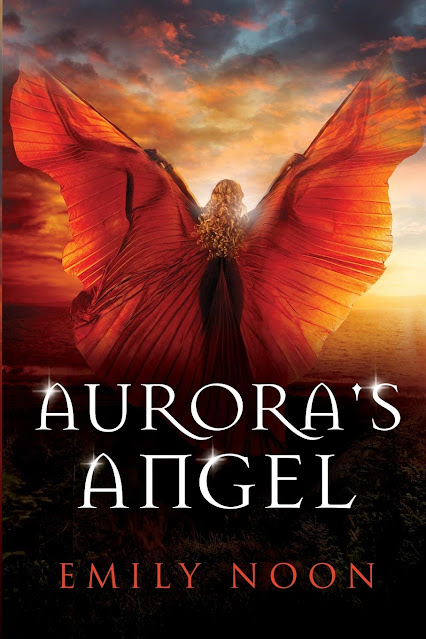
"Aurora's Angel" by Emily Noon--Fiction Review

What a way to start this year off with Indie reviews! “Aurora’s Angel” by Emily Noon is a dark fantasy romance novel that is revelatory. It’s also an LGBTQ+ sort of novel, so it’s nice to see a good book serving an underserved audience.


Emily Noon


***The Non-Spoiler part of this review***


What I love about this book:

Right from the beginning, this book is intense. There is an escape scene with lots of shooting, and then it shifts quickly into a survival story. Noon leans into the dark descriptor of her fantasy pretty hard, and there is a visceral quality to her combat scenes that is equal parts satisfying and disquieting. That intensity isn’t just present in the fantastic elements of this dark fantasy romance, either. The romance is a real grip you by the heart—claws first sort.

It’s worth mentioning it’s a romance between two women, and if that’s going to be a problem like I said in my review of “The Song of Achilles,” how about—try growing up? Ok? Ok. 

How Noon realizes her principal two characters of Aurora and Evie is sublime. They’re deeply complex women with distinct character voices who have many admirable qualities. But they also have defects and blind spots to their characters that make them feel authentic. It’s effortless to fall into the suspension of disbelief with them and mentally treat their story as if it were happening to a real person that you know. Plus, they make for exciting chemistry in a romance.

There are virtually no introduced elements—no detail so small—that aren’t impactfully used in the plot of this story. Overall the plot is very tightly organized. Story problems are introduced in immediate, short-term, and long-term flavors, and solutions are then rendered at the appropriate times.

A lot of attention to detail was given to the dialogue in this novel—and each conversation shines with that effort. When the characters talk, it feels as natural and intimate as any good conversation I’ve had in my life.


What I don’t love about this book:

So there is something that I call the cotton candy effect—or well, there is now, I now call this the cotton candy effect—and the surmise is simple. There is such a thing as too much of a good thing. Which yes, I get that I just added an extra layer to a cliché, and this seems like stalling because it is—but there is a lot of talking in this book—like—a lot, a lot. 

I know I just said I like the dialogue in this book, but I wish there was less of it. Let me explain; much like my favorite carnival confection—after funnel cake and deep-fried Oreos—I love cotton candy but only for about a third of the bag, maybe half if I’m going wild. I’m not saying that half of the dialogue could be dropped, that would be too detrimental, but still, it feels like there could have been more streamlining. This isn’t just with the talky bits, either. There are plenty of elaborately detailed meal scenes, too, more than enough. Other elements get overused beyond those examples, but I feel that the point has been made: there is a lot of indulgence in this novel. 

This leads me to the length of this book—for a twenty-hour experience, there are actually very few locations explored by the characters. To use another fantasy author as an example, Noon has a very Brandon Sanderson-Esque meander about her. If you like that quality for its intimacy, then this is great. I, on the other hand, am very much the kind of fantasy story reader that is constantly asking, “Hey, what’s over there? Are we done here now?” 

While the protagonists of this book, and their orbit, are fleshed out with nuanced and sometimes contradictory motivations and backstories—the antagonists are not. They’re all mustache-twirling dickheads. Except for one avian woman, who, lacking a mustache to twirl—an assumption—is given more of a treatment and, while still eighty percent villain, manages to be sympathetic.


This preview is an Amazon Affiliate link; 
as an Amazon Associate, I earn from qualifying purchases

Author’s Website: https://www.emilynoonbooks.com/


***The Spoiler part of this review***
***Ye be warned to turn back now***


The quick and dirty synopsis:

Aurora discovers a band of black market traders in a mine, known as cutters, that do precisely what they sound like they do. They cut people up and sell their body parts. Well, specifically, they chop up shapeshifters. Aurora, a powerful shapeshifter, has a special hatred for cutters, the details of which are revealed later in the story. Anyway, she exacts some vengeance and frees some captives, including an avian woman named Evie.

Wednesday, December 22, 2021

Micro Mention "Dragonvein"

Brian D. Anderson


"Dragonvein" by Brian D. Anderson has a set-up—a soldier in WW2, unbeknownst to himself, is actually from a parallel universe of magic and dragons—that instantly resonated with me. It might be one of my favorite starting points in a book series.

As for the actual execution of the plot, well, it's ok. I don't know what I was expecting, but I'd have to say I thought there was going to be a little more dragons in this here dragon book. Part of this, I'm sure, is because this is a book one of a series. It still tells an engaging fantasy story, even if it was a shade predictable.


This preview is an Amazon Affiliate link; 
as an Amazon Associate, I earn from qualifying purchases


Monday, December 13, 2021

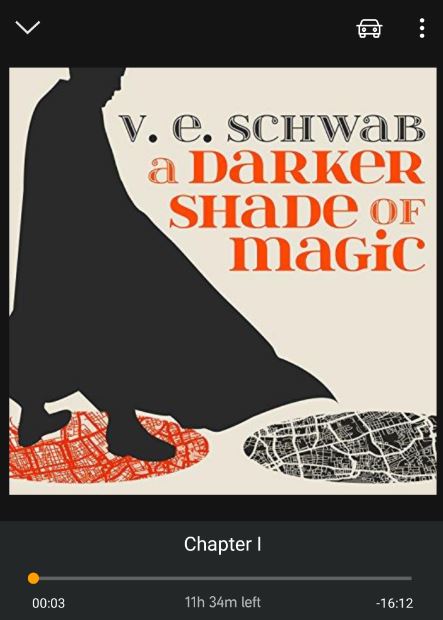
Micro Mention "A Darker Shade of Magic"

V.E. Schwab


After a bit of a slow start for me, this novel, "A Darker Shade of Magic," by V.E. Schwab, ramps up nicely and takes an interesting tact on parallel universes via the fantasy route instead of science fiction.

The atmosphere in this novel is probably its most gripping feature to me. The Londons are all very different places, but they all feel like threatening and dangerous places in their own ways. The sense of mystery and dread Schwab manages to instill in this book made it so that I couldn't stop reading it by about the middle.


This preview is an Amazon Affiliate link; 
as an Amazon Associate, I earn from qualifying purchases.


Friday, October 29, 2021

"The Name of the Wind" by Patrick Rothfuss--Fiction Review

Time for some fantasy, Obscurists. This week I’m talking about “The Name of the Wind” by Patrick Rothfuss, a sweeping heroic fantasy novel, and the first of “The King Killer Chronicle.”


Patrick Rothfuss


***The Non-Spoiler part of this review***


What I love about this book:

If you’re a fan of fantasy worldbuilding, Rothfuss is your guy. “The Name of the Wind” has richly detailed settings, people, cultures, and a rigorous magic system that is all intricately planned out by the author. It also works one of my favorite angles in fantasy: magic as science or technology—there are rules and limitations that are to be discovered, and it isn’t just handwaved.

Rothfuss is also really good at character voice, and his characters, like the world they inhabit, are well designed—on the protagonist side of things and also with the more neutral characters. I can’t say there was ever a character in this story that I thought was poorly conceived. The antagonists are certainly scary but scary the way lightning is when you’re out in a storm and not under any cover.

There are big exciting action sequences at the beginning of the book and the end that were a lot of fun. They act as tent poles on either side of the story. There are conflicts in between but smaller in magnitude.

The musical angle in this book is something I have always admired in books when they’re pulled off well. I think it’s because I can read music and hold a tune, but I’m still a pretty dreadful musician. I was a clarinetist of middling natural skill in school, coupled with an appalling lack of motivation—but that never stopped me from admiring people of great talent and dedication to music. I just wish I was better in that regard. Anyway, through his main character, Rothfuss injects so much passion for music that it’s arresting in a wondrous way and creates a whole new dimension to this guy.


What I don’t love about this book:

So I’ve been hedging on whether or not to write a review of this book. It’s one of those big fantasy books that I’ve been told by multiple people that it is their absolute favorite book, and I should totally read it and love it like them. I thought it was ok. It’s really long, and the framing story is actually the story I’m more interested in, which robbed a lot of my enthusiasm for the actual main story. 

Kvothe, other than persistent poverty, is also a bit of a male Mary Sue. He’s inexplicably naturally talented at anything he decides to take up. This doesn’t make him immune to mistakes, which is why I qualified “a bit of,” but he always tends to be leaps and bounds better than he ought to be at his age, regardless of the task. His most significant character flaw seems to be his arrogance, but I’d be arrogant too if I were a master swordsman/magician/musician/scholar/adventurer.

The worldbuilding, like I said before, is excellent. You can easily tell that Rothfuss has spent a lot of time thinking about and intricately planning out how his fantasy world looks, feels, and operates. I wish there was a bit more of that planning evident in the plot. I say this because “The Name of the Wind” is actually several subsequent stories that just sprawl and spread out, taking a while to focus in on what’s happening next in the story.


This preview is an Amazon Affiliate link; 
as an Amazon Associate, I earn from qualifying purchases


***The Spoiler part of this review***
***Ye be warned to turn back now***


The quick and dirty synopsis:

The story starts with a frame story, set in a typical small fantasy farm town and centered on the local tavern and its keeper—a man named Kote. Early on, the villagers and a traveling scribe called Chronicler are threatened by giant demon-like spiders. Chronicler is only saved by the mysterious Kote, who Chronicler correctly deduces isn’t just a simple tavern owner but the legendary figure named Kvothe, who has gone into hiding since the whole King killing business he was involved with apparently.

Wednesday, June 23, 2021

Micro Mention "The Name of the Wind"

Patrick Rothfuss


The Name of the Wind” by Patrick Rothfuss was recommended to me thusly, need a gritty fantasy story to fill that “Game of Thrones” hole in your heart? Upon finishing this book, I feel this first novel is like a fusion of “Game of Thrones” and a gritty version of Harry Potter.

This is one of those books that I wanted to love more than I actually did. It's a great story, and I get why people love this book. It just didn't resonate with me. It certainly had the scope of some of my favorite epic fantasy stories. Still, as one long origin story for its protagonist Kvothe, it often feels directionless, like a series of short stories where you're not certain where any of this is going—rather than a novel.

The listless feeling I got reading this book wasn't helped by the fact that interesting and exciting things are afoot in the frame story. There are monsters about, and this mysterious tavern owner, who is more than he seems, knows about them, but then we leave that story for that tavern owner to tell his literal life story to a scribe. And as interesting as that life story can be, I kept thinking, yeah, but what about the demon spidery things?


This preview is an Amazon Affiliate link; 
as an Amazon Associate, I earn from qualifying purchases.


Wednesday, May 19, 2021

Micro Mention "Crooked Kingdom"

Leigh Bardugo


"Crooked Kingdom" by Leigh Bardugo is a fantastic sequel to "Six of Crows" everything I loved about the first, and more. It's also single-handedly made reconsider the duology as being just as valid as the more traditional trilogy.

Without having to establish the core six protagonists again, Bardugo is freed up in this book to hit the ground running through the streets of her fictional city of Ketterdam, which is probably my favorite location in her stories. "Crooked Kingdom" isn't just another heist story but an all-out shadow war between thieves, merchants, assassins, nations, and most of all—Grisha.

I wrote a full review of this novel: HERE


This preview is an Amazon Affiliate link; 
as an Amazon Associate, I earn from qualifying purchases.


Friday, February 26, 2021

"Crooked Kingdom," by Leigh Bardugo--Fiction Review

So for this review, Obscurists, we’re returning to Leigh Bardugo’s Grishaverse in her dark epic fantasy “Crooked Kingdom.” Characters from which will be featured in a new Netflix show “Shadow and Bone” coming out this April.  


Leigh Bardugo


***The Non-Spoiler part of this review***


What I love about this book:

Sometimes sequels don’t quite match up to the first story, like “Ghostbusters 2,” for example. In trying to recapture the original’s magic, they end up telling the first story again, but slightly different. That is emphatically not the case with “Crooked Kingdom,” which, in my opinion, addresses all of my minor issues with “Six of Crows” and tells a whole new story. Again—in my opinion—it is a far superior book to its predecessor.

I felt that the city of Ketterdam is a far better setting than the Ice Court and was thrilled that this is where all the action of this story takes place. Ketterdam has all the intrigue and political machinations on both sides of the law. It’s a dynamic place, a melting pot of a variety of peoples created by Bardugo. Whereas the Ice Court, in Fjerda, certainly had a lot of ice—that—and blonde-haired blue-eyed barbarians. As a blonde-haired, green-eyed barbarian, meself, I know these people already, I’d rather hang out in Ketterdam.

“Crooked Kingdom” turned me around on Wylan and Jesper’s relationship. In the first book, I felt it was tacked on, but in this, I thought it might have been the healthiest romantic subplot of the bunch. This further development of the characters was really done well, and Bardugo doesn’t try to re-review old territory with her characters. Since she didn’t have to introduce her characters, she had far more time to develop them further and deepen their individual arcs.    


What I don’t love about this book:

One character in this book I didn’t like and didn’t feel contributed much in the narrative, despite becoming the central McGuffin at the end of “Six of Crows,” and throughout this novel, was Kuwei Yul-Bo. Kuwei is vital to the plot because of what he might be able to do—not because of who he is as a person, which is mainly an ungrateful catty prick. I get it—he wants his freedom to go where he chooses and resents Kaz for using him as a chip in the big game of nation-states—see how I didn’t say thrones there? Oh, shit, I just did—damn it. 

But anyway, back on topic; why I don’t like Kuwei is because he annoyingly goes on about how he’s being treated by the dregs. He complains incessantly, without really acknowledging that without the dregs and Kaz, he’d be back at the Ice Court, in a cell, forced to create what amounts to a weapon of mass destruction for a bunch of people just one shade away from Nazi. 

This is a minor quibble, and it’s more my fault than anything, but we get introduced to characters from a previous story in this novel, from a different trilogy, and I get the sense that there is a lot of depth to them that I’m missing because I haven’t read those stories yet. This is the crux of why I don’t like reading things out of order. I want to understand each character’s story in precisely the manner and order it was intended. But again, this is what I get for having read the “Six of Crows” duology first before the “Shadow & Bone” trilogy, and I really only have myself to blame.  


This preview is an Amazon Affiliate link; 
as an Amazon Associate, I earn from qualifying purchases.


***The Spoiler part of this review***
***Ye be warned to turn back now***


The quick and dirty synopsis:

“Crooked Kingdom” starts off right where the last book left off, Kaz and crew have just pulled off an impossible heist, and their employer betrayed them, kidnapping Inej, who is Kaz’s love interest from the first book. The merchant gives Kaz and the dregs an ultimatum, give him Kuwei, which really means the secret of Jurda Parem, the most dangerous substance in the world, for Inej. 

Friday, November 27, 2020

"Homeland," by R.A. Salvatore--Fiction Review

For today’s review, I’m going to reach way down into my book collection to one of those fantasy books I grew up with—I never promised to be timely on this blog. We’re talking about “Homeland” by R.A. Salvatore, author of the “Legend of Drizzt” series whose titular character was a childhood hero of mine. 

Full disclosure, I first read this book—and a lot of other R.A. Salvatore books—when I was a wee lad, well, not really because I was a pretty chubby kid. My point is, though, I grew up with these books, and my love for them is nostalgia drenched, which is a sentiment that, while warm and fuzzy, should be taken with a large grain of salt.


R.A. Salvatore


***The Non-Spoiler part of this review***


What I love about this book:

While we’re on the topic of shocking revelations, I’m a big D&D nerd, and the forgotten realms, the shared universe that Drizzt belongs to, is a D&D setting. Part of my initial and enduring interest in these books is how they tie into that game world. You don’t need to have any understanding or experience with D&D to enjoy the stories; it’s just that knowledge of it enhances the experience.

Drizzt Do’Urden himself is probably chiefly why I love “Homeland” and all the other novels in this series. I find him to be a compelling character even all these years later. My belief is it’s because of his bedrock moral character. If any one character in fiction exemplifies the admirable quality of sticking to one’s principles, even when it’s hard or even deadly to do so, it’s Drizzt.

Another major reason why I like this novel so much is that it’s the origin story for Drizzt Do’Urden and his life amongst the sinister dark elves, the drow. An anomaly amongst the drow, Drizzt, unlike most drow, couldn’t bring himself to fit in with their evil society, which predictably did not go over well.

Finally, a thing that I like about all of these books are the bits where Salvatore writes as Drizzt, and we get to read his personal journal. There is a timeless philosophical feeling about these journal entries that I really appreciate—hell, I’d read a book that was just Drizzt’s journal entries. It was a bold choice to include these in the novel(s) because it could be taken as a bit indulgent, but I’ve always felt it made the world feel more like a real lived-in place. 


What I don’t love about this book:

My main problem with this story is the concept that there are goodly races and not so goodly races. This is more a problem with D&D in general and as such applies to this novel as well. D&D’s stories build off the literary tradition of J.R.R. Tolkien and “The Lord of the Rings,” which in of itself has this problem. The whole concept of orcs is pretty fucked up the longer you think about it. The idea that morality is somehow a racial trait and not an individual characteristic is pretty awful. 

Drizzt himself, early on, is really just an exception that proves the rule that the drow, as a race, are evil, and everyone knows this about them and reacts accordingly. To be fair, this is a concept that in later stories, Salvatore has had the moral courage to push back against, and trust me, it’s unsettling but necessary to see our heroes struggle with possibly being on the wrong side of history for a bit. But that isn’t this story. In this story, the drow are uniformly evil, except for Drizzt, and maybe his dad, and only because they’re awesome.

And finally, Matron Malice is a name so on the nose that it’s like being punched in the nose. It’s only a shade better than just calling her Lady Sinister Von McEvil.  


This preview is an Amazon Affiliate link; 
as an Amazon Associate, I earn from qualifying purchases.

Author's Website: http://rasalvatore.com/


***The Spoiler part of this review***
***Ye be warned to turn back now***

The quick and dirty synopsis:

The novel starts in a city in the Underdark, Menzoberranzan, the dark elves’ city, aka the drow, engaged in their favorite pastime—war. Not war against an external threat to the city, mind you, but rather one great house of the city against another. In Menzoberranzan, the city is ruled by a ruling council made up of the most powerful families. The only way for a family to advance in drow society is for another family, higher in rank, to somehow be eliminated. In drow “law,” it isn’t illegal for one family to murder another, but it is deadly to be “caught” by leaving any survivors.

Friday, September 4, 2020

"The Final Empire," by Brandon Sanderson--Fiction Review

Good Morning dear obscure readers of the interwebs, how about we talk about an epic fantasy by one of the best in the business, “The Final Empire” by Brandon Sanderson. It’s got a whole complex mythos and rigorously detailed magic system.

Brandon Sanderson


***The Non-Spoiler part of this review***


What I love about this book:

As the first book of the Mistborn trilogy, “The Final Empire,” serves to introduce this sweeping epic world and its strange magic called Allomancy. As one of the all-time best world builders I’ve read, how Brandon Sanderson sets up the world of the Mistborn is immensely impressive. There is a depth of world history and a complexity to not only how that world works, but he builds fine-tuned cultures that inhabit this world. 

Sanderson’s character work is also first-rate, this skill, combined with his talents as a worldbuilder, is what makes him one of the best fantasy writers of today. Each of the characters, from the primary protagonist Vin, her mentor Kelsier, to Kelsier’s crew of thieves, are all exquisitely fleshed out and polished to a gleam. No two characters sound the same, and they all have their distinctive roles within the narrative. 

I find the antagonist of this novel, the Lord Ruler himself, to be the most interesting character of the story. The protagonists find the journal of this malevolent figure, who once held ultimate power and changed the very world itself with the power of a god and created the first allomancers. He’s a figure that has lived for thousands of years, enslaved generations of people, and ruled as a tyrant since the beginning of his reign. But in the journal, the Lord Ruler seems like a kind soul. He’s a man who doesn’t shrink from violence but wants what is best for all. It’s an interesting mystery of how the past idealistic man in the journal became the despot tyrant of the present.  


What I don’t love about this book:

More a critique about all of Brandon Sanderson’s epic fantasy work, then just this novel specifically—but he has a way of meandering in one location for way, way too long. Sanderson creates sandboxes the size of continents, populated with diverse and exciting people, and then—especially in this novel—we spend almost all our time in the same twenty square miles of that continent-sized sandbox. Luthadel, where we spend most of that time, is an interesting city, don’t get me wrong, Sanderson packs so much into it it’s like a fantasy version of old New York City—but it is still just one city, and the Final Empire covers a whole planet.   

For me, the revelation of how the Lord Ruler became the way that he is, felt like a massive cop-out and was ultimately disappointing. It’s the main reason I didn’t enjoy the ending of “The Final Empire” as much as I thought I would. Well, that’s not entirely true, at the time that I read it I thought I liked the ending, but then I stewed on it for a few days and was horrified to realize that I didn’t like the end. Horrified because I enjoyed the rest of the book so much, and endings are my favorite parts of stories—so how could I not love the ending? It was a whole existential crisis for me, well, as first-world reading problems go, that is, I mean, it’s no scavenging for food in the wilderness kind of problem.   


This preview is an Amazon Affiliate link; 
as an Amazon Associate, I earn from qualifying purchases.


***The Spoiler part of this review***
***Ye be warned to turn back now***

Friday, July 24, 2020

"Six of Crows," by Leigh Bardugo--Fiction Review

Happy Friday, today I thought we’d talk fantasy with Leigh Bardugo’s “Six of Crows.” It’s a YA fantasy that has a 19th to early 20th century feel in its mixture of magical elements with more modern technologies beyond what would be typical for epic or high fantasy, i.e., they use guns instead of bows and swords—typically. 

Leigh Bardugo


***The Non-Spoiler part of this review***


What I love about this book:

The ensemble cast of characters is all diverse and interesting in their own ways. Bardugo does all of her groundwork on the characterizations of the six protagonists of the story. They have distinct ways of speaking, mannerisms, and everyone’s back story gets fleshed out with times and places.

Bardugo shines with more than just her character work and is also a skilled world builder, which is a core skill required for fantasy and science fiction. She captures the notion that whole nations and even smaller city-states aren’t homogenous but are always conglomerates of people—built by smaller and smaller fractals of tribal units. Her city, Ketterdam, is the best example of this concept—in this novel—it’s a place ruled by commerce, so from the nobles on down to the gangsters of the barrel, trade is the central concern of their lives.   

I appreciate that there are no characters that are built up as being awesome, but we never experience them in action, or even succeeding. It’s one of my absolute greatest dislikes in the vain of telling and not showing. I call it the Yara Greyjoy syndrome—Asha Greyjoy if you’re feeling bookish. Everyone in Bardugo’s story gets their moment in the sun, and their core competencies are displayed more than once.

Have I mentioned that I’m a bit of an audiobook fan? Well, in case I haven’t, the audiobook version of this title has a full cast, which is awesome. I always enjoy it when audiobooks have different voice actors narrating different perspective characters. 


What I don’t love about this book:

There is a romantic pairing off of all six of the main characters, and it can feel a bit forced. Especially the romantic tension between Jesper and Wylan, it’s not that I’m down on a non-heterosexual relationship it just feels like a bit of an afterthought, a check on a list of objectives.

One of my teeny problems, also about the ensemble cast of characters, is their ages and maturity levels all feel a little out of wack. They’re all young men and women in their late teens, and I get they’ve all had hard lives in this world and have had to grow up fast, but they all have an air of gravitas that suggests a depth of experience and world-weariness of decades.   


This preview is an Amazon Affiliate link; 
as an Amazon Associate, I earn from qualifying purchases.


***The Spoiler part of this review***
***Ye be warned to turn back now***