Showing posts with label Physics. Show all posts

Monday, May 16, 2022

Micro Mention "American Prometheus"

 
Kai Bird & martin J. Sherwin


J. Robert Oppenheimer is a tragic figure of American history whose accomplishments were all overshadowed by one thing; he was the father of the atomic bomb. Once a hero, then painted a villain and torn down by his own. “American Prometheus” by Kai Bird and Martin J. Sherwin captures that narrative.

I talk about that idea in more detail in my full review

What I want to point out, though, for this little piece is, isn't it amazing how like in this book, when the conservative political party froths its way up into a moral panic, lives are ruined, and careers are destroyed.

But when a right-wing politician straight up breaks the law, they fly away in their helicopter with no consequences. Or fights an entire debacle shadow war with no consequences. Or an actual conventional war, twice, with little to no plan with no consequences. Or, finally, continues to be president after seriously suggesting protestors be shot in the legs or to cure a virus with bleach injections.


This preview is an Amazon Affiliate link; 
as an Amazon Associate, I earn from qualifying purchases.


Wednesday, April 6, 2022

Micro Mention "Astrophysics for People in a Hurry"

 
Neil deGrasse Tyson


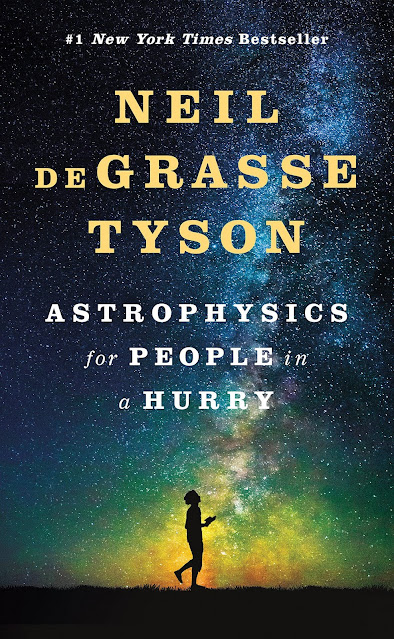
"Astrophysics for People in a Hurry" by Neil deGrasse Tyson is precisely what it claims to be, and it's genuinely impressive how much content is packed into this slim volume. If you want to better understand the universe quickly, here's the book.

I have been a fan of Neil deGrasse Tyson for a while. Like I said in my full review of this book, what I really appreciate about this book is how he talked about a lot of the same material as Carl Sagan's "Cosmos" and even evoked the same spirit as that book but made it his own. Frankly, it's nice to get such a focused product.


This preview is an Amazon Affiliate link; 
as an Amazon Associate, I earn from qualifying purchases.


Friday, September 10, 2021

"American Prometheus" by Kai Bird & Martin J. Sherwin--Nonfiction Review

In this review, we’re talking about the Pulitzer Prize-winning biography “American Prometheus” by Kai Bird and Martin J. Sherwin. It tells the story of J. Robert Oppenheimer—father of the atomic bomb.


Kai Bird & Martin J. Sherwin


What I love about this book:

As someone interested in technology, physics, and history, this book satisfies all of those interests in one fell swoop. At first, I assumed it would be strictly a biography of Oppenheimer during his time with The Manhattan Project and shortly after that because that’s when he was the director at Los Alamos, where we all know him for his work—the building of the first nuclear weapons. “American Prometheus” is actually the entire story of J. Robert Oppenheimer’s life from the cradle to the grave. As such, it provides us with great context for how and why he became the father of the atom bomb. 

Oppenheimer was someone whose life straddles two sides of a pivotal moment in history. I enjoyed vicariously seeing the world—as best you can imagine through books like these—through his eyes and perceptions. It has been growing in my mind this idea that while we may have been on the winning side of World War Two, we won at a significant cost to our nation’s soul and character. 

The World Wars are often expressed in numbers—number of dead—number of planes, tanks, and ships lost—number of dollars spent. So the intangibles get left by the wayside because they’re impossible to quantify. What I mean by our national character and soul is that when we fought against Nazi Germany, Fascist Italy, and Imperial Japan, we were morally in the right and superior to our foes. 

But then we won, and things change. An ugly thing started to creep into America, the presumption that we would always be morally right and superior to our adversaries—no matter what we did because we dubbed ourselves the good guys. It stood to reason that any actions done by the good guys would have to ex post facto be good and justified for the greater good. Even when objectively it wasn’t true. This book shows in the latter half how our paranoia caused us to turn on our own, seeing traitors and communists everywhere in our midst, including our national luminaries such as Oppenheimer.

This is not the focus of this book but is given context through Oppenheimer’s life that it occurred to me when reading “American Prometheus” that there is a kind of repetitive beat to the American character. We fought the American Civil war, and the crux of it was that all people are people and should be able to partake and enjoy the fruits of freedom, against a foe who, based on an odious theory of race, disagreed. Then after we won, we backslid with the death of reconstruction. In World War Two, something similar happened, and after we won, we backslid again. 

The argument could be made that this has always been our central conflict. It’s been with us even all the way back to the Revolutionary War against Britain because our founding fathers pointed out, as a central justifying point for our rebellion, the question; what is a King? Is he not but a man? And as just a man, how could he be any more than merely equal to his fellow-men?


What I don’t love about this book:

So this book won a Pulitzer Prize in biography in 2006—and that’s great, don’t get me wrong—but my complaint is for such an esteemed book, and it’s a great book, how is it the audiobook version is produced so poorly? 

The narrator isn’t totally to blame. He’s fine. But somewhere along the line, the editing got sloppy, and the sound levels are all over the place. In one sentence, it’ll sound like Jeff Cummings is right next to you. The next, he’ll sound like he’s across the room, and then right back next to you a heartbeat later. I get it’s an older audiobook, but—holy hell—it’s not like 2007 when the audiobook was released was the dark ages. For a ninety-five percent exclusive audiobook reader, it was beyond distracting for me.

My chief complaint about the content of this book is that the authors will state a point, share a quote, and then make sure to repeat it again. This typically happens at the beginning of one of their usually very long chapters—my feelings about that topic are well documented—and then rehammer that point or quote later in the chapter. It isn’t clever. It just adds to a whole circular repetitive feel to the whole book. You might have noticed I just did something similar with nearly every sentence in this paragraph, and it was annoying then too!


This preview is an Amazon Affiliate link; 
as an Amazon Associate, I earn from qualifying purchases.

Author's Website: https://kaibird.com/

Parting thoughts:

One of the most terrible things about American culture over great periods seems to be our proclivity to vacillate back and forth on our beliefs. It’s uncomfortable—to me at least—how many times we defeat a foe either ideologically, on the battlefield, or both only to then cede ground to them. Then some of our number spontaneously decide something like, “well, maybe those objectively terrible people had a point!”

Again calling back to the civil war period, we did it with the Confederacy, then the Ku Klux Klan, and now some people openly call themselves Nazis. All of those original groups engaged in slavery and genocide to varying degrees. It does a disservice to the men and women who sacrificed so much to put them down that we now allow them a seat at the table as though they had something legitimate to add to the conversation. Now I get this is starting to sound like an anti-free speech argument, and that isn’t my intention. I believe in free speech. I believe you should be allowed to say nearly anything you want without censorship from the government, as defined in the first amendment.

What I don’t believe in is immunity to consequences because of your words or a guaranteed platform provided by privately or publicly owned companies. The first amendment protects you from the government, but any other entity which isn’t the government is free to decide not to do business with you because you went on a racist tirade on Youtube. I cannot begin to tell you how much it makes me grind my teeth when people get this wrong still when they accuse Youtube or Facebook, their job, or whatever else that isn’t part of the government of violating their first amendment rights.

I digress—and I’m straying from my original point—I can’t help but be horribly conflicted with what happened in Afghanistan. On the one hand, I never agreed with the war. I didn’t think we should have invaded in the first place. To continue to pour blood and treasure into the cause decades on, intellectually, I understand, would be folly. But it smacks a lot of what I was saying earlier. It kind of smells like the age-old American tradition to cede ground because we’re tired of the fight—and maybe this fight wasn’t worth fighting in the first place. I thought so and still think so.

But watching people cling to the outside of American planes in takeoff—people who fought with us, people who believed in us, only to fall to their deaths—how did it come to this? 

There had to be a better way.


Friday, June 18, 2021

"Astrophysics for People in a Hurry," by Neil deGrasse Tyson--Nonfiction Review

It’s review day, obscurists! And today, we’re going to touch on big topics like the stars and the universe, in all their glory, quickly, with Neil deGrasse Tyson’s “Astrophysics for People in a Hurry.” 


Neil deGrasse Tyson


What I love about this book:

This book is very much in the same tradition as Carl Sagan’s “Cosmos,” which is a book I very much enjoy, and I’ve reviewed on this blog as well. Like Sagan, Tyson takes some of the biggest, mind-bending concepts—right on the verge of human understanding—and breaks them down for an audience who aren’t astrophysicists. Similar to what I said in the “Cosmos” review, Tyson achieves this similar effect by explaining the results of well-documented experiments and famous scientific theories with a liberal amount of metaphors.

Unlike “Cosmos,” this book is a far—far more focused product. Ever faithful to his title, in “Astrophysics for People in a Hurry,” Tyson doesn’t meander. You can read every chapter in the book, in about twenty minutes on average, or thereabouts, which is right at that sweet spot for my favorite chapter length.

The material covered in this book is about the fundamental workings of the universe as we understand them—it’s literally the biggest topic there is—and I can’t imagine not being at least curious about the subject. Personally, I’m more than just curious but deeply fascinated, and I can gobble up these sorts of books endlessly. Even when I’ve revisited material I already knew, rereading it never fails to cement it again in my mind in a new and often unexpected way.


What I don’t love about this book:

That focus I lauded above doesn’t come without a cost, and it’s this: “Astrophysics for People in a Hurry” will never be remembered being as profound as “Cosmos.” I find it laudable that Neil deGrasse Tyson didn’t set out to rewrite Carl Sagan’s book. He wrote his own book, largely about the same subjects, but with its own goals. It’s a brief primer, which casts the widest net possible through its focus and brevity to bring in the largest crowd, and hopefully, teach them something.

One thing that “Cosmos” does better and gets short shrift in “Astrophysics for People in a Hurry” is its political commentary—or rather, it’s near-total lacking it until the end. Sagan was never one to shy away from commenting on the virtues and foibles of our little human world—and I’m not precisely accusing Tyson of the opposite—he’s very, very outspoken in the public sphere and a fierce proponent of rational thought. But, unfortunately, this book lacks his typical flair for commentary on the human condition because it’s sacrificed to the abbreviated form rather than any timidity.

So the final chapter, “Reflections on the Cosmic Perspective,” while I like it—a lot—in of itself, feels like an appendix. It’s an indulgent essay in an otherwise just the facts and science text. Mind you, this hurts me to point out because I agree with everything he says in the chapter. It might be my favorite chapter—paradoxical since I’m talking about it here. I guess what I don’t love about this chapter, that I love, is that it’s a bumpy spot in an otherwise smooth experience.


This preview is an Amazon Affiliate link; 
as an Amazon Associate, I earn from qualifying purchases.


Parting thoughts:

The stars—and books about them—never fail to leave me awestruck. Contemplating the infinite, deep time, and cosmic scale objects is an exercise in the abstract, to be sure, but it’s such a sublime experience. These topics create perspective in a way nothing else can. 

It always leaves me wanting to know more and what happens next. It’s probably why I love sci-fi and space opera so much in the realms of fiction. I want to know what is out there beyond our tiny world. But, honestly, it makes me a bit jealous of those generations that will come after us because they might get to find out some of those things. So here’s hoping that they get the chance to get there.


Friday, April 10, 2020

"Cosmos," by Carl Sagan--Nonfiction Review

We’ve made it to another Friday, my dear internet strangers. You all still socially distancing? Still, reading this blog? Good, you’ll survive… that isn’t to imply reading this blog will impact your chances of survival one way or another, or is it?

Anyway, in today’s nonfiction review, we’re talking space stuff, shocking, I know, with Carl Sagan’s “Cosmos.” It’s one of those books that I believe everyone should read at least once in their life because the gifts Carl Sagan left us with are genuinely precious—chief of which is the gift of perspective.

Carl Sagan


What I love about this book:

It isn’t just a book about astronomy. Don’t get me wrong, I love me some astronomy and could talk about it for many an hour—but Sagan doesn’t limit the topics covered in “Cosmos” to things that happen in outer space. After all, like that stoner you met in freshman year, once said, “like everything man, is like the universe, so like we’re all the universe, man.” He wasn’t wrong—inelegant maybe—but not wrong. Sagan describes it a bit more elegantly by saying that we are all made of star-stuff. He leads you on the journey of why that is true, explaining that all elements making up matter are ultimately forged through the process of fusion in the furnaces of every star. The rarer and very dense elements, further down the periodic table, can only be made via this process, not in normal stars but only after a star dies in a fiery explosion called a supernova.

Without getting too much further into the weeds—understanding that and how matter and energy can’t ever truly be destroyed but only transformed creates an opportunity. The opportunity to realize that not only are we all fundamentally the same, but the greater truth that we are connected to everything, everywhere, for as long as time passes. No one and nothing is ever truly lost, only changed in form and pattern.

Overall, the text of “Cosmos” is accessible for everyone, regardless of personal scientific education level. Carl Sagan wouldn’t have been the arch science communicator we remember him as if he could only express himself in a meaningful way to other astrophysicists. His book is the perfect starting place for anyone interested in the stars, physics, or the universe as a whole. He doesn’t dumb down the concepts presented in the book, more he just slowly and robustly explains them without presupposing the audience all have PhDs. How does he do this? With a lot of metaphors. 

Sagan sometimes even flexes his fiction muscles at various points in the book, for which I’m appreciative. He’s a powerful writer, and his talents with fiction are sometimes forgotten in the face of his nonfiction accomplishments as an astronomer, astrophysicist, and a science communicator—especially in the shadow of the television programs that share a namesake with this book.         


What I don’t love about this book:

Sagan can wax poetic like the best of them, and most of the time, it’s lovely—flowery and so forth, but it can be a bit long-winded. The problem is he takes a while,  getting to his point of whatever he’s describing. When he does get there, it’s usually graceful, sort of like how the Sistine Chapel is elegant—but if all you wanted was a picture, there are no pictures in Cosmos, only Sistine Chapel(s), metaphorically speaking. Literally, there are several pictures in “Cosmos,” and what I’m getting at is the word choice is always elevated, and with elevated language, your audience needs to be in the right mindset to appreciate the product fully. I understand why the author chose to write this book in such a revering way. This is his life’s work, and it’s about the most significant topic possible because it’s about the whole universe—which by definition, is the biggest thing that can be conceived of that we know for certain exists.

Also, “Cosmos” is guilty of one of my primary nemeses when reading—hyper long chapters—right up there with super short chapters in terms of how much it annoys me. I get it—the thirteen chapters of “Cosmos” accompany the thirteen episodes of the original “Cosmos” show, but it still aggravates me for petty reasons.

It’s hard to say what any chapter in the book is precisely about in a concise way. Certainly, they’ve all got individual themes, and they’re about a lot of things, but without breaking them down further, they all become vast self-contained literary adventures in their own right. So my experience reading “Cosmos” wasn’t that I was reading one book but several small books tied together. 


This preview is an Amazon Affiliate link; 
as an Amazon Associate, I earn from qualifying purchases.


Parting thoughts:

Carl Sagan lived and died a little before my time—so sadly, I don’t know the experience of him and his work as a science communicator during my formative years. Those figures for me are Bill Nye and Neil deGrasse Tyson. Yes, I was alive in 1996 when Carl Sagan died, but I was in elementary school, and my love for the stars hadn’t been fostered much beyond reruns of “Star Trek: The Next Generation.”

Even still, it has been an emotional journey for me to discover his work and watch his old shows now that I’m older. My introduction to him, was in fact, “Cosmos” but hosted by Neil deGrasse Tyson. I guess technically the first thing I’d experienced by him was “Contact” the 1997 film based on his novel of the same name—but I don’t count it because I hadn’t realized that movie was based on a novel, haven’t seen it since the ’90s, and it went way over my head back then. I’ll have to revisit it at some point.

Why this stuff resonates with me so much is because outer space, the further reaches of our solar system and beyond, is our only logical future as a species. There are no more oceans to cross on Earth, no more lands to discover—this is it, and there are more of us every day. I know it’s a strange thing to say during a pandemic, but even after world wars one and two, and the Spanish flu, which by all accounts was far more lethal than COVID-19, the Earth’s population still grew and grew at ever-increasing rates. It will continue to do so—even after this.

Carl Sagan was ultimately an optimist. He believed in humanity, and that we can be better. Through the rigorous use of the scientific method, one day, we will reach the stars, and it is a beautiful dream. Before that can happen though, we as a species need to do better, to cooperate and learn to let live, better. For me, that is ultimately the perspective Carl Sagan wanted us to adopt—and I hope we don’t let him down.

Friday, January 17, 2020

"Einstein's Cosmos," by Michio Kaku--Nonfiction Review


So we’re shaking things up today, I know, the third review, already shaking things up? Almost like you don’t have a plan, Kevin. I just want you to know dear internet strangers, I don’t have a plan. It’s pretending to have a plan until genius strikes, maybe, definitely.

Anywho, I’m reviewing a non-fiction book today, and the whole spoiler, no spoiler sections don’t really work for nonfiction. Unless it’s a narrative of some sort—which this one kind of is because today we’re talking about “Einstein’s Cosmos” by Michio Kaku. Spoiler! Albert Einstein was a physicist and a damn good one too, and if you feel cheated by that revelation before having read the book—well, then write me a disgruntled comment. …please write me a disgruntled comment. I’m so lonely here alone in the Obscurity dome, where I write my reviews. 

Michio Kaku


What I love about this book:

I’ve read a few books about Albert Einstein, I believe I’ve mentioned my status of being a bit of a nerd in an earlier review. I picked this one because I feel it’s the best overall look at the man and his work, and I really like Michio Kaku. A close second is a book called “Light Falls: Space, Time, and an Obsession of Einstein,” which is an audible exclusive that features Paul Rudd as a narrator, yes Antman, who does an amazing job, but this book, “Einstein’s Cosmos,” is narrated by Ray Porter and I’m a Ray Porter fanboy. Sorry, Antman.

Since the book starts at the beginning of Einstein’s life and describes his journey until his death, toward the end of the book, it addresses early on a couple myths we normals like to tell each other about the great scientist. You know the one, it goes something like: when Albert Einstein was a boy, he flunked math. I hate to burst your bubble if you held to that one, actually, no, I don’t, I’m a disappointment incubi, and I feast on anticlimax to grow stronger, but it isn’t true. Einstein did struggle in school. That part isn’t a lie, see how I’m building up your hopes here, but he only struggled because he was bored and found his course work to be too trivial to do—in other words, he was already so smart that he couldn’t relate to the task at hand. Right back down to unsatisfying un-relatability, and now I live another year for having taken you on this journey, ha-ha!  So—I like that it takes the time to bust that myth.

The book also mentions that he had trouble memorizing things by rote, which was all the rage in german schools when he was a child, which I can relate to because I also can’t remember things that way either. Where we differ though is, he’s the most important scientist to ever live, and I’m a person who struggles at a blog, he had a fantastic ability to visualize abstractions in his head, and I tell myself little stories to remember things, like a child.

Finally, what I love the most about this book is: yes, it describes tough theoretical principals in an accessible way—as Einstein would have liked—but it does so step-by-step as Einstein discovered them by telling the story of his life.  It’s fascinating to consider the perspective of the man on the train racing the light beam, and all that, but it’s also neat to find out that Albert Einstein also loved the violin and was at one point considered a talented musician when he was young. Details of the man’s life woven as a narrative, married to his work, is what makes this book such a compelling vehicle. It’s hard to relate to a concept such as space-time, but it’s far easier to connect to and admire a young father trying to keep his baby alive in a shitty apartment while struggling to find work, who then elucidated the concept of space-time.


What I don’t love about this book:

The introduction by the author is really the only thing I don’t like, not because it isn’t informative or interesting—it is—but it doesn’t set up an accurate expectation of what the rest of the book is like. The impression I get from the introduction is this book is going to be a “just the facts” sort of experience about Einstein’s work. Mainly, I get this impression because Dr. Kaku jabs at how in popular culture, Albert Einstein is often remembered as the man or the myth of the man. However, understanding of his actual contributions to science are thin, which is a salient point, but science—especially topics such as relativity and quantum mechanics—are abstract concepts by their nature. So of course, people gravitate to remembering that inspirational quote—probably misattributed—of Einstein’s more so than understanding why time literally flows at different rates in a valley vs. the top of its neighboring mountain. Which inspirational quote might you ask? Pick one. Most of them are dubious. So it’s an odd effect when you get into the book and find out that yes, it is a lot about Einstein’s work, but it’s all done within the context of the story of his life, which I really love. Yes, I realize that statement screws up my subject headings, invisible friend.      


Parting thoughts:

So one of my principal interests is outer space, and the idea of space travel, you’ll get to know this about me, if you existed, and I wasn’t talking to myself, writing to myself, whatever.

Full disclosure, though, physics and math, don’t come naturally to me, and I’m a bit of a knuckle dragger on this topic. I think it may stem from a realization I came to as an adult, that I am, and always have been, slightly dyslexic. Before recognizing that about myself, I allowed that to hamstring my early education. This is something I’m trying to work on and improve in myself now that I realize the problem. Why I’m going on about this, is you may have looked at what this book was about and thought, “a book about Einstein, the theory of relativity, and quantum mechanics, that sounds like a lot,” and I’m not going to lie to you, it is, these are mind-stretching abstract topics. That being said, I would encourage you to read about these topics anyway and fail, and then fail again if necessary.

I’ve read a little more than a half dozen books that are similar to this one, and the first one I completed I may have said at the time I understood it if asked. But if I was more honest with myself, I would have owned that it was nearly incomprehensible to me. So why did I read another one? Because one thing stuck out to me. When physicists and scientists talk about eye-wateringly abstract math or theoretical models that describe our universe on scales we can’t even perceive, they speak of it as if it were the sweetest symphony—or more beautiful than the most golden dawn to ever crest the horizon. That there is knowledge worth wanting, to rage against the shadows of ignorance that keep you from it—even though it’s hard.

As a child, I wasn’t bad at math because I was stupid or incapable. I was terrible at math because some public educators, who I’m sure did their best by me—but even still—were too stressed and taxed to realize that I wasn’t getting it because I was a kid who lacked confidence, and mixed the numbers up in my head. It’s no mystery why I prefer audiobooks to actually reading. I say I’m an auditory learner to everyone, and that is true, and it’s true because I’m a notoriously slow reader—not just with numbers but everything. I want you to take in the full irony of that, I’m a guy who writes a blog about books, who wants to write books for a living, and I have a tough time reading.

All that aside, when it comes down to it, why should any of that keep from me the language that describes the very stars in the heavens? What I didn’t realize until recently is; it didn’t have to. Just because you fail today, or the next day, or the day after that, doesn’t mean you’re a failure, or that you will always fail. It’s about getting back up, trying again—maybe start a blog nobody will read.

What I can tell you is that after sticking with it and consuming book after book on this topic, in my mind's eye, I can dimly see what all those scientists and mathematicians were talking about. Sure, it’s still blurry, like someone smeared peanut butter over the lens of my mind’s eye—I also really like peanut butter, almost as much as space, I know off topic—but I don’t think they were exaggerating when they describe things like atoms smashing together in colliders or supernova in distant galaxies as music. It really is beautiful.