Showing posts with label mythology. Show all posts

Friday, February 25, 2022

"The Hero with a Thousand Faces" by Joseph Campbell--Nonfiction Review

Today obscurists, we’re being all sophisticated whilst discussing Joseph Campbell’s “The Hero with a Thousand Faces.” It’s a book about mythology, psychology, and the very human condition!

It’s ok.
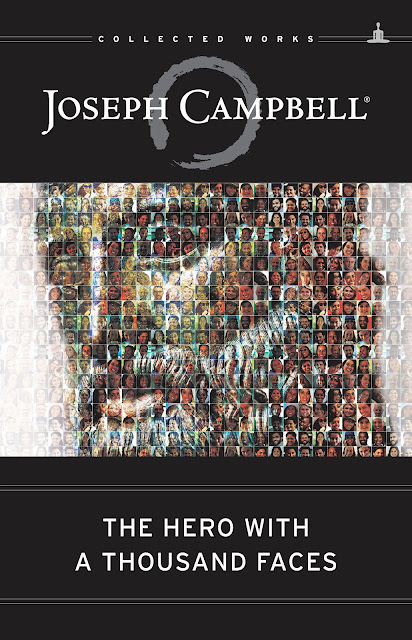

Joseph Campbell


What I love about this book:

First off, just going over the sheer scope of myth and religious stories that this book addresses, you get a really cool survey of many stories from all over the world. It’s a regular smorgasbord of global culture references that, while a bit scattered in its approach, still gives you a great bird’s eye view.

However, the central thesis of Campbell’s book is that we’re basically all telling the same story. The monomyth is an interesting concept that any storyteller should be at least aware of—and while Joseph Campbell may not have invented the Hero’s journey exactly, he did popularize it with this book. Basically, what the Hero’s journey gets at is a distinct pattern to how we tell stories, especially myths.

“The Hero with a Thousand Faces” tries to demonstrate that this impulse and this innate pattern to myth and religion is cross-cultural, occurring in both western and eastern cultures. There is something about that idea that I find beautiful. The whole concept dovetails with one of my values—that we are all more alike than different, and yadda, yadda, yadda.


What I don’t love about this book:

As interesting as this book might be—it wasn’t exactly what I expected, even though I didn’t quite know what to expect.

I think my biggest problem with “The Hero with a Thousand Faces” is that it goes down some pretty speculative roads undergirded by a combination of Freudian and Jungian psychology, which while fascinating, is firmly out-of-date. To be fair, this wasn’t so starkly true back when Campbell wrote the book, but even in 1949, Jung’s Analytical Psychology was heavily criticized. 

Ultimately, to lean on a cliché, it’s one of those; if it sounds too good to be true, it probably is, situations. I think that Jung’s idea, which Campbell leans on heavily with this book, regarding a collective unconsciousness that we’re all connected to and have access to sounds super cool—as science fiction. There isn’t a shred of verifiable evidence that there is any such thing as a collective unconsciousness that can’t be explained by the mere fact that we’re all situated in a closed ecosystem, often consuming the same media, or cross-pollinating between cultures.


This preview is an Amazon Affiliate link; 
as an Amazon Associate, I earn from qualifying purchases.


Parting thoughts:

One of the main critiques of Campbell’s work is that to arrive at the conclusions he wanted, he cherry-picked his examples. That, and convincingly sounding like he knows what he’s talking about, makes him seem all the more revelatory. What I’m describing here isn’t actually wisdom—it’s sophistry—a form of clever but fallacious argument that we get from the Greeks.

I’m not suggesting, one way or another, if it was Campbell’s desire to deceive. My intuition is that it wasn’t, but still, this book ultimately rings hollow for me.

For an example of why: let’s take something like our concept of a serpent as a symbol. Well, if you’ve read the bible, you’ll know the story of Adam and Eve—and well, spoilers—but if it weren’t for that damn deceitful snake, we’d all still be chilling in paradise. The lesson? Snakes are universally thought of as evil. Need another example? Jörmungandr in Norse mythology is one of Loki’s children, it’s a giant serpent, and during Ragnarök, it kills Thor! In some Native American traditions, the rattlesnake regarded as the grandfather of snakes caused tempests.

So, snakes are evil. Seems pretty universal, right?

But what I just did there is bullshit. It’s an example of sophistry. While everything I said is true—well, as true as myths go—they’re examples I picked to support my foregone conclusion that snakes are evil and everyone thinks so. For instance, in the Native American tradition I talked about, the rattlesnake myth I was cherry-picking has another side to it—yes, the tempest thing is true, but the rattlesnake also makes the fair winds too. To reference the Greeks again, they thought snakes were wise. It’s why we have that medical symbol, the Caduceus—look it up, trust me, you’ve seen it.

This book does a lot of this—work backward from a premise while giving the illusion of working toward one, and it’s what a lot of intentionally and unintentionally dishonest people do out there in our modern world.


Monday, November 22, 2021

Micro Mention "The Aeneid"

Virgil


Both Dido and Camilla in the "Aeneid" are super badass women—and both were done dirty by Aeneas directly and indirectly, respectively, resulting in their deaths, which is just one more reason I don't like Aeneas.

Having read Virgil's "sequel" to Homer's work, it feels like possibly the earliest form of fan fiction complete with its own original character—who is, like, super badass and better than all those original Greek characters. And much like modern fanfiction that engages in this, I don't particularly like that story beat and roll my eyes. That's who the Romans were as a people, though, unimaginative conquerors who were partial to absorbing other people's societies and cultures, slap some different names on them, and then proclaim themselves the chosen ones.

Virgil is especially keen to convince us that Aeneas is so much better than my favorite character in these myths, Odysseus, renamed Ulysses because—again—the Romans were weirdly unimaginative as an empire. Anyway, let us not forget that when all is said and done, Aeneas, the Trojan, lost, because Odysseus, the Greek, wrecked his shit. This whole story of this loser pissing off to Italy to be the progenitor of the Roman Empire mystifies me because I'm unsure why Virgil thought it was inspiring. 

Maybe stoicism? 

The quick synopsis of the Aeneid is the Trojans lose the war against the Greeks, and Aeneas leads them on a road trip across the Mediterranean to finally settle in Italy. Oh, and he gets his wife, and then his girlfriend killed. By the way, notice how Penelope and Circe are still alive, just saying.


This preview is an Amazon Affiliate link; 
as an Amazon Associate, I earn from qualifying purchases


Monday, July 26, 2021

Micro Mention "Medieval Myths & Mysteries"

Dorsey Armstrong


I once referred to the medieval period as the dark ages, which isn’t super relevant to this course “Medieval Myths & Mysteries” by the Great Courses, but I remember Dorsey Armstrong saying once not to do that, and I’ve guilt-wracked ever since.

On a more serious note, even though this is one of the shorter courses, it's got a lot to offer. I especially liked lecture 4 on King Arthur because you'd be hard-pressed to find any other figure than the legendary King of England, who is more mythologized. Whether or not there ever was a historical figure that the legend is based on is endlessly debatable. In any case, if he did exist, a lot of the stories attributed to him are embellished, and the best candidates lived in a time before a lot of the pageantry of kingship existed in England as we know it.


Wednesday, February 17, 2021

Micro Mention "Classical Mythology"

Elizabeth Vandiver


I have been on a whole mythology kick for a while now, and I've found that "Classical Mythology" from the Great Courses lectured by Professor Elizabeth Vandiver was very useful for background information when I was reading "Circe."

This course is a great place to get a boilerplate understanding of myth in the western literary canon. The Greek and then Roman traditions would help shape later luminaries such as Shakespeare, Milton, Alighieri, and too many more to list here. So if your aim is to enhance your understanding of the earliest works of the western literary canon, like those writers, this course might be a good start.

Wednesday, February 10, 2021

Micro Mention "The Hero with a Thousand Faces"

Joseph Campbell


Joseph Campbell was a titanic figure in the mythology community—I don’t quite agree with his thesis of the interrelatedness of all myths, and his concept of the monomyth doesn’t convince me. Still, "The Hero with a Thousand Faces" is an excellent survey of a multitude of myths and is certainly worth reading if you want to be introduced to a lot of different mythologies from all over the world quickly
if not all that thoroughly. 

This is one of those books I had heard about long before I read it for myself, and I'm not going to lie, while it's a fascinating look at mythology, it's disappointing to find out that most of Campbell's contemporaries didn't and don't hold with his theories. My own far less qualified opinion is that Campbell's monomyth smacks of Jungian Analytical psychology, aka Jungian analysis. Which is also a topic I found deeply interesting and insightful, but ultimately more fiction than fact.


This preview is an Amazon Affiliate link; 
as an Amazon Associate, I earn from qualifying purchases.