Showing posts with label religious. Show all posts

Saturday, July 30, 2022

"The Secret of Heaven" by Felix Alexander--Fiction Review

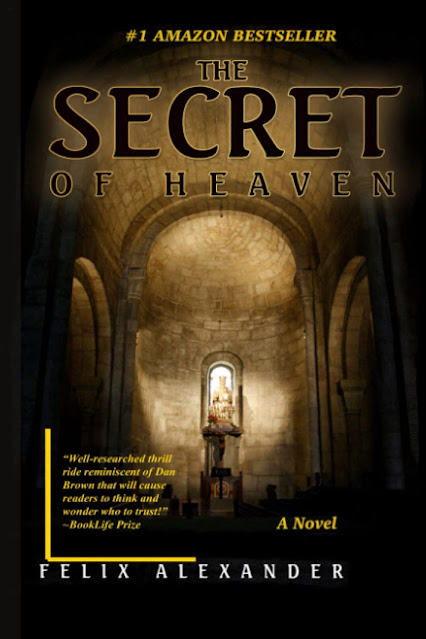
Today’s book, Obscurists, is “The Secret of Heaven” by Felix Alexander, a historical religious thriller that revolves around theological controversies that span thousands of years.

Felix Alexander


***The Non-Spoiler part of this review***


What I love about this book:

Despite not being a religious person myself, I enjoy theological lore, albeit from a strictly literary and historical perspective. Right off the bat with his writing, it’s easy to tell that Alexander is well versed in this subject—more so than I am, at least. Which is one of the chief things I liked about this book because, even though it’s fiction, I got to learn new things. 

Undoubtedly a bit of Dan Brown in this book’s DNA, with even a sly nod and wink at Brown’s titular protagonist. Typically, I’m not the biggest fan of that kind of thriller/historical fiction and have to be in an odd humor to pick up such a book. Still, though, I’m glad I picked up “The Secret of Heaven” because it managed to surprise me by grabbing my attention early on and holding it all the way to the end.

There is no denying that it’s an exciting book. The characters are almost always on the move, and even in the rare moments they aren’t, the tension gets ramped up with every scene as more-and-more revelations come to light. This only makes the antagonists of this story even more deadly as they become increasingly desperate to find the lost bible.

Supernatural elements are present in this book, but I really liked how Alexander primarily played them off stage from the main plot.


What I don’t love about this book:

This world is lousy with secret societies doing—whatever secret societies do with their endless amount of free time and resources. I’m skeptical of secret societies in fiction that control the whole worldwide economy because—to put it delicately—people suck at keeping anything secret. So skeptical, in fact, that I find a secret society that has been masterfully kept to the shadows for centuries to be more fantastical than angels or dragons. That’s how little of an opinion I have of people being able to keep a secret.

At the beginning of this novel, which sort of just trails off, amnesia is introduced as a story element, and, yeah, like I said in my “Project Hail Mary” review, it isn’t one of my favorite story devices. In “The Secret of Heaven,” other than obscuring the details of how precisely Aiden’s mentor Lazzaro de Medici died, it doesn’t add much to the story. Basically, it goes, “ugh, who am I?” “You’re Aiden Leonardo, respected Professor of Biblical Studies, and this is your fiancé, who is also a doctor of archaeology, is incredibly beautiful, incredibly talented, incredibly smart, and incredibly fit with martial arts training.” “Oh, yeah, I guess I am Aiden Leonardo.”


This preview is an Amazon Affiliate link; 
as an Amazon Associate, I earn from qualifying purchases


***The Spoiler part of this review***
***Ye be warned to turn back now***


The quick and dirty synopsis:

Our story begins with the aforementioned amnesia-riddled Aiden finding out from his fiancé that he is the prime suspect in the murder of Lazzaro de Medici, Aiden’s mentor, and adoptive father.
Saturday, June 18, 2022

"The Testament of Mary" by Colm Tóibín--Fiction Review

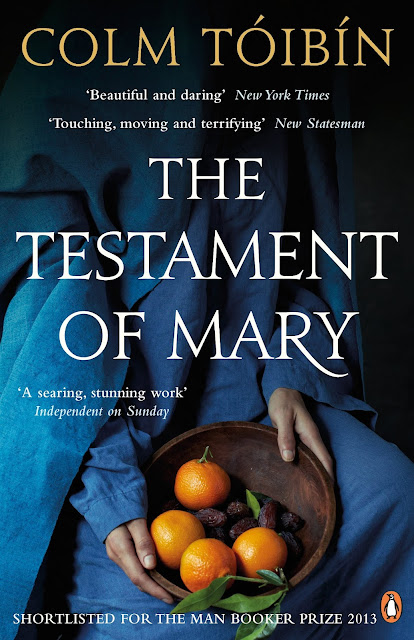
Today Obscurists, we’re going to dip our toes into a new field of fiction I’ve not covered a whole lot, a religious, historical novel about the life of Mary, mother of Jesus Christ. The novella is “The Testament of Mary” by Colm Tóibín.


Colm Tóibín


***The Non-Spoiler part of this review***


What I love about this book:

This book, in my opinion, takes a rather agnostic view on the divinity of Jesus of Nazareth. While the character of his mother, Mary, might doubt his divinity, it’s never exactly refuted. It’s undoubtedly challenged throughout the plot but never wholly suppressed. 

To get a completely different view of the life of Jesus and from his mother’s perspective was very interesting to me. It feels grounded in the world that Mary and her life and perceptions were of our flesh and blood world.

This is also one of those times I feel a first-person perspective really works and sells the story. The entire story is relayed to us by Mary herself. It’s an incredibly intimate experience of this woman’s life, who loves her son while doubting his purpose and the reasons for his demise. At no point does the narrative romanticize what happened to Jesus. It was brutal, vicious, bloodthirsty, and done out of blood lust.


What I don’t love about this book:

It’s challenging to grasp how much time passes in “The Testament of Mary.” The narrative seems to start at the end with the crucifixion of Jesus, and then it dives into Mary’s story, but it didn’t start where I assumed it would, the beginning. It begins when Jesus was already a man and had followers, but it’s unclear how long this has been happening.

As much as I like the intense character study of a doubting Mary, all the other characters in the novella are mere wisps of characters compared to her. Even Jesus, the larger-than-life figure he was, is barely characterized. This may be an intentional choice, given the brevity of this story. Still, if you don’t immediately latch on to Mary’s story and perspective, there really isn’t anything else in this story. 

Ultimately, given its succinctness, “The Testament of Mary” feels like part of a larger work. We get allusions to Jesus’s childhood but no explicit scenes of that childhood. A lot of the goings on around Mary rely heavily on the reader having a secondary insight of the gospels and other Christian historical understanding, which is a long tradition in the western literary canon, but still, it’s a limiting factor for the audience.


This preview is an Amazon Affiliate link; 
as an Amazon Associate, I earn from qualifying purchases

Author’s Website: http://www.colmtoibin.com/


***The Spoiler part of this review***
***Ye be warned to turn back now***


The quick and dirty synopsis:

“The Testament of Mary” starts with Mary talking about her lonely existence after her son’s death. How she is kept—like a pet—by his followers who bring her food and money but expect her to go along with and support their version of Jesus’s life. Her recollection, however, doesn’t particularly jive with the “authorized” version of events told by presumably the apostles. They typically react to her non-canonical asides with exacerbation and scorn.