Showing posts with label Mental Health. Show all posts

Saturday, August 13, 2022

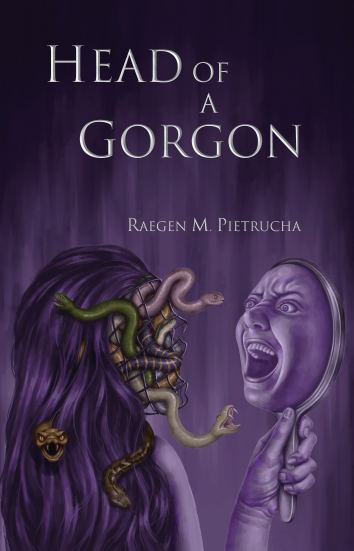
"Head of a Gorgon" by Raegen M. Pietrucha--Fiction Review

Today Obscurists, we’re diving into another book on poetry. Full disclosure—these poems and the overall narrative of this book touch on violence, sexual and otherwise. It also involves mental health, including straying into the realm of suicide ideation, so it’s worth keeping that in mind before picking it up. Besides that, “Head of a Gorgon” by Raegen M. Pietrucha is thought-provoking and visceral.

Raegen M. Pietrucha


What I love about this book:

Succinctly put, “Head of a Gorgon” is an incredible read—it’s short, so I flew through it in one sitting, but I also felt compelled to re-read portions of it again, more than once. 

I’m a sucker for anything touching on Greek myth ever since I read Madeline Miller’s “Circe,” which I’ve also reviewed. Pietrucha’s work hits in the same vein as that novel—reimaging a female character from classical myth as someone more complicated than a straight villain—while approaching the subject from a wildly different angle.

I found myself enjoying the structure of this book—a narrative told through poems—it got me to do two things I seldom do; first, I read a physical paper book with my terrible eyes, and second I read a poetry book which is always a challenge for me. Overall, still a rewarding experience. 

From start to finish, it’s hard to put down or even take a break from because each bit is laser-focused and leads right into the next one. So quickly, I would find myself on the treadmill of, “well, I’ll just read one more poem,” and then it would be another one after that, and after that, and so on and so forth.


What I don’t love about this book:

As much as I enjoyed this narrative approach to poetry—it’s still poetry. So it’s a stretch for me, and I need to be in the right frame of mind to enjoy any poetry. I’m constantly battling the feeling when reading it that I just don’t get it, and it’s going over my head. 

Poetry is one of those creative forms of writing I wish I were better at writing and enjoying, but people can also hope for wings. My attempts all come off as artificial to myself. So really, these are more things I’m disappointed in myself than “Head of a Gorgon.” Ultimately, I found the experience of this book sublime, even with its darker moments. Since it slots into a section of literature I’m not all too familiar with, it’s difficult for me to grasp onto anything to critique. My experience was pretty uniform from start to finish; I was pleasantly surprised.


Author’s Website: https://raegenmp.wordpress.com/


Analysis:

While I’m sure almost everyone in the world knows who Medusa is, still knowing a bit about Greek mythology adds immeasurably to the experience of these poems. For instance, when the conversations between M and P are happening, it’s obviously helpful to know Medusa’s story to deduce who P is in this context. But less obvious is—there are a lot of references to water in these poems, and at first, that might seem confusing because Medusa isn’t the same snake-like monster as Scylla, who spent her time munching on sailors like Odysseus’s men. But, if you know Medusa’s parents and how prominently M’s parents play a role in these poems, especially at the beginning and the end—the references to water make much more sense.

I also liked the shedding skin sections—in theme and style. It’s a clever call back to earlier poems in the narrative of this collection presented through deconstruction to change the meaning of those earlier poems. It had to have taken some serious planning to execute.


Parting thoughts:

In literature, there are a lot of women who get short shrift, especially in myths. For as much as I find Greek mythology fascinating, women had few roles, and in Scylla, Circe, Medusa, and Calypsos cases—to create a short list—they are often antagonists our male heroes have to overcome. If they aren’t dutiful wives—then they’re witches, seductresses, or straight-up monsters, with no in between.

The real power of a narrative like in “Head of a Gorgon” is to take that negative persona and flip it on its ear. It wasn’t until the modern era—as far as I know—that anyone considered the qualia of what it was like to be in Medusa’s head, or any of them for that matter.

I believe that context matters—with context comes understanding and empathy. Redefining these ancient characters’ context is creative and breathes new and better life into them. I think that is the heart of what I liked the most about this book and others like it.

Monday, March 14, 2022

Micro Mention "Stress and Your Body"

Robert Sapolsky


Feel stressed sometimes? Stressed right now, maybe? Want to learn what it does to your body? Then this course, "Stress and Your Body," lectured by Robert Sapolsky, is just the thing.

This is the second lecture series I've listened to by professor Sapolsky, and I've also read his memoir "A Primate's Memoir." He's obviously brilliant, but what I think I value most about him as an educator is his objectivity mixed with a wry sense of humor. It's dry humor, sure, but I'm always surprised how quickly his lectures seem to go by because of how engaging I find him.


Monday, January 10, 2022

Micro Mention "Where Darkness Meets Light"

Sabrine Elouali


I'm not a poet myself, but as an amateur who can appreciate it, I feel that Sabrine Elouali's poetry in "Where Darkness Meets Light" can speak movingly to anyone who has experienced chronic anxiety or depression. It highlights that feeling of being stuck and learning to move past it.

In my life, I'm lucky to have only suffered one major depressive episode. It was the tail end of 2008, and it lasted until the first few months of 2010. It's funny how I can remember exactly when it started but not quite when it ended. I guess that's the human tendency to remember the negative more than the positive.

What struck me the most about this collection was the universality of Elouali's writing. I've had so many moments while reading it where I thought, "Oh, I've had this moment. I've thought these thoughts." Though I could never put them down quite as eloquently.


This preview is an Amazon Affiliate link; 
as an Amazon Associate, I earn from qualifying purchases.


Friday, July 9, 2021

"No One Cares About Crazy People" by Ron Powers--Nonfiction Review

“No One Caes About Crazy People” by Ron Powers is informative—often disturbing—and nonfiction, making it all the more pointedly sad. In this book, Powers tells the story of mental illness in America in more ways than one.


Ron Powers


What I love about this book:

This book is a fearless and candid look not just at how poorly mental illness is handled nationwide but what our collective neglect looks like on an individual level. Powers gives you the history of how the mentally ill were treated globally, domestically in the United States, and finally, what that looked like for his sons, who both struggled with schizophrenia. One of which, sadly, did not survive his struggles with depression and schizophrenia. That’s what makes this book so brave. He invites the world into his home, to his family—and to their pain.

The title of this book is an actual quote from a government official, and it’s a perfect distillation of a pure lack of empathy. She wasn’t saying it to lament the idea that there isn’t enough care and consideration for the mentally ill—it was a statement of she—and how she perceived the rest of us feel about the mentally ill. That’s why Powers made that statement the title of this book because it’s revolting. No matter how functionary or bureaucratic one’s job is—if they hold such opinions and are employed by the government, a light needs to be shined on them—for that is how we start to chase the cockroaches out.

Powers gets right into the nitty-gritty details of mental illness—primarily schizophrenia—he talks about the medications, the treatments, the biology, the pain, and most of all, the stories of its sufferers and their families. It’s a hard subject. But one that can strike anyone.  

Reading about the wrenching injustices, which sometimes, and often, led to the deaths of mentally ill people, while not enjoyable, I feel it is vital. For change to happen, discomfort is necessary. Powers includes a story where a mentally unstable person was shot to death while brandishing a screwdriver. It was said to be an icepick, but it was a screwdriver, and while that individual needed to be dealt with—I hardly believe bullets were the only or even the best option.  


What I don’t love about this book:

One of this book’s greatest strengths to credibility is Ron Power’s lived experience with both of his sons’ illnesses. However, I feel, out of the catharsis of writing down his lived experience and the tragedy of losing his son, the book strays a bit too far into the memoir. I don’t know what it’s like to lose a son, and I hope I never do—and this critique is hard to write, but still, I feel valid.

Mostly, and this isn’t the book’s fault—but the subject matter—I’m really wearied by the world when I read about such apathy. It’s a reminder that people of excellent mental and physical health often just don’t care. Really, the mental health crisis in America is just another symptom of the greater generalized health crisis in America. The rich may get the best care in the world, but everyone else needs to either risk bankruptcy or agonize over incredibly convoluted health insurance.

The mentally ill just have it worse because of the lack of promising programs and facilities to meet their needs, and the ones that do exist—could be better—is a vast understatement. So I don’t love how sad and angry this book makes me, but sad and angry is what is needed for things to get better.


This preview is an Amazon Affiliate link; 
as an Amazon Associate, I earn from qualifying purchases.


Parting thoughts:

This is another one of those books that reinforces the idea in my mind that the greatest evil of our day isn’t malice or even hate, but simply not caring. Apathy is the root because it allows all of the other ills, such as hate, racism, greed, et cetera, to run unchecked. The cliché is—and I’m paraphrasing—when good people do nothing, evil triumphs. I would also offer that they also aren’t all that good for standing by and doing nothing.

We live in a world, unlike anything our ancestors ever knew. The poorest of us can often still find a way to communicate across the oceans with other people—instantly. Two hundred years ago, that wasn’t even a power the mightiest of kings and queens dreamed was possible. As a species, we taught ourselves to fly in the air, and less than seventy years later, we landed on the surface of the moon. So the idea that it isn’t within our collective power, from a monetary or technological standpoint, to care for the most vulnerable amongst us isn’t just archaic—It’s ludicrous.

I think the first step in solving our societal ills is—much like how we lost our respect for and love of kings—we need to stop worshiping our modern-day demigods, the billionaires. No one should have that much power. 

At the time of this writing, a gallon of gasoline in Pennsylvania costs, on average, $3.13. Google cheerfully informs me that, at a perfect conversion—and I get that’s impossible in the real world—a gallon of gas produces thirty-six kilowatt-hours. A human on a specialized treadmill can generate one kilowatt-hour in five hours. So a billion dollars can work out to, rounding down, to 319 million gallons of gasoline, which converts to 11.4 billion kilowatt-hours, or about 6.5 million years on that treadmill—and Elon Musk has 169 times that—again, rounding down!

And I get it—the world is a complicated and often overwhelming place to live in. But it is the only place we got. So my most salient piece of advice is; if someone suggests, or if you happen to think “who cares” about someone’s or something’s pain. That’s wrong.


Friday, May 14, 2021

"Where Darkness Meets Light" by Sabrine Elouali--Poetry Collection Review

Today’s review is going to be very different. It’s a different format, and it’s a different sort of book today than anything I’ve previously reviewed. Today we’re talking about Sabrine Elouali’s “Where Darkness Meets Light,” which is a poetry collection. I think every writer has a poetry phase that they either take off from—or it withers, and for myself, I’m certainly one of the faded. So I’m not a poet or well versed in poetry beyond a superficial level. What I can tell you about in this review is my experience with this collection.


Sabrine Elouali


What I love about this book:

So I’ve read a fair amount in my day—as you might have deduced from a quick perusal of this site—but I don’t read much poetry, and it’s something I have long considered changing about my reading habits. Elouali’s poetry has been very accessible to me, and I devoured the entire collection rapidly. I like that quality of her work because it does one of the things I’ve talked about before as one of my favorite things about reading: it causes me to want to read more.

For anyone who has experienced any form of depression or anxiety, I think that “Where Darkness Meets Light” is a terrific read. Don’t get me wrong, it isn’t because I believe it will cure your depression or anything—that’s the work of a therapist—but because it’s comforting to know of other people who have had similar thoughts and feelings. Relatability is an underrated comfort in the world that I don’t think is championed nearly as much as it should. I think this because if we can take the time to see and acknowledge each other’s humanity more, then maybe things would be better for all of us.

My favorite piece in this collection is “OCD and Me.” It’s not my favorite for its lyrical quality, form, or anything like that, but because it speaks to a very specific fear of mine—I know I’m weird like that. I can’t tell you how much I dread locking doors because it might set off a loop of checking the door, then checking the door, walking away, then returning and checking the door—ad nauseam. So I guess I liked it so much because, by the time I got to the glass of water, I was already thinking, “oh, I’ve done this.”


What I don’t love about this book:

This might be my failing as a dyed-in-the-wool storybook reader who is constantly looking for and overvaluing narrative—but the thing that bothered me the most as I read through this collection is I didn’t understand the sequencing of the poems. 

What I mean is, I couldn’t tell you why one poem preceded another one or vice versa, or why the collection begins the way it does or ends the way it does. It’s not a thematic problem per se, but maybe I’m just too thick to see or understand if there was a greater meta effect intended that I was supposed to be appreciating. My guess—if I were taking a stab at it, is that maybe the overall effect is to emulate the unpredictability of anxiety and depression, which, while authentic, I can’t say I’m a fan of that feature in this or in that.


This preview is an Amazon Affiliate link; 
as an Amazon Associate, I earn from qualifying purchases.


Analysis:

Thematically, “Where Darkness Meets Light” is about depressive thoughts and anxiety, but it’s more than just that too. As its title implies, it’s also about confronting those feelings, and there is a heroic quality to it in that sense. 

Elouali acknowledges pain and struggle in these poems, but she also takes a more inspiring tact as well, and there is a thread moving through each piece—stringing them together—the desire to improve and move beyond. Sometimes she does this in clusters of poems, and sometimes she’ll do all of this in one poem, such as in “Your Brain.”

There is also regression too in this collection which is a very genuine part of depression, which takes courage to write about. No one likes to be depressed, so there is a lot of preoccupation with “getting better” that is honestly exhausting. It’s that feeling of; you have a couple good hours or days, and then somehow you’ve slid back down some mental muddy embankment and are right back in that hole that is depression’s most terrible element. It’s being stuck—stuck with limited mental energy each day to attempt to get unstuck.


Parting thoughts:

I’ve experienced one major depressive episode in my life—so far, and I hope it’s the only time—in the second half of my college years. It lasted for the better part of two years, stretching from the end of 2008 to somewhere in the first half of 2010. You’ll notice that I’m pretty clear on when it started but not so clear when it ended.

For me, the long walk out of depression was incremental and imperceptible to myself, which isn’t very cinematic—but it was my experience with the illness, and it is a mental illness. A lot of my problem was first, not wanting to admit that I was depressed and remained in denial about it for about half of my time. When I then finally recognized what was wrong, I hid it because of shame. All of this—was precisely the wrong thing to do. What I should have done was seek professional help. Why I didn’t do it was a combination of toxic masculinity—tough men don’t talk about their feelings—and an overestimation of my ability to fix my own problems.

Not seeking help and refusing any overture suggesting it is the single greatest regret of my life because, one, I was miserable, two, I strained nearly every friendship I had, and three, all of the wasted listless time feeling terrible. My grades suffered in school; I went from the Dean’s List to the middle of the pack real fast, and my creative output dropped catastrophically. During those two-ish years, creatively speaking, I wrote less than 800 words—total. For context, this blog post is more than a thousand words, and I do this, and other things, every single week. Writing creatively is literally the most important thing in the world to me, and I gave it up, and even when I recovered, it still took me years to get back into the swing of things.

So if you’re even a little worried that you’re depressed or experiencing anxiety issues that are disrupting your day—I am imploring you, begging you, to get help. Don’t do what I did and assume that one day you’ll just wake up and everything will be right as rain. Your time and your life are worth it. You are worth saving, no matter what you might be thinking. Talk to someone—please.

Wednesday, February 3, 2021

Micro Mention "No One Cares About Crazy People"

Ron Powers


I cannot even begin to imagine how difficult it must have been for Ron Powers to write this book—but I am very glad that he did, and can't thank him enough. I hope one day it can be said that most people care about crazy people.

This book is a deeply personal book for Mr. Powers as both of his sons suffered from mental illness, one of which sadly lost his battle with depression. It is as moving a book as it is stark, underscoring the anguish of the mentally ill under the inadequate systems in place for their care here in the United States. The most shocking and troubling thing captured by this nonfiction is outlined by its title, which is the appalling indifference toward sufferers of poor mental health. 


This preview is an Amazon Affiliate link; 
as an Amazon Associate, I earn from qualifying purchases.


Friday, October 30, 2020

"The Collected Schizophrenias," by Esmé Weijun Wang--Nonfiction Review

This Friday, we’re talking about an illuminating book, one part collection of essays, and one part memoir about living with mental illness. “The Collected Schizophrenias” by Esmé Weijun Wang is a sometimes uncomfortable but necessary book written by a woman who lives with schizophrenia. 


Esmé Weijun Wang


What I love about this book:

This book had to take an immense amount of internal fortitude and external support to write. From my admittedly dim understanding of the disease, schizophrenia has to be one of the most all-time difficult conditions to deal with and stay out of an institution. For Wang to put her experiences, and the experiences of others like her, down into writing for random idiots—he said with self-awareness—to read and comment on it took bravery. I wish I knew I was capable of something similar myself, and I admire her immensely for this act of courage.

Wang expresses her thoughts and feelings in her own words, and since you all should know I obviously “read” the audiobook, you should know she also narrates the book—all of this makes the experience that much more powerful. She allows you to experience the horror and alienation of having your mind turn in on itself in an unhealthy way vicariously. If you’re like me and don’t have to experience mental illness regularly, it should make you appreciate your own mental health all the more.

Clearly knowledgeable about the topic, since it’s her lived experience, Wang takes the time to break down the features, variables, and variants of mental illness. She describes the types of medications and treatments there are, and while not an exhaustively comprehensive list of the subject, this book is an excellent introduction to this branch of medicine from the patient’s point of view. 

Though there is a lot of pain and suffering, while listening to Wang’s stories, there are also lighter moments, moments of understanding, and acceptance. Her stories about her time volunteering at the summer camp for children with bipolar disorder, especially resonated with me. Before going, she describes how she didn’t “like” children, mainly because she didn’t allow herself to out of fear that engaging with them might awaken a maternal instinct in her that she didn’t want. But she does go, and even outside of her comfort zone, she manages to do a lot of good. Wang went above and beyond for some of those kids, especially with one boy who didn’t fit in well, even when that task was sometimes a bit thankless.


What I don’t love about this book:

So this is a challenging section to write for this book. I’m not going to be over here like, “I just didn’t feel that her pain was all that bad or explained well enough.” Because that would make me a human monster. Instead, I will talk about aspects of the world that I don’t love that unfortunately needed to be addressed in this book.

My first disappointment was with how well Yale historically dealt with students suffering from mental illness. Spoilers, If Wang’s experiences can be used as a yardstick—not well. It would not surprise me if that’s still the case given how well many institutions of higher learning deal with sexual assault, again, not well. 

Furthermore, the Yale thing is really just a symptom of a larger problem within society, and that’s our apathy toward the mentally ill and disturbed. This is a point better captured by Ron Powers, “No One Cares About Crazy People,” another book related to this topic, than I can do justice here in a blog post. However, its apathy which leads to repeated misunderstandings and mismanagement of people who are legitimately suffering daily, just trying to keep up with the rat race of everyday life.  


This preview is an Amazon Affiliate link; 
as an Amazon Associate, I earn from qualifying purchases.

Author's Website: https://esmewang.com/ 


Parting thoughts:

I believe that a certain amount of our apathy as a society toward the mentally ill stems from another problem we all share more and more. We don’t empathize well with each other.

The world is a vastly complex place, so-much-so it’s often baffling to just one person. It’s drilled into us that the strong survive and the weak don’t. This messaging starts early, too, with kids. This is so prevalent that it sounds radical and new, even today when someone points out that in the wealthiest country in the world at the most technologically sophisticated time in human history—it doesn’t need to be this way. And the solution is deceptively simple, we need to start caring more for each other to work together to solve the problems we all face. 

Empathy is a newer kind of feeling for us as a species. People get the ascendency of humankind all wrong, in my opinion. It wasn’t our thumbs, or our application of brutality, or even our frankly overrated intelligence that built our world. Empathy is what allowed us to cease traveling around in small groups, killing each other on sight, for nearly a hundred thousand years—and trade tools. Then in time, language and stories, until one day we could tell ourselves a story that we were really all the same group of people, and we built the first villages.  

We all share the surface of this rock, hurtling through space, and one day it will likely be necessary for us to journey beyond it to survive long term. But before that, we should really take the time to learn how to care for each other first.