Showing posts with label feminism. Show all posts

Saturday, August 13, 2022

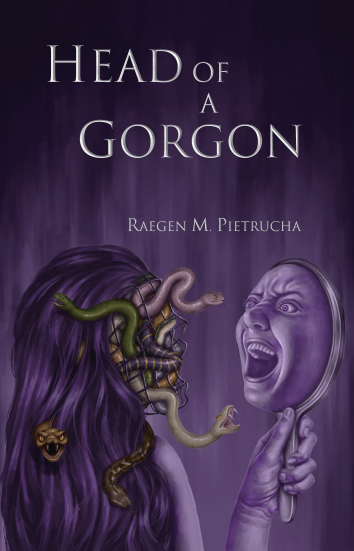
"Head of a Gorgon" by Raegen M. Pietrucha--Fiction Review

Today Obscurists, we’re diving into another book on poetry. Full disclosure—these poems and the overall narrative of this book touch on violence, sexual and otherwise. It also involves mental health, including straying into the realm of suicide ideation, so it’s worth keeping that in mind before picking it up. Besides that, “Head of a Gorgon” by Raegen M. Pietrucha is thought-provoking and visceral.

Raegen M. Pietrucha


What I love about this book:

Succinctly put, “Head of a Gorgon” is an incredible read—it’s short, so I flew through it in one sitting, but I also felt compelled to re-read portions of it again, more than once. 

I’m a sucker for anything touching on Greek myth ever since I read Madeline Miller’s “Circe,” which I’ve also reviewed. Pietrucha’s work hits in the same vein as that novel—reimaging a female character from classical myth as someone more complicated than a straight villain—while approaching the subject from a wildly different angle.

I found myself enjoying the structure of this book—a narrative told through poems—it got me to do two things I seldom do; first, I read a physical paper book with my terrible eyes, and second I read a poetry book which is always a challenge for me. Overall, still a rewarding experience. 

From start to finish, it’s hard to put down or even take a break from because each bit is laser-focused and leads right into the next one. So quickly, I would find myself on the treadmill of, “well, I’ll just read one more poem,” and then it would be another one after that, and after that, and so on and so forth.


What I don’t love about this book:

As much as I enjoyed this narrative approach to poetry—it’s still poetry. So it’s a stretch for me, and I need to be in the right frame of mind to enjoy any poetry. I’m constantly battling the feeling when reading it that I just don’t get it, and it’s going over my head. 

Poetry is one of those creative forms of writing I wish I were better at writing and enjoying, but people can also hope for wings. My attempts all come off as artificial to myself. So really, these are more things I’m disappointed in myself than “Head of a Gorgon.” Ultimately, I found the experience of this book sublime, even with its darker moments. Since it slots into a section of literature I’m not all too familiar with, it’s difficult for me to grasp onto anything to critique. My experience was pretty uniform from start to finish; I was pleasantly surprised.


Author’s Website: https://raegenmp.wordpress.com/


Analysis:

While I’m sure almost everyone in the world knows who Medusa is, still knowing a bit about Greek mythology adds immeasurably to the experience of these poems. For instance, when the conversations between M and P are happening, it’s obviously helpful to know Medusa’s story to deduce who P is in this context. But less obvious is—there are a lot of references to water in these poems, and at first, that might seem confusing because Medusa isn’t the same snake-like monster as Scylla, who spent her time munching on sailors like Odysseus’s men. But, if you know Medusa’s parents and how prominently M’s parents play a role in these poems, especially at the beginning and the end—the references to water make much more sense.

I also liked the shedding skin sections—in theme and style. It’s a clever call back to earlier poems in the narrative of this collection presented through deconstruction to change the meaning of those earlier poems. It had to have taken some serious planning to execute.


Parting thoughts:

In literature, there are a lot of women who get short shrift, especially in myths. For as much as I find Greek mythology fascinating, women had few roles, and in Scylla, Circe, Medusa, and Calypsos cases—to create a short list—they are often antagonists our male heroes have to overcome. If they aren’t dutiful wives—then they’re witches, seductresses, or straight-up monsters, with no in between.

The real power of a narrative like in “Head of a Gorgon” is to take that negative persona and flip it on its ear. It wasn’t until the modern era—as far as I know—that anyone considered the qualia of what it was like to be in Medusa’s head, or any of them for that matter.

I believe that context matters—with context comes understanding and empathy. Redefining these ancient characters’ context is creative and breathes new and better life into them. I think that is the heart of what I liked the most about this book and others like it.

Tuesday, November 30, 2021

Talking In Obscurity, "Circe," by Madeline Miller

Madeline Miller


Or Download This Episode Here:


Ok, Obscurists, we're at the end of another month, so it's podcast time. For this one, Steven and I talk about "Circe" by Madeline Miller. This book is a wonderful modern reimagining of a minor character from "The Odyssey."

I am proud that at no point in this podcast did I fall back on my over-used explanation that it's like "Wicked" but with Greek Myth. Of course, I just did that here, so... clearly, I can't help myself. In any case, if you'd like to read my full review of this book, you can find it here.


This preview is an Amazon Affiliate link; 
as an Amazon Associate, I earn from qualifying purchases.

Author's Website: http://madelinemiller.com/

Wednesday, March 17, 2021

Micro Mention "True Grit"

Charles Portis


"True Grit" by Charles Portis is a western novel that is genuinely subversive the more-and-more you think about it. On the one hand, clearly in love with the genre, it doesn’t shrink from critiquing that genre, either, through the eyes of its strong female protagonist.

It isn't parody per se, but by making the POV character Mattie Ross, a fourteen-year-old girl, we see the classic American western setting and the people who inhabit it in a novel way. In more ways than one, Mattie, not a typical girl of her age, typifies some of the core character traits we come to expect from westerns. Traits like courage, self-reliance, practicality, perseveranceaka grit, and I'd argue she demonstrates these qualities more so than even her allies, the U.S. Marshall and a Texas Ranger. Both of those characters are who you'd expect to be the exemplars of the genre, but interestingly, both are clearly subordinate to Mattie herself.


This preview is an Amazon Affiliate link; 
as an Amazon Associate, I earn from qualifying purchases.

Monday, February 15, 2021

Micro Mention "Circe"

Madeline Miller

"Circe" by Madeline Miller was the greatest book I read last year. I even wrote a full review of it here in case you missed it.

This cannot be an original observation, but it works and tugs at the heartstrings much in the same fashion as Wicked. Circe, by far, isn't one of the most celebrated goddesses of Greek Myth. Often she's referred to as a clever womannot a compliment in ancient Greek societyand an evil sorceress who famously turns men into pigs.

Miller, much in the same spirit as Gregory Maguire in his novel, explores the why of Circe's seemingly "evil" actions. Without giving too much away, it's unsurprisingly because people are douchebags to her, and she's defending herself. This is a clever story beat because it underscores the depressingly common narrative of blaming the victim.


This preview is an Amazon Affiliate link; 
as an Amazon Associate, I earn from qualifying purchases.

Author's Website: http://madelinemiller.com/


Monday, February 8, 2021

Micro Mention "The Handmaid’s Tale"

Margaret Atwood


"The Handmaid’s Tale" by Margaret Atwood is one of those dystopian novels that should make you uncomfortable and be required reading like "1984" and "Fahrenheit 451." Why this book is particularly sinister is it feels more plausible than the other two.

It especially feels real in light of the recent political unrest at the Capitol. After all, Gilead got its start after most of Congress was executed by a radicalized group of dissidents. If you can't see the parallels there, I don't know what to tell you. 

I would like to think that no American would actually want a totalitarian state for absolute control that allows the stripping away of women's agency as people. To reduce them to nothing more than babymaking factories or trophies. But I'm less certain of that today more than any time in the last decade. 


This preview is an Amazon Affiliate link; 
as an Amazon Associate, I earn from qualifying purchases.

Author's Website: http://margaretatwood.ca/


Friday, December 25, 2020

"Circe," by Madeline Miller--Fiction Review

Merry Christmas! Did I review a book relevant to the season? No, of course not! Instead, let’s talk about Madeline Miller’s “Circe,” a reimagining of Greek myth from the witch of Aiaia’s perspective.  


Madeline Miller


***The Non-Spoiler part of this review***


What I love about this book:

This was my favorite book I read all year. It’s part of the reason why I selected it for my final review this year. “A Song of Achilles” was good, but Miller blew me away with “Circe.” 

My favorite part—and this is a tiny bit of a spoiler here—are all the early scenes with the goddess Circe as a single mother. Not inherently a funny book, Miller presents the shock of raising a mortal son for a goddess as something both breathtakingly sweet and funny, because Circe who requires no food or rest to live, is still exhausted by motherhood. 

Circe, like a lot of women—even goddesses—in Greek mythology, gets a pretty bad rap. To see her image reimagined and rehabilitated by Miller in “Circe” is a really cool update. I’ve said this before, but for me, it hits all the same notes as Elphaba’s story in “Wicked.” We learn through the course of this book that Circe isn’t just some witch who turned men into pigs, and Odysseus shacked up with for a while—I mean, she is those things—but also so much more. 


What I don’t love about this book:

Circe’s family because they all range from apathetic to malevolent pricks. This is a bit of a cop-out here because I wouldn’t change a thing here with their characterizations; them being awful is what creates the contrast for us to see how Circe is different. 

Miller can be wryly funny, in that dry sort of way as underscored in Circe’s adventures in motherhood, and once I read that chapter, I thought, why isn’t every chapter like this? Ok, maybe that’d be a bad idea because this story is more of a drama about finding oneself and the nature of a life well-lived—but still, a bit more of that humorous tone could have found its way into this story. I was surprised by it because I don’t remember Miller exercising those muscles at all in “The Song of Achilles.” 


This preview is an Amazon Affiliate link; 
as an Amazon Associate, I earn from qualifying purchases.

Author's Website: http://madelinemiller.com/


***The Spoiler part of this review***
***Ye be warned to turn back now***


The quick and dirty synopsis:

Circe begins her story with a brief introduction of who and what the Greek Gods are and who her parents are—the great Titan of the sun Helios and the nymph Perse. She also explains the war between the second-generation gods—the Olympic gods—and the Titans. Like Circe’s father, some of the Titans threw their lot in with Zeus in the war. In doing so, they were spared the rest of the Titans’ fate, namely, being banished to the underworld. After the war, there was distrust between the gods, and in the society of gods, the Olympics were firmly the ruling caste. That means the remaining Titans were just as solidly second class, and the tension between the groups was constant.

Friday, July 10, 2020

"I Am Malala," by Malala Yousafzai--Nonfiction Review

Hey, it’s Friday, so as the song goes, let’s take a look, it’s in a book, and we can go anywhere. So why don’t we take a trip to Pakistan, specifically to the Swat valley during the time the Taliban occupied the valley? I was fired from my first day on the Reading Rainbow by the way—but anyway, today’s book is “I Am Malala” by Malala Yousafzai.   

Malala Yousafzai


What I love about this book:

This book scratches the same itch and feeling as “The Kite Runner” but has the added dimension of being about a real person. You get a snapshot of the culture as seen through Malala’s eyes, and the book puts a human face to the Pashtun people living in the Swat valley. 

Malala’s bravery is the same stuff they wrote epic poems about in antiquity—but in all of those, the hero is usually some burly man slaying some monster. Malala, on the other hand, surpasses that in her attempt to reason with people as far gone as Taliban true believers because it’s the right thing to do according to her interpretation of her faith. She stood up to the radicals and argued that women deserve an education, full well knowing that the Taliban’s typical rebuttal to a viewpoint that they disagree with usually involves a Kalashnikov and a lot of bullets. Then after she was shot in the head by the Taliban and nearly dies, she still makes it her life’s work to fight for women’s rights. 

I admire her candor in telling her story as a young woman in a culture that is by any western standard, is very hard on all women. Still, it’s kind of nice to read about little details of her life, like her and her friend reading the Twilight novels, and her father taking her whole class on field trips. These heartwarming little anecdotes break up the truly terrifying parts when the Taliban came to the Swat valley and generally ruined everything.

Another thing I respect about her honesty is that Malala never tries to describe herself as a perfect person. In fact, she tells numerous stories about how she could be petty, a little vain, and sometimes jealous. It makes her seem like a real person, which of course, she is since this isn’t fiction. As a flawed person, her bravery to stand up to and try to reason with literal murderers seems even more heroic.  


What I don’t love about this book:

After the horror-filled introduction, which is read by the author, if you go in for the audiobook version, there is a bit of a wait until we get into Malala’s story. She had opted to tell the story of her father’s life and her mother’s before she was born. I don’t begrudge her that, clearly, she loves her father—her mother too—and her father seems like an extraordinary man in his own right—but if I’m nitpicky, and I am, it does go on for a while. 

On the subject of things I don’t like that happened, and not to be confused with a suggestion of not including them in the book, I find it disheartening how western culture has often failed these people. A popular self-inflicted myth of Americans is we tend to see ourselves as the heroes of the world. We do this without so much as polling the rest of the world for their opinion on the matter. 

Turns out, at best, we come off as paternalistic and patronizing—at worst, greedy imperialists in all but name only who don’t care about other people’s sovereignty. That viewpoint was greatly exasperated and underscored in Malala’s narrative when President Obama sent in our Navy Seals to raid Osama Bin Laden’s compound, and ultimately kill him, without so much as a howdy doody to the Pakistani government explaining our intentions. President Obama took that action for operational security reasons so as to not tip off the target, was that the right call? I’m not qualified to second guess him on that point, so I’m of the belief that I’d just have to take his word for that was the case. It’s not like the president particularly cares about my—a random schmuck on the internet—opinion. Anyway, I can see her point on why the Pakistani people were upset about the whole thing. 


This preview is an Amazon Affiliate link; 
as an Amazon Associate, I earn from qualifying purchases.

Author's Website: https://www.malala.org/

Parting thoughts:

When I was a freshman in college, I had a professor loosely “teach” us about the geography and society of the Swat valley. It wasn’t until nearly a decade later, when I read this book that I had the realization that, oh, that professor was a racist. This professor explained to my class that those people were all warlike and are unconquerable because they train all of their children to be warriors. One of the “practices” this professor taught of the people of the Swat valley is mothers would randomly slap their children, unprovoked by anything, to teach them the valuable lesson that life is capricious and violent and condition them for the eventual rigors of the battlefield. 

Like most good bullshit, there is a kernel of something that is part of the truth. The people of the Swat valley historically speaking were very good at setting aside their numerous differences to repel invaders. Malala even talks about a famous battle where the Pashtuns, a group of people spread out between Afghanistan and Pakistan, including the Swat Valley, repelled the British, and fun trivia it’s the same battle where Sir Arthur Conan Doyle’s Dr. Watson was injured. The whole slapping babies part of the lesson? Utter made up nonsense as far as I can tell, but who knows, maybe someone somewhere does that, but I’m pretty sure that would be a disturbed individual, not a cultural norm. Like I said in my “The Kite Runner” review, my vision of what the Swat valley was like had been warped by the general perception that everything that is reminiscent of the middle east—or middle east adjacent in Pakistan’s case—is endless desert.

Clearly, with this photo from Wikipedia, you can see that it isn’t true.


To think, in a place so beautiful, some of the worst modern-day atrocities happen. If there is a God who created everything and everyone, it’s hard to imagine that shooting children in the head for the crime of being a woman and wishing for an education was what he had in mind.  

Friday, February 28, 2020

"The Feminine Mystique," by Betty Friedan--Nonfiction Review

Once again, it’s Friday, and that means another review. In today’s non-fiction review, we’re talking about “The Feminine Mystique” by Betty Friedan, the book that launched second-wave feminism in the United States. This can be a divisive topic for some, especially coming from me because I’m a man of very Nordic descent, but I like the book, and it’s my blog, so that’s why we’re talking about it. 

Betty Friedan


What I love about this book:

The book starts out explaining research the author did in the form of interviews with her peers, and as it goes on, it almost reads like a horror story. The feeling I get is there is a vast conspiracy happening, mainly targeted against women, but also society at large—and we’re all unwittingly a part of this conspiracy.

It delves into how the pressures of society, especially a post World War Two American society, crushed people into socially “acceptable” roles. Somehow we allowed in the land of the free—as we like to style ourselves—a status quo where it didn’t matter who you were, what you wanted, or what your skills and interests were. If you were a man, you did this, and if you were a woman, you did that, any deviance from the mold was terrible—no exceptions. That’s the essence of the problem that “The Feminine Mystique” captures and illuminates.

I like how the author demonstrates that even the entertainment of the day, and the media, reinforced gender stereotypes. It still does, by the way, just differently. She outlines how this, in combination with how casually discrimination was accepted as the norm, served to gaslight an entire generation of women. As the book goes on, like a horror story as I’ve already mentioned, everything, even mundane things like household appliances, take on a sinister light.

Powerfully, in addition to its feminist message, the book also captures an alternative snapshot of that post-WW2 American history I’ve talked about in a prior review. It shows that same time that is often remembered as being an optimistic time for the United States, as being more complicated than just smiles and rainbows for the world’s only superpower at the time. This is all unintentional, of course, because when “The Feminine Mystique” was published, it was a contemporary book for its time, not a history book. It does demonstrate how not everyone found the boom times after the war to be all that great, women for one. Friedan talks about how a lot of women, who were accustomed to working for a living, were suddenly forced out. This happened because there were a lot of returning men, soldiers, who needed jobs.   


What I don’t love about this book:

“The Feminine Mystique” has a blind spot for people—yes, including women—who were outside of the author’s immediate social circles—or class. The focus is on the struggles of middle-class white women, nearly exclusively, and only whispers over any woman outside of that scope. Obviously, sexism is bad for all women in all walks of life. However, the book’s primary stories address things like the monotonous suburban hell for women who have nothing else in their lives other than their husband, their children, and their house. This story is sometimes spiced with the addendum of how young academically inclined women gave up their degrees or careers to be admitted into that particular brand of hell—a theme clearly informed by the author’s own lived experience.

However, as bad as an endless existence of cooking, cleaning, buying washing machines, rearing children, and shattered dreams genuinely are—and there is no argument to say that isn’t a monotonous existence—you know what could be worse? Being a black woman in the 1950s or 1960s. Not telling the story of how sexism, on top of all the pressures of being a minority, and how it magnifies everything, is a huge missed opportunity. Sure, being stuck in an endless cycle where considering buying new curtains is the be-all and end-all of your days is nightmarish. But not being able to afford curtains and expect to feed your children, while watching some rednecks dressed in sheets, burn a cross on your lawn through that window you can’t provide curtains for is a whole new level of nightmare.      


Parting thoughts:

Betty Friedan, like a lot of historical figures, was also a product of her time. While in certain regards, she should be held up as a heroine for her radical belief—at the time she was alive and working—that women are just as much independent persons, with agency and dreams as much as men, she did have her failings. She wasn’t what you could call a friend of people outside of the heteronormative—to say the least.

This isn’t addressed in the book—but despite Friedan’s clarion call for women to be treated as people, as equals, and for freedom to live one’s life on their own terms—she was not a supporter of anyone who couldn’t be considered heterosexual. She did not honestly believe in gay rights for most of her life, often expressing “unease” with gay people. She did, however, evolve on this issue as her life went on, softened on earlier positions she had taken. Eventually, she even offered tepid support to lesbians and gay men. I say tepid because everything she did still reminded, even toward the end of her life, that she was still mired in the past. Like a beloved grandparent who intellectually has accepted that they can’t say, or do, things that they used to but never fully emotionally got there.

I bring this up because I’ve noticed a trend where we castigate historical figures for not being better than their times. Some diminish a person’s positive works because they failed to rise above the normal of their day. I agree it is a perfectly legitimate feeling to be disappointed by a historical person, even one’s own heroines and heroes, as an H.P. Lovecraft fan I have to be acutely aware of it every time I read his work. However, to disregard everything they ever did or achieved, simply because they don’t live up to our current standards is unfair—for one, they never got the chance to live in and develop from a young age in today’s contemporary society. Maybe if they had, their sharper edges would have been blunter, or wouldn’t exist at all. The counter-argument would have to assume that people are somehow born better people today, which is nonsense. I believe people of every era are born a mixed bag of good and bad, in about the exact same degree, the flavors of their virtues and vices can be a bit different, but it’s all just a matter of perspective.