Showing posts with label Urban Fantasy. Show all posts

Saturday, August 27, 2022

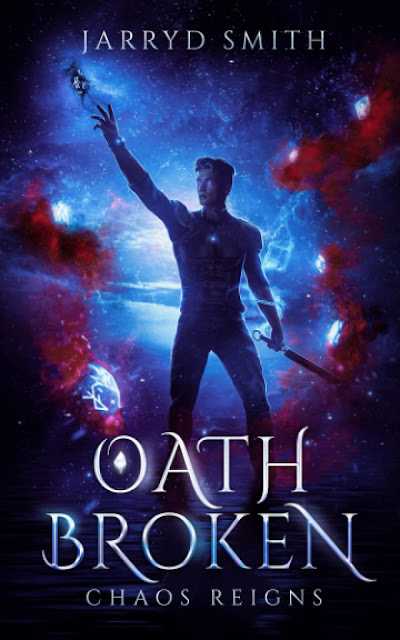
"Oath Broken" by Jarryd Smith--Fiction Review

This evening Obscurists, we’re diving into an urban fantasy novel with Jarryd Smith’s “Oath Broken.” It’s a fantasy story with a big central mystery and a lot going on in the outskirts. 

Jarryd Smith


What I love about this book:

“Oath Broken” has a distinct urban fantasy style that should appeal to anyone who likes books like “The Dresden Files.” Magic and fantastical creatures are just on the fringes of society, blending into everyday life. It’s a cool atmosphere, in my opinion. 

Smith does an excellent job at making the world of “Oath Broken” feel big, with many entities with their own agendas going about their business. I appreciate the sense that the world of this novel doesn’t seem to pivot on the main character or his problems, which I think is a subtle art a lot of storytellers get wrong. Kaleb is the protagonist of this story, but he isn’t the alpha and omega of this universe. He’s just another guy who lives in the world, a talented guy, sure, but one among many.

In other posts, I’ve mentioned this numerous times—I’m a sucker for a good action scene, and Smith doesn’t disappoint in this book. The various fantasy-style showdowns in this novel are all distinct in what’s going on. The ebb and flow of the battles that take place have their own character, so they never become repetitive or uninteresting.

Also, I appreciate Kaleb’s meticulous approach to what sorts of gear and equipment he brings into any situation—as a consummate wizard player in D&D, I value preparation over spontaneity any day.


What I don’t love about this book:

Everyone’s default communication style in this book is sarcastic disdain. Nobody seems to like each other or even can have a conversation without someone being utterly dismissive. It’s all—“that’s impossible,” “you’re a liar,” “you are useless,” and “why don’t you just leave?” 

That last one, I actually started to agree with thinking, “Kaleb, buddy, budgie, boopy, these people suck; why are you trying so hard?” At no point after Kaleb does something extraordinary or saves everyone for the 9th time that day in a heroic or self-sacrificial way does anyone ever say, “hey, thanks, Kaleb. Good Job. I guess I was incorrect in my assessment of you.” No, even right after Kaleb does something altruistic that directly refutes someone’s negative perception of him or his abilities, it’s still on the caliber of, “I hate you, Kaleb. I would say I hope you die in a fire, but I also think that might be too quick a death. Now, if you’ll excuse me, with zero self-awareness, I’m going to rush headlong into a dangerous situation—against your recommendations—that you will inevitably bail me out of later.” 

Other than that, my other dislikes are pretty trivial. There was some disconnect for me regarding what was going on with the prologue and epilogue characters and the main story. It was all ominous things are afoot and how that relates to anything is unclear and ambiguous.

Also, Smith could get stuck in explain mode for certain things: how they look, act, work, et cetera, et cetera. I get the explanations as world-building material, but I’m also disenchanted by world-building when it comes at the expense of the plot or its pacing.


This preview is an Amazon Affiliate link; 
as an Amazon Associate, I earn from qualifying purchases


***The Spoiler part of this review***
***Ye be warned to turn back now***


The quick and dirty synopsis:

After a prologue with death and various deities associated with death, doing—well, death stuff—the story opens with Kaleb going to a wedding. The bride-to-be is less than thrilled about Kaleb’s choice of wardrobe and makes it clear. But Kaleb is at the wedding as his friend Sam’s plus one and so makes the best of it. He even hits it off with a beautiful redhead at the reception named Alex, and they have quite the evening together…

Wednesday, October 13, 2021

Micro Mention "The Assassins of Altis"

Jack Campbell


"The Assasins of Altis" was probably my favorite one yet of Jack Campbell's "The Pillars of Reality" steampunk series. He has a way of making his characters grow on you until you feel incredibly attached to them—and then he threatens their lives. I love it.

There is something about Campbell's stories that always draw me in. Even when I notice flaws, the world he creates in his stories never cracks open and falls apart for me. I'm not entirely sure at this point if my firm suspension of disbelief is a genuine effect of his quality as a storyteller or maybe I've just been so long immersed in his imaginary realms I just can't tell the difference anymore. 

In any case, I often find myself wishing the real world worked more like a Jack Campbell story than it does. There are still great, possibly world-ending perils in Campbell's stories, but there is always a core of thoughtful earnest people willing to put everything on the line to face those challenges. They aren't zealous or god-like entities and aren't immune to consequences that might result in their tragic deaths. But still, they struggle, fight, and almost always succeed because they do what they believe is the right thing to do for the good of everyone.

I'm just saying I wish there were more people like that in the real world.


This preview is an Amazon Affiliate link; 
as an Amazon Associate, I earn from qualifying purchases.


Friday, October 16, 2020

"Ink and Bone," by Rachel Caine--Fiction Review

Happy Friday, my dear obscurists, and hey, I want to stop for a moment to let you know that to me, you’re magical… you’ll get it once you’ve read this review. Speaking of which, today’s review is of “Ink and Bone” by Rachel Caine, an alternate history/fantasy, heavy on the fantasy. 


Rachel Caine


***The Non-Spoiler part of this review***


What I love about this book:

I like the alternate history elements in this book, alternate history as a subgenre has been growing on me in the last few years. It’s fun to see how the world might be altered if certain events in the past were different. As the reader, you can be transported to familiar locales that are also radically different, allowing you to rediscover them in a new way.

The main character, Jess, is one of those characters who comes from a family who are, by this world’s laws—criminals. Jess, however, early on in this story, gets the chance to join the Great Library and go legit. It’s a character angle I’ve always liked, the rogue who wants to go legit but still has one foot in his family’s business, which is illegally selling books.

Once I got deep enough into the plot and met the ensemble cast of characters, I grew to love them for their individual virtues and vices—even the curmudgeon Scholar. Caine infuses each of her supporting characters with many facets like her protagonist, which gives them a three-dimensional feel.  


What I don’t love about this book:

So—this book wasn’t what I thought it was going to be. Sometimes, that’s a good thing, but I was hooked in by the high concept of: what would the world be like if the Great Library of Alexandria never declined but instead grew to supreme political power in the world? Love that—I’ve recently become engrossed with the topic of the Great Library and the city of Alexandria in general. 

The synopsis I read mentioned alchemy, but I honestly didn’t overthink it when I bought the book. After all, alchemy was a thing in history. It was mainly for charlatans and cranks pulling dubious pseudoscience to impress those who didn’t know better—but sometimes even respected founding fathers of modern science like Sir Isaac Newton dabbled in it and convinced themselves of its efficacy. What I thought this book was about was primarily an alternate history. What it really is, is mostly a fantasy story where magic is real, and the Great Library controls it. Alchemy is code for magic is totally real. Had the Great Library not been burned by Julius Ceasar—probably an accident despite popular belief—and didn’t eventually pitter out after another two hundred years or so, the world would be undeniably different. While I’m not sure what would have happened, magic being discovered as real wouldn’t be my guess. 


This preview is an Amazon Affiliate link; 
as an Amazon Associate, I earn from qualifying purchases.


***The Spoiler part of this review***
***Ye be warned to turn back now***


The quick and dirty synopsis:

The prologue begins with the main character, Jess, as a young boy, participating in his family’s “business,” which is illegally running books for clients. This is illegal because, in this version of Earth, the Great Library of Alexandria never declined but thrived and became the world’s most powerful political force, a bit like the Vatican at some points in history, and they have a monopoly on all printed works. So book-running is illegal and often dangerous, and Jess’s family achieves it by literally running books en masse through London’s streets, past the authorities, and to their clients. Jess’s father has no compunction with using his young son to run books with all the other kids he employs—even though the same thing got Jess’s older brother killed. Jess manages to deliver a priceless book to a fabulously rich resident of London, who turns out to be a deviant I hope is unique to this world. He’s what they call an “ink-licker,” which means he eats one of a kind books.