Showing posts with label YA. Show all posts

Monday, February 28, 2022

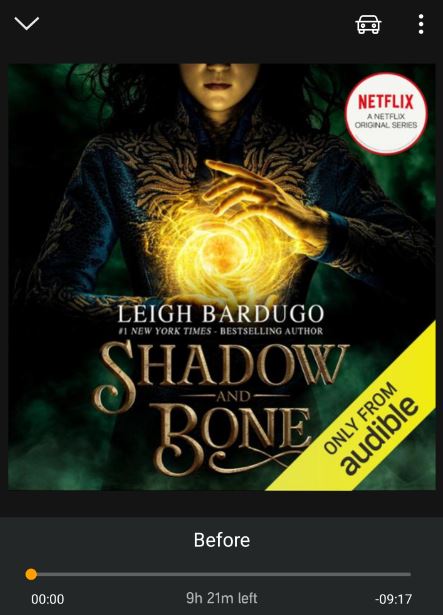
Micro Mention "Shadow and Bone"

Leigh Bardugo


After reading "Six of Crows" and "Crooked Kingdom" by Leigh Bardugo and starting the new Netflix show Shadow and Bone based on Bardugo's Grisha universe, I decided to go back to where it began and read the novel where it all started—"Shadow and Bone."

I enjoyed this novel, but I didn't love it, like "Crooked Kingdom," which I reviewed here. I think mostly this is because this first novel is just that, the first in this universe. Even though it was only a few years, by the time Bardugo wrote "Six of Crows," which directly preceded "Crooked Kingdom," she was already a very different and better writer. Ultimately, it's a serviceable fantasy story if you're looking for something to read, but the best stuff comes in later books.


This preview is an Amazon Affiliate link; 
as an Amazon Associate, I earn from qualifying purchases.


Monday, February 21, 2022

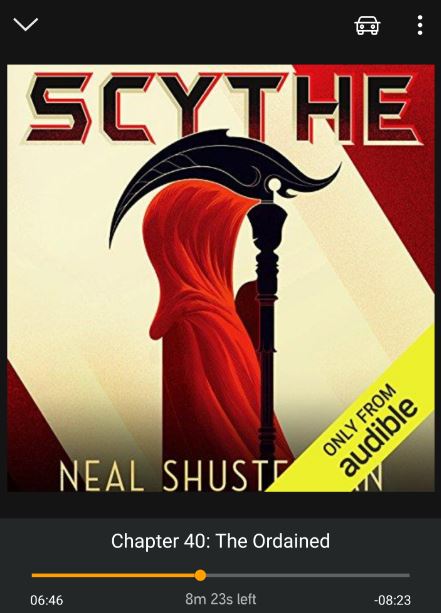
Micro Mention "Scythe"

Neal Shusterman


"Scythe" by Neal Shusterman is a young adult novel that deals with the usual YA concerns, first loves, first heartbreaks, coming of age, et cetera, but it's also wrapped around an interesting sci-fi question of: "what are humans like as functional immortals?"

The answer, somewhat predictably, is pretty awful. 

I don't exactly mean this as a criticism of the book because if everything was hunky-dory, then it would be pretty hard to tell a compelling story about the subject. After all, a story requires conflict in some form to be engaging. If there's no conflict, well, it's more of a recitation of events than a narrative.

Overall, if you like YA novels, "Scythe" will serve you well.


This preview is an Amazon Affiliate link; 
as an Amazon Associate, I earn from qualifying purchases.

Author’s Website: http://www.storyman.com/


Monday, March 15, 2021

Micro Mention "The Six and the Crystals of Ialana"

Katlynn Brooke


“The Six and the Crystals of Ialana” by Katlynn Brooke is one of those epic fantasy books targeting a YA audience where a band of scrappy teenagers uses the power of friendship to fight an evil tyrant. That aside, it also has some interesting world-building ideas too.

I call it YA, but I feel like that other than a few PG-13 moments of fantasy violence, it's a great book for the niche of working as a bridge between middle-grade readers transitioning to young adult readers. If you want my full review you can get it here.


This preview is an Amazon Affiliate link; 
as an Amazon Associate, I earn from qualifying purchases.

Author's Website: https://katlynnbrooke.com/


Wednesday, March 3, 2021

Micro Mention "Anne of Green Gables"

Lucy Maud Montgomery


"Anne of Green Gables" is like a Canadian version of "The Adventures of Tom Sawyer," but with a female protagonist in this coming-of-age story. There is something in the way that Anne talks that is mesmerizing even today.

A story about an orphan girl, Anne, is easy to love because of her relentless optimism despite numerous episodes of heartbreak, big and small, throughout her life. Honestly, this sort of story is normally outside of my wheelhouse in terms of interest, I'm more a science fiction/fantasy/horror person, but despite that, I found myself totally engrossed in this story by about the middle.


This preview is an Amazon Affiliate link; 
as an Amazon Associate, I earn from qualifying purchases.

Friday, February 26, 2021

"Crooked Kingdom," by Leigh Bardugo--Fiction Review

So for this review, Obscurists, we’re returning to Leigh Bardugo’s Grishaverse in her dark epic fantasy “Crooked Kingdom.” Characters from which will be featured in a new Netflix show “Shadow and Bone” coming out this April.  


Leigh Bardugo


***The Non-Spoiler part of this review***


What I love about this book:

Sometimes sequels don’t quite match up to the first story, like “Ghostbusters 2,” for example. In trying to recapture the original’s magic, they end up telling the first story again, but slightly different. That is emphatically not the case with “Crooked Kingdom,” which, in my opinion, addresses all of my minor issues with “Six of Crows” and tells a whole new story. Again—in my opinion—it is a far superior book to its predecessor.

I felt that the city of Ketterdam is a far better setting than the Ice Court and was thrilled that this is where all the action of this story takes place. Ketterdam has all the intrigue and political machinations on both sides of the law. It’s a dynamic place, a melting pot of a variety of peoples created by Bardugo. Whereas the Ice Court, in Fjerda, certainly had a lot of ice—that—and blonde-haired blue-eyed barbarians. As a blonde-haired, green-eyed barbarian, meself, I know these people already, I’d rather hang out in Ketterdam.

“Crooked Kingdom” turned me around on Wylan and Jesper’s relationship. In the first book, I felt it was tacked on, but in this, I thought it might have been the healthiest romantic subplot of the bunch. This further development of the characters was really done well, and Bardugo doesn’t try to re-review old territory with her characters. Since she didn’t have to introduce her characters, she had far more time to develop them further and deepen their individual arcs.    


What I don’t love about this book:

One character in this book I didn’t like and didn’t feel contributed much in the narrative, despite becoming the central McGuffin at the end of “Six of Crows,” and throughout this novel, was Kuwei Yul-Bo. Kuwei is vital to the plot because of what he might be able to do—not because of who he is as a person, which is mainly an ungrateful catty prick. I get it—he wants his freedom to go where he chooses and resents Kaz for using him as a chip in the big game of nation-states—see how I didn’t say thrones there? Oh, shit, I just did—damn it. 

But anyway, back on topic; why I don’t like Kuwei is because he annoyingly goes on about how he’s being treated by the dregs. He complains incessantly, without really acknowledging that without the dregs and Kaz, he’d be back at the Ice Court, in a cell, forced to create what amounts to a weapon of mass destruction for a bunch of people just one shade away from Nazi. 

This is a minor quibble, and it’s more my fault than anything, but we get introduced to characters from a previous story in this novel, from a different trilogy, and I get the sense that there is a lot of depth to them that I’m missing because I haven’t read those stories yet. This is the crux of why I don’t like reading things out of order. I want to understand each character’s story in precisely the manner and order it was intended. But again, this is what I get for having read the “Six of Crows” duology first before the “Shadow & Bone” trilogy, and I really only have myself to blame.  


This preview is an Amazon Affiliate link; 
as an Amazon Associate, I earn from qualifying purchases.


***The Spoiler part of this review***
***Ye be warned to turn back now***


The quick and dirty synopsis:

“Crooked Kingdom” starts off right where the last book left off, Kaz and crew have just pulled off an impossible heist, and their employer betrayed them, kidnapping Inej, who is Kaz’s love interest from the first book. The merchant gives Kaz and the dregs an ultimatum, give him Kuwei, which really means the secret of Jurda Parem, the most dangerous substance in the world, for Inej. 

Friday, October 2, 2020

"The Six and the Crystals of Ialana," by Katlynn Brooke--Fiction Review

Alright, my obscure readers, today we’re talking about a YA fantasy novel by Katlynn Brooke, “The Six and the Crystals of Ialana.” Other than fantasy violence at the same level as “The Hobbit” or “The Lord of the Rings,” this book might be a good pick as an introduction to fantasy for younger readers.  


Katlynn Brooke


***The Non-Spoiler part of this review***


What I love about this book:

This book has a similar feel to it to Leigh Bardugo’s “Six of Crows,” which was a novel I rather quite liked. Like that story, you can see that Brooke spent a lot of time developing the world of Ialana. There is a robust feeling of place and description of all of the various settings that the characters pass through throughout the book. Furthermore, Brooke has the knack of making these different places and societies feel like they continue on with their own motives and plans even when the lens we view the world through moves on to somewhere else.  

The whole narrative is a bit of a mystery, there is this reincarnation angle to it, and you’re gradually figuring out what original mission the six were on, before their untimely deaths, with them. It’s an interesting spin on a coming of age story to also have the characters deal with the idea they were reincarnated, and it didn’t go well last time. 

I like the lost advanced civilization motif in my fantasy and extra points to shifting the style toward the end of the story from a straight sword and sorcery fantasy to a more science fantasy angle. Some of my favorite stories from my formative years go that direction. I seriously could listen to a set up of magic as a technology for ages. 


What I don’t love about this book:

Unfortunately, the character work is one of the weakest parts of the story to me, especially with the antagonists of the story. 

The six break down to three boys, three girls—and yes, they all pair off in some way, which I find annoying—and one spare guy named Blaidd, whom I wouldn’t trust on a walk to the local coffee shop, let alone across a continent. It continually strikes me as weird that they let him keep on with them, and the explanation is: well, he’s Adain’s friend. Ok, but why? Well, they just were since they were kids, and it seems like he was always a narcissistic sociopath then too, but there you go. 

Now, this is going to be a weird thing to say in this section for some, get your pitchforks ready, but this novel’s start reminded me a whole lot of “The Eye of the World” first book of the “Wheel of Time” series. So—I am not in love with “The Eye of the World.” In fact, it’s one of the only books I stopped reading for years before going back to it and finishing it. I know—I know, but the “Wheel of Time” is foundational for so many people? Brandon Sanderson himself finished the series! How do you sleep at night—you monster!? But you know, the good news is if you like that whole set up of the farm boys and girls, with a magical destiny, like “The Eye of the World,” then you might like this book—and I might just have something wrong with me.  


This preview is an Amazon Affiliate link; 
as an Amazon Associate, I earn from qualifying purchases.

Author's Website: https://katlynnbrooke.com/


***The Spoiler part of this review***
***Ye be warned to turn back now***


The quick and dirty synopsis:

So, much like “Eye of The World,” this book opens with something violent happening to people we don’t know yet. There is a torture bit, some telepathy, and some talk about setting a backup plan in motion. Then the perspective character catches an ax to the brainpan. 

Friday, July 24, 2020

"Six of Crows," by Leigh Bardugo--Fiction Review

Happy Friday, today I thought we’d talk fantasy with Leigh Bardugo’s “Six of Crows.” It’s a YA fantasy that has a 19th to early 20th century feel in its mixture of magical elements with more modern technologies beyond what would be typical for epic or high fantasy, i.e., they use guns instead of bows and swords—typically. 

Leigh Bardugo


***The Non-Spoiler part of this review***


What I love about this book:

The ensemble cast of characters is all diverse and interesting in their own ways. Bardugo does all of her groundwork on the characterizations of the six protagonists of the story. They have distinct ways of speaking, mannerisms, and everyone’s back story gets fleshed out with times and places.

Bardugo shines with more than just her character work and is also a skilled world builder, which is a core skill required for fantasy and science fiction. She captures the notion that whole nations and even smaller city-states aren’t homogenous but are always conglomerates of people—built by smaller and smaller fractals of tribal units. Her city, Ketterdam, is the best example of this concept—in this novel—it’s a place ruled by commerce, so from the nobles on down to the gangsters of the barrel, trade is the central concern of their lives.   

I appreciate that there are no characters that are built up as being awesome, but we never experience them in action, or even succeeding. It’s one of my absolute greatest dislikes in the vain of telling and not showing. I call it the Yara Greyjoy syndrome—Asha Greyjoy if you’re feeling bookish. Everyone in Bardugo’s story gets their moment in the sun, and their core competencies are displayed more than once.

Have I mentioned that I’m a bit of an audiobook fan? Well, in case I haven’t, the audiobook version of this title has a full cast, which is awesome. I always enjoy it when audiobooks have different voice actors narrating different perspective characters. 


What I don’t love about this book:

There is a romantic pairing off of all six of the main characters, and it can feel a bit forced. Especially the romantic tension between Jesper and Wylan, it’s not that I’m down on a non-heterosexual relationship it just feels like a bit of an afterthought, a check on a list of objectives.

One of my teeny problems, also about the ensemble cast of characters, is their ages and maturity levels all feel a little out of wack. They’re all young men and women in their late teens, and I get they’ve all had hard lives in this world and have had to grow up fast, but they all have an air of gravitas that suggests a depth of experience and world-weariness of decades.   


This preview is an Amazon Affiliate link; 
as an Amazon Associate, I earn from qualifying purchases.


***The Spoiler part of this review***
***Ye be warned to turn back now***

Friday, January 31, 2020

"The House with a Clock in Its Walls," by John Bellairs--Fiction Review


Good morning dear internet strangers, we’re closing out January with “The House with a Clock in Its Walls” by John Bellairs. Full disclosure upfront—I read this book because I loved the Jack Black movie and was pleased to find out I like the book too, it’s YA fantasy/gothic horror.

John Bellairs
   

***The Non-Spoiler part of this review***


What I love about this book:

I love the atmosphere of this novel and the people who inhabit it—the mansion Lewis and Jonathan live in is a bit creepy, but it also has a lighthearted charm that is somehow relaxing. Personally, I think everyone wishes deep down, they had a mysterious magical uncle like Jonathan. I also really enjoy every conversation between Jonathan and Mrs. Zimmerman, they’re usually bickering like an old married couple, but you can tell there is real affection there.

This is clearly a young adult novel, with the classic fears of growing up—fears like insecurity and making friends in a strange new place, et cetera, et cetera, but I appreciate that it doesn’t pull its punches. The stakes are genuine and deadly, I like that it doesn’t sugar coat for its young audience. So for every charming scene where Mrs. Zimmerman bakes them all cookies, and they play cards or fiddle with some magical doodad or whatnot, there is still the looming threat of the clock in the walls. They aren’t sure initially what its ill purpose is, given to it by its evil creator, but they all know it’s terrible.

The story feels like a period piece because while that probably wasn’t exactly the intention when it was published in 1973, the plot starts in 1948. To explain why I like this, we need a little history, at that time in America—immediately after world war two—optimism in the United States was at an all-time high. Collectively, we just escaped from not only the horrors of the worst war in modern human history but also an economic depression. As a country, we could take pride in the idea that, for the most part, we were heroic—on the right side of history.

So reading this novel is like stepping back in time and wrapping that moment in history comfortingly around you like a warm blanket. Nevermind, perceptions aside, that objectively speaking, it wasn’t that great a time for everybody or even most people. For instance, if you were a woman who was a riveter during the war, you got to experience all of the joy of losing your job, probably to a less qualified man, and return to unpaid kitchen and babymaking duties. If you were a minority—you could just multiply all the usual stressors, but this is a topic for another day.   


What I don’t love about this book:

The magic in the novel is a little unfocussed, you never really get a sense of the rules and limitations on what the warlocks and witches can or can’t do with their magic. At one point, a warlock and a witch are being chased by a car while in their car, and their solution isn’t to turn it to dust or vanish it away—they just drive faster. Subsequently, one of the two that were being chased, during a later scene, has to deal with an evil sorceress and marches across the street and gives her what for, so clearly, these people aren’t helpless.

My instinct is part of the undefinable nature of the magic in the story comes from when this book is published. Rigorously detailed and internally consistent systems of magic, where there are rules and whatnot, is more a modern taste than anything. I’m sure there are contrary examples, but consider something like Brandon Sanderson’s Mistborn books or J.K. Rowling’s Harry Potter—how the magic in those stories work is talked about in great detail. Now compare that with the Wicked Witch of the West or Gandalf, they just do magic and how they do it doesn’t need to be understood by us mere mortals. It’s a little point, but I prefer the modern approach with internally consistent magic systems in stories.


***The Spoiler part of this review***
***Ye be warned to turn back now***


The quick and dirty synopsis:

Lewis Barnavelt is traveling to New Zebedee to live with his uncle Jonathan Barnavelt because his parents are dead—fantasy is a tough genre on parents just ask Harry Potter. Lewis doesn’t really know his Uncle Jonathan because Jonathan has always been regarded as the black sheep of the family. When Lewis arrives in New Zebedee, he meets his kindly but odd uncle right away and is whisked off to Jonathan’s gigantic house.

Soon after arriving, Lewis meets Jonathan’s equally eccentric—if different—friend Mrs. Zimmerman who has an antagonistic friendship with Jonathan. Shortly after meeting Mrs. Zimmerman, Lewis starts to notice some odd things about his uncle, Mrs. Zimmerman, and especially the house. Jonathan then reveals to Lewis that the former owner of the house was an evil warlock, and furthermore, Jonathan himself is a warlock, and Mrs. Zimmerman is a witch—though they aren’t evil. Jonathan further explains that he has so many clocks in the house to drown out the ticking from a clock the previous owner put somewhere in the walls of the house, which despite his best efforts, Jonathan hasn’t been able to find.

After a couple weeks, Lewis starts school at New Zebedee, and as a new kid who isn’t particularly athletic, he has trouble fitting in with his new classmates. Luckily, another boy, Tarby, who is the most popular kid in school, takes Lewis under his wing because, like Lewis, Tarby can’t join in and play baseball either, but only because he has a broken arm. The two become friends, and Tarby even tries to teach Lewis how to hit a baseball. As Tarby’s arm heals though, the two become more-and-more estranged as Tarby returns to his normal life.

Afraid to lose his new friend, Lewis tries to impress Tarby by proving to him that his uncle Jonathan is a real-life warlock. Jonathan agrees to put on a little actual magic show in his backyard for Lewis, Tarby, and Mrs. Zimmerman, and at first, everyone is impressed. Tarby, however, eventually decides that the whole thing was a fake, and Jonathan must have just hypnotized them all. Lewis decides to up the ante by doing something irrefutably magical, something like raising the dead, always a good idea to which nothing has ever gone wrong before in fiction. It, of course, goes wrong, who could have seen that coming, because it turns out Lewis resurrected the wife of the evil warlock who previously owned Jonathan’s house.

This sets off a series of events where Lewis, Jonathan, and Mrs. Zimmerman need to battle the resurrected sorceress before she likewise raises her late husband. The two evil sorcerers apparently created the clock in the walls of Jonathan’s house to cause doomsday. In the end, Lewis is the one who saves everyone by helping them find the evil clock with his magic eight ball, then smashes the clock, preventing the evil warlock from returning and causing the end of the world.


Analysis:

The plot of this novel isn’t in any hurry to get anywhere, so be prepared for a relaxed pace. I believe at least some of this is because of the era in which its portraying, leisure was becoming a highly valued thing then. The other reason I think is the author wanted to marinate the reader in the setting.

The setting is essential in this novel because like any good gothic horror, the evil of the story emanates mainly from one location. The twist with this novel is that the place the evil emanates from is the very house the main characters live. This in itself isn’t odd for gothic horror—à la Amityville Horror—but there is a dissonance with this story because the house with a clock in its walls, seems like a cool place to live from start to finish. It never seems to become sinister—not for very long, at least. Lewis certainly admires the house several times, even though he thinks it’s more than a bit scary. It is creepy because the house, while charming and inviting, also hides secrets, secrets about a dark past, or possibly things forbidden—elements that are also important to the gothic tradition of horror.

All of these atmospherics juxtaposed with a conventional young adult story, make it a special experience. I’d also argue that the plotting of this YA novel may be traditional, but the characters weren’t for its time, which only adds to its uniqueness. Remember this novel was published in 1973, that’s a year before Dungeons and Dragons was a thing, a couple years before even Star Wars, and nearly twenty years after the Lord of the Rings or the Chronicles of Narnia. Wizards, witches, and warlocks weren’t typical traditional heroes for Americans at the time.

You could make a counter-argument that Bewitched came out in 1964 and ran until 1972. To which, I’m going to point out that Bewitched isn’t a novel, it’s a television show—and it was a show primarily about, “well have you ever tried not being a witch?” So the messaging of that show is problematic. Additionally, I Dream of Jeannie was the exact same show, this time with a blonde lady and the added horror in the synopsis that describes her as the man’s slave.      


Parting thoughts:

Like I said at the beginning of the review, I really did pick up this book because I liked the Jack Black movie. Movie reviews aren’t really my thing, but I felt it was a great introduction to this oft-forgotten little universe of books that came out way before Harry Potter.

Why I bring this up is—while I don’t write movie reviews, I do often read them, and I feel that a lot of the critical reviews are unduly harsh toward this movie. One I read—and I’m paraphrasing here—that the film had reduced John Bellairs’ masterpiece to nothing more than a series of fart jokes and that it loses all of the finer details of the novel. I find this to be an incredibly unfair assessment. Are their fart jokes? Sure, it’s a movie targeting ten-year-olds as the target demographic. Is the movie just one after another, after another? Of course, not, that is nothing more than hyperbole. Are some details lost? Yes, of course, it’s a movie, movies are a different medium possessing less time to tell a story.

In a novel, you can meander, get lost in the story—it’s one of the reasons I love books. If you do that in a movie, then you’ve just created the Ten Commandments with Charlton Heston. Do I think that’s a great movie? Absolutely—but I’m not going to lie, I typically fall asleep every Easter when it’s on at about the time Moses gets banished to the desert during the nineteenth thousandth hour of its run time. My point is—this isn’t an excellent fit for a young audience, a few details need to get trimmed.
Finally, I find that these negative reviews of the movie miss a few acting moments brought out by its cast. Jack Black is surprisingly good at not just being a comedic actor, but as just an actor as well. His version of Jonathan hits all the major points of his literary counterpart, but he also adds a level of insecurity and vulnerability as a new guardian to his nephew, which I don’t feel comes across as well in the book.