Showing posts with label Writing Advice. Show all posts

Saturday, May 21, 2022

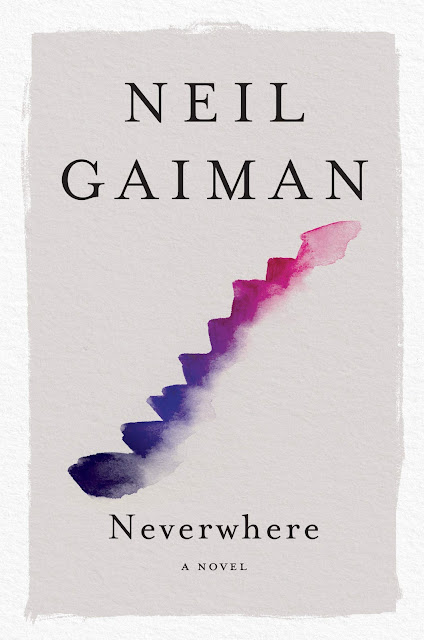
"Neverwhere" by Neil Gaiman--Fiction Review

We’re going in for some fantasy and a little bit of horror with this one, Obscurists. Today’s review is on Neil Gaiman’s “Neverwhere.”

Neil Gaiman


***The Non-Spoiler part of this review***


What I love about this book:

The first thing that I love about this book is you never quite manage to get your bearings before it’s on to another weird and uncanny location. Like the protagonist, Richard Mayhew, as the audience follows him along throughout London below, we’re never sure what the next location will bring. 

Also, this book is way creepier than I thought it would be, which keeps happening to me with every Neil Gaiman book I read. I think it’s because of how whimsically he writes everything with a dash of dry humor that always suckers me. It’s hard to explain what Gaiman’s stories feel like, but the closest I can think of is someone in an Easter Bunny costume. Soft and fluffy, joyfully playful, until you finally realize there is no one in the bunny costume, just a sentient swarm of bees somehow controlling it.

So yeah, a bit like that.

I love the inherent weirdness of that feeling, and when he makes the shift into threatening with his menacing characters, you absolutely believe they’re capable of anything.


What I don’t love about this book:

I like all of the characters in this novel, even our everyman protagonist Richard Mayhew. I don’t get why Mayhew wants to get back to his boring life so bad, other than the fact that London below is a pretty dangerous place. His fiancé was pretty heartless, and his job seemed stressful and unrewarding.

The motivations for all of the characters were fleshed out, and you understood why they were doing what they were doing—except for the two evil henchmen characters. They were just sadists and creepy because they like being sadists and creepy, which is uninteresting to me. 

Without spoiling anything, the ending didn’t really happen where I thought, which seems to be another Gaiman thing that I could take or leave. In this, the end feels like it went on too long to get to its point.


This preview is an Amazon Affiliate link; 
as an Amazon Associate, I earn from qualifying purchases


***The Spoiler part of this review***
***Ye be warned to turn back now***


The quick and dirty synopsis:

Richard Mayhew is living a perfectly ordinary life in London. He’s engaged to an ambitious, beautiful woman, and his job is firmly middle of the road. On their way to dinner—a very important dinner for Richard’s fiancé’s career—they encounter a badly injured young woman. Richard’s fiancé essentially just wants to leave her, but Richard, after hearing the young woman doesn’t want to go to a hospital for mysterious reasons, doesn’t hesitate. He scoops up the injured girl and takes her home to tend to her wounds, leaving his flabbergasted ex-fiancé on the sidewalk.

Monday, October 4, 2021

Micro Mention "Analysis and Critique"

Dorsey Armstrong


"Analysis and Critique: How to Engage and Write about Anything," from the great courses and taught by Dorsey Armstrong, is incredibly useful. On a separate note, Dorsey Armstrong, I hope you never discover how poor a student I actually am in making use of your lessons.

I love these courses because I love learning new things, and they appeal to my inherent laziness in not wanting to actually have to do homework and tests like in a real college class.

What you can expect to get out of this course is succinctly covered by its title, and if you fancy yourself a writer, I can't recommend it any more highly. I've listened to a few courses from Professor Armstrong now, and so far, I've always come away having learned something either useful or fascinating.


Monday, March 8, 2021

Micro Mention "Why You Are Who You Are"

 Mark Leary


Ever wonder why people are the way they are? Or maybe, you’re even puzzled over some of your own motivations and behaviors? "Why You Are Who You Are," from the Great Courses lectured by Professor Mark Leary, is illuminating for both questions.

It's a lecture series that touches on psychology, sociology, and culture. Using all of those subjects and more, Professor Leary provides you with genuine insight on why people are, well, like they are. From a creative writing perspective, I found it most useful in helping me to flesh out and create better characters.


Monday, March 1, 2021

Micro Mention "How Conversation Works"

Anne Curzan


This is an interesting albeit short course from The Great Courses, lectured by one of my favorites on the platform, Professor Anne Curzan. Fair warning, though, after listening to it, you'll be hyper-aware of how you talk to people for a few days afterward.

Communication is the cornerstone of any career, and struggling with communication effectiveness is something a sizable number of people experience. So of all "The Great Courses" I've listened to, this is one of the most practical, with one of the widest applications.  


Friday, October 2, 2020

"The Six and the Crystals of Ialana," by Katlynn Brooke--Fiction Review

Alright, my obscure readers, today we’re talking about a YA fantasy novel by Katlynn Brooke, “The Six and the Crystals of Ialana.” Other than fantasy violence at the same level as “The Hobbit” or “The Lord of the Rings,” this book might be a good pick as an introduction to fantasy for younger readers.  


Katlynn Brooke


***The Non-Spoiler part of this review***


What I love about this book:

This book has a similar feel to it to Leigh Bardugo’s “Six of Crows,” which was a novel I rather quite liked. Like that story, you can see that Brooke spent a lot of time developing the world of Ialana. There is a robust feeling of place and description of all of the various settings that the characters pass through throughout the book. Furthermore, Brooke has the knack of making these different places and societies feel like they continue on with their own motives and plans even when the lens we view the world through moves on to somewhere else.  

The whole narrative is a bit of a mystery, there is this reincarnation angle to it, and you’re gradually figuring out what original mission the six were on, before their untimely deaths, with them. It’s an interesting spin on a coming of age story to also have the characters deal with the idea they were reincarnated, and it didn’t go well last time. 

I like the lost advanced civilization motif in my fantasy and extra points to shifting the style toward the end of the story from a straight sword and sorcery fantasy to a more science fantasy angle. Some of my favorite stories from my formative years go that direction. I seriously could listen to a set up of magic as a technology for ages. 


What I don’t love about this book:

Unfortunately, the character work is one of the weakest parts of the story to me, especially with the antagonists of the story. 

The six break down to three boys, three girls—and yes, they all pair off in some way, which I find annoying—and one spare guy named Blaidd, whom I wouldn’t trust on a walk to the local coffee shop, let alone across a continent. It continually strikes me as weird that they let him keep on with them, and the explanation is: well, he’s Adain’s friend. Ok, but why? Well, they just were since they were kids, and it seems like he was always a narcissistic sociopath then too, but there you go. 

Now, this is going to be a weird thing to say in this section for some, get your pitchforks ready, but this novel’s start reminded me a whole lot of “The Eye of the World” first book of the “Wheel of Time” series. So—I am not in love with “The Eye of the World.” In fact, it’s one of the only books I stopped reading for years before going back to it and finishing it. I know—I know, but the “Wheel of Time” is foundational for so many people? Brandon Sanderson himself finished the series! How do you sleep at night—you monster!? But you know, the good news is if you like that whole set up of the farm boys and girls, with a magical destiny, like “The Eye of the World,” then you might like this book—and I might just have something wrong with me.  


This preview is an Amazon Affiliate link; 
as an Amazon Associate, I earn from qualifying purchases.

Author's Website: https://katlynnbrooke.com/


***The Spoiler part of this review***
***Ye be warned to turn back now***


The quick and dirty synopsis:

So, much like “Eye of The World,” this book opens with something violent happening to people we don’t know yet. There is a torture bit, some telepathy, and some talk about setting a backup plan in motion. Then the perspective character catches an ax to the brainpan. 

Friday, July 17, 2020

"Kill Creek," by Scott Thomas--Fiction Review

Hello obscurists, why don’t we slip into something spooky? I was thinking for today’s review we’d discuss “Kill Creek” by Scott Thomas, and since this is my blog, you’ll have to humor me on that… please. Please humor me on this. It’s so lonely here in the Obscure Dome. 

Scott Thomas


***The Non-Spoiler part of this review***


What I love about this book:

That first chapter after the prologue, man—I still go back and re-read it every few weeks. It feels like auditing part of a master class on horror writing. It feels that way, because well, it is in a way, Sam McGarver is a best-selling horror author teaching a college class on the subject of horror writing. I’ve never been more jealous of college kids. Why I especially like it is, from the little bit of his class, we as the audience get to see, Sam seems like a great teacher and I found it all very engaging.  

"Kill Creek," is a book about writers, specifically horror writers, experiencing a haunted house together, which is a concept that I find infinitely amusing—a model that’s been working for Stephen King for more than half a century, so it ain’t broke.  

As such, when the bestselling authors show up at the creepy mansion, the tone and sense of fall weather, and Halloween style horror is palpable. For me, that’s like a mental warm and cozy wingback chair next to the fireplace, blazing with hellfire. So the whole concept is really in my wheelhouse. 

The fact that these famous authors are all at this haunted house for an interview as a publicity stunt for a wealthy playboy website owner devoted to anything and everything in the horror genre—especially tickles me. I have a website. I talk about horror a lot. Why not Kevin? I like Wainwright, the rich kid who owns the website, as a character, and his earnest endeavor to make all things horror more mainstream, even though the success of his fictional website seems—well, let’s say unlikely. 


What I don’t love about this book:

Sam McGarver isn’t a real person and doesn’t have a freshman-level class I can take, and this book reminds me again that life is just truly unfair.

Back on the topic of the book, and with less melodrama, T.C. Moore, the female author of the group, is problematic as a character. On a side note, I didn’t see this aspect of her character until after I finished the book and a friend pointed it out to me, which goes to show when you like the overall product as much as I did with this book, you can be blind to its faults.  

As a deuteragonist, she has her positives, she’s undoubtedly a very strong-willed woman, but they’re overshadowed by her negatives, which cause her to fall into stock-character parody at times. T.C. Moore falls into that super serious badass woman trope, who isn’t afraid to use her sexuality as a weapon—which is an overcorrection from the weak-willed damsel in distress cliché. Being a badass and having a strong sexual identity aren’t bad things, but they’re literally all of her things, she has no more qualities to round her out. Now given a choice between her or the damsel in distress, I’d pick the super-serious badass woman every time.       


This preview is an Amazon Affiliate link; 
as an Amazon Associate, I earn from qualifying purchases.


***The Spoiler part of this review***
***Ye be warned to turn back now***

Friday, July 3, 2020

"Slaughterhouse-Five," by Kurt Vonnegut--Fiction Review

Today we’re going to talk about “Slaughterhouse-Five” by Kurt Vonnegut, the novel that made that man’s career. Sometimes, the hype is real, and while my personal favorite Vonnegut story is “Sirens of Titan,” I felt I should talk about the most well known Vonnegut story first. 

“Slaughterhouse-Five” is a hard story to classify because Vonnegut was one of those literary darlings who didn’t constrain himself to any one mere genre. But since I hate the dreaded catch-all “fiction,” classification let’s give it a shot—“Slaughterhouse-Five” certainly has its share of science fiction elements, with the time travel and whatnot. However, I’d probably have to peg it most accurately as a darkly humorous anti-war novel. 

Kurt Vonnegut


***The Non-Spoiler part of this review***


What I love about this book:

To steal a descriptor I find fitting that I had read about a character in a novel I’d read recently, Kurt Vonnegut was cheerfully disappointed in the entirety of the human experience. His writing captures that feeling at all times. While typically, I consider myself an optimist or would like to think I make an effort at being an optimist, and let’s face it I’m probably just a deluded pessimist. It’s sometimes fun to read someone’s work, which takes the diametrically opposite outlook on life. That’s why I love Kurt Vonnegut’s work, including this book, he reminds me that no one and nothing should take itself so seriously.

The time and place Vonnegut manages to conjure with his writing specifically when he’s talking about Dresden. He talks about his brief impressions of the city before the firebombing, immediately afterward, and years later. In the section immediately after the bombing, when the POWs are conscripted to sift through the ruins, I was especially disturbed by his description of the hunt for bodies as being the worst Easter Egg hunt ever. It’s that jarring contrast that makes Vonnegut’s writing powerful. 


What I don’t love about this book:

Kurt Vonnegut is often remembered or accused of being pretentious, and it’s a charge that even if you don’t agree with it, you can see the argument for, even in “Slaughterhouse-Five.” There are numerous times where Vonnegut delves into metaphysics in this novel that become eye-crossing tedious to follow. It’s especially likely to happen when he discusses his beloved aliens, the Tralfamadorians, which normally I’m thrilled by the inclusion of space aliens.   

Another thing I’m not a fan of is the numerous and varied characters don’t develop. They are precisely the same people when you meet them as when they leave the scene forever. Part of this, is there are a lot of them, when you have a large cast of named characters it’s hard to give them all the spotlight to grow and change—but nobody does. It makes sense why Billy doesn’t change throughout the book—he’s unstuck in time and experienced all the moments of his life and therefore has nothing to cause him to change or grow. The other characters orbiting Billy, make less sense, though. If I were to hazard a guess, the implicit messaging is all characters are like Billy, they just can’t perceive it as he can, and therefore no one is capable of change. I get it—it’s just not something that resonates with me.   


This preview is an Amazon Affiliate link; 
as an Amazon Associate, I earn from qualifying purchases.

***The Spoiler part of this review***
***Ye be warned to turn back now***