Showing posts with label Fantasy. Show all posts

Saturday, August 27, 2022

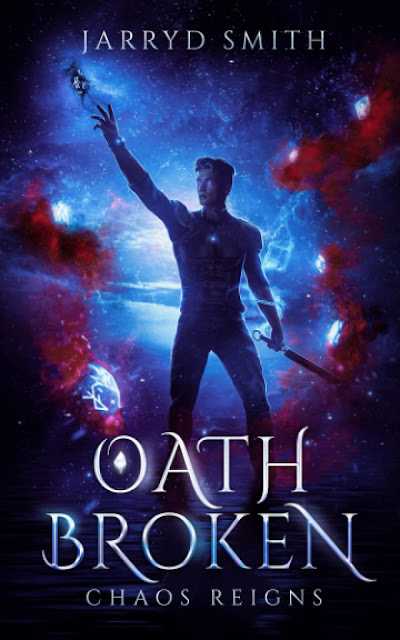
"Oath Broken" by Jarryd Smith--Fiction Review

This evening Obscurists, we’re diving into an urban fantasy novel with Jarryd Smith’s “Oath Broken.” It’s a fantasy story with a big central mystery and a lot going on in the outskirts. 

Jarryd Smith


What I love about this book:

“Oath Broken” has a distinct urban fantasy style that should appeal to anyone who likes books like “The Dresden Files.” Magic and fantastical creatures are just on the fringes of society, blending into everyday life. It’s a cool atmosphere, in my opinion. 

Smith does an excellent job at making the world of “Oath Broken” feel big, with many entities with their own agendas going about their business. I appreciate the sense that the world of this novel doesn’t seem to pivot on the main character or his problems, which I think is a subtle art a lot of storytellers get wrong. Kaleb is the protagonist of this story, but he isn’t the alpha and omega of this universe. He’s just another guy who lives in the world, a talented guy, sure, but one among many.

In other posts, I’ve mentioned this numerous times—I’m a sucker for a good action scene, and Smith doesn’t disappoint in this book. The various fantasy-style showdowns in this novel are all distinct in what’s going on. The ebb and flow of the battles that take place have their own character, so they never become repetitive or uninteresting.

Also, I appreciate Kaleb’s meticulous approach to what sorts of gear and equipment he brings into any situation—as a consummate wizard player in D&D, I value preparation over spontaneity any day.


What I don’t love about this book:

Everyone’s default communication style in this book is sarcastic disdain. Nobody seems to like each other or even can have a conversation without someone being utterly dismissive. It’s all—“that’s impossible,” “you’re a liar,” “you are useless,” and “why don’t you just leave?” 

That last one, I actually started to agree with thinking, “Kaleb, buddy, budgie, boopy, these people suck; why are you trying so hard?” At no point after Kaleb does something extraordinary or saves everyone for the 9th time that day in a heroic or self-sacrificial way does anyone ever say, “hey, thanks, Kaleb. Good Job. I guess I was incorrect in my assessment of you.” No, even right after Kaleb does something altruistic that directly refutes someone’s negative perception of him or his abilities, it’s still on the caliber of, “I hate you, Kaleb. I would say I hope you die in a fire, but I also think that might be too quick a death. Now, if you’ll excuse me, with zero self-awareness, I’m going to rush headlong into a dangerous situation—against your recommendations—that you will inevitably bail me out of later.” 

Other than that, my other dislikes are pretty trivial. There was some disconnect for me regarding what was going on with the prologue and epilogue characters and the main story. It was all ominous things are afoot and how that relates to anything is unclear and ambiguous.

Also, Smith could get stuck in explain mode for certain things: how they look, act, work, et cetera, et cetera. I get the explanations as world-building material, but I’m also disenchanted by world-building when it comes at the expense of the plot or its pacing.


This preview is an Amazon Affiliate link; 
as an Amazon Associate, I earn from qualifying purchases


***The Spoiler part of this review***
***Ye be warned to turn back now***


The quick and dirty synopsis:

After a prologue with death and various deities associated with death, doing—well, death stuff—the story opens with Kaleb going to a wedding. The bride-to-be is less than thrilled about Kaleb’s choice of wardrobe and makes it clear. But Kaleb is at the wedding as his friend Sam’s plus one and so makes the best of it. He even hits it off with a beautiful redhead at the reception named Alex, and they have quite the evening together…

Wednesday, June 8, 2022

Micro Mention "The Halfling's Gem"

 
R.A. Salvatore


I know—I know, high-minded ideals dictate that schadenfreude isn't laudable, and after all, it was precisely that impulse that makes Pasha Pook in "The Halfling's Gem" by R.A. Salvatore so odious. But still, when he got what was coming to him…

Well, let's just say this book has a very satisfying conclusion for a story where the heroes are on their heels for most of the narrative.


This preview is an Amazon Affiliate link; 
as an Amazon Associate, I earn from qualifying purchases.

Author's Website: http://rasalvatore.com/

Friday, May 27, 2022

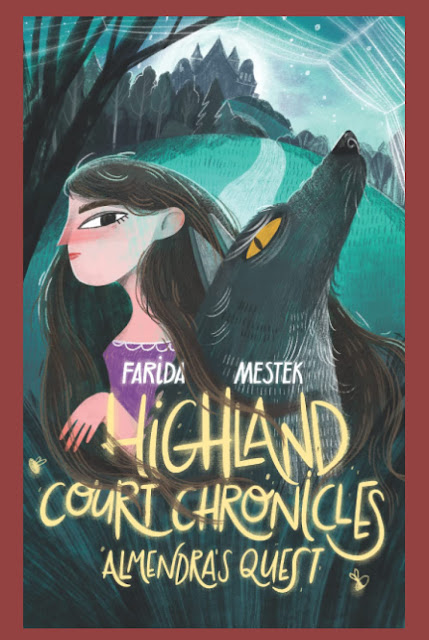
"Highland Court Chronicles: Almendra's Quest" by Farida Mestek--Fiction Review

Today, Obscurists, we’re plunging into a magical fantasy world where one young woman must step-up to save her kingdom—prophecy or no prophecy. We’re discussing Farida Mestek’s “Highland Court Chronicles: Almendra’s Quest.” 


Farida Mestek


***The Non-Spoiler part of this review***


What I love about this book:

I’m not giving away anything here that isn’t already in the sales copy synopsis on Kindle—but I like that the princess in this fairy tale with modern sensibilities isn’t content to just sit around and wait for her happily ever after. When Almendra is finally given a chance, she takes off from the enchanted castle on her own initiative to see what is wrong with the Prince, who the prophecy strongly suggests is supposed to be the one to save her. I like Almendra because she faces her problems head-on and accepts the consequences of her actions and shortcomings.

Mestek has a gift for whimsical locales that are typically equal parts charming as they are dangerous. While still at the enchanted castle early on, Mestek makes every place feel infused with magic, and even when the story moves to the Lowland kingdom, where magic is forbidden, magic still seems to slip in on every occasion.

I also liked the recurring lesson that decisions made in a moment of passion without forethought often have dire consequences, be that moment rage or panic. This sort of thing happens with protagonists and antagonists alike.

Also, as a sucker for dogs and really any cuddly-looking animal, I liked the animal companion aspect of this story that Almendra has with Woo.


What I don’t love about this book:

Speaking of Almendra and Woo, though, the nature of their relationship changes toward the end of the story in a way that would have pleased Ovid to no end. For me, though, my dog has seen me do many an unflattering thing, and now the idea that I might have to have a conversation with him one day about why I pick up so many objects off the ground with my feet—well, no thanks.

The shawlweavers as villains are certainly frightening enough, and motivation for power for its own sake is regrettably understandable, but that said, I don’t precisely get their bone-deep hatred for the high ladies. It’s the old they’re antagonistic because they’re antagonistic, self-fulfilling prophecy. 

This isn’t much of a complaint, but still, I found myself enjoying a lot of the early scenes in this book where Almendra and her Granny would but heads. You don’t quite get that in any other form through the middle to the end of the book. 


This preview is an Amazon Affiliate link; 
as an Amazon Associate, I earn from qualifying purchases


***The Spoiler part of this review***
***Ye be warned to turn back now***


The quick and dirty synopsis:

Our story begins with Almendra, her ever faithful wolf companion Woo, and her Granny going about their lives as the only inhabitants of an enchanted castle—waiting for a prophecy to be fulfilled. Almendra hates being idle, waiting for some prince to come to rescue her and her magical kingdom. Her Granny insists that their enemies, the shawlweavers, must have laid a terrible curse on the Upper Kingdom, which is why it is shrinking, and all the people have disappeared. And for all they know, if Almendra tries to leave, it might strike her down too, and as the last High Lady of the Upper Kingdom, she is too precious to risk.

Saturday, May 21, 2022

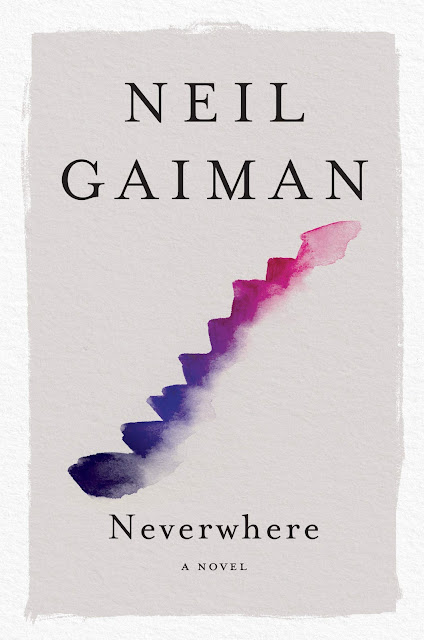
"Neverwhere" by Neil Gaiman--Fiction Review

We’re going in for some fantasy and a little bit of horror with this one, Obscurists. Today’s review is on Neil Gaiman’s “Neverwhere.”


Neil Gaiman


***The Non-Spoiler part of this review***


What I love about this book:

The first thing that I love about this book is you never quite manage to get your bearings before it’s on to another weird and uncanny location. Like the protagonist, Richard Mayhew, as the audience follows him along throughout London below, we’re never sure what the next location will bring. 

Also, this book is way creepier than I thought it would be, which keeps happening to me with every Neil Gaiman book I read. I think it’s because of how whimsically he writes everything with a dash of dry humor that always suckers me. It’s hard to explain what Gaiman’s stories feel like, but the closest I can think of is someone in an Easter Bunny costume. Soft and fluffy, joyfully playful, until you finally realize there is no one in the bunny costume, just a sentient swarm of bees somehow controlling it.

So yeah, a bit like that.

I love the inherent weirdness of that feeling, and when he makes the shift into threatening with his menacing characters, you absolutely believe they’re capable of anything.


What I don’t love about this book:

I like all of the characters in this novel, even our everyman protagonist Richard Mayhew. I don’t get why Mayhew wants to get back to his boring life so bad, other than the fact that London below is a pretty dangerous place. His fiancé was pretty heartless, and his job seemed stressful and unrewarding.

The motivations for all of the characters were fleshed out, and you understood why they were doing what they were doing—except for the two evil henchmen characters. They were just sadists and creepy because they like being sadists and creepy, which is uninteresting to me. 

Without spoiling anything, the ending didn’t really happen where I thought, which seems to be another Gaiman thing that I could take or leave. In this, the end feels like it went on too long to get to its point.


This preview is an Amazon Affiliate link; 
as an Amazon Associate, I earn from qualifying purchases


***The Spoiler part of this review***
***Ye be warned to turn back now***


The quick and dirty synopsis:

Richard Mayhew is living a perfectly ordinary life in London. He’s engaged to an ambitious, beautiful woman, and his job is firmly middle of the road. On their way to dinner—a very important dinner for Richard’s fiancé’s career—they encounter a badly injured young woman. Richard’s fiancé essentially just wants to leave her, but Richard, after hearing the young woman doesn’t want to go to a hospital for mysterious reasons, doesn’t hesitate. He scoops up the injured girl and takes her home to tend to her wounds, leaving his flabbergasted ex-fiancé on the sidewalk.

Monday, May 9, 2022

Micro Mention "The Pirates of Pacta Servanda"

 
Jack Campbell


After this book, “The Pirates of Pacta Servanda,” I only have two more books to read in Jack Campbell’s steampunk “The Pillars of Reality” series. In this one, the cataclysmic conflict of this series is starting to kick off with early battles of the war against the great guilds.

As the title suggests, this is one of the more nautical-themed books in this series, a move in setting that I was giddy about. Why you might ask? Because I feel that Campbell's singular skill, above all his other great writing gifts, is to describe naval vessels in motion and conflict. You can tell these parts of his stories are directly informed by his Navy experience.


This preview is an Amazon Affiliate link; 
as an Amazon Associate, I earn from qualifying purchases.


Monday, April 25, 2022

Micro Mention "Ready Player Two"

 
Ernest Cline


I really wanted to love “Ready Player Two” by Ernest Cline, and I did legitimately like the ending a lot. But much like playing as player two back in the day, it doesn’t quite have the same magic as one.

With a bit of time and distance from this novel, my sentiment regarding this story has only hardened after I wrote my full review here. Despite having read it more recently, I couldn't as quickly describe the plot of this novel as opposed to "Ready Player One." There are memorable moments I can still recall, but overall the feeling I have with this kind of story is: that lightning rarely strikes twice.


This preview is an Amazon Affiliate link; 
as an Amazon Associate, I earn from qualifying purchases.

Author's Website: https://ernestcline.com/


Monday, April 4, 2022

Micro Mention "Howl's Moving Castle"

Diana Wynne Jones


So, the book "Howl's Moving Castle" by Diana Wynne Jones changed how I viewed the animated film by Studio Ghibli. I am ardently aware of the seams of that movie now, where Jones's writing ends and Miyazaki's begins.

I talk about this in my full review of this novel, but Miyazaki's version of "Howl's Moving Castle" was focused nearly exclusively on an anti-war narrative, whereas the book is more just a fantasy story. As to which version I personally prefer, I'm going to cop out and say that it's more interesting to read and watch both because how these two writers mixed their aesthetics is what I find most interesting.


This preview is an Amazon Affiliate link; 
as an Amazon Associate, I earn from qualifying purchases.


Friday, March 25, 2022

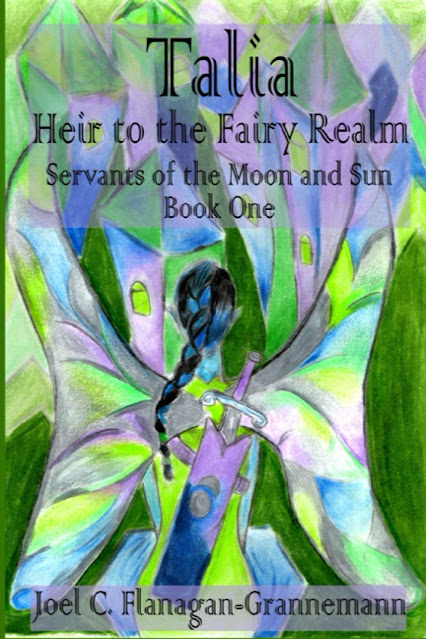
"Talia Heir to the Fairy Realm" by Joel C. Flanagan-Grannemann--Fiction Review

Today Obscurists, we’re going on a magical journey with some fairies—through enchanting vistas and sublime locales. Oh, and there will be blood, murder, betrayal, and mayhem in this fantasy novel about statecraft in “Talia Heir to the Fairy Realm” by Joel C. Flanagan-Grannemann. 


Joel C. Flanagan-Grannemann


***The Non-Spoiler part of this review***


What I love about this book:

At first, I thought this book would primarily be about Talia’s affair with the human prince, Bastile, but it turns out that event is really just inciting action, which surprised me. I liked that the book surprised me, especially because the outsider’s perspective looking into the fairy realm would have been a far easier way to do world-building. But the book is called “Talia Heir to the Fairy Realm” and not “Bastile,” so I appreciate that Flanagan-Grannemann stuck to his guns.

The whole story reads like mythic fiction like “Jason and the Argonauts” or the “Odyssey,” but with fairies, and frankly, in terms of numbers, Talia is much better at keeping her people alive than old Odysseus. What I’m driving at is Flanagan-Grannemann’s story has an episodic quality that I enjoyed regarding Talia and her ladies’ adventures. 

Flanagan-Grannemann manages a large number of protagonists as well or better than anyone else I’ve read. There are 19 fairies in Talia’s traveling group, and it was genuinely amazing, to me at least, that he managed to give most of them their time in the sun with their own little backstories.


What I don’t love about this book:

It’s a long book that still somehow manages to end feeling like it’s in the middle. I get it is part of a series, and there is a bit of a cliffhanger ending, but I expected some of the sub-plots to have seen some resolution as opposed to nearly none of them.

There is also the equivalent of a fairy Auschwitz in this story which was distressing to discover. I assumed that when the characters were visiting this particular location, there would be some sort of moral lesson—you know, other than rape and systematic murder are terrible. I’m not putting this observation here because I dislike per se that Flanagan-Grannemann would discuss such topics in a fantasy story. I think that any topic can be examined within the scope of fiction. It’s here because I’m horrified by the idea of forced labor or concentration-like camps, which is, I believe, the intended effect.


This preview is an Amazon Affiliate link; 
as an Amazon Associate, I earn from qualifying purchases


***The Spoiler part of this review***
***Ye be warned to turn back now***


The quick and dirty synopsis:

Talia, and the fairy court at large, are hosting a contingent of humans led by the human prince, Bastile. There has been a war before between the fairy and human realms, so tensions are high during these diplomatic visits. Despite the apparent strain, Talia manages to forge a connection with Bastile and rapidly falls in love with him.

Wednesday, March 16, 2022

Micro Mention "Exile"

R.A. Salvatore


"Exile" by R.A. Salvatore is a wonderful story of taking off into the great unknown for Drizzt. He has struck out from Menzoberranzan with no clear destination or place to call home.

The balance of this story is almost entirely set in The Underdark, the mythic subterranean homeland of not just the dark elves, such as Drizzt, but also fun-filled people like the mind flayers, also pictured on this cover. They hug you with their faces and suck your brains. It's often an intense book is what I'm saying. Drizzt discovers that freedom and principles often require profound sacrifices in safety and comfort.


This preview is an Amazon Affiliate link; 
as an Amazon Associate, I earn from qualifying purchases

Author's Website: http://rasalvatore.com/


Monday, February 28, 2022

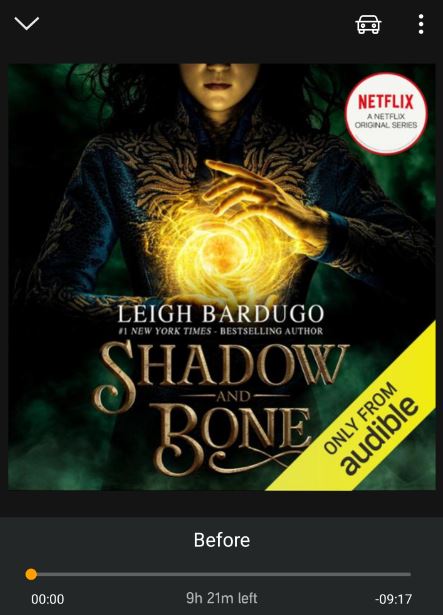
Micro Mention "Shadow and Bone"

Leigh Bardugo


After reading "Six of Crows" and "Crooked Kingdom" by Leigh Bardugo and starting the new Netflix show Shadow and Bone based on Bardugo's Grisha universe, I decided to go back to where it began and read the novel where it all started—"Shadow and Bone."

I enjoyed this novel, but I didn't love it, like "Crooked Kingdom," which I reviewed here. I think mostly this is because this first novel is just that, the first in this universe. Even though it was only a few years, by the time Bardugo wrote "Six of Crows," which directly preceded "Crooked Kingdom," she was already a very different and better writer. Ultimately, it's a serviceable fantasy story if you're looking for something to read, but the best stuff comes in later books.


This preview is an Amazon Affiliate link; 
as an Amazon Associate, I earn from qualifying purchases.


Friday, February 18, 2022

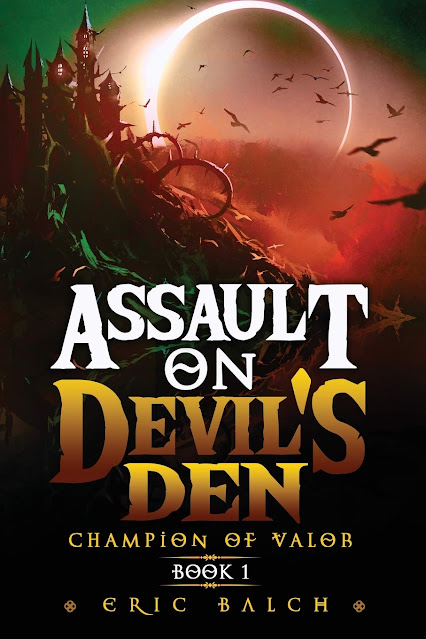
"Assault on Devil's Den" by Eric Balch--Fiction Review

We’re on a road trip to hell today, Obscurists—or, well, hell adjacent. In any case, today’s book is Eric Balch’s “Assault on Devil’s Den,” a sword and sorcery hack and slash fantasy adventure.


Eric Balch


***The Non-Spoiler part of this review***


What I love about this book:

This will come as a complete shock, but I’ve been known to play a little Dungeons and Dragons here and there—nearly every week. So, “Assault on Devil’s Den,” which reads exactly like the setup and execution of a D&D campaign, is right up my alley. I love the adventuring, the sword and sorcery aspect, and generally the whole aesthetic. It’s important to note that“Assault on Devil’s Den” is like D&D in many ways, but it isn’t officially a D&D book, and it very much does its own thing with its own lore.

One of the things I really liked about this novel is how Balch dealt with one of the queasier aspects of old D&D, which is how it dealt with race. Spoilers it didn’t do it well. The central problem is in any Dungeons and Dragon’s setting, a lot like Tolkien’s Middle Earth setting, there are various intelligent races other than humans, like elves, dwarves, orcs, and so on. That in itself isn’t bad, but, both in Tolkien’s fantasy world and the game inspired by it, there is also the conceit that there are goodly races and not so goodly races—which is a fictional form of racism. Balch eschews all of that in his novel. There are plenty of trolls, orcs, and goblins who aren’t evil because of genetics. In his fantasy world, whether a person is good or evil depends largely on individual personal character traits, not inherited by race, you know, like the real world. There are even examples of demons who aren’t evil just because they’re born a demon.

Also, as a fan of a good old-fashioned fantasy dust-em-up, that last fight at the end of this book was a real knock-down-drag-out fight that the story had been building the entire novel. After the wait of nearly the whole book, I found it very satisfying.


What I don’t love about this book:

It is exactly like reading a D&D campaign setting. I know, I just praised this, and I pulled a somewhat similar trick in a review recently about another independent author. Part of the problem this time around is how involved Balch gets into his world-building. A story device I’ve become less and less enchanted with the more books I read. Suppose story should be primary, followed then by characterization. In that case, world-building is third in elements—maybe—but when it’s the primary element of a book, you get into odd moments where you know more about things and places in a story than the people going to those places to retrieve those things. 

For instance, a whole aside in this story takes place at a blacksmith’s shop in a town where the heroes buy new equipment. It’s lovingly rendered down to such fine detail of how much the equipment costs, how long it will take to create, the materials used, et cetera, et cetera. How much does this impact the narrative? Very little. The time and words could have been used to develop the characters more through interaction, or maybe we could have got more background on them with insight into why they are who they are. 

The thing that grounded on me the most, though, was the combat dialogue. There are rarely any good conversations during a pitched battle for nearly exactly the same reason there are seldom any good interviews with players immediately post-football game. The same things get said—a lot. Balch’s word is “impressive” or “impressed,” and it happens in nearly every fight scene if not all of them—there are also a lot of “final form(s)” and “you have no chance(s).”


This preview is an Amazon Affiliate link; 
as an Amazon Associate, I earn from qualifying purchases

Author’s Website: https://ericbalch.com/

***The Spoiler part of this review***
***Ye be warned to turn back now***


The quick and dirty synopsis:

Pelagius, an old adventurer, sits despondently in a tavern with his best friend, a bird person hybrid, and a powerful sorcerer named Bojan. Why Pelagius is despondent is because after a long adventuring career, he fears he’s lost his mojo after freezing up in a fight, and it might be time to hang up the old adventurer cloak. Bojan tries to cheer him up and shake him from his melancholy but what really snaps Pelagius back is the town he and his friend are resting in gets attacked by some notorious soul hunters led by a green-eyed man.

Friday, January 21, 2022

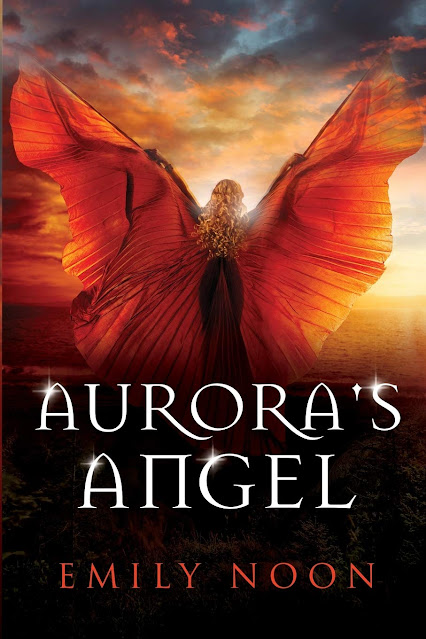
"Aurora's Angel" by Emily Noon--Fiction Review

What a way to start this year off with Indie reviews! “Aurora’s Angel” by Emily Noon is a dark fantasy romance novel that is revelatory. It’s also an LGBTQ+ sort of novel, so it’s nice to see a good book serving an underserved audience.


Emily Noon


***The Non-Spoiler part of this review***


What I love about this book:

Right from the beginning, this book is intense. There is an escape scene with lots of shooting, and then it shifts quickly into a survival story. Noon leans into the dark descriptor of her fantasy pretty hard, and there is a visceral quality to her combat scenes that is equal parts satisfying and disquieting. That intensity isn’t just present in the fantastic elements of this dark fantasy romance, either. The romance is a real grip you by the heart—claws first sort.

It’s worth mentioning it’s a romance between two women, and if that’s going to be a problem like I said in my review of “The Song of Achilles,” how about—try growing up? Ok? Ok. 

How Noon realizes her principal two characters of Aurora and Evie is sublime. They’re deeply complex women with distinct character voices who have many admirable qualities. But they also have defects and blind spots to their characters that make them feel authentic. It’s effortless to fall into the suspension of disbelief with them and mentally treat their story as if it were happening to a real person that you know. Plus, they make for exciting chemistry in a romance.

There are virtually no introduced elements—no detail so small—that aren’t impactfully used in the plot of this story. Overall the plot is very tightly organized. Story problems are introduced in immediate, short-term, and long-term flavors, and solutions are then rendered at the appropriate times.

A lot of attention to detail was given to the dialogue in this novel—and each conversation shines with that effort. When the characters talk, it feels as natural and intimate as any good conversation I’ve had in my life.


What I don’t love about this book:

So there is something that I call the cotton candy effect—or well, there is now, I now call this the cotton candy effect—and the surmise is simple. There is such a thing as too much of a good thing. Which yes, I get that I just added an extra layer to a cliché, and this seems like stalling because it is—but there is a lot of talking in this book—like—a lot, a lot. 

I know I just said I like the dialogue in this book, but I wish there was less of it. Let me explain; much like my favorite carnival confection—after funnel cake and deep-fried Oreos—I love cotton candy but only for about a third of the bag, maybe half if I’m going wild. I’m not saying that half of the dialogue could be dropped, that would be too detrimental, but still, it feels like there could have been more streamlining. This isn’t just with the talky bits, either. There are plenty of elaborately detailed meal scenes, too, more than enough. Other elements get overused beyond those examples, but I feel that the point has been made: there is a lot of indulgence in this novel. 

This leads me to the length of this book—for a twenty-hour experience, there are actually very few locations explored by the characters. To use another fantasy author as an example, Noon has a very Brandon Sanderson-Esque meander about her. If you like that quality for its intimacy, then this is great. I, on the other hand, am very much the kind of fantasy story reader that is constantly asking, “Hey, what’s over there? Are we done here now?” 

While the protagonists of this book, and their orbit, are fleshed out with nuanced and sometimes contradictory motivations and backstories—the antagonists are not. They’re all mustache-twirling dickheads. Except for one avian woman, who, lacking a mustache to twirl—an assumption—is given more of a treatment and, while still eighty percent villain, manages to be sympathetic.


This preview is an Amazon Affiliate link; 
as an Amazon Associate, I earn from qualifying purchases

Author’s Website: https://www.emilynoonbooks.com/


***The Spoiler part of this review***
***Ye be warned to turn back now***


The quick and dirty synopsis:

Aurora discovers a band of black market traders in a mine, known as cutters, that do precisely what they sound like they do. They cut people up and sell their body parts. Well, specifically, they chop up shapeshifters. Aurora, a powerful shapeshifter, has a special hatred for cutters, the details of which are revealed later in the story. Anyway, she exacts some vengeance and frees some captives, including an avian woman named Evie.

Wednesday, December 22, 2021

Micro Mention "Dragonvein"

Brian D. Anderson


"Dragonvein" by Brian D. Anderson has a set-up—a soldier in WW2, unbeknownst to himself, is actually from a parallel universe of magic and dragons—that instantly resonated with me. It might be one of my favorite starting points in a book series.

As for the actual execution of the plot, well, it's ok. I don't know what I was expecting, but I'd have to say I thought there was going to be a little more dragons in this here dragon book. Part of this, I'm sure, is because this is a book one of a series. It still tells an engaging fantasy story, even if it was a shade predictable.


This preview is an Amazon Affiliate link; 
as an Amazon Associate, I earn from qualifying purchases


Monday, December 13, 2021

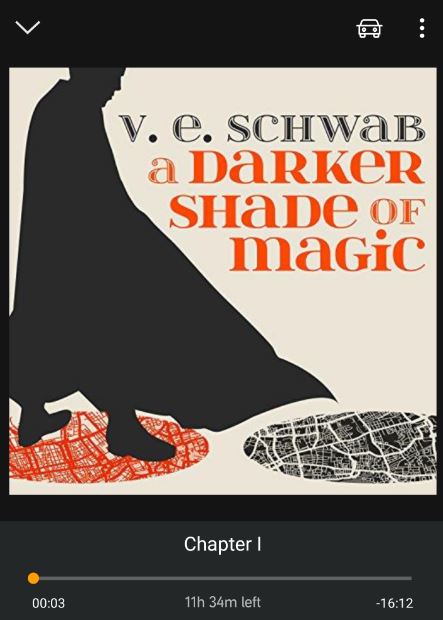
Micro Mention "A Darker Shade of Magic"

V.E. Schwab


After a bit of a slow start for me, this novel, "A Darker Shade of Magic," by V.E. Schwab, ramps up nicely and takes an interesting tact on parallel universes via the fantasy route instead of science fiction.

The atmosphere in this novel is probably its most gripping feature to me. The Londons are all very different places, but they all feel like threatening and dangerous places in their own ways. The sense of mystery and dread Schwab manages to instill in this book made it so that I couldn't stop reading it by about the middle.


This preview is an Amazon Affiliate link; 
as an Amazon Associate, I earn from qualifying purchases.


Tuesday, November 30, 2021

Talking In Obscurity, "Circe," by Madeline Miller

Madeline Miller


Or Download This Episode Here:


Ok, Obscurists, we're at the end of another month, so it's podcast time. For this one, Steven and I talk about "Circe" by Madeline Miller. This book is a wonderful modern reimagining of a minor character from "The Odyssey."

I am proud that at no point in this podcast did I fall back on my over-used explanation that it's like "Wicked" but with Greek Myth. Of course, I just did that here, so... clearly, I can't help myself. In any case, if you'd like to read my full review of this book, you can find it here.


This preview is an Amazon Affiliate link; 
as an Amazon Associate, I earn from qualifying purchases.

Author's Website: http://madelinemiller.com/

Friday, October 29, 2021

"The Name of the Wind" by Patrick Rothfuss--Fiction Review

Time for some fantasy, Obscurists. This week I’m talking about “The Name of the Wind” by Patrick Rothfuss, a sweeping heroic fantasy novel, and the first of “The King Killer Chronicle.”


Patrick Rothfuss


***The Non-Spoiler part of this review***


What I love about this book:

If you’re a fan of fantasy worldbuilding, Rothfuss is your guy. “The Name of the Wind” has richly detailed settings, people, cultures, and a rigorous magic system that is all intricately planned out by the author. It also works one of my favorite angles in fantasy: magic as science or technology—there are rules and limitations that are to be discovered, and it isn’t just handwaved.

Rothfuss is also really good at character voice, and his characters, like the world they inhabit, are well designed—on the protagonist side of things and also with the more neutral characters. I can’t say there was ever a character in this story that I thought was poorly conceived. The antagonists are certainly scary but scary the way lightning is when you’re out in a storm and not under any cover.

There are big exciting action sequences at the beginning of the book and the end that were a lot of fun. They act as tent poles on either side of the story. There are conflicts in between but smaller in magnitude.

The musical angle in this book is something I have always admired in books when they’re pulled off well. I think it’s because I can read music and hold a tune, but I’m still a pretty dreadful musician. I was a clarinetist of middling natural skill in school, coupled with an appalling lack of motivation—but that never stopped me from admiring people of great talent and dedication to music. I just wish I was better in that regard. Anyway, through his main character, Rothfuss injects so much passion for music that it’s arresting in a wondrous way and creates a whole new dimension to this guy.


What I don’t love about this book:

So I’ve been hedging on whether or not to write a review of this book. It’s one of those big fantasy books that I’ve been told by multiple people that it is their absolute favorite book, and I should totally read it and love it like them. I thought it was ok. It’s really long, and the framing story is actually the story I’m more interested in, which robbed a lot of my enthusiasm for the actual main story. 

Kvothe, other than persistent poverty, is also a bit of a male Mary Sue. He’s inexplicably naturally talented at anything he decides to take up. This doesn’t make him immune to mistakes, which is why I qualified “a bit of,” but he always tends to be leaps and bounds better than he ought to be at his age, regardless of the task. His most significant character flaw seems to be his arrogance, but I’d be arrogant too if I were a master swordsman/magician/musician/scholar/adventurer.

The worldbuilding, like I said before, is excellent. You can easily tell that Rothfuss has spent a lot of time thinking about and intricately planning out how his fantasy world looks, feels, and operates. I wish there was a bit more of that planning evident in the plot. I say this because “The Name of the Wind” is actually several subsequent stories that just sprawl and spread out, taking a while to focus in on what’s happening next in the story.


This preview is an Amazon Affiliate link; 
as an Amazon Associate, I earn from qualifying purchases


***The Spoiler part of this review***
***Ye be warned to turn back now***


The quick and dirty synopsis:

The story starts with a frame story, set in a typical small fantasy farm town and centered on the local tavern and its keeper—a man named Kote. Early on, the villagers and a traveling scribe called Chronicler are threatened by giant demon-like spiders. Chronicler is only saved by the mysterious Kote, who Chronicler correctly deduces isn’t just a simple tavern owner but the legendary figure named Kvothe, who has gone into hiding since the whole King killing business he was involved with apparently.

Wednesday, October 13, 2021

Micro Mention "The Assassins of Altis"

Jack Campbell


"The Assasins of Altis" was probably my favorite one yet of Jack Campbell's "The Pillars of Reality" steampunk series. He has a way of making his characters grow on you until you feel incredibly attached to them—and then he threatens their lives. I love it.

There is something about Campbell's stories that always draw me in. Even when I notice flaws, the world he creates in his stories never cracks open and falls apart for me. I'm not entirely sure at this point if my firm suspension of disbelief is a genuine effect of his quality as a storyteller or maybe I've just been so long immersed in his imaginary realms I just can't tell the difference anymore. 

In any case, I often find myself wishing the real world worked more like a Jack Campbell story than it does. There are still great, possibly world-ending perils in Campbell's stories, but there is always a core of thoughtful earnest people willing to put everything on the line to face those challenges. They aren't zealous or god-like entities and aren't immune to consequences that might result in their tragic deaths. But still, they struggle, fight, and almost always succeed because they do what they believe is the right thing to do for the good of everyone.

I'm just saying I wish there were more people like that in the real world.


This preview is an Amazon Affiliate link; 
as an Amazon Associate, I earn from qualifying purchases.


Friday, September 24, 2021

"Howl’s Moving Castle" by Diana Wynne Jones--Fiction Review

In today’s review, we’re getting a castle—that moves! Ok, that was terrible. In any case, Obscurists, we’re talking about “Howl’s Moving Castle” by Diana Wynne Jones.


Diana Wynne Jones


***The Non-Spoiler part of this review*** 


What I love about this book:

I can’t remember if I first really got into science fiction or fantasy as a kid, but I suppose it doesn’t matter—both were formative to me. I bring this up because “Howl’s Moving Castle” struck me several times as being an excellent first fantasy book for a young reader. The stakes are real—from beginning to end—but it feels more whimsical than threatening. The challenges the characters face in this book never seem unsurmountable as long as they all work together.

Our main character, Sophie, is a wonderful protagonist because of her relatability, she’s a good person, but she has her flaws. Her biggest of which is that she’s nosey. If ever she’s told not to go somewhere or ask a certain question, she can’t help herself and does it anyway. This extends to really all of Jones’s characters. They’re all likable but have distinct character flaws—Howl’s vanity, Calcifer’s grumpiness, and Michael’s insecurity. What I like about these characters is that despite their flaws, they all still have the opportunity to grow and transcend their character flaws without radically altering their identities. It’s very tactful character work because, in my experience, many characters feel like different people at the ends of novels than who they were in the beginning.

It’s a slow-burn romance between Sophie and Wizard Howl, and the outcome is never certain throughout the book. We know what Sophie thinks about everything, but it’s difficult to pin down Howl because he hates giving a straight answer to anything.


What I don’t love about this book:

The middle of this novel meanders to the point of sedateness. Part of this is because of the particular curse Sophie is under—she’s a young woman cursed into being an elderly lady, but there doesn’t feel like a lot of direction from the other characters, either. 

Since most of our time is spent hanging out in the moving castle with Sophie, cleaning, making the other character’s lives more interesting, there isn’t much world-building involving the different locations the moving castle is attached to. There is, in theory, people certainly talk about the other places. But it’s precious few times that Sophie actually gets out of the castle in a way that involves us seeing what’s going on in the wider world. This might just be my perception because when I think about this book, it’s about the long, intricate passages of Sophie cleaning the castle, like Cinderella if she were a crone. 

So it’d be weird if I didn’t bring up that there is a Miyazaki film based on this novel that I’d wager people are more familiar with than the book. I was certainly in that camp. In the movie, the Witch of the Waste is a far more complex character that transcends the descriptor of a mere antagonist. In the book, however, if she had a mustache, she’d be twirling it constantly. There’s no rhyme or reason why she’s a jerk that I can see. She just is a jerk.


This preview is an Amazon Affiliate link; 
as an Amazon Associate, I earn from qualifying purchases


***The Spoiler part of this review***
***Ye be warned to turn back now***


The quick and dirty synopsis:

Sophie Hatter, daughter to a deceased Hatter and eldest sister of three girls, lives in a magical kingdom but doesn’t suppose her life will ever amount to much. This is just a known and accepted fact about the eldest sisters in this world. Sophie tries to content herself running her father’s old hat shop alongside her stepmother—who, as a nice change of pace, isn’t evil or even malicious.