Showing posts with label Cosmic Horror. Show all posts

Monday, August 7, 2023

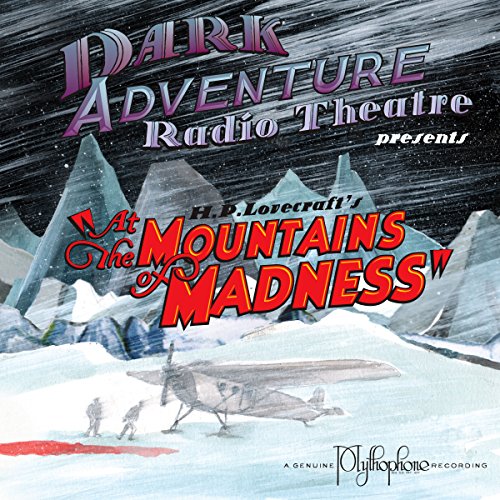
Talking In Obscurity, "At the Mountains of Madness" by H.P. Lovecraft


Dark Adventure Radio Theatre


Distance makes the heart grow fonder, my dear Obscurists. I apologize for being on such a sparse and erratic upload schedule, but I have a good one for you today.

Speaking of distance, Steven and I are taking you to a faraway destination, "At The Mountains of Madness," by H.P. Lovecraft, not once but twice in this double feature review. Today we compare the novella version of this story, written by the man himself, and Dark Adventure Radio Theatre's adaptation of this story as a radio drama. Dark Adventure Radio Theatre is part of The H.P. Lovecraft Historical Society, so if you want to check them out, click the link below.


Some links in this post are Amazon Affiliate links; 
as an Amazon Associate, I earn from qualifying purchases.

Saturday, December 10, 2022

Talking In Obscurity, "Annihilation," by Jeff VanderMeer

 
Jeff VanderMeer


Today Obscurists Steven and I are talking about one of my favorites, "Annihilation" by Jeff VanderMeer. It's a weird cosmic horror that I've talked about before on this blog.


This preview is an Amazon Affiliate link; 
as an Amazon Associate, I earn from qualifying purchases.

Monday, May 2, 2022

Micro Mention "Who Goes There?"

 
John W. Campbell


Sure, “Who Goes There?” by John W. Campbell might be a rip-off of another favorite story of mine, “At the Mountains of Madness,” but I still love it to pieces because it ultimately gave us John Carpenter’s “The Thing,” my favorite horror film, ever.

Having read the novella more than once, I still prefer the 1980s creature feature that uses all too disturbingly realistic and gross practical effects. Still, it's fascinating as a fan of Carpenter's movie to see the backbone of what made that movie possible.


Friday, February 11, 2022

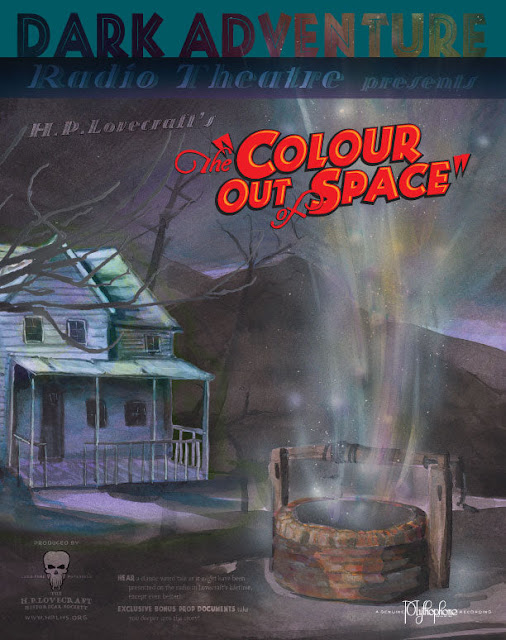
"The Colour Out of Space" by H.P. Lovecraft--Fiction Review

In this review, Obscurists, I am talking about H.P. Lovecraft’s “The Colour Out of Space.” Still, this one is a little different because I’m actually talking about three different versions of this story in one place. But I’m primarily talking about the original short story and the H.P. Lovecraft Historical Society’s Dark Adventure Radio Theatre version.


H.P. Lovecraft


***The Non-Spoiler part of this review***


What I love about this book:

I go back and forth on whether or not “The Colour Out of Space” is my second favorite H.P. Lovecraft story, or maybe it’s “The Dunwich Horror,” anyway, today, let’s say it’s the former. On a totally unplanned and spontaneously random self-promotional note, if you read my own novel “Jade Fall,” you’ll pick up on how this story and “The Shadow over Innsmouth” influenced me.

My biggest love for this story is how it derives its horror without actually invoking the supernatural, unlike many of Lovecraft’s earlier stories. It isn’t ruled out that the meteorite comes from a supernatural source, but it isn’t confirmed or even suggested either. What it is, is simply unknowable. It’s so different and so odd that it can’t be classified when studied. I love that atmosphere of merely saying it came from outside. He doesn’t even specify outside of what, the earth, the solar system, the galaxy, the universe!?

Specific to the Dark Adventure Radio Theatre version of this story, the H.P. Lovecraft Historical Society has created an updated—yet still feeling part of an older era—radio drama edition that is sublime. I’m not nearly old enough to be properly nostalgic for or even remember the golden age of the radio drama, but I love the format.


What I don’t love about this book:

Lovecraft pulls his old standby of: “It was just too horrible to describe.” And sure, there is something to be said about less is more and don’t show the monster, but he overuses that trick, and it happens in this story in more than one place. 

Every version of this story that I’ve experienced at least makes use of a framing story of a surveyor making his way into the hill country around Lovecraft’s fictional city of Arkham, working on the planning stage of a new reservoir. Anyway, like I said, it’s just a framing story, and it’s an excuse to tell this outsider, and by extension, us the audience, the weird and horrible goings-on at the Gardner farm. Usually, I don’t mind a framing story, “At the Mountains of Madness,” my favorite Lovecraft story sort of employs one. I’m not too keen on this one because “The Colour out of Space” is already a short story, so it feels like words are being wasted.

Also, present in this story, there is that Lovecraft element of a casual disdain for foreigners that I always find off-putting.


H.P. Lovecraft Historical Society

Author’s Website: https://www.hplhs.org/


***The Spoiler part of this review***
***Ye be warned to turn back now***


The quick and dirty synopsis:

Like I said above, the narrative begins with a surveyor telling the tragic story of the Gardner family as it was told to him by their neighbor, a man named Ammi. The story tells of how a meteorite crashed into one of the Gardners’ fields. At first, the family’s patriarch is pleased by all the attention his farm is getting from the local scientific community—and really just the community in general.

Monday, December 20, 2021

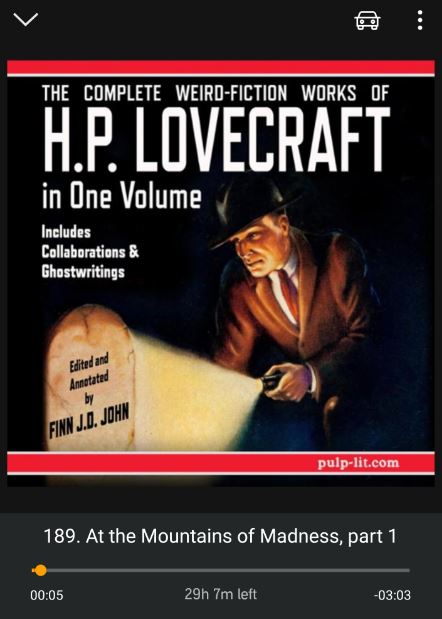
Micro Mention "The Complete Weird-Fiction Works of H.P. Lovecraft"

Finn J.D. John


So not to fanboy out too much, but this is my absolute favorite Lovecraft collection put together. It's compiled by Finn J.D. John. Why I love it so much is because outside of S.T. Joshi's "I am Providence," nothing has ever given me so much Lovecraft backstory and context like this.

John puts all, and I do mean all, of Lovecraft's fiction together in one volume, but he also puts them in chronological order as to when they were published. This lets you see how Lovecraft developed as a storyteller from the beginning to the end of his career.

What is truly my favorite part of the collection, other than the stories themselves, is that between each story, John also gives us snippets of a biography on Lovecraft. It's a very long read since it's the sum total of Lovecraft's life and an incredibly intimate experience as you get to know the man while reading his fiction because of how the biography and the fiction are woven together. 

I've read this collection twice now, and one of the things that stuck with me both times is how much Lovecraft changed as a person as he grew older. He's often remembered for when he was at his worst, racism-wise when he was a young man. But a little-known story, toward the end of Lovecraft's life, called "In the Walls of Eryx" often makes me wonder what would Lovecraft have produced if he had a few more decades.

"In the Walls of Eryx" was technically Kenneth J. Sterling's story, but he was a young man collaborating with Lovecraft, who probably wrote the bulk of the story. It's very different from the jump than anything else Lovecraft wrote, but its crux is humanity is a spacefaring race in the story and is in conflict with the natives who live on Venus. With all the swagger of an odious imperialist, the protagonist is only on Venus to strip it and, by extension, the natives of their resources. He views them as inferior beings, not worth worrying about if they live or die.

Then something strange happens toward the end of the story. Even as the natives manage to trick the protagonist, and they're still in mortal conflict, he begins to respect them. He even realizes that humanity is in the wrong, that the natives are just trying to defend their homes. Then he considers that in the grand scheme of the wide universe, and all time, who is to say which race is superior in the long run, and maybe the distinction doesn't matter. 

Sure, it was a story initially conceived by someone else, but for a man like Lovecraft to work on it, who was firmly a white supremacist as a young man, that story turn is revelatory. That's why I wonder, what would the man have written if he had a few more decades and didn't die of stomach cancer tragically soon after.


This preview is an Amazon Affiliate link; 
as an Amazon Associate, I earn from qualifying purchases.

Author’s Website: http://finnjohn.com/


Friday, November 26, 2021

"Terminus" by Peter Clines--Fiction Review

So Obscurists, this is a big day—yes, I know it’s black Friday—but no, not that. According to my almighty spreadsheet, today is the day I have posted 100 full reviews here on WIO. So that means you could scroll back through this blog, read all of them, get a pretty good gist of them, and then you could claim at, I don’t know, let’s say parties that you’ve read all those books—sorta. Do people still do parties? I’ve not gone outside for a very long time. 

It also means that if you took the time to print out all 100 reviews, spread them out on your floor, and rolled around on them naked—you’re undoubtedly a serial killer. Please stop doing that.

In any case, so what are we going to talk about today? Oh! I know—how about a book? I started this book blog reviewing “14” by Peter Clines, one of my favorite authors, so it only feels right that my 100th review should be one of his books. So today, we’re talking about “Terminus.”


***The Non-Spoiler part of this review***


What I love about this book:

So, “Terminus” is actually book four of Clines’s “Threshold Universe” series, but the nature of this series is such that I don’t feel it’s a big deal to jump ahead to wherever. Normally such a statement from me would be sacrilegious—so you might ask yourself—did I do that? Jump from book two to book four? No, of course not. I’m not a book heretic. So explanation time, Clines writes each of these books as standalone stories, typically with whole new casts of characters, with maybe some cameos from other stories sprinkled in. They all share the same universe, but they’re not really unified narratives like you’d expect with most book series.

What is the actual throughline through these books—and clearly, I find this very clever—are the stories’ antagonists instead of the protagonists. Each book still works in the traditional model of meeting, following, and rooting for the protagonists of each individual book, but they get swapped out each story. Whereas the more monstrous characters are omnipresent in each story. They’re slower to take the stage in the narrative in the first two books but ramp up with each novel, and by the time we get to “Terminus,” shit hits the fan nearly immediately.

There are my usual loves about Clines’s writing present in this book. I love listening to his characters talk and who they are, and of course, I read the audiobook version, which is read by my favorite narrator Ray Porter—and I’m gushing.

Also, there are more direct ties in this book to “14” than any other in the series, and “14” is still my favorite book I’ve read as an adult—maybe ever—it’s hard to say.


What I don’t love about this book:

This book gets very far away from having a central protagonist—or main character, if you will. Typically, that isn’t something that I’d even bring up and doesn’t bother me when other novels do it, but by the end of “14,” I knew its characters very well. I liked them, and I enjoyed listening to them go about their exploration of their building together, and how they deepened their friendships was nice. It made it all the more wrenching when they started dying and getting hurt. A lot of that sense of community and that community suddenly being threatened isn’t present in this book.

The characters are good, don’t get me wrong, it’s just we’re meeting them all for the first time—we don’t spend lots of time with them temporally from their perspective—this story is largely about one really bad day—and they never seem to like each other all that much. So when people start dying, it’s not as impactful. As much as I liked that sailor dude, his shocking death hits like, “oh, well, that sucks.” But not with soul-crushing sadness. Also, calm down. That isn’t a spoiler, there are tons of sailor dudes in this book, and many die. It’s more of a generalized statement about this novel rather than a specific plot point.


This preview is an Amazon Affiliate link; 
as an Amazon Associate, I earn from qualifying purchases

Author’s Website: http://thoth-amon.blogspot.com/


***The Spoiler part of this review***
***Ye be warned to turn back now***


The quick and dirty synopsis:

“Terminus” begins with Murdoch listening to a minister talking to her new congregation—the Family—on a beach. He’d apparently been involved with minister Anne when they were younger. She had recently returned to the faith, having had her faith in the Great Ones confirmed during the events of “The Fold,” the second book in this series. It turns out that the antagonist of “14” was her brother. He had failed to destroy the machine, really the whole building the characters in “14” live in—but Anne has a new plan. One she is sure will destroy the machine keeping the Great Ones from coming through to Earth.

Monday, September 6, 2021

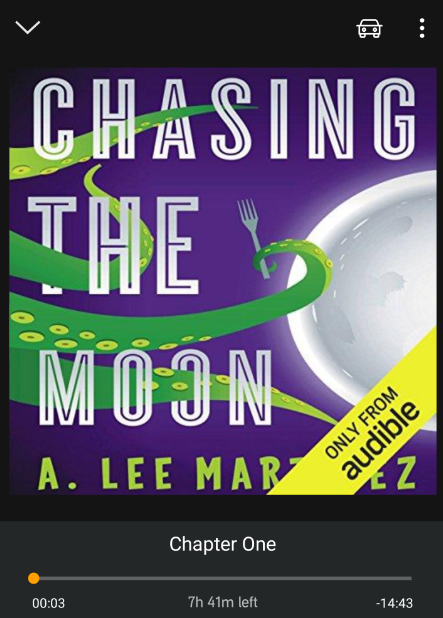
Micro Mention "Chasing the Moon"

A. Lee Martinez


“Chasing the Moon” by A. Lee Martinez is a weird one. It’s Lovecraft-like, but it's also far lighter of a story in terms of tone than the usual fare for weird fiction and cosmic fiction. In any case, it has big unfathomable cosmic entities from beyond space and time—and they mainly just want to hang out.

I actually had a conversation with the author about this book on Twitter where I had called this book "Lovecraft-lite," and I didn't mean any harm by that, but it was pointed out that "lite" suggests lesser. I apologized because it wasn't my intention to comment or compare quality levels, one way or another, but just to point out it's lighter in tone. In any case, the precise care for word choice is critical, is what I'm getting at here.

As a book, if you're looking for an entry into this sub-genre but are a little dubious about an overly terrifying book, "Chasing the Moon" would be a good entry point.


This preview is an Amazon Affiliate link; 
as an Amazon Associate, I earn from qualifying purchases.

Author's Website: http://aleemartinez.com/


Friday, August 13, 2021

"At the Mountains of Madness" by H.P. Lovecraft--Fiction Review

Ok, Obscurists, I’ve talked about this author numerous times, but I’ve never reviewed any of his books before here on WIO. So today, we’re talking about my absolute favorite story from H.P. Lovecraft, “At the Mountains of Madness.”


***The Non-Spoiler part of this review*** 


What I love about this book:

The setting of this story is Antarctica, and while I don’t like the cold—ok, I hate the cold—but Antarctica has somehow always been fascinating to me. It’s so vast—so different from the rest of Earth and the last place on the planet to be really explored. Especially when Lovecraft wrote, “At the Mountains of Madness,” so if you put yourself into that mindset, then really anything could be there—a literal here be dragons sort of place in modern times.

Without giving away too much of the story yet, this story is complex in that it isn’t just a horror story but a detailed adventure story focusing on exploration. That’s an element in Lovecraft’s canon, which is common but isn’t as focused on in such detail as this story. Typically someone is exploring something against their will or by total accident. Usually, Lovecraft doesn’t bother himself with the practical details of exploration like in “At the Mountains of Madness.” I find this focus on real-world details about the expedition’s tools and methods makes the world he’s building for us feel all the more authentic.

Since Lovecraft makes this world feel particularly close to reality, the horror when Lovecraft-style monsters show up is all the more compelling. When flesh and bone people suddenly come in contact with protoplasmic nightmare creatures at the bottom of the world, the atmosphere of isolation and terror has crescendoed into an all-out panic.

In addition to his typical masterful use of terror, dread, and oppressive atmosphere—the best tools in his writing—Lovecraft employs something different in this story as well that I’d never seen him use before I read “At the Mountains of Madness.” He uses, albeit sparingly, empathy for the other—he has one of his characters express pity for and even imagines the perspective of their antagonist. Lovecraft was a product of his time, which means that if he were alive today, he’d be judged an odious racist and white supremacist. “At the Mountains of Madness” was written toward the end of Lovecraft’s career, so any expression of empathy toward an “other,” in this case winged space monsters from beyond time immemorial, is a huge breakthrough in his writing.


What I don’t love about this book:

Sadly, Lovecraft died a few years after writing “At the Mountains of Madness,” and it wasn’t that successful while he was alive. He’d thought the story his masterpiece—a sentiment I agree with—and his confidence was shaken when it didn’t take off with his usual outlets. That’s why I believe we see a regression in style and scope with “The Shadow Over Innsmouth,” written later that same year. It’s a fine story in pacing, atmosphere, and horror, but another one that relies heavily on his crackpot preoccupations with race and degeneration—so on and so forth. 

“At the Mountains of Madness” might be one of Lovecraft’s best attempts at character development—there are actual people with names and defined relationships to one another. But, still, a published author of his caliber and experience should be able to muster a bit more dialog and inject more robust character interaction than the C+ effort he puts into this story.

Lovecraft was quintessentially a short story writer, and that shows in all of his longer works in differing degrees. This one is no exception. Often, I feel like I’m being summarized—at, which would mean he does a lot of telling and not a lot of showing in the modern parlance. There are some terrific sequences of immediate peril toward the end that aren’t like that, and they’re awesome. In the middle of the story, however, lots of telling. It’s nowhere near as bad in this regard as “The Dream-Quest of Unknown Kadath,” which legit, in my opinion, Lovecraft wrote a sort of horror/fantasy “Lord of the Rings” style epic in just over 42,000 words. Sounds like it should be kickass! But—it isn’t—because it’s like reading an outline of a book series which should have been three or four full-sized novels, which he was painfully incapable of writing.


This preview is an Amazon Affiliate link; 
as an Amazon Associate, I earn from qualifying purchases

***The Spoiler part of this review***
***Ye be warned to turn back now***


The quick and dirty synopsis:

The story begins with a framing story of a professor of Miskatonic University, William Dyer, warning and pleading that no one should return to the site of his expedition in Antarctica. Dyer is reluctant to tell his story because he’s certain that he’ll be labeled either a liar or madman.

Wednesday, June 30, 2021

Micro Mention "The Beautiful Thing That Awaits Us All"


I once said of Laird Barron's short story collection "The Beautiful Thing That Awaits Us All" that it was awesome, and I wouldn't qualify that further because it’s awesome. So here we are, qualifying that further. It has a Robert Aickman-Esque quality that I appreciated, but while sometimes meditative like that author, Barron never takes his hand off the wheel of terror. Each story is working toward a specific effect, and it's always grounded in some sort of fear, typically cosmic in origin.

My favorite story in this collection is "The Men from Porlock," which starts off as just a story about lumberjacks that eventually morphs into a nightmare involving things—puppetmasters from beyond normal reality. I love that—taking something rural and seemingly salt of the earth common and slowly twisting it into a feverish night terror. This story's pacing strategy is one of my favorites too, slow at first, but with an ever exponentially accelerating pace, so that by the end, events are speeding by, leaving you whiplashed.


This preview is an Amazon Affiliate link; 
as an Amazon Associate, I earn from qualifying purchases.


Friday, April 30, 2021

"Annihilation" by Jeff VanderMeer--Fiction Review

In today’s review, we’re visiting Area X in Jeff VanderMeer’s “Annihilation,” which is one of my absolute favorite examples of modern-day weird fiction/cosmic horror.


Jeff VanderMeer


***The Non-Spoiler part of this review***


What I love about this book:

The first thing I want to talk about—that I love about this book—is the fact that none of the characters have names in the traditional sense. Everyone is just identified by their role on the team during the expedition, and our protagonist is the Biologist. It really adds to the whole weirdness of the story.

As cosmic horror, “Annihilation” is a high-water mark of the subgenre. I’ve heard VanderMeer called the weird-Thoreau before, and I can tell you it’s deserved high praise. More than anything, “Annihilation” is an atmospheric book to such a finely honed degree that I found myself getting lost in VanderMeer’s lush descriptions of Area X.

There is a pervasive feeling of dislocation throughout the narrative of this book that mocks any form of human intent or investigation. Area X is determinedly unknowable in every sense of the word. It’s a kind of horror that is constant pressure, unlike the jump scare sort, which is all short, intense bursts. Everything—every element of this story—serves that feeling from the human characters not having names but titles, to the bizarre environment of Area X, and how the characters investigating it even got there, or why.


What I don’t love about this book:

“Annihilation” is a short book, and typically, I enjoy a good short book—I’m addicted to hearing, “Audible hopes you’ve enjoyed this program,”—but in this case, it leaves me wanting more, a little more time in Area X. This is what makes the next book in the “Southern Reach Trilogy,” so frustrating for me because it takes place just outside of Area X. The third book scratches that same itch as the first one but there feels like something missing from the whole formula so, it’s only nearly as good. This is more a critique of the series as a whole, but if “Annihilation” had a bit more to it, I don’t think I would be left wanting more.

Half of the expedition team isn’t as fleshed out as the other half. VanderMeer spends all this time creating subtle character development and hints of back story for the Biologist and the Psychologist that the character work for the Surveyor and the Anthropologist suffers noticeably. It isn’t clear why they’re there in the first place. As for the Biologist, or Ghost Bird, as her husband calls her, she’s there, you discover, because she’s an odd bird—sorry, it had to be done. 


This preview is an Amazon Affiliate link; 
as an Amazon Associate, I earn from qualifying purchases.


***The Spoiler part of this review***
***Ye be warned to turn back now***


The quick and dirty synopsis:

We start “Annihilation” with four women, the Biologist, the Psychologist, the Surveyor, and the Anthropologist. Beyond their titles, we’re never told their names. Everything starts shortly after they enter the mysterious Area X, a coastal location that has been quarantined and studied for the last thirty years. This is the twelfth expedition into Area X. The Biologist, our protagonist, is the wife of one of the members of the eleventh expedition. That expedition was thought lost, but mysteriously, members of the eleventh expedition returned home with no memory of how they got out of Area X. They all soon died of terminal cancer, including the Biologist’s husband.

Friday, February 14, 2020

"The Fold," by Peter Clines --Fiction Review


Happy Friday, internet strangers! Today we’re talking about “The Fold” by Peter Clines, the second book in the Threshold series. So another book by Peter Clines? Yes, he’s one of my favorite authors purely because of how much I loved “14,” and one day, that restraining order will expire.

“The Fold” is also science fiction/horror in the same bent of the neo-Lovecraftian subgenre. Like most of Lovecraft’s later work, while being a kind of soft-science fiction, Peter Clines’ “The Fold” doesn’t rely on magical influence to tell its story or evoke its horror—in other words, everything is presented as being scientifically consistent within the story’s universe.
    

Peter Clines


***The Non-Spoiler part of this review***


What I love about this book:

The easy stuff first, I’m a big fan of classic Lovecraft stories, and newer versions of the subgenre and “The Fold” scratch that itch, much like its predecessor. It isn’t just a simple retelling of “14,” though—first of all, the cast of characters changes in this novel, and the setting is entirely different. The plot isn’t about a group of characters investigating a mysterious old building—a trope Lovecraft liked. It’s about a group of scientists who seemingly invented a teleportation gate that they don’t seem to know quite as much about as they should—another trope Lovecraft liked—where the science experiment goes horribly wrong.

Pacing wise, I really like Peter Clines’ propensity with “14” and now the “The Fold” to start off slow and give you time to get a lay of the land before suddenly ramping up at the end of the novel. I understand that a lot of people are off-put by this, but my argument for why I like it is this: a disaster rarely slowly unfolds. It explodes, suddenly and horribly out of control. That’s what makes them so scary. “The Fold” captures that feeling in its closing chapters. 

Again, the characters of this novel have that gift of gab that I associate with Peter Clines, and his dialogue never fails to delight me. I never find a conversation in this book where I think to myself, this could have been skipped. Everything talked about feels compelling, and if not that, then it is funny or charming, etc.  


What I don’t love about this book:

I guessed the whole twist of the story after reading the synopsis and the prologue, which is one of the reasons I like this book about ninety percent as much as “14.” The publisher’s summary even touts, “…and a terrifying final twist you’ll never see coming…” For starters, that’s a cliché in book marketing material, secondly, if you read “14” to the end and got its whole deal—then yes, you will, and if you didn’t, then you’re just not paying attention. 

Also, another issue I have is with the characters—I know I said above that they talk all pretty and whatnot—but I find them less memorable than the characters in “14.” Part of the reason for this, in my opinion, is because all of the characters in “The Fold” are all very similar for no other reason than they are the kind of people who could be working on a top-secret teleportation project for DARPA. What I mean by this is they’re all scientists, engineers, computer experts—super geeks.

Even Mike, our protagonist and stand in everyman like Nate in “14” isn’t really an everyman character. He’s a hyper genius with an eidetic memory, playing at being an everyman character. This makes everyone sorta run together, and unless you’re really focusing, the specifics of who did what and when fuzz over quickly.

 It wasn’t until a second reading of the novel that I noticed the detail that one of the scientists looks like Humphrey Bogart. Other than the character’s accent that Ray Porter gives him in the audiobook version of the novel, his looks really are the only thing that is memorable about the character—that and his propensity for being mad all the time and certain everyone else is always wrong.


***The Spoiler part of this review***
***Ye be warned to turn back now***


The quick and dirty synopsis:

Leland “Mike” Erickson is an English teacher in New England just finishing up a school year with his class when an old friend visits him. The friend, Reggie, is someone high up in DARPA and wants to recruit Mike for a project, which Mike shows little interest in but agrees to visit Washington DC to hear more about it before refusing. Reggie wants to hire Mike because he’s actually one of the smartest people on earth, possibly ever, and Reggie knows this from their time together as friends in college. Mike has a true eidetic memory, perfect recall of everything he’s ever seen or heard.

In Washington, Mike finds out that the project Reggie wants him to observe is an honest to god teleporter. The first version, a straight teleporter, as in breaks a person down into energy, moves that energy to somewhere else, and then reassembles them, was a colossal failure. The second project, though, the Albuquerque Door is a success, but the scientists working on the project say they need more time for testing and more funding, while simultaneously maintaining that every test using the door has been an unqualified success. This is where Mike comes in, Reggie, believes something must be wrong, but obviously wants the project to succeed and get more funding, this is why he recruited Mike to be his man on the ground.

Once at the project, Mike starts his investigation, and right off the bat, he’s given a demonstration of the Albuquerque door—and it works. When he settles in though and begins questioning the scientists and engineers that work on the project, he’s met with hostility and suspicion, even after reassuring them that he’s on their side. More than that, Mike can’t help but feel like people are hiding things from him, holding something back.

As the story unfolds, it becomes more evident to Mike that the scientists and engineers who built the door and supposedly designed it—don’t really know how it works. Eventually, it’s revealed that they really don’t know at all how it works, they just know that it does work. Initially, after their first project was a failure, they were sure they would soon be out of a job, and the Albuquerque door was just a ploy to get more funding and stretch things out longer. Then they used the equations of a long-dead obscure scientist–the same scientist who designed the building in “14”—and the Albuquerque door opened, creating a stable gateway to another building a quarter of a mile away.

Except Mike discovers, that’s not what it’s doing at all. The Albuquerque door isn’t teleporting anything, it’s opening a tear from one dimension to another dimension, very similar to the one it’s in, but in reality, it sends its travelers to a whole new universe. The biggest catch is the more people who are around the portal increases the variability in the universes the Albuquerque door opens up to, which includes those universes that the monsters from “14” have destroyed. Then Mike and the scientists find they can’t close the door anymore, even when they turn off the power, and the monsters start making their way into their universe, which leads to a desperate struggle to destroy the Albuquerque door.         


Analysis:

The fold is an old-time science fiction machine run amok story, mixed with Lovecraftian stylings, and updated to modern sensibilities. The plot is an original piece for this series, and it doesn’t precisely repeat “14,” but it would be misleading to not point out that certain elements are tried and true science fiction arcana.

Parallel universes are nothing new in science fiction, and I believe the mention of certain characters being Star Trek fans early on in the novel is the author winking at the audience and foreshadowing a “mirror universe.” The “mirror universe” idea is a recurring Star Trek plot point where characters sometimes find themselves in an alternate universe, similar to, but different from their native universe. Surprise, surprise usually this happens because of a transporter accident—or teleporter in other parlance.

I like each character in this novel as individuals, but overall as a group, I find them less effective on an emotional level than the group in “14.” This is because of the lack of diversity in the group, they don’t contrast as well off each other as the ones in the first novel. Like I said in the non-spoiler part of the review, part of this is because the median intelligence of every character is necessarily high. However, to tell this plot, I think this trade-off in character is inevitable because it wouldn’t make sense to throw in a radically different character from the others, other than Mike himself, of course. That would be distracting from the story to answer the question of why that person would even be there. Another reason is this story shows people at work, whereas “14” tells a story about people at home. It’s realistic that people at work—if we want to keep our jobs that is—are more reserved in nature and less relaxed than when they are in their home. So it’s harder to get to know the people who populate this story, and when a lot of them die, it’s less emotionally taxing.              


Parting thoughts:

One of the things I don’t like about this book has nothing to do with the plot, characters, or even the author. It’s how the book is marketed. The novel is positioned as a science fiction thriller, and I’ve never really internalized what a “thriller” truly is and is not. I understand what a lot of people think it is, and it’s obviously popular as a genre. It isn’t even exactly that “The Fold” is labeled as a thriller that bothers me precisely—it’s what is missing that bothers me. It isn’t described as a horror story when clearly, that is a significant component of the story. That’s probably why a lot of people don’t like the ending, they’re not expecting the turn into horror.

It isn’t really a mystery to me why this happens—even “14” isn’t positioned as a horror story. It’s called a Sci-Fi, a mystery, or even a thriller—but not horror. The dirty secret is horror stories are a non-preferred genre, viewed as not capable of making as much as the other genres.
Don’t believe me? Take a look at how most sellers of books list horror on their website. They typically don’t even list it as a genre, even my beloved audible shoe-horns it in as a sub-genre under the catch-all fiction genre. Barnes & Noble lists Manga and Westerns as genres while omitting horror. Now I like Japanese graphic novels (never, ever, call them comic books or cartoons or their fans will tear you a new asshole for just thinking it) and a good western—but how has this happened? The genre that Stephen King writes in most commonly isn’t even considered a real genre anymore. The genre that gave us Frankenstein and Dracula, if they were written today, would be marketed with some milquetoast nonsense like, “a thrilling supernatural mystery,” or “a suspenseful page-turner,” but they wouldn’t ever be described as the honest truth—it’s a scary story.     

Friday, January 3, 2020

"14," by Peter Clines--Fiction Review

I wanted my first review to be of “14” by Peter Clines.

Peter Clines


***The Non-Spoiler part of this review***


What I love about this book:

It’s neo-Lovecraftian horror that somehow manages to feel very light, like an episode of friends that takes an unexpected hardcore turn into Cthulu-Ville.  I also love its ensemble cast of characters who are all compelling in their own ways. Finally, and the biggest reason I love this book, I’m enchanted by the vocal talents of its narrator, Ray Porter, for the audiobook edition—yes, I’m one of those.

“14” does exactly what I want in modern-day cosmic horror. It keeps all the stakes of perception stretching nightmares, and it updates the characters to make them more relatable than just the stuffy professor type who stumbles upon a moldy old book. So, when bad things start happening to the characters, you genuinely care about their fates. Lovecraft, a pioneer of stories like this, didn’t always bother to name his characters, making it hard to care about them when things from beyond the veil of ordinary reality drove them insane. Oh no—that… guy—went nuts and jumped out of a window! I will forever remember fondly how frightened he was of fish people. 

I credit Peter Clines for reawakening my enthusiasm for writing and great storytelling at a time when I had walked away from this art form. It is my favorite novel that I’ve read as an adult, it’s the first book I always recommend, and you should buy it.


What I don’t love about this book:

There isn’t much of anything I don’t like about “14,” which isn’t to say that it’s a perfect work of literature—I don’t believe perfection is possible. Subjectively, for me, all of its constituent elements of plot and character development work in a way I find pleasing. I often find myself picking a random moment in the story and relistening to the rest of the book from there—yes, sometimes that’s the very beginning—in an attempt to inhabit that headspace I experienced the first time I read the novel. Now I get that this is starting to sound like more reasons why I love this book, dear probably no other human being ever until aliens from Alpha Centauri are sifting through the wreckage of our collapsed society and only come across my blog to ascertain what our culture was like reader. But, where I’m going with this is with great familiarity inevitably, you can’t help but see little defects.

First off, as much as I love the dialog between characters, there are a few kitschy moments. The major one I’m thinking of is one character mentions Torchwood—which I’ve never seen, and I’m sure is a lovely program—but nobody in a group of people greater than three, who vary wildly in demographics, such as age group, asks, “what’s that again?” Everyone gets it, and the banter continues without missing a beat, which was probably a conscious decision by the author to keep the flow going, but I’d argue it feels a tad inauthentic.

This leads to my next point, every character, who are the protagonists—or orbit the protagonists in a friendly way, share essentially the same sense of humor, a light form of sarcastic gallows, which if you’ve read the preceding paragraphs, you’ll understand why it resonates with me. Groups of friends do tend to have similar senses of humor but are less likely, to have the exact same sense of humor, differences in experiences make that sort of thing unlikely. This means that how the characters talk doesn’t always sound exactly like how people actually talk. I would also argue that in fiction, we don’t really want characters to talk precisely how people actually speak in the real world, because real-world people do things like, um, you know add words and things improbably, and like, um, incorrectly, and repetitively, while sorta babbling on, stalling for time, because they sorta drift off, forgetting their original, you know, point they were driving at, at the beginning of their run-on sentence.


This preview is an Amazon Affiliate link; 
as an Amazon Associate, I earn from qualifying purchases

Author's Website: https://www.peterclines.com/

***The Spoiler part of this review***
***Ye be warned to turn back now***


The quick and dirty synopsis:

The story opens with a man running away from a group of people while bleeding to death. He knows he’s going to die and is cool with it, just so long as the mysterious people don’t catch him and get him to reveal something that would kill everyone—not a few people, or a lot of people, all the people.