Showing posts with label Romance. Show all posts

Friday, January 21, 2022

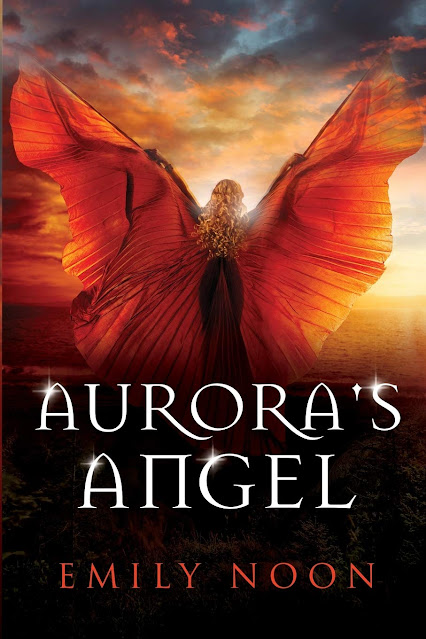
"Aurora's Angel" by Emily Noon--Fiction Review

What a way to start this year off with Indie reviews! “Aurora’s Angel” by Emily Noon is a dark fantasy romance novel that is revelatory. It’s also an LGBTQ+ sort of novel, so it’s nice to see a good book serving an underserved audience.


Emily Noon


***The Non-Spoiler part of this review***


What I love about this book:

Right from the beginning, this book is intense. There is an escape scene with lots of shooting, and then it shifts quickly into a survival story. Noon leans into the dark descriptor of her fantasy pretty hard, and there is a visceral quality to her combat scenes that is equal parts satisfying and disquieting. That intensity isn’t just present in the fantastic elements of this dark fantasy romance, either. The romance is a real grip you by the heart—claws first sort.

It’s worth mentioning it’s a romance between two women, and if that’s going to be a problem like I said in my review of “The Song of Achilles,” how about—try growing up? Ok? Ok. 

How Noon realizes her principal two characters of Aurora and Evie is sublime. They’re deeply complex women with distinct character voices who have many admirable qualities. But they also have defects and blind spots to their characters that make them feel authentic. It’s effortless to fall into the suspension of disbelief with them and mentally treat their story as if it were happening to a real person that you know. Plus, they make for exciting chemistry in a romance.

There are virtually no introduced elements—no detail so small—that aren’t impactfully used in the plot of this story. Overall the plot is very tightly organized. Story problems are introduced in immediate, short-term, and long-term flavors, and solutions are then rendered at the appropriate times.

A lot of attention to detail was given to the dialogue in this novel—and each conversation shines with that effort. When the characters talk, it feels as natural and intimate as any good conversation I’ve had in my life.


What I don’t love about this book:

So there is something that I call the cotton candy effect—or well, there is now, I now call this the cotton candy effect—and the surmise is simple. There is such a thing as too much of a good thing. Which yes, I get that I just added an extra layer to a cliché, and this seems like stalling because it is—but there is a lot of talking in this book—like—a lot, a lot. 

I know I just said I like the dialogue in this book, but I wish there was less of it. Let me explain; much like my favorite carnival confection—after funnel cake and deep-fried Oreos—I love cotton candy but only for about a third of the bag, maybe half if I’m going wild. I’m not saying that half of the dialogue could be dropped, that would be too detrimental, but still, it feels like there could have been more streamlining. This isn’t just with the talky bits, either. There are plenty of elaborately detailed meal scenes, too, more than enough. Other elements get overused beyond those examples, but I feel that the point has been made: there is a lot of indulgence in this novel. 

This leads me to the length of this book—for a twenty-hour experience, there are actually very few locations explored by the characters. To use another fantasy author as an example, Noon has a very Brandon Sanderson-Esque meander about her. If you like that quality for its intimacy, then this is great. I, on the other hand, am very much the kind of fantasy story reader that is constantly asking, “Hey, what’s over there? Are we done here now?” 

While the protagonists of this book, and their orbit, are fleshed out with nuanced and sometimes contradictory motivations and backstories—the antagonists are not. They’re all mustache-twirling dickheads. Except for one avian woman, who, lacking a mustache to twirl—an assumption—is given more of a treatment and, while still eighty percent villain, manages to be sympathetic.


This preview is an Amazon Affiliate link; 
as an Amazon Associate, I earn from qualifying purchases

Author’s Website: https://www.emilynoonbooks.com/


***The Spoiler part of this review***
***Ye be warned to turn back now***


The quick and dirty synopsis:

Aurora discovers a band of black market traders in a mine, known as cutters, that do precisely what they sound like they do. They cut people up and sell their body parts. Well, specifically, they chop up shapeshifters. Aurora, a powerful shapeshifter, has a special hatred for cutters, the details of which are revealed later in the story. Anyway, she exacts some vengeance and frees some captives, including an avian woman named Evie.

Tuesday, November 30, 2021

Talking In Obscurity, "Circe," by Madeline Miller

Madeline Miller


Or Download This Episode Here:


Ok, Obscurists, we're at the end of another month, so it's podcast time. For this one, Steven and I talk about "Circe" by Madeline Miller. This book is a wonderful modern reimagining of a minor character from "The Odyssey."

I am proud that at no point in this podcast did I fall back on my over-used explanation that it's like "Wicked" but with Greek Myth. Of course, I just did that here, so... clearly, I can't help myself. In any case, if you'd like to read my full review of this book, you can find it here.


This preview is an Amazon Affiliate link; 
as an Amazon Associate, I earn from qualifying purchases.

Author's Website: http://madelinemiller.com/

Friday, June 25, 2021

"A Farewell to Arms" by Ernest Hemingway--Fiction Review

In today’s review, we’re going back to the World War One era for some romance in “A Farewell to Arms” by Ernest Hemingway.


Ernest Hemingway


***The Non-Spoiler part of this review***


What I love about this book:

Hemingway, I always knew, even before reading anything from him, has a reputation of being straightforward in his prose. That’s well earned, in my opinion, in this novel. He explains enough to set the scene, sketch the characters, and moves the plot forward efficiently, and even in the slower moments, I didn’t feel he lingered anywhere needlessly. Just because the story is told in this way doesn’t diminish its more literary qualities, like his use of symbolism and possible double meanings.

It’s an interesting meditation on World War One at a time well before World War Two, while that first great war was fresh in the minds of contemporary readers at the time. All fiction and nonfiction written about the first World War after the second one is written through the lens of that second war—it’s inevitable. So, it’s fascinating to observe that conflict through the eyes of people who don’t have the assumptions brought of WWII—even if the conflict’s scope is limited to Italy in this novel.

For all his machismo, I didn’t feel that Hemingway glorified the war in any way. It was thankless and terrifying work that was often administered ineptly in this part of the war. The people who fought in it did so because of a combination of youthful ignorance or were pressed into fighting. The reasons for the fighting often eluded and frustrated the common soldier. “A Farewell to Arms” paints that picture well; of a modern war fought by people who were still coming to terms with what that meant—usually slaughter on an industrial scale.


What I don’t love about this book:

A lot of the secondary cast of characters are a bit thin, especially the Italian ambulance drivers that serve alongside the American protagonist. I’ve considered that maybe this is an intentional choice since this story is first and foremost a romance story set during this time period. You could argue this simulates new love’s narrowing focus, where all your attention seems to be drawn back to your new paramour.  

The protagonist clearly has an unaddressed problem with alcohol, like Hemingway, I suspect, that I wasn’t a big fan of in this story. Why constantly introduce the element in copious detail? If the messaging was just, this guy likes to drink, and that’s fine. Hemingway is so spartan about everything else that it’s odd that he chooses to waste words going on about the various liquor consumed. There is a bit about jaundice, possibly related to alcoholism, but it doesn’t really go anywhere. 

Also, there’s a real empathy problem with our protagonist that becomes apparent at the novel’s end. 


This preview is an Amazon Affiliate link; 
as an Amazon Associate, I earn from qualifying purchases


***The Spoiler part of this review***
***Ye be warned to turn back now***


The quick and dirty synopsis:

Lieutenant Frederic Henry, an American, is serving in the Italian army’s ambulance corps. At this point, the conflict in Italy is primarily a frustrating stalemate, made worse from a recent cholera outbreak. Frederic’s personal life, however, takes an exciting turn when he meets and immediately becomes infatuated with an English nurse, Catherine Barkley.

Wednesday, May 5, 2021

Micro Mention "A Farewell to Arms"

Ernest Hemingway


Ernest Hemingway’s “A Farewell to Arms” is one of those sneaky sticks you right in the feels kind of book. At first, it seems to be a pretty straightforward war novel/romance with an understated style, but boy, when Hemingway wants you to feel loss, you feel it.

Despite being known for his sparse, straightforward prose, I never felt like this novel lacked detail. Truthfully, I was so wrapped up in the emotional lives of the two main characters to notice. It's a poignant story of love during wartime and the beauty of life when faced with the contradiction of a world war. Hemingway really isn't one to gloss over reality, though, and he captures that most of life's events happen a lot because of chance, both good and bad.


This preview is an Amazon Affiliate link; 
as an Amazon Associate, I earn from qualifying purchases.

Monday, February 15, 2021

Micro Mention "Circe"

Madeline Miller

"Circe" by Madeline Miller was the greatest book I read last year. I even wrote a full review of it here in case you missed it.

This cannot be an original observation, but it works and tugs at the heartstrings much in the same fashion as Wicked. Circe, by far, isn't one of the most celebrated goddesses of Greek Myth. Often she's referred to as a clever woman—not a compliment in ancient Greek society—and an evil sorceress who famously turns men into pigs.

Miller, much in the same spirit as Gregory Maguire in his novel, explores the why of Circe's seemingly "evil" actions. Without giving too much away, it's unsurprisingly because people are douchebags to her, and she's defending herself. This is a clever story beat because it underscores the depressingly common narrative of blaming the victim.


This preview is an Amazon Affiliate link; 
as an Amazon Associate, I earn from qualifying purchases.

Author's Website: http://madelinemiller.com/


Friday, December 25, 2020

"Circe," by Madeline Miller--Fiction Review

Merry Christmas! Did I review a book relevant to the season? No, of course not! Instead, let’s talk about Madeline Miller’s “Circe,” a reimagining of Greek myth from the witch of Aiaia’s perspective.  


Madeline Miller


***The Non-Spoiler part of this review***


What I love about this book:

This was my favorite book I read all year. It’s part of the reason why I selected it for my final review this year. “A Song of Achilles” was good, but Miller blew me away with “Circe.” 

My favorite part—and this is a tiny bit of a spoiler here—are all the early scenes with the goddess Circe as a single mother. Not inherently a funny book, Miller presents the shock of raising a mortal son for a goddess as something both breathtakingly sweet and funny, because Circe who requires no food or rest to live, is still exhausted by motherhood. 

Circe, like a lot of women—even goddesses—in Greek mythology, gets a pretty bad rap. To see her image reimagined and rehabilitated by Miller in “Circe” is a really cool update. I’ve said this before, but for me, it hits all the same notes as Elphaba’s story in “Wicked.” We learn through the course of this book that Circe isn’t just some witch who turned men into pigs, and Odysseus shacked up with for a while—I mean, she is those things—but also so much more. 


What I don’t love about this book:

Circe’s family because they all range from apathetic to malevolent pricks. This is a bit of a cop-out here because I wouldn’t change a thing here with their characterizations; them being awful is what creates the contrast for us to see how Circe is different. 

Miller can be wryly funny, in that dry sort of way as underscored in Circe’s adventures in motherhood, and once I read that chapter, I thought, why isn’t every chapter like this? Ok, maybe that’d be a bad idea because this story is more of a drama about finding oneself and the nature of a life well-lived—but still, a bit more of that humorous tone could have found its way into this story. I was surprised by it because I don’t remember Miller exercising those muscles at all in “The Song of Achilles.” 


This preview is an Amazon Affiliate link; 
as an Amazon Associate, I earn from qualifying purchases.

Author's Website: http://madelinemiller.com/


***The Spoiler part of this review***
***Ye be warned to turn back now***


The quick and dirty synopsis:

Circe begins her story with a brief introduction of who and what the Greek Gods are and who her parents are—the great Titan of the sun Helios and the nymph Perse. She also explains the war between the second-generation gods—the Olympic gods—and the Titans. Like Circe’s father, some of the Titans threw their lot in with Zeus in the war. In doing so, they were spared the rest of the Titans’ fate, namely, being banished to the underworld. After the war, there was distrust between the gods, and in the society of gods, the Olympics were firmly the ruling caste. That means the remaining Titans were just as solidly second class, and the tension between the groups was constant.

Friday, September 11, 2020

"Wuthering Heights," by Emily Bronte--Fiction Review

Let’s be romantic this Friday, my beloved obscure readers, with Emily Bronte’s “Wuthering Heights,” a book about love, hate, and occasionally ghosts—for some reason. 

Emily Bronte


***The Non-Spoiler part of this review***


What I love about this book:

I love a good ghost story, and even though that aspect of the story isn’t the main focus of the tale, it’s still a major component. This book begins and ends on this note, though, which speaks to my love of horror. The supernatural element is one of the reasons I like this era of novelists from time to time—for example, and more famously, Charles Dickens was known to throw in ghosts into his stories, and he lived at the same time as Emily Bronte. It was often treated as mental furniture in the background, like today we’re talking about interwoven love stories, set amongst a generational family drama—and oh yeah, ghosts are totally real and about, but don’t focus on that.    

Unlike many romances set in Victorian or Victorianesque times and places, where the protagonists usually fall in and out of love because of simple misunderstandings but in the end are typically good people at heart—“Wuthering Heights” doesn’t do that. They’re certainly complex characters, and I found myself even sympathizing with all of them at various points. Most of them share one defining character trait, though—they’re all miserable bastards. It’s hard to say why I love this about them, but there’s just some morbid, ephemeral quality about Bronte’s characters that I like. They’re like passionate shooting stars, and that passion could be love, or more often than not, bitter hate.   


What I don’t love about this book:

Emily Bronte died young, and this is her only novel, which is upsetting because, as far as first novels go, “Wuthering Heights” promises a grand career for Bronte, which sadly never came to pass. It isn’t that it’s set up for a sequel or anything. Her writing is just so compelling that I would have wanted to see what she would have done next in novel-length. 

On to the weakest character of this novel, Lockwood, who is the principal protagonist we’re viewing events through at the beginning of the book and the end of the novel, isn’t really a character. He’s a story device—specifically, his function is to be told the story of the various inhabitants of Wuthering Heights. This makes him feel vestigial at best. We learn a few things about his character in the beginning, but ultimately since he isn’t in most of the narrative, it’s easy to forget he exists.


This preview is an Amazon Affiliate link; 
as an Amazon Associate, I earn from qualifying purchases.

***The Spoiler part of this review***
***Ye be warned to turn back now***

Friday, June 5, 2020

"The Song of Achilles," by Madeline Miller--Fiction Review

Hey, it’s June, it’s probably warm out, I don’t know I wrote all of these reviews prophetically during the last ice age some 12,000 years ago. Anyway, why don’t we talk about today’s book, “The Song of Achilles” by Madeline Miller, which is a reimagining of the Greek classic “The Iliad.” The novel is from the perspective of Patroclus, who in “The Iliad “ is Achilles’ “friend.” 

Madeline Miller


***The Non-Spoiler part of this review***


What I love about this book:

Madeline Miller might be one of the best writers I’ve ever read. Her language choice is precise in a manner that is so sharp you feel cut by it as if it were a scalpel. The prose of the story has a hypnotic quality that she uses more to paint the story rather than tell it. 

Her use of the first-person perspective is bold, but it also evokes the feeling of an oral tradition like how “The Iliad” and “The Odyssey” were originally presented in Homer’s day. This, although every translation of either of those two stories, is always done in third-person. Even “The Odyssey,” which is named after Odysseus, isn’t really from any one character’s perspective like Miller’s “The Song of Achilles.”

I also enjoy her take on the characters of this classic Greek mythos. She does justice to Odysseus, who is only a minor character in this story, but if you’ve read my “The Odyssey” review, then you know I’m ride or die with my boy Odysseus. Where Miller shines in her character work is her use of irony when developing the character of Achilles—or at least through the eyes of Patroclus, who is passionately in love with the man. So there may be some tint there.

Sidebar: Achilles and Patroclus are in an intense homoerotic relationship throughout this novel, so if that’s going to be a problem for you as a reader, then maybe bow out of this one, or I don’t know, grow up. Gay people are real people too, who have equally valid intense love affairs as heterosexuals.

Anyway, back to irony and how it applies to Achilles, the most obvious of his ironies is how we remember the Aristos Achaion—best of the Achaians as Miller stylizes him—in the contemporary idiom Achilles’ Heel. Achilles is supposed to be the mightiest, fiercest warrior, and his name evokes weakness—a specific kind of weakness sure, one that is both singular and unexpected, but still a weakness. Everyone who speaks English as a first language has used or heard the idiom Achilles’ heel, and Miller does the interesting thing and almost completely doesn’t address that aspect of him. No, the ironies she explores in this novel are more profound. Achilles, as a man, is gentle, soft-spoken, honest to a fault, and before the Trojan war, was rarely violent. In fact, he seems to respect life genuinely. The irony is he’s also the greatest killer ever.      


What I don’t love about this book:

Lots of lead time before the events of “The Iliad” in this retelling of “The Iliad.” We spend time with Patroclus as a baby. Then as a boy with a simpleton for a mother and a tyrant for a father. Further along, but still mired in Patroclus’ past, as a slightly older boy, we see him as a suitor at the gathering where Helen chooses her husband. Minor spoiler here, it’s not Patroclus as you might have guessed. Finally, there is a scene where some boy decides to take something of Patroclus,’ and a fight ensues where Patroclus stands up for himself and accidentally kills the boy. Then he gets banished from his father’s kingdom—all that has to happen first before we ever really meet Achilles, the guy the novel is named after. Then there are even more goings-on until we finally get to the bit where it picks up with the goings-on of the “The Iliad” at about halfway through the book.

My point is, “The Song of Achilles” takes a bit to get to the main action of the story. While the preceding scenes are excellent character building—for the main characters—it does also involve a lot of characters you’ll never see again once the boys head off to Troy. So you have to learn another cast of secondary characters as well in the second half of the story.   


This preview is an Amazon Affiliate link; 
as an Amazon Associate, I earn from qualifying purchases.

Author's Website: http://madelinemiller.com/

***The Spoiler part of this review***
***Ye be warned to turn back now***

Friday, February 21, 2020

"We Were Liars," by E. Lockhart--Fiction Review

This Friday, my dear internet strangers, we’re in for a sad one titled, “We Were Liars” by E. Lockhart.

It’s a teen/YA book about family, love gained and lost, and death…and rainbows—well, not that last part, but I thought I should inject some levity here. Like a clown, everyone loves clowns!

E. Lockhart


***The Non-Spoiler part of this review***


What I love about this book:

I was all prepared to not like this book, and it won me over. After all, it’s from the point of view of some rich white girl describing her trials and tribulations of her summers living on her waspy wealthy family’s private island off the coast of Martha’s Vineyard. So I was dismayed when Cadence and her cousins started worming their way past my thinky bits and into my feely bits. This might sound like a reason to not love this novel, but I hold it up as evidence of the author’s skill to get me to relate to characters I usually wouldn’t like.

This novel uses the unreliable narrator literary device in such a way that while early on, you’re kind of aware of it—the title talks about liars after all—but it’s still devastating when the grand illusion is shattered. I often reread novels, usually because I want to re-live a particular story, but there is no going backward with “We Were Liars” it’s impossible to have a similar experience the second read through. I recently reread this novel, marathoning it while I was bedridden and not feeling well—a state of being eerily similar to Cadence’s normal. So during that time, knowing the twists and turns, it was exquisitely evident to me that this book was designed to be a completely different story on subsequent read-throughs. This is a writing feat I find massively impressive.   


What I don’t love about this book:

Short chapters—I know it’s a weird thing to not like, but I typically read a lot of books simultaneously, and when one book has short chapters, it throws off my timing when I switch books. The whole story is from Cadence’s point of view as though she is writing the novel, so I found myself saying out loud a few times, “walking into a new god damn room doesn’t require a new chapter, Cady!” I know this is a little off-topic, but my ideal chapter takes fifteen to twenty-five minutes to read, and the sooner the rest of the world conforms to this—the better. In my own writing, I go the other way, rarely keeping to this rule, because my prolixness is unending, but this is a do as I say, not as I do sort of thing.


***The Spoiler part of this review***
***Ye be warned to turn back now***


The quick and dirty synopsis:

This isn’t synopsis yet, and I know I just did my spoiler warning, but seriously, if you haven’t read this book yet, I’d go read it first before continuing. Once you know the ending, you can’t really see it any other way.

So for those of you still here—the book starts off with Cadence Sinclair Eastman, describing how her father left her and her “mummy” and then apparently shoots Cadence right in the chest with a handgun on the front lawn. Except that he didn’t. This is just a graphic metaphor Cadence uses to describe the feeling of him leaving. It’s also the first indication that Cady, as her family affectionately calls her, can be a bit light on the truth when she tells a story.

The story moves on to describing Cadence’s time living on her family’s private island during the summers, where she spent most of her time with her cousins close to her own age Johnny and Mirren, and eventually Johnny’s friend Gat, who is Indian. As the years go on, the four of them are inseparable during the summers and get a reputation for mischief amongst the family—hence the nickname the liars. Gat and Cady even fall into a young love romance, the kind which is all passion and nobody is entirely confident what the other person wants and so on.

Then during the summer, when they were fifteen, Cadence is in some sort of accident. The details are fuzzy to her because she has a form of amnesia, and is relating the events after the fact. Cadence doesn’t return to the island next year. Instead, she goes on an extended summer trip to Europe with her father, the guy who definitely didn’t shoot her at the beginning of the book. The journey doesn’t go exactly well, she misses the liars, and she still has crippling migraines related to her “accident.”  

The next year, Cady and her mother return to the island for the summer, her Grandfather’s house has been rebuilt as something new, and foreign to Cadence. Cady meets up with the rest of the liars at cuddledown—one of the houses on the island—and they resume their old life together, and Cadence finds she is still desperately in love with Gat. The rest of the family are living in the three other houses on the island, so Cady and the liars have plenty of time alone together at cuddledown.

The liars try to slowly help Cadence remember summer fifteen, throughout the summer, since she’s lost most of her memories of that whole summer and not just her accident. She gets bits and pieces, here and there as they hang out, in the house, on the beach, etc. Soon she realizes that the whole of summer fifteen wasn’t very good. Her mother and aunts got drunk and fought continuously that summer over their father, and their inheritance, and Cadence’s dead grandmother’s possessions.

It becomes clear to Cady that the family had been on the verge of breaking up during summer fifteen. The liars were being pitted against each other by their mothers, to try to win better terms in their Grandfather’s will. Gat was going to be sent away because Cadence’s Grandfather didn’t approve of her relationship with him for purely racist reasons, and everything was a mess.

Then Cadence realizes that her “accident” happened because of an ill-conceived attempt to save the family and get the aunts to stop fighting over their inheritance. The liars had decided to burn down Cady’s Grandfather’s house when everyone else was off the island. Then the first tragic revelation happens, Cadence realizes that when they did that, they accidentally killed her Grandfather’s dogs. Then the other shoe drops and Cadence realizes that the other liars also died in that fire, and she was the only survivor.

The book ends with Cadence talking to her liars, who have been dead for nearly all of the book, one last time. Then they swim off into the sunset, having done what they were there for, helping Cady remember and move past her survivor’s guilt.        

        
Analysis:

This book is many things, it’s romantic, and a family drama, but mainly it’s about power and how it can be illusory. Cadence’s Grandfather holds all the power in the family, and all of his daughters become pretty awful people trying to win his favor. This is what leads the liars to burn down his house, in a foolish attempt to seize power and save the family. In the end, all their righteous bravado was really idiocy masquerading as bravery—helped along by underage drinking—and all it led to was a tragedy.

After the revelation that Cadence’s cousins and Gat are dead, and have been for most of the book, everything before that moment is suddenly and violently reframed. It truly is worth going back and rereading the whole novel at that point because, like I said in the non-spoiler section of this review, it is an entirely different novel the second time. A whole bunch of weird conversations and unlikely events suddenly make sense, and understanding Cadence’s delusions enhance the tragedy of the entire experience.

A fascinating detail is the degradation of the cuddledown house as the story progresses because that house serves as the de facto base of the liars. As the plot marches along and toward the big revelation, cuddledown is described as becoming messier and messier. The first time reading it, I thought, wow, these kids are slobs, but after knowing that the liars are all dead save Cady, the mess suddenly makes a whole new terrible sense. It isn’t the messy clubhouse of four teenagers. It’s the trashed domain of one severely depressed young woman. When people are clinically depressed, it’s incredibly common for them to not clean up after themselves. This is one of those excellent set of details that reframes after you gain more information by progressing through the plot.

There is an argument to be made that cuddledown is haunted by the ghosts of the liars, especially because Cadence’s younger cousin Taft even claims to her that it’s haunted, and it’s more than implied he sees his dead sister there too. However, I think it’s more likely that he, like Cadence, is having a hard time reconciling her death and shares her delusions on some level.    


Parting thoughts:

I’m not super proud to admit this, but I never knew where Martha’s Vineyard was until I read this book, and I definitely didn’t realize it was an island. Certainly, I’d heard of the place many times in passing, but for some reason, I always associated it with Martha Stewart or sometimes as a place in California—both are equally stupid for different reasons.

Finally, this book was initially recommended to me by a friend after I had just finished reading, “The Road,” and one of the books in the Red Rising series, and I had expressed a desire for lighter emotional fare. She suggested this, proving she has just as sick a sense of humor as me. She claims she didn’t realize the context of her recommendation at the time, but I have my doubts. Regardless, I think it’s an excellent book, and you should read it too—but maybe not if you’re in the mood for a feel-good story.

Friday, January 24, 2020

"Black Hills," by Nora Roberts--Fiction Review


Happy Friday! Today we’re discussing, “Black Hills” by Nora Roberts—a romance, you probably thought I didn’t have a romantic bone in my body, dear internet stranger. That’s just hurtful, and untrue, I have exactly one. Okay, so sometimes this book is labeled as suspense or thriller, but I’d argue it’s of the subgenre romantic suspense/thriller. 

Nora Roberts


***The Non-Spoiler part of this review***

What I love about this book:

It’s not just a romance—but then again nothing probably is—even “The Notebook” has interesting introspection on aging and disease and their effects on love, at least in the subtext. Well, let me rephrase that nothing is probably just a romance story that ignores all other facets of life, and is worth reading. Because then it would miss the whole point of love in general, which is to build a life together—not be a perfume commercial. I know it’s off-topic, but can we take a second to realize just how profoundly weird perfume/cologne commercials are? Why is the camera always at an odd auteur angle? What is up with all the complex messaging when the basic principle is spraying this on yourself will make you smell good.

I also like that the setting during the main action of the story is a wild animal rescue in South Dakota, only because I love animals. It does break up from the monotony of the reliable coffee shop, but the wildlife refuge is still comfortably close to the old romance standby of the rural, ranch, romance story as I like to call them. Don’t believe me? Do a quick search for best cowboy romance books, and you’ll find a list on Goodreads that is three hundred and eight books long—as of today. Trust me, that probably isn’t even in the right order of magnitude to list all of them either.  

Finally, and this is a small point, but there is a mention of Tetris for the Gameboy at the very beginning of the novel, and based on the timing of when the plot takes place, it took some research by the author to explain how Coop had the game. It’s one of those small details that I’m sure most readers just gloss over, but since one of the many things I’m nerdy about is video games, I really appreciated the attention to detail here.   


What I don’t love about this book:

Coop as a leading man is a lil bit rapey. Let me make this clear—Coop, isn’t a rapist, doesn’t even do anything that could be considered rape, but he does say and do a few uncomfortable things. It’s played as confident and assertive, but in a romantic situation, there’s a fine line between those qualities and being demanding and forceful.

As good as the research is for this book, it does anthropomorphize the wild animals a bit. This is forgivable since it’s fiction, not nonfiction—but still, I find the “motivations” of some of the big cats described in the novel as a bit hoaky just short of eye-roll territory.

There is also a tendency in this book to slow the pacing of the plot down for a lot of dialogue. Characters don’t just feel emotions, they discuss them, which is a healthy thing to do—but then they discuss them again, and possibly again from a slightly different angle. Also, neither of the main characters is excellent at giving each other the benefit of the doubt. So there are a lot of moments where I find myself thinking if just one of you could stop being terrible for a moment, you’d probably remember why you loved each other in the first place.
     

***The Spoiler part of this review***
***Ye be warned to turn back now***


The quick and dirty synopsis:

Cooper Sullivan, Coop, is sent from New York City to the Black Hills of South Dakota to spend a summer with his grandparents, and clearly, from his preteen point of view, his life is over. Dramatics aside, it turns out to be an excellent experience for him, and he meets a girl his age that everyone calls Lil, whose destined to be more than just a friend—even though sullen Coop doesn’t recognize that at first.

Over the years, Lil and Coop grow up together, as he visits his grandparents more and more during the summers, they share a love of the outdoors—one that Lil always had, and fostered in Coop. The two eventually fall into that sort of intense, all-consuming, dramatic love only late-stage horny teenagers seem to experience and even consummate their relationship. Soon after, though, they discover the body of a murdered woman just off a trail in the Black Hills, which puts a sour note on the end of Coop’s time visiting. They say their goodbyes, promises of calls, and “I’ll miss yous” are had, and then Coop drives off on his motorcycle.

The story jumps forward from there by about a decade, and it turns out Lil and Coop aren’t together. She went on to become a wildlife researcher, earned her doctorate, and even followed her dream to open her very own wildlife refuge, complete with a full staff. Coop, on the other hand, spent his time trying to win the approval of his shitty father, he doesn’t, and following his sorta dream of, “being someone,” which took the form of becoming a cop in NYC, and ended when he was shot and his partner was killed. He did a stint of owning his own business of being a private investigator but ultimately ends up selling it and moves back to South Dakota to take care of his aging grandparents, and run their horse ranch.

The two former flames, of course, run into each other, and sparks immediately start to fly, the angry, resentful kind, not the sexy ones—not at first at least. Then the murder plot resumes, and that woman they found as kids, well apparently she was killed by a serial killer, and he strikes again. He murders some poor family man out on the trail for no better reason than he was there, and the killer sees himself as the descendant of Native Americans and sees the man as an interloper. He also kills a cougar, because he’s also a colossal dick, and gets it in his head to murder Lil.

Coop swings into action and takes it upon himself to take responsibility for security at the wildlife refuge and personally bodyguard Lil, a decision he unilaterally comes to without even consulting Lil, who is less than thrilled. This trait it would seem is the central crux of why Coop and Lil’s first relationship didn’t work out, he’s really big on making decisions for everyone.

In the end, the serial killer manages to kidnap Lil to “the most dangerous game” her out in the woods. His plan to hunt her as human prey, however, goes awry when Coop let’s out the cougar that lives at the wildlife refuge—a cat that loves Lil, and it mauls the serial killer to death. The two lovers reconcile, and it’s happy-ish ever after.  


Analysis:

Overall, I like this story, it’s a comfortable read—it’s romantic at times, a cozy mystery at others, and then ratchets up at the end of the novel for a brief bit with the whole kidnapping scene.

I do find myself coming down more on Lil’s side of the whole romantic argument, which is the central trunk of this entire story. I’m a little suspicious of my own position, though, for it occurs to me, I may be biased because I do tend to like women, in general, a little more than flawed alpha males. I wouldn’t go so far as to reduce Coop as nothing more than an alpha male stereotype, but overall, I don’t like him as much between the main characters. He does do some rather unlikeable things. First off, he’s the one who unilaterally decided to break off their first relationship to “protect” Lil instead of having a reasonable conversation about each of their goals and dreams, and what challenges they would have to face together. Thus robbing her of any agency in the relationship. Then when he whirlwinds his way back into Lil’s life, he’s very forward about his intention to sleep with her, in words and actions. At another point, Lil is stressing about something at the refuge a little too much, and he thinks she needs to get some air. How he ends up approaching that conflict—because she doesn’t want to go anywhere—is to pick her up bodily and carry her out of the building cro-magnon style. I guess thankfully, he didn’t drag her by her hair.

So Coop has a lot of room to grow throughout the novel as a person. Does he? That’s debatable. He adjusts at the very least.

Lil is far more likable, she’s energetic, self-motivated, and intelligent—she is a doctor that saves animals after all. However, a likable and an interesting character are two different things. She is essentially the same person at the beginning of the novel as she is at the end of the novel, which is fine for major and minor characters but is less so in one of the protagonists. Coop, while often a screwup, can, at the very least, be described as less sullen at the end of the novel. Also, screwups are entertaining. They create situations, problems, and conflicts for characters to work through.

I’ve focused nearly all of my analysis on the two protagonists because, in a romance story, the goal of the story is to be an intense character study on the characters in the romance. The plot in such a story needs to do two things, don’t distract too much from that theme, and don’t do anything so jarring that it takes the reader out of the story completely. In other words, they tend to error toward plausibility rather than originality. “Black Hills” does a fine job of this. The only part that almost took me out of the story was when Coop uses the cougar to save Lil, and even I would have to admit that moment is earned. The author sets up the possibility of it when she describes Lil’s relationship with the cat, and how long she’s known the cougar, and their special bond, so on. The fact that probably isn’t how mountain lions work is irrelevant since this is fiction, and you should expect to have to suspend your disbelief at times.         


Parting thoughts:

I think I’m so hard on Coop because some aspects of him remind me of myself—a younger, less flattering version of myself. I also was prone to self-martyrdom, or at least the perception of it, and instead of considering things in a broader context, like an adult, I would couch my behavior and thoughts in noble sacrifices or equally pretentious drivel.

When we meet Coop, he’s sullen, which is understandable, his parents are splitting up—but I too have experienced depression, and while it was understandable why I was depressed, the fact it was understandable didn’t make me anymore pleasant to be around. Coop obviously has the defense he was a child in the beginning, but he obviously carries that into his adulthood as well. You want to know a short cut in life to find out who really loves you or is your friend? The people who listen to you complain about the same thing for not just the ninth time, but the nine hundredth time. That’s advice both he and I could have really used in an earlier time in our lives instead of this, go it alone nonsense. I’m straying from the topic—but people who are depressed, in my opinion, need two things more than anything else, patience and understanding. Leave the helpful hints, tricks, and suggestions to break a depression to the therapists, who I also firmly believe depressed people should see.

Shifting gears so that I can leave all six of you on an interesting note, instead of an introspective note about mental illness, a detail this novel brings up about cougars—aka. Mountain lions—is that they don’t roar. They scream—and it is one of the most god damn nightmarish sounds I’ve ever heard. So here’s a link, and we can have nightmares about it together! Doesn’t that sound like fun? I think it sounds like fun. Go on. Do it. CLICK ON IT!