Showing posts with label War. Show all posts

Monday, April 11, 2022

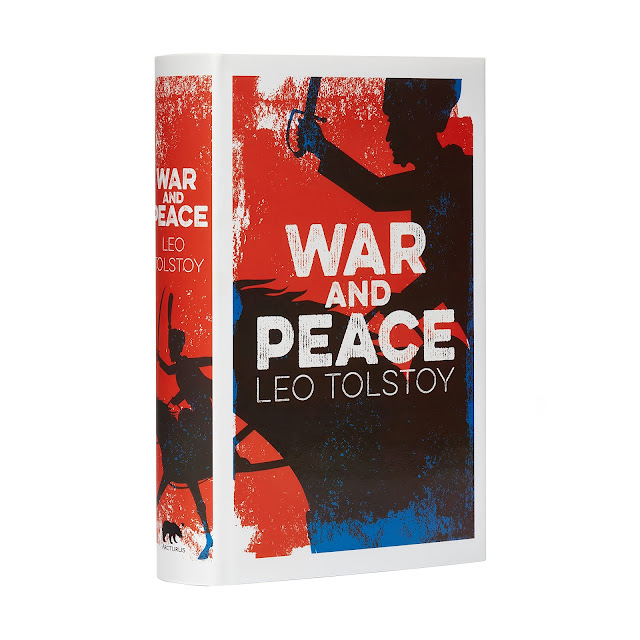
Micro Mention "War and Peace"

 
Leo Tolstoy


"War and Peace" by Leo Tolstoy isn't just long—as everyone knows—it also has a shit ton of characters. Like, flow chart worthy amount of characters. AND they go by different names at times. I read half of this goliath when I realized Prince Andrey and Prince Bolkonsky were the same prince.

At a certain point, I admitted to myself that the only reason I was even reading this book was to see if I could finish the journey. I've retained bits and pieces here and there, but the story's overall structure in my head is just one long sprawl of things that happen—generally miserable things.


This preview is an Amazon Affiliate link; 
as an Amazon Associate, I earn from qualifying purchases.


Wednesday, December 1, 2021

Micro Mention "The Home Front: Life in America During WWII"

Audible Original


World War 2 was an incredibly destructive event, but it was no picnic back on the home front either. In the audible original “The Home Front: Life in America During WWII,” you can get a sense of the heroic and, sadly, some not so heroic American actions during & after the war.

I’ve thought a lot about, talked a lot, and even written a lot about the Second World War on this blog, and I think, more than any other event in the modern era, no event has shaped our world more than it. Certainly, other events before and after helped to shape the present, but it’s almost like there is a clear dividing line in modern history that even World War One didn’t quite define—not like the second one. The world was one way before the war and quite another place after it.

My suspicion is it’s because as we settled into the cold war, we collectively realized as a species that we now had the means to end civilization and extinguish ourselves with nuclear weapons. It’s hard to grasp, to even approach, that we seriously considered suicide for decades—generations—as a species.


Wednesday, November 10, 2021

Micro Mention "Masters of War"

Andrew R Wilson


Suppose you've any interest in military history or just strategic thought in general. In that case, you can't go wrong with the great courses "Masters of War: History's Greatest Strategic Thinkers" taught by Andrew R. Wilson.

So if you're like me, you find war to be terrible but fascinating. Wars are like thunderstorms in that regard, only interesting if you've got some sort of separation from the actual event. For instance, you might watch a thunderstorm from your window and be entranced, unless, of course, it turns into a tornado and blows your house down. Then it's just terrible. Both storms and wars kill people, and choosing to not understand them isn't actually a defense.

Strategic thought, however, is a lesson the history of war can teach you, and luckily it can be divorced from national death contests to enhance other aspects of your life. I think people commonly go wrong when they read things like "The Art of War" is because they then equate everything to a "war" like business or negotiation. But the real lesson and the point is to see things as a strategic puzzle to be solved. Domination is only one sort of solution and often not even the best. War hawks fall into that fallacy because they can't ever imagine solutions other than violence.


Friday, June 25, 2021

"A Farewell to Arms" by Ernest Hemingway--Fiction Review

In today’s review, we’re going back to the World War One era for some romance in “A Farewell to Arms” by Ernest Hemingway.


Ernest Hemingway


***The Non-Spoiler part of this review***


What I love about this book:

Hemingway, I always knew, even before reading anything from him, has a reputation of being straightforward in his prose. That’s well earned, in my opinion, in this novel. He explains enough to set the scene, sketch the characters, and moves the plot forward efficiently, and even in the slower moments, I didn’t feel he lingered anywhere needlessly. Just because the story is told in this way doesn’t diminish its more literary qualities, like his use of symbolism and possible double meanings.

It’s an interesting meditation on World War One at a time well before World War Two, while that first great war was fresh in the minds of contemporary readers at the time. All fiction and nonfiction written about the first World War after the second one is written through the lens of that second war—it’s inevitable. So, it’s fascinating to observe that conflict through the eyes of people who don’t have the assumptions brought of WWII—even if the conflict’s scope is limited to Italy in this novel.

For all his machismo, I didn’t feel that Hemingway glorified the war in any way. It was thankless and terrifying work that was often administered ineptly in this part of the war. The people who fought in it did so because of a combination of youthful ignorance or were pressed into fighting. The reasons for the fighting often eluded and frustrated the common soldier. “A Farewell to Arms” paints that picture well; of a modern war fought by people who were still coming to terms with what that meant—usually slaughter on an industrial scale.


What I don’t love about this book:

A lot of the secondary cast of characters are a bit thin, especially the Italian ambulance drivers that serve alongside the American protagonist. I’ve considered that maybe this is an intentional choice since this story is first and foremost a romance story set during this time period. You could argue this simulates new love’s narrowing focus, where all your attention seems to be drawn back to your new paramour.  

The protagonist clearly has an unaddressed problem with alcohol, like Hemingway, I suspect, that I wasn’t a big fan of in this story. Why constantly introduce the element in copious detail? If the messaging was just, this guy likes to drink, and that’s fine. Hemingway is so spartan about everything else that it’s odd that he chooses to waste words going on about the various liquor consumed. There is a bit about jaundice, possibly related to alcoholism, but it doesn’t really go anywhere. 

Also, there’s a real empathy problem with our protagonist that becomes apparent at the novel’s end. 


This preview is an Amazon Affiliate link; 
as an Amazon Associate, I earn from qualifying purchases


***The Spoiler part of this review***
***Ye be warned to turn back now***


The quick and dirty synopsis:

Lieutenant Frederic Henry, an American, is serving in the Italian army’s ambulance corps. At this point, the conflict in Italy is primarily a frustrating stalemate, made worse from a recent cholera outbreak. Frederic’s personal life, however, takes an exciting turn when he meets and immediately becomes infatuated with an English nurse, Catherine Barkley.

Wednesday, May 5, 2021

Micro Mention "A Farewell to Arms"

Ernest Hemingway


Ernest Hemingway’s “A Farewell to Arms” is one of those sneaky sticks you right in the feels kind of book. At first, it seems to be a pretty straightforward war novel/romance with an understated style, but boy, when Hemingway wants you to feel loss, you feel it.

Despite being known for his sparse, straightforward prose, I never felt like this novel lacked detail. Truthfully, I was so wrapped up in the emotional lives of the two main characters to notice. It's a poignant story of love during wartime and the beauty of life when faced with the contradiction of a world war. Hemingway really isn't one to gloss over reality, though, and he captures that most of life's events happen a lot because of chance, both good and bad.


This preview is an Amazon Affiliate link; 
as an Amazon Associate, I earn from qualifying purchases.

Wednesday, March 24, 2021

Micro Mention "War"

Sebastian Junger


No other book I've read but "War" by Sebastian Junger has captured the stark day-to-day lives of the American frontline soldiers in the War in Afghanistan with such high fidelity for me. It's an uncompromisingly intense look into these young men's lives. He puts your right there in the Korengal Valley with them. You live through their triumphs and tragedies vicariously through Junger himself, who was embedded right there in the front line with them.

This was a fascinating book for me because I find the psychology of warfare and of the people who wage it interesting. In "War," you get to know these front-line soldiers, before, during, and after their time in Afghanistan. Aspects of them, like personality traits, change over the narrative, but others don't change at all but just harden from combat experience. 

There is always this mystique involving stories written about warfare that almost every soldier repeats. You can't really ever understand it entirely unless you were there. That's probably true of even this book, but I feel it does define the borders of that unknown country of understanding for us civilians. Knowing what you don't know isn't exactly knowledge, but it's better than ignorance.

If you'd like my full review you can read it here. 


This preview is an Amazon Affiliate link; 
as an Amazon Associate, I earn from qualifying purchases.


Friday, October 9, 2020

"War," by Sebastian Junger--Nonfiction Review

For this Friday, we’re talking about a book called “War” by Sebastian Junger. It’s an in-depth look at what being a frontline soldier in Afghanistan was like—spoilers bad. It was bad. But then that’s true of pretty much every conflict. 


Sebastian Junger


What I love about this book:

Junger’s book is the best book I’ve read about the war in Afghanistan. It’s a tight focus on the Korengal Valley and the men who fought the Taliban there, which creates a human-scale outlook of the war. All of it is told from Junger’s point of view from when he was embedded with American soldiers in Afghanistan, and during his time there, he saw some harrowing gun battles—and not just from the base. 

Junger and his cameraman often went out on patrol missions with American forces and were smack dab in the middle of fighting armed with nothing but cameras. The man can’t ever be accused of not being courageous enough to face the same dangers as his subjects, and it’s that kind of visceral experience that informs the narrative of this book. 

You get to know the soldiers who fought in Korengal far more than you could ever learn from a quick thirty-minute interview. You learn the ins and outs of their individual personalities, hobbies, hopes, and personal failings. Most of all, Junger makes you experience their pain and the unit’s pain when one of them is hurt or killed.   

This book’s most controversial point about wars that I appreciated Junger dared to address is—why do young men, and sometimes young women, sign up for them and keep volunteering despite their obvious possibility of being lethal? The acceptable reasons given are; because of patriotic duty, for freedom, to defend America, et cetera. The darker reason Junger points out is that it makes some young soldiers feel alive, sure there is a sense of duty and brotherhood, but the violence itself is seductive. Even after being in combat and seeing friends maimed and killed, they still enjoy the fight. So much so sometimes they re-up because there is no other job with the absolute clarity of purpose of trying to stay alive and keep your buddies alive while people are actively trying to shoot you to death. It might be unsettling to hear, but like any other inconvenient truth, ignoring it is perilous.     


What I don’t love about this book:

War addresses the reasons for the War in Afghanistan—primarily focused on degrading and defeating the Taliban allies of Osama bin Laden, who masterminded 9/11—but it doesn’t do much to address the United States’ overall military priorities of the era. In a way—I get it—Junger wanted to focus on telling the story of the grunt front line soldiers fighting in Afghanistan. What command’s priorities were, and groups within the United States priorities were, aren’t unaddressed, per se, but are mainly brought up as a way of pointing out that they don’t much matter to most frontline soldiers.

Beneath the grime, grit, and fear of war that Junger captures eloquently in a Hemingway-Esque manner, he also infuses the narrative with a certain amount of romantic adventure that I distrust. I don’t mean romantic in the commonly thought of way as in romantic love, but in the sense of an idealized view of reality. Don’t get me wrong—soldiers are incredibly brave people and deserve our respect, empathy, and, most of all, our support. But ultimately, we should be striving for a world in which they’re obsolete, at least in their warfighting capacity. So romanticizing combat beyond seeing it as something that is dreadfully necessary isn’t productive to that goal. I know the cynics will say that humans will always fight and battle each other, and thinking differently is naïve. But is it? Is it really? Or is that just an unexamined prejudice that sounds like wisdom when really it’s just bullshit? As a species, we have managed to create airplanes, split the atom, and prevent polio—it just seems that figuring out how not to kill each other in global orgies of death should be within our grasp.   


This preview is an Amazon Affiliate link; 
as an Amazon Associate, I earn from qualifying purchases.


Parting thoughts:

As someone who has lived through the era of the wars in Afghanistan and Iraq, two wars fought largely by members of my generation, including personal friends, both conflicts are never far from my mind. I consider myself a peace-minded individual—but a true pacifist I am not—as readers to this blog may have deduced, I’m clearly interested in the history of war and how they’ve been fought. Personally, I believe violence is the most expedient way to solve a dispute, and like most things achieved expediently, it makes it the worst possible solution. 

So to the question of should we go to war, I’m almost always on the side of no. There is one category of exceptions, though, for me. If the threat posed is annihilation or the annihilation of our friends and allies, then war is unavoidable. Even if that threat is only just possible and not guaranteed, military intervention might be necessary. This standard applies to the annihilation of a people’s agency within society, as well, such as slavery. 

For example, when it came to conflicts such as WW2—there was no coexisting with the Third Reich—no soft power of diplomacy to temper and cultivate civility with them. They were going to spread-and-spread, and most of the human family would have to die for their sick dream world to come into being. War was inevitable.

The conflicts in Iraq and Afghanistan, upon sober reflection, never reached the standard of threatening to annihilate whole nations. Maybe, an argument could be made about the possibility of vulnerable ethnic groups being wiped out, which should require a military response from a just and unified world—but we’ve yet to achieve such a thing. I’m of many minds about the subject. 

What I distrust are the economic reasons for war. I personally don’t believe anyone should have to die for economics, for any reason, and especially not as a war casualty. This makes me very skeptical of the military-industrial complex that fuels these conflicts—their existence is predicated on building more-and-more military hardware. They pay lip service to the idea of freedom and the sanctity of human life, but it’s ultimately the almighty dollar that they’re after. Then, other companies have an economic “interest” in the whole business of nation-building. While they might not be directly responsible for building bombs and guns, they benefit from the use of such devices in reaping natural resources or merely fulfilling contracts to provide “services” in worn-torn nations.

As a global community—If we fought strictly to save human lives and not because it made some people a lot of money, then the world would be a better place. To demonstrate how far we fall short of that ideal—it beggars the imagination why we can observe from space, places like North Korea put people in literal concentration camps, and yet do nothing but wring our hands.