Showing posts with label literary fiction. Show all posts

Saturday, June 18, 2022

"The Testament of Mary" by Colm Tóibín--Fiction Review

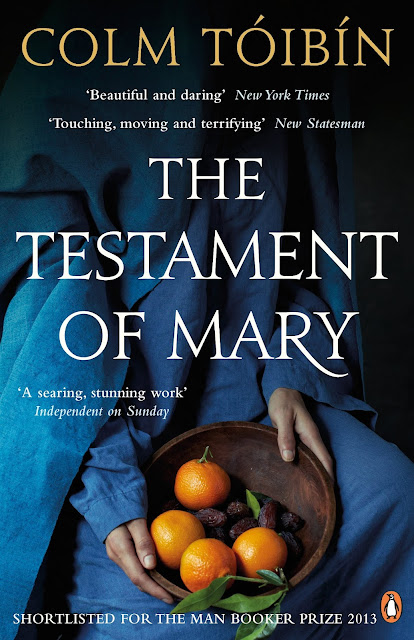
Today Obscurists, we’re going to dip our toes into a new field of fiction I’ve not covered a whole lot, a religious, historical novel about the life of Mary, mother of Jesus Christ. The novella is “The Testament of Mary” by Colm Tóibín.

Colm Tóibín


***The Non-Spoiler part of this review***


What I love about this book:

This book, in my opinion, takes a rather agnostic view on the divinity of Jesus of Nazareth. While the character of his mother, Mary, might doubt his divinity, it’s never exactly refuted. It’s undoubtedly challenged throughout the plot but never wholly suppressed. 

To get a completely different view of the life of Jesus and from his mother’s perspective was very interesting to me. It feels grounded in the world that Mary and her life and perceptions were of our flesh and blood world.

This is also one of those times I feel a first-person perspective really works and sells the story. The entire story is relayed to us by Mary herself. It’s an incredibly intimate experience of this woman’s life, who loves her son while doubting his purpose and the reasons for his demise. At no point does the narrative romanticize what happened to Jesus. It was brutal, vicious, bloodthirsty, and done out of blood lust.


What I don’t love about this book:

It’s challenging to grasp how much time passes in “The Testament of Mary.” The narrative seems to start at the end with the crucifixion of Jesus, and then it dives into Mary’s story, but it didn’t start where I assumed it would, the beginning. It begins when Jesus was already a man and had followers, but it’s unclear how long this has been happening.

As much as I like the intense character study of a doubting Mary, all the other characters in the novella are mere wisps of characters compared to her. Even Jesus, the larger-than-life figure he was, is barely characterized. This may be an intentional choice, given the brevity of this story. Still, if you don’t immediately latch on to Mary’s story and perspective, there really isn’t anything else in this story. 

Ultimately, given its succinctness, “The Testament of Mary” feels like part of a larger work. We get allusions to Jesus’s childhood but no explicit scenes of that childhood. A lot of the goings on around Mary rely heavily on the reader having a secondary insight of the gospels and other Christian historical understanding, which is a long tradition in the western literary canon, but still, it’s a limiting factor for the audience.


This preview is an Amazon Affiliate link; 
as an Amazon Associate, I earn from qualifying purchases

Author’s Website: http://www.colmtoibin.com/


***The Spoiler part of this review***
***Ye be warned to turn back now***


The quick and dirty synopsis:

“The Testament of Mary” starts with Mary talking about her lonely existence after her son’s death. How she is kept—like a pet—by his followers who bring her food and money but expect her to go along with and support their version of Jesus’s life. Her recollection, however, doesn’t particularly jive with the “authorized” version of events told by presumably the apostles. They typically react to her non-canonical asides with exacerbation and scorn.

Monday, April 11, 2022

Micro Mention "War and Peace"

 
Leo Tolstoy


"War and Peace" by Leo Tolstoy isn't just long—as everyone knows—it also has a shit ton of characters. Like, flow chart worthy amount of characters. AND they go by different names at times. I read half of this goliath when I realized Prince Andrey and Prince Bolkonsky were the same prince.

At a certain point, I admitted to myself that the only reason I was even reading this book was to see if I could finish the journey. I've retained bits and pieces here and there, but the story's overall structure in my head is just one long sprawl of things that happen—generally miserable things.


This preview is an Amazon Affiliate link; 
as an Amazon Associate, I earn from qualifying purchases.


Monday, January 31, 2022

Micro Mention "Their Eyes Were Watching God"

Zora Neale Hurston


Zora Neale Hurston's "Their Eyes Were Watching God" is one of those novels written in such a keenly beautiful way that everything you want to express about how good it is—feels trite. What I can say is it was eye-opening for me.

In my full review of this novel, I finish by talking about its prominent religious themes, but apart from that, I think its humanity is what made it so touching to me. That is the true magic of stories to me. If you're open to it, you can experience a whole new world, a way of thinking and being, completely separate from your own. Hurston's writing makes it so easy to see the world through Janie's eyes.


This preview is an Amazon Affiliate link; 
as an Amazon Associate, I earn from qualifying purchases.


Thursday, September 30, 2021

Talking In Obscurity, "The Outsider," by Stephen King

Stephen King


Or Download This Episode Here:


We're at the end of September, Obscurists! So Steven and I thought since we're heading into the spooky season, we'd kick things off right with a Stephen King book.

"The Outsider" is a mix between police procedural, murder mystery, and straight-up horror. We hope you enjoy hearing our thoughts on it!


This preview is an Amazon Affiliate link; 
as an Amazon Associate, I earn from qualifying purchases.

Author's Website: https://stephenking.com/

Wednesday, July 21, 2021

Micro Mention "Breakfast At Tiffany's"

Truman Capote


"Breakfast at Tiffany's" by Truman Capote is one of those short classics that I didn't know if I liked it initially, which is probably intentional. There is something about Capote's gossamer writing that keeps you invested and it's narrated brilliantly by Michael C. Hall—it got to me at the end.

I think what kept me invested beyond Capote's writing is the manic energy he infused in every character, even the narrator. They're all out to do—something, even if they're not sure what. It's like watching ambitious twenty-somethings all ping-ponging off of each other, not sure where they're going or what they want, but they know they want to get there fast. Also, and I talk about this more in my full review, which you can find here, but a lot of the characters feel like archetypical people you meet throughout life.


This preview is an Amazon Affiliate link; 
as an Amazon Associate, I earn from qualifying purchases.


Friday, May 21, 2021

"Their Eyes Were Watching God" by Zora Neale Hurston--Fiction Review

Hello, my obscurists. In today’s review, we’re going to head into the deep south in the post-reconstruction era, with Zora Neale Hurston’s “Their Eyes Were Watching God.” It’s a story of loss and love, but most of all, it’s a book about what a life well-lived looks like despite all opposition.


Zora Neale Hurston


***The Non-Spoiler part of this review***


What I love about this book:

Usually, I’m a “narrative is king” sort of person, but to read “Their Eyes Were Watching God” and not note how absolutely gorgeous Hurston’s prose is—would be a disservice. There is a pastoral, naturalistic quality to it that her metaphors are all grounded in. Her use of regional dialect might be off-putting to some people, but I found that it enhanced the story for me. Her words described the world her characters lived in, and their words, and the language they used, told who they were and what it was like to live in that world.

The three men in Janie’s life that were her husbands at various points in her life are interesting contrasts of each other. They each represent a different mode of life for black men of their era. And while their “works,” or the lack of them in Tea Cake’s case, in some sense, defined them, they were also capable of surprising acts outside of their usual character, which means they never fall into becoming flat stereotypes.

Janie herself is a heroic character—a black woman, born into a world only a few scant generations after the American Civil War—finding her voice and achieving agency for herself in of itself was a radical idea for her era. That’s how oppressive her world was—that the very idea that she could have wants and dreams, hopes and goals, of her own, wasn’t even considered. The fact that it takes her the better part of the story to finally stand up for her belief that she, Janie, was a person with thoughts and feelings just as valid as anyone else doesn’t diminish her heroism. It’s still an achievement when she stands up for herself, her gender, and her race—even when sometimes those three elements weren’t necessarily aligned.


What I don’t love about this book:

There are many side characters in this book that can be described as people who should just mind their own business. They’re constantly insinuating themselves into Janie’s life, typically just picking at her and expressing disapproval for some such or other. As someone who grew up in a small-town setting, I can confirm wholeheartedly this is definitely authentic small-town behavior. My dislike for this kind of behavior, in reality, translates right into fiction, and I was often annoyed by some petty character or another whose whole role in life seems to be to give Janie a hard time. I get their function within the story and why they’re there, but I did find myself thinking several times, did there really need to be so many of them?

I’ve mentioned that I’m a big dog lover before on this blog—so it was horribly troubling for me that the ultimate antagonist of this story, other than the hurricane, was a rabid dog. The thing is, I saw it coming too, and when the dog bit someone, I knew exactly what the problem was going to be after that. All of that was very sad for the humans involved, don’t get me wrong, it works, but me being me, I was still going on about how sad I was about the dog in my head. So I was distracted by that.


This preview is an Amazon Affiliate link; 
as an Amazon Associate, I earn from qualifying purchases

***The Spoiler part of this review***
***Ye be warned to turn back now***


The quick and dirty synopsis:

The story starts with a frame story of Janie returning home after a long day and not engaging with her gossiping neighbors, who proceed to talk about her—unkindly. Janie’s friend, however, excuses herself and walks over to Janie’s house to give her some food, and ultimately the conversation turns to the story of Janie’s life.

Monday, May 3, 2021

Micro Mention "A Portrait of the Artist as a Young Man"

James Joyce


I’ve never read one of James Joyce’s books before picking up this one, “A Portrait of the Artist as a Young Man.” I can tell you right now that it’s clear that Joyce did not give a fuck if you couldn’t keep up with his wit. Also, that sermon on hellfire can take the paint off walls.

Joyce was a genius, for sure, and you can tell from his writing in this book that he was definitely aware of that fact about himself. So, needless to say, while interesting, in a historical sort of way, this novel isn't what I would call easily accessible.


This preview is an Amazon Affiliate link; 
as an Amazon Associate, I earn from qualifying purchases.

Wednesday, March 3, 2021

Micro Mention "Anne of Green Gables"

Lucy Maud Montgomery


"Anne of Green Gables" is like a Canadian version of "The Adventures of Tom Sawyer," but with a female protagonist in this coming-of-age story. There is something in the way that Anne talks that is mesmerizing even today.

A story about an orphan girl, Anne, is easy to love because of her relentless optimism despite numerous episodes of heartbreak, big and small, throughout her life. Honestly, this sort of story is normally outside of my wheelhouse in terms of interest, I'm more a science fiction/fantasy/horror person, but despite that, I found myself totally engrossed in this story by about the middle.


This preview is an Amazon Affiliate link; 
as an Amazon Associate, I earn from qualifying purchases.

Friday, February 19, 2021

"Breakfast at Tiffany's," by Truman Capote--Fiction Review

This week let’s head back in time with an old classic. Take in that old New York feel of the 1940s with Truman Capote’s “Breakfast at Tiffany’s.” 


Truman Capote


***The Non-Spoiler part of this review***


What I love about this book:

How Capote constructs this story, from a technical perspective, is ingenious. It’s written in the first person from the POV of a character who isn’t the story’s protagonist. Not only that, but his name is never given. That’s a hard trick to pull off and could go wrong in several ways. I believe that’s also why this story is a relatively short novella.

Holly Golightly, the true protagonist of this story—the character in which the plot pivots around—initially is an unlikeable protagonist. By the end, I softened on her. Here’s the thing, though, not because she learns anything or even significantly changes her ways. Holly is just that compelling in how firm she holds to her character.

Capote also captures the feeling of a New York of yesteryear and crystalizes it in his prose. All of the principal characters in this story are complex creations that often express conflicting values, which I feel is emblematic of the war years of WW2.


What I don’t love about this book:

On the flip side, this is definitely a story that dates itself in an unpleasant way regarding race and sexuality—hint, it’s got that cavalier use of derogatory terms, which was all the rage in the 1950s. I’m not suggesting that Capote was a racist or homophobic. After all, he was an openly gay man at a tough time to be a gay man. My impression of him, which comes across in this story, is that he was very preoccupied with the sensational. If a little offense was needed to get that shock value, so be it.      

Without spoiling too much here in the non-spoiler part, but there is a bit with Holly’s cat that I found incredibly sad. It doesn’t get hurt or anything—nothing like that—it’s just that I am especially prone to sad animal moments. 


This preview is an Amazon Affiliate link; 
as an Amazon Associate, I earn from qualifying purchases.


***The Spoiler part of this review***
***Ye be warned to turn back now***


The quick and dirty synopsis:

The story begins with our unnamed narrator, a writer, having a conversation with a bartender about a mutual—friend—love? It’s hard to tell with how they talk about Holly. What’s clear is they miss her, and she seems to have fled the country.

Monday, February 8, 2021

Micro Mention "The Handmaid’s Tale"

Margaret Atwood


"The Handmaid’s Tale" by Margaret Atwood is one of those dystopian novels that should make you uncomfortable and be required reading like "1984" and "Fahrenheit 451." Why this book is particularly sinister is it feels more plausible than the other two.

It especially feels real in light of the recent political unrest at the Capitol. After all, Gilead got its start after most of Congress was executed by a radicalized group of dissidents. If you can't see the parallels there, I don't know what to tell you. 

I would like to think that no American would actually want a totalitarian state for absolute control that allows the stripping away of women's agency as people. To reduce them to nothing more than babymaking factories or trophies. But I'm less certain of that today more than any time in the last decade. 


This preview is an Amazon Affiliate link; 
as an Amazon Associate, I earn from qualifying purchases.

Author's Website: http://margaretatwood.ca/


Friday, November 13, 2020

"Invisible Man," by Ralph Ellison--Fiction Review

Today’s review is on “Invisible Man” by Ralph Ellison—ah-ha! You all read this review’s title and thought ole Kevin was losing his marbles, reviewing the same book twice. But no—this is another book about invisibility, metaphorical invisibility, where Ellison tries to capture the black experience through fiction. 


Ralph Ellison


***The Non-Spoiler part of this review***


What I love about this book:

This book is really a series of stories, loosely strung together by our unnamed protagonist, a young black man. Because of circumstances mostly out of his control, he leads several lives that make him an excellent everyman character—who is black. I say he’s an everyman character, but part of the novel’s point is he’s also no one because of his persistent anonymity. The whole device of never properly naming the protagonist of the story is clever in supporting this theme.

Sometimes funny, “Invisible Man,” for the most part, is rather poignant. I believe its most salient point is that—despite how society acts—black people aren’t all a homogenous group. They are people, some good, some bad, some apathetic, and others deeply caring and loving. They don’t all think the same, they don’t all value the same things, but they all have the shared experience of being black, which in America, historically and today, is a mixed bag—often negative. All that, plus the marginalization and being robbed of agency in one’s own life, is what I believe Ellison was trying to capture with this novel.

Ellison had to have known he would ruffle some feathers with this novel because he takes an unsparing examination of all society. Not just with what you might expect—topics such as racism and how violence tends to only accomplish more violence, but his critiques also wither things that are nearly universally considered virtues. His point, I believe, is that under the right circumstances, even good things can be corrupted—and that’s a brave and subtle point to make.   


What I don’t love about this book:

The whole medical experiment scene, while creepy, and I like creepy, just ends awkwardly. I get the spirit of what Ellison was driving at—a sort of Tuskegee Experiment vibe—but plotwise, it’s an episode somewhere in the middle of the story that feels out of place. After the protagonist is injured “accidentally” at the paint factory he is working at, he’s taken to the company doctor to be treated. And sure, that was a popular thing back in the day and relevant to the black experience. If you’ve ever read “The Immortal Life of Henrietta Lacks,” you’ll know that the medical profession has had some troubling track records with black people. But why it doesn’t work for me is it doesn’t add or take away anything in the novel. It happens, the protagonist has an odd conversation with the doctor, and then he leaves. But other than suffering from feeling faint for a bit, he has no further complications, and it’s as if nothing happened.  

Narratively speaking, occasionally, the transition from one scene to the next got a little foggy for me. I’ve considered that might be an intentional move by Ellison to further the novel’s surreal atmosphere, but, for me, any time I miss a mental gear change as I did several times in this book, it just annoys me.


This preview is an Amazon Affiliate link; 
as an Amazon Associate, I earn from qualifying purchases.


***The Spoiler part of this review***
***Ye be warned to turn back now***

Friday, October 23, 2020

"The Outsider," by Stephen King--Fiction Review

I’m a huge Stephen King fan—I know, shocker—so I’ve resisted doing the obvious thing and jumping in on a review of one of his books early on after starting this blog. However, we’re closing in on Halloween, and I feel like now is the time. So today, we’re talking about “The Outsider” by Stephen King. 


Stephen King


***The Non-Spoiler part of this review***


What I love about this book:

Stephen King has mastered a variety of small American townie voices that always seem to populate his novels. It’s genuinely impressive, and one of his literary talents I don’t think gets enough praise, and sure—he’s thought of as the master of the macabre and horror, but his skill with character voice is nearly peerless.

King, in my experience, is a master at setting up a story. He develops that plot through the middle with fascinating and diverse characters, ramping up the tension—then introduces elements at the end like a giant cosmic space turtle or we’re going to defeat the evil clown with tongue biting, metaphorically, or maybe not. What I’m trying to get at is endings are not really known as his thing. It’s a cliché to point that out—so why go on about this in this section? Because “The Outsider” has an actual end, one that I found satisfying, too. 

This book isn’t just a partnership between Detective Ralph Anderson and Holly Gibney—a character he established in other books of his—but none-the-less I enjoyed their inverse X-files partnership a whole lot. I was always a big fan of that show, and this novel really scratches that itch, unlike many actual X-files novels that feel vaguely parody-like to me.   


What I don’t love about this book:

Speaking of X-files, at a certain point, just like in that show, I became wearied by Detective Anderson’s agent Scully-Esque constant insistence on there being a “rational” explanation even after some serious supernatural shit has gone down. I know this is a seemingly weird position for me to take because often I’ve written about how I am such a person who is always seeking a rational answer to things, and decrying magical thinking or reasoning is bullshit. I, however, have never claimed that I would make a good fictional character. I would be that smug jerk who dies right at the beginning of the horror story saying something like, “c’mon guys, demon vampire ghosts aren’t real!” 


This preview is an Amazon Affiliate link; 
as an Amazon Associate, I earn from qualifying purchases.

Author's Website: https://stephenking.com/

***The Spoiler part of this review***
***Ye be warned to turn back now***


The quick and dirty synopsis:

The book begins bouncing between scenes of various witnesses being interviewed by the police and Detective Ralph Anderson and his team on their way to arrest a popular little league coach Terry Maitland. Maitland is a family man and a local school teacher in addition to being a little league coach and is beloved and respected around the community. Now he is suspected of raping and murdering a little boy.