Showing posts with label nonfiction. Show all posts

Friday, August 5, 2022

"Sidney Crosby The Rookie Year" by Sidney Crosby--Nonfiction Review

Today’s “book” is an audible original on one of the best to play the game of hockey, “Sidney Crosby the Rookie Year.”


Sidney Crosby


What I love about this book:

It’s a short book that gets you right into it; introductions are made, and then—bam—we’re back vicariously living out the day Sidney Crosby was drafted to the Pittsburgh Penguins.

How this program is presented, through some narration by Joe Manganiello and interviews with Sid himself and those closest to him during his rookie year, creates an intimate atmosphere. I found it interesting to see what this moment in time looked like from Crosby’s point of view because to say he was kind of a big deal in the league then and today—is a major understatement.

You get to learn what his life was like, to be one of the best to play the game from the very beginning, and to play with and live under Lemieux’s roof, literally. That mentor dynamic between Crosby and Lemieux is unique because—while I’m not an expert in the subject—how often does a sports phenomenon get to apprentice under one of the last generation’s phenoms?


What I don’t love about this book:

The pressure we put on people like Sidney Crosby to be “on” all the time is shitty and unfair. When he was drafted by the Penguins, he was still a teenager, and many of the city’s sports fans put their hopes and dreams squarely on Crosby’s shoulders. They were all counting all of the Stanley Cup wins before even that first playoff game—and when that did not pan out, Sid got a lot of the blame. As if one player, and one player alone, could change the trajectory of a team’s winning or losing season. That isn’t to knock the influence one player can have; leadership has a tangible effect on performance. I’m merely stating that the group is more important than the individual in a team sport. If the group can’t perform, that extra edge by having a few ringers can’t make up for the deficit.

This is more a thing I don’t like about the game of hockey than this book, and that is how often fights break out and aren’t immediately stopped. Which, I get, is an unusual stance for me to take because of all sports; boxing is probably my favorite. I don’t like it in hockey, though, because it tacitly makes it ok to counter someone skilled at the game, maybe even the best on the ice, like Sid, by just hurting him. I get that there is a difference between a hard hit and a fight. But think about any time anyone hauls off and straight up punches a guy in football, baseball, and basketball. It’s rare, and it isn’t tolerated.


Parting thoughts:

I’m not much of a sports guy—I know, shocking, right? So as exciting as some of this book is, a lot of it is wasted on me. Actually, I’ve been to a lot of hockey games over the years. I’m always excited to go, and I enjoy myself when there, that atmosphere, seeing incredible athletes be effortlessly amazing on the ice, and the concession stand… I might have an unhealthy relationship with food. In any case, of the several dozen games I’ve been to over the years, with one friend or another, I’ve probably only ever “watched” the Penguins game on TV, maybe just as many times over the years as I’ve been to games in person.

Anyway, the point I’m making here is that hockey just isn’t in the orbit of my life regularly. That’s important because I still remember the day Sidney Crosby was drafted by the Pittsburgh Penguins all these years later. I remember the conversations I had that day in 2005. Pittsburgh is that much of a sports town. It was the only conversation happening before and after it was confirmed that Sidney Crosby was coming to Pittsburgh.

Everyone was saying, “Sid is the next Super Mario,” and nobody was confused about who they meant, and it wasn’t the video game character.

I find it fascinating how the passion for some things, like when this Canadian kid about my age came to town, is so transcendent that it doesn’t matter who you are—you’re aware.
Friday, July 15, 2022

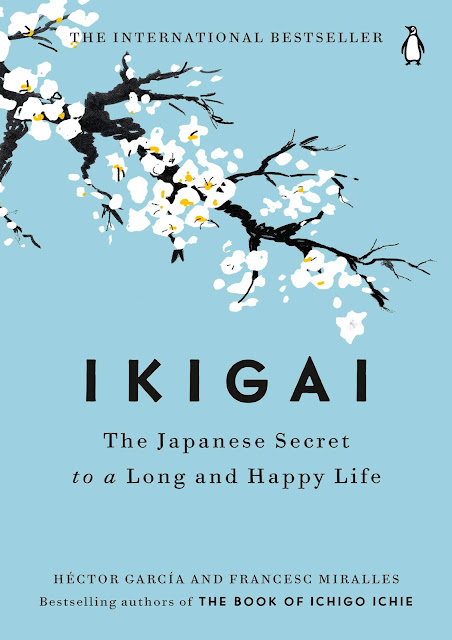
"Ikigai" by Hector Garcia and Francesc Miralles--Nonfiction Review

Today Obscurists, we’re finding our purpose with “Ikigai” by Hector Garcia and Francesc Miralles. It’s a book about the Japanese way of living a long and happy life by discovering your purpose in life and how to recognize it.


Hector Garcia and Francesc Miralles


What I love about this book:

“Ikigai” is a relatively short book that doesn’t outstay its welcome. I appreciated the brevity and straightforwardness of the book’s message—that the secret to happiness is ultimately to have a purpose. 

Like many Americans, I harbor a particular fascination for Japanese culture. While that isn’t specifically this book’s goal, “Ikigai” also gives an enjoyable look into this specific eastern mindset. I found it interesting to learn how aging is viewed in Japanese culture.

Finally, the practicality of this book’s advice appealed to my sensibilities. I like tangible, achievable advice that eschews mystical concepts. Never have I been impressed by the “positive vibes” people or those seeking to communicate with the “universe.”


What I don’t love about this book:

This is a bit of a petty start here, but I don’t like the long chapter titles. Mainly, I don’t like them because each chapter seems like just a continuation of the primary thesis behind this book. It’s good that the main point is reiterated, despite the attempt to break it down by subtopic though it still feels like there isn’t much rhyme or reason for why one point is presented here and why one thought is presented there. It all feels kind of the same.  

Also, while Japanese culture is far—far more collectivist than western cultures in nature, the Japanese aren’t nearly as monolithic as this book presents. Japanese people, like any subgroup of humans, have various traits, predispositions, and opinions that differ from others within that culture. They’ve not all found their “Ikigai” and are some wise super society. This book feels like it views them with more than a little rose-tinted glasses.

I’m prepared to accept that, on average, especially compared to the West, the Japanese tend to live longer, happier lives, as this book asserts. That ultimately just comes down to statistics. And those who live longer probably have better than average coping strategies, like defining themselves by the goals they profess.


This preview is an Amazon Affiliate link; 
as an Amazon Associate, I earn from qualifying purchases.

Author’s Website: https://hectorgarcia.org/


Parting thoughts:

To carry on my point from the prior section, I think this is one of those situations in which statistics can—well, not lie so much—as omit specific qualifying details. Like I said before, I accept, on average, that the Japanese probably live longer, healthier, and happier lives than in, say—my culture. But that’s only for the ones it works out for because while the national suicide rate in the United States isn’t great, it isn’t in the same ballpark as it is in Japan.

It’s a major societal issue for them with many complex factors. One of those factors is that Japanese society is incredibly demanding, with stratospheric standards to live up to and a preoccupation to avoid shame wherever possible.

So my point is that it seems to me that cultural values in Japan, when they work out, really work out overall for people. But when they don’t, they really don’t.

Also finally, a significant stressor in Japan right now is that its population is aging, and there are more and more older people with fewer younger people to support them. So there is that double-edged sword. Great success in one area typically means neglect in another.

Saturday, June 11, 2022

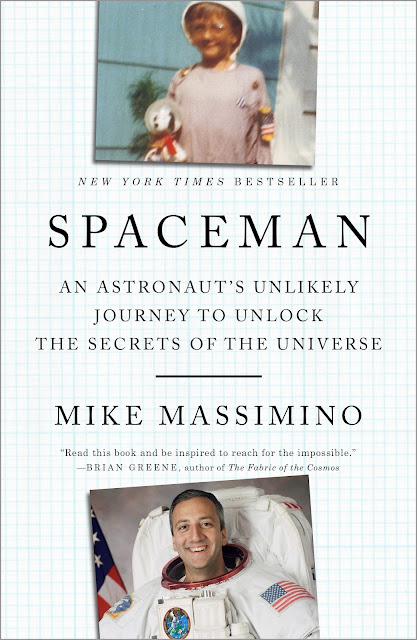
"Spaceman" by Mike Massimino--Nonfiction Review

So I’ve been pretty clear on this blog before about how much I love space, which is why today we’re talking about Mike Massimino’s “Spaceman.”


Mike Massiminio


What I love about this book:

Clearly, the space stuff is my top love for this book. Massimino was part of the tail end of the generation of astronauts who flew in the space shuttle, which I’m not too proud to admit I don’t know as much about as the earlier programs. So it was nice to get to know the names and missions that happened during his time at NASA.

Most of this book is about his journey to become an astronaut. I hadn’t realized this before he pointed it out, but, unlike most career paths, there are no well-known tracts to take to become an astronaut. So it’s nice that he put it down how he did it, for all the advice he provides.

Massimino is a charmingly warm and often funny guy. I went in for the audiobook version—per usual—and it’s read by him. I know I belabor this point a lot, but especially in this, hearing the tone of his voice as he relates some of his personal disappointments and some of the tragedies to befall NASA immeasurably adds to the experience.

Getting his first-hand account of what it was like to work on the Hubble telescope was endlessly fascinating to me. It cannot be adequately expressed how much that orbiting telescope has given us, so it’s incredibly important. Working on it in space sounded equally amazing as it was terrifying.


What I don’t love about this book:

There isn’t much I didn’t love about this memoir. It’s firmly in my wheelhouse, after all. If I had to say something, maybe an argument could be made that it dithers a little bit too much before getting into the meat of the NASA stuff. That isn’t too serious of a criticism, though, because I enjoyed Massimino’s journey becoming an astronaut almost as much as I enjoyed him as an astronaut.

The Space Shuttle Columbia disaster was hard to read about and thus relive. When the Challenger exploded during the launch, that disaster happened before I was born, but I was in middle/high school when Columbia happened. So the tragedy of that event when it happened still sticks in my mind, and the old feelings of disappointment that NASA, an organization I idolized, didn’t do enough to keep that crew safe resurfaced. That they dropped the ball on the dangers of free-falling foam debris from launch and how it could damage the orbiting vehicle.


This preview is an Amazon Affiliate link; 
as an Amazon Associate, I earn from qualifying purchases.

Author’s Website: https://www.mikemassimino.com/


Parting thoughts:

Space exploration is inherently dangerous and expensive. There are many solid arguments for why we shouldn’t bother with this exercise. How to justify the cost monetarily and, more importantly, in lives lost is tricky. Why spend billions of dollars on space exploration to send a handful of people to space while millions of people are starving right here on Earth.

What Space exploration is ultimately about is investing in the next step for our species, for the next generation’s future. It’s about the billions and billions of people yet to be born who could one day lead a better existence beyond the confines of the Earth. 

The Earth, as wonderful and beautiful as it is, is a closed system. We keep adding more and more humans to that closed system without increasing the fixed amounts of resources and livable area. The idea that we’re somehow going to collectively agree to stop creating too many people globally and then create rigidly sustainable utopias out of our various bickering and competing cultures in the near future demonstrates a lack of awareness of human history in my mind.

At this point in our societal and social evolution, we should do what we have always done collectively when faced with shortages of livable space, opportunity, and resources. We should move on and spread out.

Crossing the oceans at one point seemed like an impossible technical feat to our ancestors, yet, they eventually managed it. It wasn’t safe, and it wasn’t cheap. Many people died for the dream of seeing over that next horizon. But in the end, it was necessary.

Let’s be clear about this point: our shameful legacy of appalling poverty, sickness, famine, and war wasn’t caused by NASA’s budget. Our poorest citizens, again globally, are so poor because we’re still collectively beholden to a wealthy and privileged ruling caste. We might not call our billionaires princes, princesses, dukes, or duchesses anymore in the United States, but that doesn’t mean they don’t exist. 

Most of the world’s wealth belongs to a few individuals—a lot of it is inherited wealth that wasn’t earned in any meaningful way by the so-called elites of our various human societies but is merely passed down. That is the real insidious reason most of us toil from the cradle to the grave.

I wish that we were collectively wise enough to conserve the Earth and do so in a way that we could all live reasonably equitably on it and happily. But wishing reality was different doesn’t make it so, and realistically what I believe our next step is—is to chase that next frontier, the last and final one above us all. 

Monday, June 6, 2022

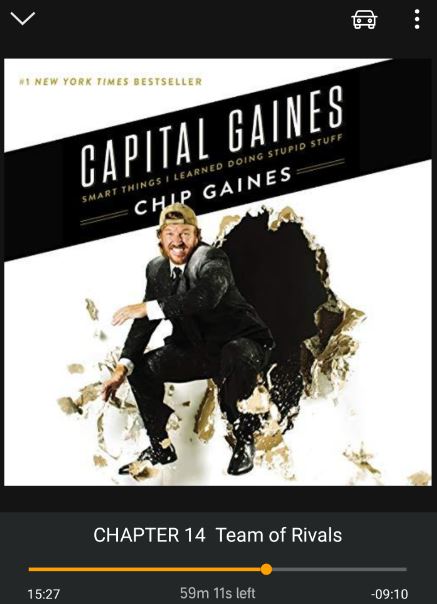
Micro Mention "Capital Gaines"

 
Chip Gaines


My favorite chapter of "Capital Gaines" by Chip Gaines is Team of Rivals—I really appreciate its sentiment and the clear reference to one of my favorite American Presidents, Lincoln.

With a little distance from my full review of this book, I still find myself thinking about it from time to time. I appreciate the messaging of this book, being willing to be open to new experiences while staying true to closely held values. I still don't think I see the world quite like Chip Gaines does, but that's fine; understanding and accepting others and their way of life doesn't require agreement.

I think somewhere along the line, we often forget that truth. We insist everyone, everyone, must agree with us, which just leads to directionless screaming matches.


This preview is an Amazon Affiliate link; 
as an Amazon Associate, I earn from qualifying purchases.

Author's Website: https://magnolia.com/


Friday, May 13, 2022

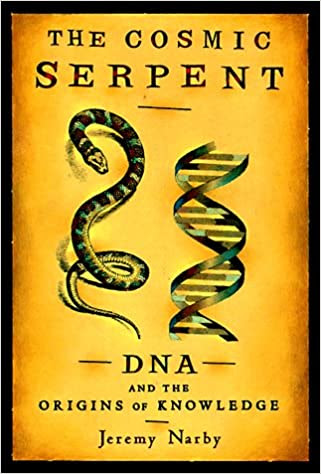
"The Cosmic Serpent" by Jeremy Narby--Nonfiction Review

Today we’re talking about a weird one, Obscurists. This nonfiction book is called “The Cosmic Serpent,” and it’s written by Jeremy Narby.


What I love about this book:

I appreciate the sentiment in this book about keeping an open mind about things and not prejudging, which I realize will probably sound awfully hypocritical a little further on in this review. But, for now, I agree with Narby’s stance that when speaking to native people about their lives and traditions, you should listen to them, reserving judgment for as long as possible. It is certainly interesting how shamans developed several techniques to manipulate the hallucinogenics they ingest and control their biochemical effects. Though I think the author discounts how much could be achieved through simple experimentation, however imperfectly. 

Alternatives on how to think about biology, other than western medicine, are, again, something I find interesting. The concept that ecology from a perspective different than what I’m used to might hold valuable insights is a tantalizing idea. A lot of research for new medicines finds their genesis after all in the world’s rainforests, and a lot of the time, it is native peoples to those regions that develop the precursors to the drugs that get synthesized in labs. True, typically, those indigenous people then get cut out of any real profit-making side of this business, but that’s a different subject that deserves its own essay.

This book does do an excellent job of pointing out that we hold a lot of local shamans and native people’s traditions on the one hand with a sort of bemused disdain. We make a show of not taking anything they have to say seriously while also fleecing them for their best ideas with the other hand. All with absolutely no sense of irony.


What I don’t love about this book:

Right at about the middle of the book—it lost me. Narby takes off onto some truly magical flights of fancy that are just nonsense. By the end, he’s accusing the scientific method of being non-objective because it dismisses what it doesn’t understand, which is precisely the opposite of the scientific method. Finding proof of a new phenomenon that can’t be explained by current models is every scientist’s wet dream because it means there is new science to be done. 

He also has a pretty piss poor understanding of natural selection or only conveniently describes it poorly to support his own unsupportable positions. Toward the end of the text, he says something to the effect of “the theory of natural selection states that evolution only happens through the random collection of errors accumulated in DNA as it’s passed down through the generations, and only keeps the changes which are improvements.” The first part is more or less accurate. Still, the second part is a common misconception used by people who have an ax to grind against the concept of evolution. Natural selection doesn’t “design” anything to be objectively better at anything, it’s merely a statement that what has survived tends to pass down its traits. 

Certainly beneficial traits like evolving wings or eyes can aid in survival and thus make sense as to why those traits are passed down. But if you’ve read my review of “Human Errors,” you’ll know we have some charming problems like retinas that are wired backward. Or the inherited need to desperately seek out vitamin c in our diet that most other animals don’t share with us. So no, the changes brought on by evolution don’t have to be helpful. They tend to be, but sometimes they’re just problems that don’t outright kill us before we can reproduce. 

His other major point he drums that made me grind my teeth is his assertion that it’s a central tenant of western, rational thought to hold absolutely true that DNA, or sometimes he just calls it “nature,” isn’t and can’t be conscious or have intent. And then he uses that to set up a whole host of logical fallacies like Straw man arguments and appeals to ignorance, so on, and so forth. The proper “scientific” way of stating skepticism toward the idea that DNA in of itself is probably not conscious is to say that “you have not proven it is conscious,” not that it “isn’t conscious.” In science, you can prove that something does exist by demonstrating it and then repeating it in testable and measurable ways. You can’t prove the non-existence of things by demonstrating, repeating, or measuring—non-existence.

He also says that the knowledge that he can gain through the use of hallucinogenics can be tested. Great! Here’s a test, use all the hallucinogenics you want and tell me a random digit of pi out past the trillionth place that a computer could verify for us. Then do that a few more times. And if the supposed ancient alien biological technology—that DNA supposedly is—doesn’t want to answer that question, then let’s ask it what it does want to answer. If the question is too hard, then maybe we can start with what color shirt is Bill wearing in Hoboken? Surely, a globally connected decentralized super consciousness should be able to muster that.


This preview is an Amazon Affiliate link; 
as an Amazon Associate, I earn from qualifying purchases.


Parting thoughts:

As you might imagine from above, I didn’t enjoy this book. I think it’s crucial to read things you disagree with because it’s important to know what the other side of an intellectual dispute looks like and to check your own beliefs. 

While not harboring any desire to experiment with hallucinogenics, I can get behind Narby on the idea that our research into precisely how they function in the human brain is woefully thin. It’s only thin because of the conscious choice to bend, at least in the United States, to those of us of a more puritanical bent and deeming all these psychotropic drugs as icky and therefore banned. 

And maybe there is a legitimate public health concern here. But it seems awfully hypocritical to me that here in the land of the free, within ten minutes walk of my front door, I can first indulge in a three thousand calorie fast food meal. Second, get a carton of cigarettes to smoke afterward, and then three chase it all down with a bottle of Jack Daniels. That there is my right as an American, no matter how ungodly destructive it is to my body, which I wouldn’t recommend. However, if I want to do acid or ingest certain mushrooms within the closed walls of my own home, that’s too far.

My point, though, isn’t to glorify drug culture or anything of the sort—none of it seems appealing to me. What I’m pointing out is that we say we have these laws because of high moral standards and character, but once new drug laws go on the books, there are always caveats and exceptions. 

The real reason certain things are prohibited has nothing to do with morality, public health, or safety. It’s money. Specifically, those in power don’t stand to make any or actively might lose some if new competitors enter the marketplace to compete with their “legitimate” psychoactive drugs that they’re invested in.


Saturday, May 7, 2022

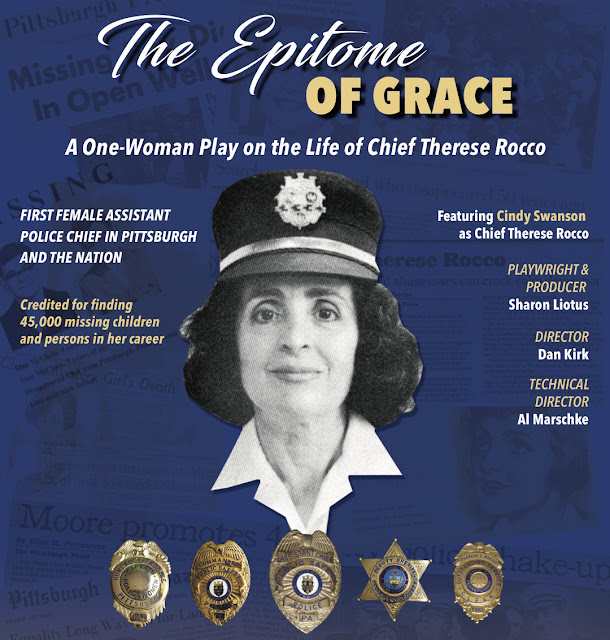
"The Epitome of Grace" by Sharon Liotus--Play Review

Sharon Liotus


This is unusual for me because I don’t normally review anything other than books on this blog. Still, here we are, and today I’m talking about “The Epitome of Grace,” a one-woman play featuring Cindy Swanson as Chief Therese Rocco. The playwright & producer is Sharon Liotus, who is a personal friend of mine—full disclosure—and it was directed by Dan Kirk, with Al Marschke as Technical Director.

As for why I’m reviewing a play out of the blue—there are many reasons—certainly, because I was asked to and because I went to see it for myself last Saturday, April 30. 

Most of all, I agreed to do this review because I’ve met Chief Rocco, who is a real person by-the-by for you non-Pittsburgh natives. She’s an amazing woman. Therese Rocco started her career in law enforcement in the middle of the 20th century, and it stretched all the way to the new millennium. By the end of that illustrious career, she was Pittsburgh’s first female assistant chief of police—and the first in the nation, according to at least one local newspaper that I’ve not rigorously fact-checked on that point.

That, however, is straying from what I want to discuss. 

I want to talk about what it was like to experience this play. As a one-woman show, it’s cleverly written from the perspective of and very much in the voice of Chief Rocco herself, telling us the story of her life. Liotus achieved this through her own friendship with Therese and through exhaustive interviews with those who knew and worked with the Chief.

At the performance I was at, Chief Rocco was in attendance. So it was a bit of a sight gag to see her in the crowd watching a woman on stage portraying a younger version of her. Like everyone else in attendance, Chief Rocco laughed when the play was funny. The vignette about how she caught the fleeing theater pervert by pulling down his pants as he tried to run away comes to mind, which has a certain amount of poetic irony about it when you think about it.

Alas, though, like with all true stories about police work, there are always the more sorrowful moments. It would be cliché if it weren’t so heartbreakingly true that every detective, given sufficient time on the job, inevitably has that one case that doesn’t get solved and haunts them—even long into retirement. The case of Mary Ann Verdecchia is that case for Chief Rocco, and the pathos that Swanson infuses into her performance describing that hole in time and space where Mary Ann disappeared walking home one day rends the soul. Mary Ann didn’t have a traditional family—her mother and father weren’t around, and she was being raised by a relative. The world took even more from her, and so far, the quest for justice has been left unfulfilled. Still, hope holds out that answers will be forthcoming one day.

Watching and experiencing—however vicariously and fleeting—Therese Rocco’s rise through the ranks in the police department is an absolute joy that this play captures. It was a journey with its ups, the promotions, and support—and downs, the constant roadblocks put in her path by those who had no motivation other than they didn’t like the idea of a woman being in her role. When Chief Rocco was tapped to be on the shortlist of candidates to be recruited for the U.S. Marshals and then ultimately betrayed for craven political reasons and blocked, again, because she was a woman, the indignity was palpable in the theater.

The concluding implicit message of the play, however, I think is its most powerful; that you can’t control the world and how it reacts to you, only how you respond to it in turn, and even if speaking for the truth is the losing position it’s still the correct one. There were many times throughout her long life and long career where Chief Rocco could have given up, thought of giving up, and had doubts—because that’s human.

In the end, though, what makes her legendary around here isn’t that she never had doubts or always succeeded. No, it’s that despite those doubts, she took what life threw at her on the chin and kept fighting for what was right, no matter how hard. 

That’s grace


This preview is an Amazon Affiliate link; 
as an Amazon Associate, I earn from qualifying purchases.


Additionally, Chief Rocco also wrote her memoir "Therese Rocco: Pittsburgh's First Female Assistant Police Chief," which inspired the play. I plan to review it here on WIO at a later date when I finish reading the book. So far, I'm loving it as much as I enjoyed the play.


Wednesday, April 20, 2022

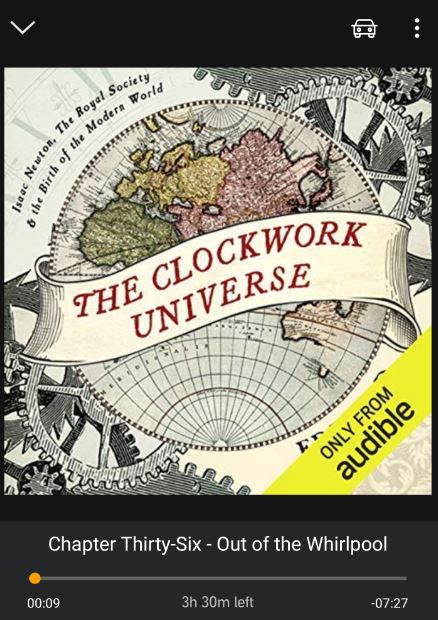
Micro Mention "The Clockwork Universe"

Edward Dolnick


“The Clockwork Universe,” by Edward Dolnick, is about many things—but most of all, it’s about the beginning of true scientific thought. The transitions from alchemy's magic potions to verifiable and reproducible results were painful and anything but clear cut.

It's a fascinating book that describes the early days of the scientific method and the people who made this school of thought that gave us the modern world. That turning point for us as a species is immeasurable in its impact on our collective destiny. It's not at all clear yet if scientific progress will eventually lift us to the point of transcendence or merely give us greater tools to destroy ourselves.


This preview is an Amazon Affiliate link; 
as an Amazon Associate, I earn from qualifying purchases.


Friday, April 15, 2022

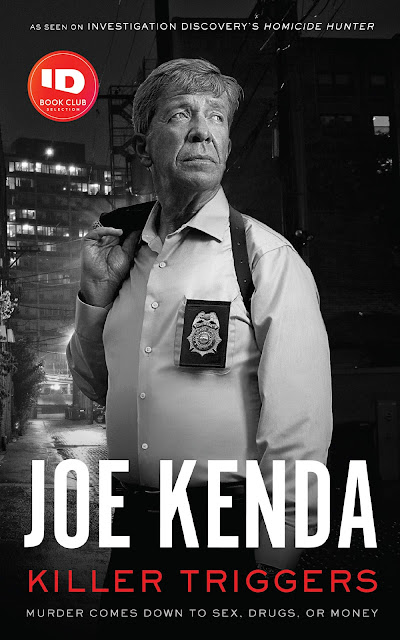
"Killer Triggers" by Joe Kenda--Nonfiction Review

 Time to dive into another true crime nonfiction, Obscurists. Today we’re talking about Joe Kenda’s “Killer Triggers.”


Joe Kenda


What I love about this book:

I love old-man stories—especially old-man cop stories. If a grandfatherly type person wants to talk about the past, I’m always down to listen. I get this is paradoxical given my views on nostalgia. How I justify the dissonance in my head is because these stories aren’t nostalgic for me. More often than not, I wasn’t even alive during these stories. They’re just history to me, and I love history.

Speaking of loves, I just love the man, Detective Joe Kenda. I’m pretty confident I would be content to listen to nearly anything he would want to talk about if I had the chance to pick his brain. There is a gruff and grim sensibility about the man, with a mix of gallows humor that is almost poetic in nature. But, aside from that, there is also a sense of duty, compassion, and practicality that I admire.

How Kenda breaks down his life’s experiences and the cases he’s investigated create vignettes into a world—thankfully—I’ve little experience with in general. It’s an interesting enough place to visit, mentally, but to face the worst humanity has to offer as a homicide detective, day-in, day-out, at all hours—I couldn’t do it.


What I don’t love about this book:

This is the second book of Kenda’s that I’ve read, and there is some overlap between the two books. Certainly, there are new details to be had, which is nice, but there were still a couple of moments when I was very much aware that I’d heard this before.

Having a long and eventful career in law enforcement, you can get a sense of Kenda’s inherent biases—not a racial bias, don’t get me wrong—but a reflexive deferment to the judgment of others in law enforcement possibly beyond what might be wise. And on one level, sure, how could he not? To survive in his world, he had to trust those professionals around him to have his back. It isn’t anything specific that he says that makes me feel this way, just the aggregate of his sentiments. Cops are the good guys, and everyone else are potential bad guys.


This preview is an Amazon Affiliate link; 
as an Amazon Associate, I earn from qualifying purchases.


Parting thoughts:

Being a police officer grants a person a certain amount of status in any community. Whether or not that community appreciates the work done by the police is a different matter. That status, however, grants power, and power has a funny effect on people. Sometimes, but not often enough, in my opinion, people rise to the responsibility of having that power entrusted to them. Detective Kenda is one such person, by my estimate.

I am, however, skeptical of any law enforcement agency—especially one that overtly or even tacitly insists that they are beyond reproach or scrutiny. My opinion of law enforcement is about the same as the government—I see and understand the need—but just because I agree with the necessity of the institution doesn’t mean I agree with how it currently functions. 

As citizens of any society, I believe it’s the people’s responsibility to hold the public servants of that society to the very highest standards. No one should get to be above scrutiny or avoid being held accountable for their actions—especially when people’s lives are in the balance.

You want to know why I’m confident the police, as a whole, aren’t nearly so infallible as they want us to trust? For every nine Americans executed, one person on death row was exonerated. That is a slightly greater than ten percent chance that any random person sentenced to death by their government was falsely convicted. No one would accept even a one percent failure rate on airplanes, trains, or cars. But for the last fifty years, we’ve accepted, as a society, greater than ten times that failure rate from the very people and system to provide impartial and dispassionate justice.

To say there is room for improvement is a vast understatement.


Thursday, March 31, 2022

Talking In Obscurity, "Human Errors," by Nathan H. Lents

 
Nathan H. Lents


Today Obscurists, I've tricked Steven into reading one of my favorite books on biology and how, well, it could be better. Nathan H. Lents has managed to write a hilarious book on human biology. 


This preview is an Amazon Affiliate link; 
as an Amazon Associate, I earn from qualifying purchases.

Friday, March 18, 2022

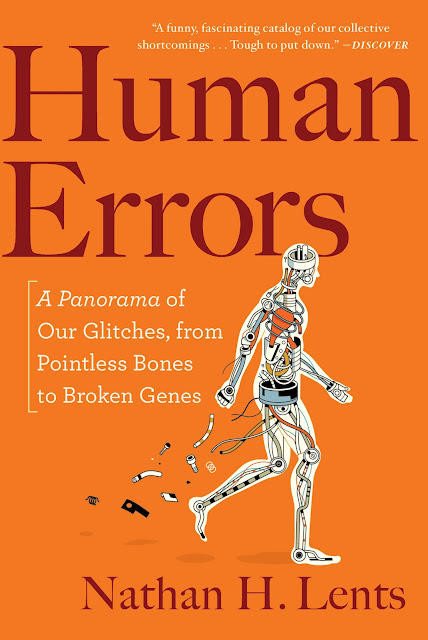
"Human Errors" by Nathan H. Lents--Nonfiction Review

Today my dear obscurists, we’re talking about biology! Don’t worry, it’ll be more fun than it seems because “Human Errors” by Nathan H. Lents is an awesome book.


Nathan H. Lents


What I love about this book:

I re-read a lot of fiction, and not so much when it comes to nonfiction titles, but I’ve probably read “Human Errors” three or four times now—it’s that good. This book is so good, in my opinion, because it transcends just being informative about a topic I find interesting, the biology of the human body, and is genuinely funny. There is not a chapter in it that you won’t be entertained if you randomly flip to it. Lents’s writing is smoothly consistent from start to finish in that regard.

Once you start viewing the world from this book’s lens of the human body is just one big pile of “eh, close enough” biological engineering, you start seeing our bodies’ limitations that are frankly arbitrary. For instance, open your hand and have it palm up. Now have it face down, easy, right? Bet you can even make it go a little further than just straight up or just straight down. Look how flexible you are. But why can’t you make it go all the way around? Wouldn’t a ball joint where our hands could just rotate on—be way more flexible? Oh, and this up-down thing with the hand? Try it with your foot, and you’ll break your ankle. In fact, a lot of our bones in our wrists don’t actually do anything other than float there and get shittier with age.

It isn’t just our suboptimal form, but how our guts function too is often bizarrely inefficient. For instance, humans are terrible at making their own vitamins—unlike most other animals, it turns out. As every desperately poor person has found out since the dawn of civilization—people need a wide and rich variety of food in their diet to stand any chance of having decent health. We’re prone to a panoply of illnesses brought on by poor nutrition without that variety. And yet—consider human’s best friend—the dog. Dogs can eat the same dog food day-in, day-out without complaint their entire lives and never get rickets or scurvy.


What I don’t love about this book:

It’s hard to come up with things I don’t love about this book—there is my ever continuing petty complaint that the chapters are all long, but there is no bite there because they all feel like twenty minutes to me.

The only thing I picked up on—is that Lents seems to be a bit hard on vegans and vegetarians when nutrition comes up. And sure, some nutrients are harder to come by in an entirely plant-based diet, but it isn’t like the solutions in the modern era aren’t plentiful. Either because people have far more access to fruits and vegetables in a greater variety than what can be grown locally, or there are supplements that make up the shortfalls. Also, it isn’t like meat is the be-all-end-all health food for us—which makes sense when you consider that our ancestors rarely ate meat, but only because we’re naturally not great hunters. We lack the physical traits to be great at the activity, and the skills to be a successful hunter are hard-learned, whereas most animals have an instinct for the activity. 


This preview is an Amazon Affiliate link; 
as an Amazon Associate, I earn from qualifying purchases.


Parting thoughts:

Evolution is thought of—wrongly—as a process of adaptation for improvements’ sake. Often there is a villain in a sci-fi monologuing about how they and their people are the next steps in human evolution. But what evolution is, is over the great gulf of time, an aggregate of the genetic traits which have survived. Sometimes those traits are useful, but that isn’t actually a given.

Returning to a prior topic, the phrase “Ye scurvy dog” is especially ironic because dogs don’t get scurvy—well, at least in normal circumstances. So long as they eat and all of their organs function correctly, their bodies make all the vitamin C they will ever need. Our body has all the same machinery to do the same trick, but we lack one key enzyme, which renders the process useless. Why? Because in the distant past, a common ancestor, who was apparently prolific in spreading their genes, had a busted gene that controls this process.

So why didn’t natural selection naturally select this out of us before we all inherited the bum trait of only being close to capable of creating our own vitamin C? Well, again, and this is a difficult concept for people, but evolution doesn’t actually design anything. Not on purpose, at least. Purpose implies a conscious designer who makes choices. Whereas in this case, how adaptation and evolution work is through the mistake. When any animal reproduces sexually, its offspring typically will inherit all of its genetic traits from its parents. The DNA is all dutifully copied, and voila, that’s how traits are passed down from parent to child. But, every so often, there is a mistake in that copy, which manifests as a new genetic trait—and that trait is often cancer—and that organism dies. But sometimes, that trait is just benign or helpful. And after millions of years of this, the differences are profound.

Not being able to manufacture your own vitamin C versus being able to seems like a significant disadvantage. Why wouldn’t the ones that could produce this vitamin be more successful? Well, you must consider the birthplace of humanity—along the equator—in about the north of Africa. What do you also find there in the world? A lot of fruit which has high concentrations of Vitamin C. So, we all have this problem, because back in the day, it just didn’t matter all that much. Assuming you continued to live near a source of the vitamin.


Monday, March 7, 2022

Micro Mention "Kingpin"

Kevin Poulsen


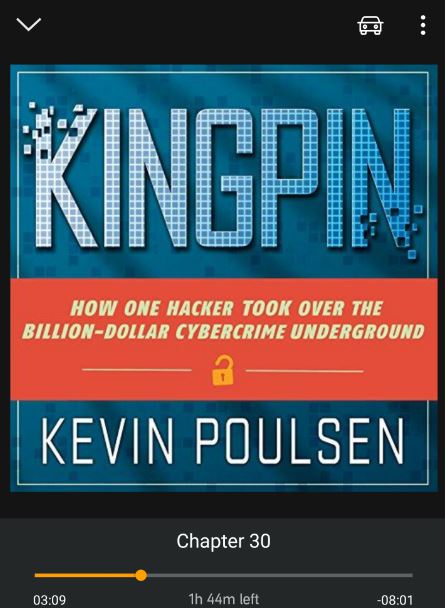
Not going to lie—my favorite thing about Kevin Poulsen’s “Kingpin” was the bit about the FBI agent Keith Mularski aka Master Splyntr from Pittsburgh. Why? Because multiple times during the book, I could say, “I know where that is!” …all small city people are like this.

This book is an interesting and modern true crime story because it combines digital and real-world elements. The people Poulsen talks about are just as colorfully multifaceted as characters in a novel. Plus, I felt how he laid out the events of this true story worked just like any techno-thriller crime drama.


This preview is an Amazon Affiliate link; 
as an Amazon Associate, I earn from qualifying purchases.

Author's Website: https://www.kingpin.cc/


Monday, February 28, 2022

Talking In Obscurity, "You Can't Be Serious," by Kal Penn

Kal Penn


We're back, Obscurists! And we're talking about "You Can't Be Serious" by Kal Penn. It's a funny and poignant memoir about Penn's life as an actor and working for the Obama administration.


This preview is an Amazon Affiliate link; 
as an Amazon Associate, I earn from qualifying purchases.

Friday, February 25, 2022

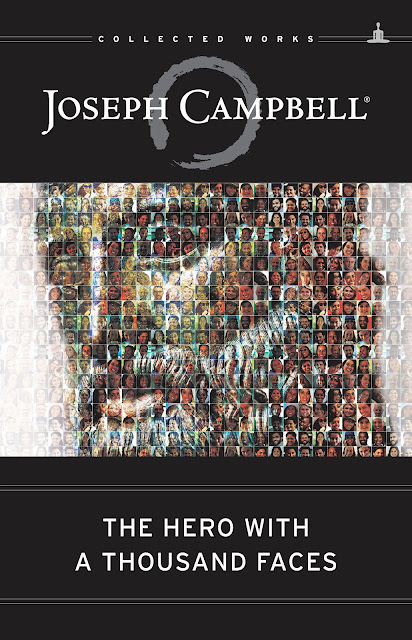
"The Hero with a Thousand Faces" by Joseph Campbell--Nonfiction Review

Today obscurists, we’re being all sophisticated whilst discussing Joseph Campbell’s “The Hero with a Thousand Faces.” It’s a book about mythology, psychology, and the very human condition!

It’s ok.


Joseph Campbell


What I love about this book:

First off, just going over the sheer scope of myth and religious stories that this book addresses, you get a really cool survey of many stories from all over the world. It’s a regular smorgasbord of global culture references that, while a bit scattered in its approach, still gives you a great bird’s eye view.

However, the central thesis of Campbell’s book is that we’re basically all telling the same story. The monomyth is an interesting concept that any storyteller should be at least aware of—and while Joseph Campbell may not have invented the Hero’s journey exactly, he did popularize it with this book. Basically, what the Hero’s journey gets at is a distinct pattern to how we tell stories, especially myths.

“The Hero with a Thousand Faces” tries to demonstrate that this impulse and this innate pattern to myth and religion is cross-cultural, occurring in both western and eastern cultures. There is something about that idea that I find beautiful. The whole concept dovetails with one of my values—that we are all more alike than different, and yadda, yadda, yadda.


What I don’t love about this book:

As interesting as this book might be—it wasn’t exactly what I expected, even though I didn’t quite know what to expect.

I think my biggest problem with “The Hero with a Thousand Faces” is that it goes down some pretty speculative roads undergirded by a combination of Freudian and Jungian psychology, which while fascinating, is firmly out-of-date. To be fair, this wasn’t so starkly true back when Campbell wrote the book, but even in 1949, Jung’s Analytical Psychology was heavily criticized. 

Ultimately, to lean on a cliché, it’s one of those; if it sounds too good to be true, it probably is, situations. I think that Jung’s idea, which Campbell leans on heavily with this book, regarding a collective unconsciousness that we’re all connected to and have access to sounds super cool—as science fiction. There isn’t a shred of verifiable evidence that there is any such thing as a collective unconsciousness that can’t be explained by the mere fact that we’re all situated in a closed ecosystem, often consuming the same media, or cross-pollinating between cultures.


This preview is an Amazon Affiliate link; 
as an Amazon Associate, I earn from qualifying purchases.


Parting thoughts:

One of the main critiques of Campbell’s work is that to arrive at the conclusions he wanted, he cherry-picked his examples. That, and convincingly sounding like he knows what he’s talking about, makes him seem all the more revelatory. What I’m describing here isn’t actually wisdom—it’s sophistry—a form of clever but fallacious argument that we get from the Greeks.

I’m not suggesting, one way or another, if it was Campbell’s desire to deceive. My intuition is that it wasn’t, but still, this book ultimately rings hollow for me.

For an example of why: let’s take something like our concept of a serpent as a symbol. Well, if you’ve read the bible, you’ll know the story of Adam and Eve—and well, spoilers—but if it weren’t for that damn deceitful snake, we’d all still be chilling in paradise. The lesson? Snakes are universally thought of as evil. Need another example? Jörmungandr in Norse mythology is one of Loki’s children, it’s a giant serpent, and during Ragnarök, it kills Thor! In some Native American traditions, the rattlesnake regarded as the grandfather of snakes caused tempests.

So, snakes are evil. Seems pretty universal, right?

But what I just did there is bullshit. It’s an example of sophistry. While everything I said is true—well, as true as myths go—they’re examples I picked to support my foregone conclusion that snakes are evil and everyone thinks so. For instance, in the Native American tradition I talked about, the rattlesnake myth I was cherry-picking has another side to it—yes, the tempest thing is true, but the rattlesnake also makes the fair winds too. To reference the Greeks again, they thought snakes were wise. It’s why we have that medical symbol, the Caduceus—look it up, trust me, you’ve seen it.

This book does a lot of this—work backward from a premise while giving the illusion of working toward one, and it’s what a lot of intentionally and unintentionally dishonest people do out there in our modern world.


Wednesday, February 16, 2022

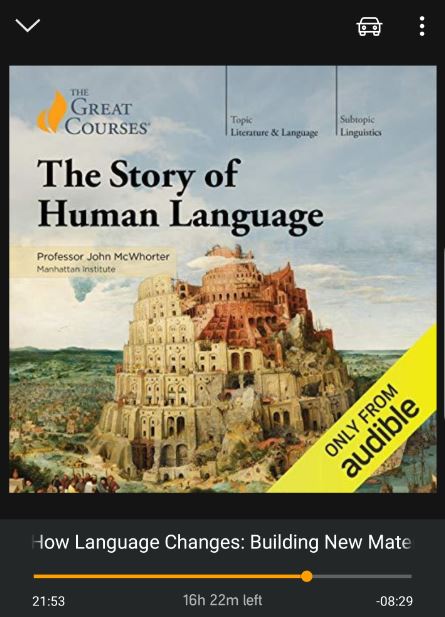
Micro Mention "The Story of Human Language"

John McWhorter


How languages evolve, split, and combine over time is an interesting subject for me, so I really enjoyed Professor John McWhorter's course presented by the Great Courses, "The Story of Human Language."

If you pick up this course, McWhorter takes you down several unexpected twists and turns on how language functions and even changes with time. There is this odd conception that language degrades with time and becomes coarser and less refined. All of which, in my opinion, is just another symptom of overindulgence in nostalgic thinking, this erroneous belief that back in the past, there was some golden age that we've all just gotten away from. If only we all still wandered about speaking perfect Latin at each other, things would be better.

It wouldn't.

In any case, McWhorter helped me understand that language is a vital thing, a living thing that changes and reflects the people whose mouths—or hands, or whatever electronic assistance devices—speak it.


Monday, February 14, 2022

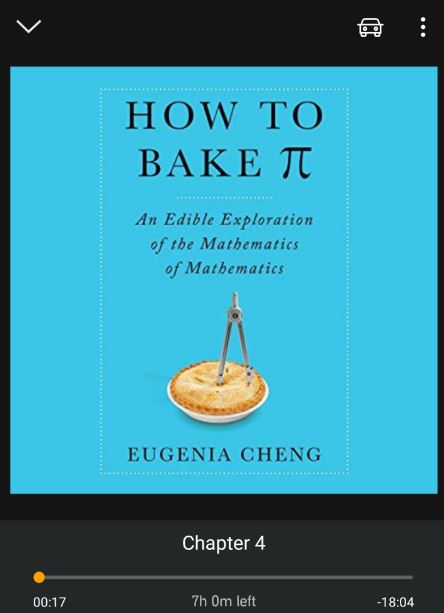
Micro Mention "How to Bake Pi"

Eugenia Cheng


Dr. Eugenia Cheng is a genius. To say I'm not too proud of my own lackluster math skills is an understatement, but I like a challenge, so I picked up her book, "How to Bake Pi," and here's where she's a genius, because she also gives recipes to things I like, like chocolate cake. Now, if only I could bake.

But seriously, though, I have the utmost respect for mathematicians in the same way I respect a great musician. It's because it's something I can't really do myself too well, and I'm more than a little obsessive over my own shortcomings. I've read a fair amount of science books, so I'm familiar with many famous mathematicians throughout history and their work. Still, if asked how to represent it on a blackboard, I might as well be a chimpanzee.

Even though it's outside of my natural aptitudes, I don't hate math like I said I did when I was younger. So, ultimately, it's glimpsing that faraway land, even though I might never go there, which is what makes me like books such as this one.


This preview is an Amazon Affiliate link; 
as an Amazon Associate, I earn from qualifying purchases.

Author’s Website: http://eugeniacheng.com/


Wednesday, February 9, 2022

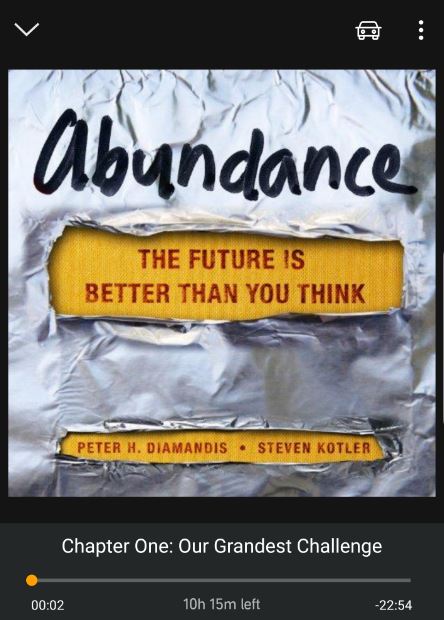
Micro Mention "Abundance"

Peter H. Diamandis & Steven Kotler


"Abundance," by Peter H. Diamandis and Steven Kotler, reminded me of Ray Kurzweil's "The Singularity is Near." Like that book, essentially, it's an argument that the future will be better than we can imagine because of exponentially improving technologies, and boy, I hope they're right.

I really enjoy the optimism of books like this, and I even tell myself I believe it, which is true most of the time. Without descending into another "climate change is bad" soliloquy—which don't you worry, I'm sure I'll be at again soon—their argument is rather compelling about why things will be better in the future. The pace of technological development really is unprecedented. It only seems normal to us, who have lived during the golden age of technology, because our lives are still relatively short.

Take, for instance, that the United States is still just shy of 250 years old at the time of this writing. However, 250 years ago would be unrecognizable to a modern-day person. Indoor plumbing wasn't something that the vast majority of people had even heard of, let alone experienced. Most of the founding fathers, however, would have been aware that in certain circumstances the ancient Romans and various other cultures of antiquity had access to knowledge and engineering skills that were lost to time, and had to be re-learned.

Sorry to be a bummer, but golden ages can and do end. If we're not careful, who is to say our descendants won't be telling stories about our glorious empires and their works. Maybe in another 200 hundred-odd years, the internet will seem like a fanciful magic tale.


This preview is an Amazon Affiliate link; 
as an Amazon Associate, I earn from qualifying purchases


Wednesday, January 19, 2022

Micro Mention "Grant"

Ron Chernow


"Grant" by Ron Chernow hasn't just made me a fan of Chernow as a historian but has made Ulysses S. Grant my favorite American president in history. Honestly, even if you read no other nonfiction/history book this year, you should read "Grant."

History is important. It tells where we've been, what we've done, and what we should have done. I don't respect opinions about policy and governance when the source of those opinions is ignorant about historical facts. That's my biggest problem with today's armchair politicians and, frankly, actual politicians. We've somehow swept back to the idea of loyalty to the individual over loyalty to the republic, and it absolutely boils my blood.

I talk about this book in greater detail in my full review here

The last point I want to make here in this piece is, so far as I'm aware of, Ulysses S. Grant, like George Washington, is the last great American president called to the presidency and did not seek it on his own initiative. We've lost this quality in our modern politics, and we are poorer for it.


This preview is an Amazon Affiliate link; 
as an Amazon Associate, I earn from qualifying purchases

Author's Website: https://ronchernow.com/