Showing posts with label Psychology. Show all posts

Friday, July 15, 2022

"Ikigai" by Hector Garcia and Francesc Miralles--Nonfiction Review

Today Obscurists, we’re finding our purpose with “Ikigai” by Hector Garcia and Francesc Miralles. It’s a book about the Japanese way of living a long and happy life by discovering your purpose in life and how to recognize it.


Hector Garcia and Francesc Miralles


What I love about this book:

“Ikigai” is a relatively short book that doesn’t outstay its welcome. I appreciated the brevity and straightforwardness of the book’s message—that the secret to happiness is ultimately to have a purpose. 

Like many Americans, I harbor a particular fascination for Japanese culture. While that isn’t specifically this book’s goal, “Ikigai” also gives an enjoyable look into this specific eastern mindset. I found it interesting to learn how aging is viewed in Japanese culture.

Finally, the practicality of this book’s advice appealed to my sensibilities. I like tangible, achievable advice that eschews mystical concepts. Never have I been impressed by the “positive vibes” people or those seeking to communicate with the “universe.”


What I don’t love about this book:

This is a bit of a petty start here, but I don’t like the long chapter titles. Mainly, I don’t like them because each chapter seems like just a continuation of the primary thesis behind this book. It’s good that the main point is reiterated, despite the attempt to break it down by subtopic though it still feels like there isn’t much rhyme or reason for why one point is presented here and why one thought is presented there. It all feels kind of the same.  

Also, while Japanese culture is far—far more collectivist than western cultures in nature, the Japanese aren’t nearly as monolithic as this book presents. Japanese people, like any subgroup of humans, have various traits, predispositions, and opinions that differ from others within that culture. They’ve not all found their “Ikigai” and are some wise super society. This book feels like it views them with more than a little rose-tinted glasses.

I’m prepared to accept that, on average, especially compared to the West, the Japanese tend to live longer, happier lives, as this book asserts. That ultimately just comes down to statistics. And those who live longer probably have better than average coping strategies, like defining themselves by the goals they profess.


This preview is an Amazon Affiliate link; 
as an Amazon Associate, I earn from qualifying purchases.

Author’s Website: https://hectorgarcia.org/


Parting thoughts:

To carry on my point from the prior section, I think this is one of those situations in which statistics can—well, not lie so much—as omit specific qualifying details. Like I said before, I accept, on average, that the Japanese probably live longer, healthier, and happier lives than in, say—my culture. But that’s only for the ones it works out for because while the national suicide rate in the United States isn’t great, it isn’t in the same ballpark as it is in Japan.

It’s a major societal issue for them with many complex factors. One of those factors is that Japanese society is incredibly demanding, with stratospheric standards to live up to and a preoccupation to avoid shame wherever possible.

So my point is that it seems to me that cultural values in Japan, when they work out, really work out overall for people. But when they don’t, they really don’t.

Also finally, a significant stressor in Japan right now is that its population is aging, and there are more and more older people with fewer younger people to support them. So there is that double-edged sword. Great success in one area typically means neglect in another.
Friday, February 25, 2022

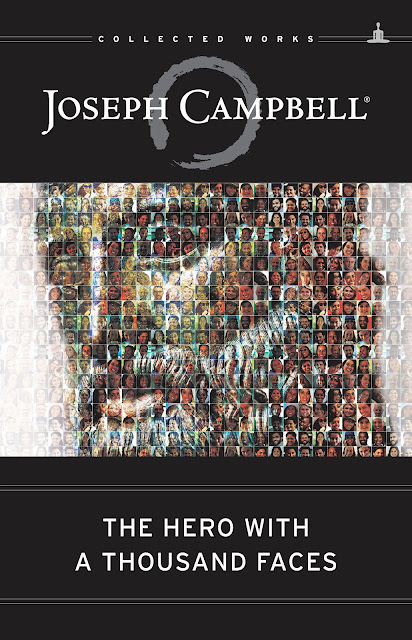
"The Hero with a Thousand Faces" by Joseph Campbell--Nonfiction Review

Today obscurists, we’re being all sophisticated whilst discussing Joseph Campbell’s “The Hero with a Thousand Faces.” It’s a book about mythology, psychology, and the very human condition!

It’s ok.


Joseph Campbell


What I love about this book:

First off, just going over the sheer scope of myth and religious stories that this book addresses, you get a really cool survey of many stories from all over the world. It’s a regular smorgasbord of global culture references that, while a bit scattered in its approach, still gives you a great bird’s eye view.

However, the central thesis of Campbell’s book is that we’re basically all telling the same story. The monomyth is an interesting concept that any storyteller should be at least aware of—and while Joseph Campbell may not have invented the Hero’s journey exactly, he did popularize it with this book. Basically, what the Hero’s journey gets at is a distinct pattern to how we tell stories, especially myths.

“The Hero with a Thousand Faces” tries to demonstrate that this impulse and this innate pattern to myth and religion is cross-cultural, occurring in both western and eastern cultures. There is something about that idea that I find beautiful. The whole concept dovetails with one of my values—that we are all more alike than different, and yadda, yadda, yadda.


What I don’t love about this book:

As interesting as this book might be—it wasn’t exactly what I expected, even though I didn’t quite know what to expect.

I think my biggest problem with “The Hero with a Thousand Faces” is that it goes down some pretty speculative roads undergirded by a combination of Freudian and Jungian psychology, which while fascinating, is firmly out-of-date. To be fair, this wasn’t so starkly true back when Campbell wrote the book, but even in 1949, Jung’s Analytical Psychology was heavily criticized. 

Ultimately, to lean on a cliché, it’s one of those; if it sounds too good to be true, it probably is, situations. I think that Jung’s idea, which Campbell leans on heavily with this book, regarding a collective unconsciousness that we’re all connected to and have access to sounds super cool—as science fiction. There isn’t a shred of verifiable evidence that there is any such thing as a collective unconsciousness that can’t be explained by the mere fact that we’re all situated in a closed ecosystem, often consuming the same media, or cross-pollinating between cultures.


This preview is an Amazon Affiliate link; 
as an Amazon Associate, I earn from qualifying purchases.


Parting thoughts:

One of the main critiques of Campbell’s work is that to arrive at the conclusions he wanted, he cherry-picked his examples. That, and convincingly sounding like he knows what he’s talking about, makes him seem all the more revelatory. What I’m describing here isn’t actually wisdom—it’s sophistry—a form of clever but fallacious argument that we get from the Greeks.

I’m not suggesting, one way or another, if it was Campbell’s desire to deceive. My intuition is that it wasn’t, but still, this book ultimately rings hollow for me.

For an example of why: let’s take something like our concept of a serpent as a symbol. Well, if you’ve read the bible, you’ll know the story of Adam and Eve—and well, spoilers—but if it weren’t for that damn deceitful snake, we’d all still be chilling in paradise. The lesson? Snakes are universally thought of as evil. Need another example? Jörmungandr in Norse mythology is one of Loki’s children, it’s a giant serpent, and during Ragnarök, it kills Thor! In some Native American traditions, the rattlesnake regarded as the grandfather of snakes caused tempests.

So, snakes are evil. Seems pretty universal, right?

But what I just did there is bullshit. It’s an example of sophistry. While everything I said is true—well, as true as myths go—they’re examples I picked to support my foregone conclusion that snakes are evil and everyone thinks so. For instance, in the Native American tradition I talked about, the rattlesnake myth I was cherry-picking has another side to it—yes, the tempest thing is true, but the rattlesnake also makes the fair winds too. To reference the Greeks again, they thought snakes were wise. It’s why we have that medical symbol, the Caduceus—look it up, trust me, you’ve seen it.

This book does a lot of this—work backward from a premise while giving the illusion of working toward one, and it’s what a lot of intentionally and unintentionally dishonest people do out there in our modern world.


Wednesday, December 29, 2021

Micro Mention "The Addictive Brain"

Thad A. Polk


Addictions come in many forms—often, they have tragic consequences on our lives or maybe the lives of our friends and families. In this course by The Great Courses, "The Addictive Brain," lectured by Thad A. Polk, there is great insight to be had about why we become addicted.

This is one of those topics I find everyone has an opinion on, informed or not. Often it's lumped in with a discussion about low-income housing or welfare, again, informed or not. Typically, it gets oversimplified to "well, just don't do it, and you won't get addicted." But one of the things I learned in this course is how the mechanisms of addiction are far more nuanced and complicated, which means that simple solutions don't actually cut it.  


Wednesday, December 15, 2021

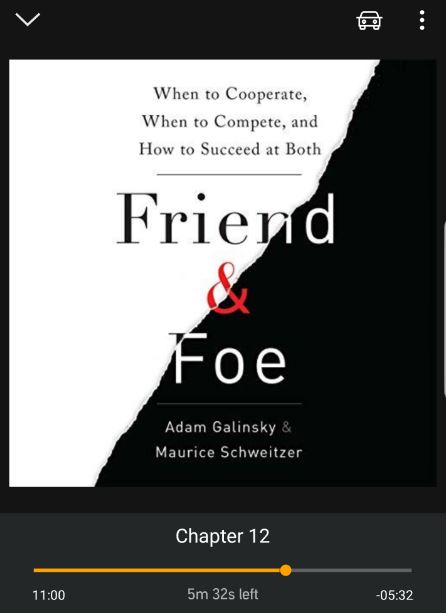
Micro Mention "Friend & Foe"

Adam Galinsky & Maurice Schweitzer


To succeed in life, should you be friends or foes with your peers? In this fascinating book, "Friend & Foe," Adam Galinsky & Maurice Schweitzer argue we're wired to be a bit of both, and recognizing that is key.

I've talked a lot on this blog about how intelligence isn't actually our superpower as a species. It's empathy and cooperation. 

But that doesn't mean that competitiveness is always a bad thing, either. Like most things, moderation in all things is typically the most prudent course. "Friend & Foe" is insightful regarding balancing the two strategies. Over-reliance on one mode of being, in my opinion, isn't a strength but a weakness.


This preview is an Amazon Affiliate link; 
as an Amazon Associate, I earn from qualifying purchases


Monday, July 19, 2021

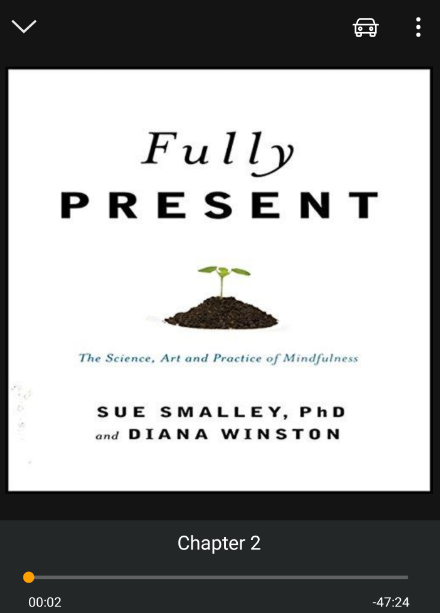
Micro Mention "Fully Present"

Sue Smalley & Diana Winston


Mindfulness is a practice we could all use a little more of—so why not start with this book, "Fully Present," by Susan L. Smalley, PhD and Diana Winston.

Personally, like anyone who fancies themselves a creative, I strive to get the most out of my mind. I'm constantly considering what works, what can I be doing better, am I utilizing my time wisely, am I wasting my time—and so on, and so on. So being present in the current moment and taking it in doesn't always occur to me. But I've found that some of my best creative ideas have come when I least expect them, not working but just being out for a walk and considering the river.

As far as I can tell, the mind, in general, needs several different inputs and outputs with variety to stay healthy. This book helped me get out of my typical always grinding, always planning and strategizing to just observe things as they are.


This preview is an Amazon Affiliate link; 
as an Amazon Associate, I earn from qualifying purchases.

Author's Website: http://www.suesmalley.com/

Author's Website: https://dianawinston.com/


Wednesday, March 31, 2021

Micro Mention "The Good Girl"

Mary Kubica


The Good Girl” by Mary Kubica is one of those psychological thrillers that, while it can be uncomfortable at times, once you start, you need to know how it turns out.

For me, no matter how you frame a story that involves a kind of Stockholm syndrome as a central element, I'm creeped out by that story. So if the goal is to get me to emotionally bond with the hostage-taker like the victim, to vicariously live out that experience, that effect has never worked on me yet. Without spoiling too much here, to be frank, it didn't work on me in this either, even after the final big reveal.


This preview is an Amazon Affiliate link; 
as an Amazon Associate, I earn from qualifying purchases.

Author's Website: https://marykubica.com/

Monday, March 8, 2021

Micro Mention "Why You Are Who You Are"

 Mark Leary


Ever wonder why people are the way they are? Or maybe, you’re even puzzled over some of your own motivations and behaviors? "Why You Are Who You Are," from the Great Courses lectured by Professor Mark Leary, is illuminating for both questions.

It's a lecture series that touches on psychology, sociology, and culture. Using all of those subjects and more, Professor Leary provides you with genuine insight on why people are, well, like they are. From a creative writing perspective, I found it most useful in helping me to flesh out and create better characters.


Friday, October 30, 2020

"The Collected Schizophrenias," by Esmé Weijun Wang--Nonfiction Review

This Friday, we’re talking about an illuminating book, one part collection of essays, and one part memoir about living with mental illness. “The Collected Schizophrenias” by Esmé Weijun Wang is a sometimes uncomfortable but necessary book written by a woman who lives with schizophrenia. 


Esmé Weijun Wang


What I love about this book:

This book had to take an immense amount of internal fortitude and external support to write. From my admittedly dim understanding of the disease, schizophrenia has to be one of the most all-time difficult conditions to deal with and stay out of an institution. For Wang to put her experiences, and the experiences of others like her, down into writing for random idiots—he said with self-awareness—to read and comment on it took bravery. I wish I knew I was capable of something similar myself, and I admire her immensely for this act of courage.

Wang expresses her thoughts and feelings in her own words, and since you all should know I obviously “read” the audiobook, you should know she also narrates the book—all of this makes the experience that much more powerful. She allows you to experience the horror and alienation of having your mind turn in on itself in an unhealthy way vicariously. If you’re like me and don’t have to experience mental illness regularly, it should make you appreciate your own mental health all the more.

Clearly knowledgeable about the topic, since it’s her lived experience, Wang takes the time to break down the features, variables, and variants of mental illness. She describes the types of medications and treatments there are, and while not an exhaustively comprehensive list of the subject, this book is an excellent introduction to this branch of medicine from the patient’s point of view. 

Though there is a lot of pain and suffering, while listening to Wang’s stories, there are also lighter moments, moments of understanding, and acceptance. Her stories about her time volunteering at the summer camp for children with bipolar disorder, especially resonated with me. Before going, she describes how she didn’t “like” children, mainly because she didn’t allow herself to out of fear that engaging with them might awaken a maternal instinct in her that she didn’t want. But she does go, and even outside of her comfort zone, she manages to do a lot of good. Wang went above and beyond for some of those kids, especially with one boy who didn’t fit in well, even when that task was sometimes a bit thankless.


What I don’t love about this book:

So this is a challenging section to write for this book. I’m not going to be over here like, “I just didn’t feel that her pain was all that bad or explained well enough.” Because that would make me a human monster. Instead, I will talk about aspects of the world that I don’t love that unfortunately needed to be addressed in this book.

My first disappointment was with how well Yale historically dealt with students suffering from mental illness. Spoilers, If Wang’s experiences can be used as a yardstick—not well. It would not surprise me if that’s still the case given how well many institutions of higher learning deal with sexual assault, again, not well. 

Furthermore, the Yale thing is really just a symptom of a larger problem within society, and that’s our apathy toward the mentally ill and disturbed. This is a point better captured by Ron Powers, “No One Cares About Crazy People,” another book related to this topic, than I can do justice here in a blog post. However, its apathy which leads to repeated misunderstandings and mismanagement of people who are legitimately suffering daily, just trying to keep up with the rat race of everyday life.  


This preview is an Amazon Affiliate link; 
as an Amazon Associate, I earn from qualifying purchases.

Author's Website: https://esmewang.com/ 


Parting thoughts:

I believe that a certain amount of our apathy as a society toward the mentally ill stems from another problem we all share more and more. We don’t empathize well with each other.

The world is a vastly complex place, so-much-so it’s often baffling to just one person. It’s drilled into us that the strong survive and the weak don’t. This messaging starts early, too, with kids. This is so prevalent that it sounds radical and new, even today when someone points out that in the wealthiest country in the world at the most technologically sophisticated time in human history—it doesn’t need to be this way. And the solution is deceptively simple, we need to start caring more for each other to work together to solve the problems we all face. 

Empathy is a newer kind of feeling for us as a species. People get the ascendency of humankind all wrong, in my opinion. It wasn’t our thumbs, or our application of brutality, or even our frankly overrated intelligence that built our world. Empathy is what allowed us to cease traveling around in small groups, killing each other on sight, for nearly a hundred thousand years—and trade tools. Then in time, language and stories, until one day we could tell ourselves a story that we were really all the same group of people, and we built the first villages.  

We all share the surface of this rock, hurtling through space, and one day it will likely be necessary for us to journey beyond it to survive long term. But before that, we should really take the time to learn how to care for each other first.