Showing posts with label dystopian. Show all posts

Saturday, October 1, 2022

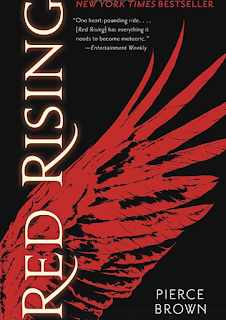
Talking In Obscurity, "Red Rising," by Pierce Brown

Pierce Brown


I love this novel and talking about it with Steven, but to say it's a happy story would be, we'll say, disingenuous. Often a grim story, it contemplates the idea that the fascists will take over in the future after all, and thank god that isn't likely in today's world. ...Oh, I just made myself sad. Anyway, you should listen to Steven and me discuss "Red Rising." 


This preview is an Amazon Affiliate link; 
as an Amazon Associate, I earn from qualifying purchases.

Author's Website: https://www.piercebrown.com/

Wednesday, May 18, 2022

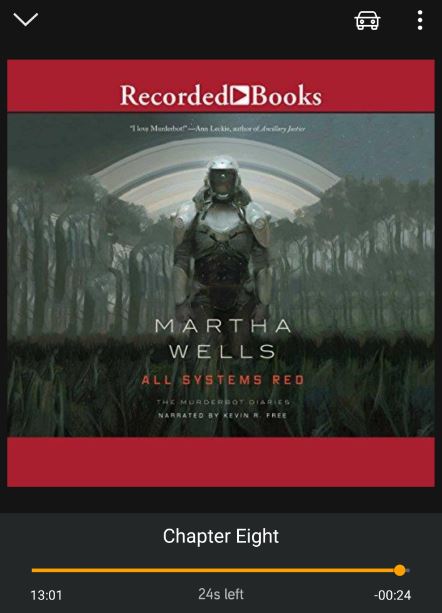
Micro Mention "All Systems Red"

Martha Wells


“All Systems Red” by Martha Wells might be short, but it’s incredible. The main character, a murder-bot, is a charmingly hilarious killing machine who frankly is more interested in watching soap operas than death and destruction.

The concept of this story tickled me, a self-aware, unshackled AI that is honestly just too much of a slacker to be a mass murderer of humans. Also, one that is good at his job, which is protecting people, in all irony, is hilarious considering what he is, a murder robot. So I don't think I can put more of a fine point on this; I loved this story.


This preview is an Amazon Affiliate link; 
as an Amazon Associate, I earn from qualifying purchases.

Author's Website: https://www.marthawells.com/

Friday, March 4, 2022

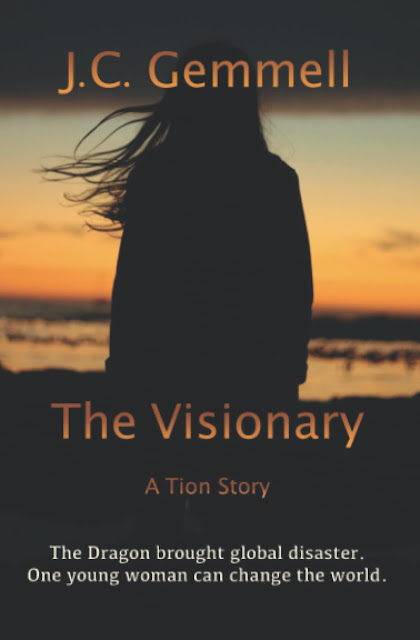
"The Visionary" by J.C. Gemmell--Fiction Review

Today Obscurists, we’re talking about a fairly unsettling dystopian sci-fi by J.C. Gemmell called “The Visionary.” And it’s a no thanks from me on the vision of the future that visionary comes up with in this story. 


J.C. Gemmell


***The Non-Spoiler part of this review***


What I love about this book:

It’s a deeply unsettling and scary story when you get right down to it. I like things that can get under my skin because most stories don’t fill me with dread anymore; often, the best they can do is startle me. “The Visionary,” though, isn’t scary because of the all-too-real sounding natural disaster that takes place, or even the raw violence and disarray that inevitably happens when a dark age kicks off during an apocalypse. No, it’s the society that “builds back better,” if you will—that is cold and alien—that creeps me out.

There is a lot of intrigue in this story, more so than I expected when I started reading it. Most scenes have at least two layers to them, what is happening and being said on the surface and what people’s actual intentions are underneath all of that.

I listened to this novella in its audiobook format because, well, naturally, I did if you’re a repeat reader of this blog. In any case, Jennifer Aquino has a subtle trick to her narration that I absolutely adored, and that is staying true to the sound of her characters’ voices while simultaneously demonstrating how they’ve aged throughout the story. Part of it is the material Gemmell gave her to work with, but there is also that performer’s flourish of how, especially, Xin-yi sounds as a girl vs. as a woman. Many narrators go wrong here by exaggerating, but Aquino uses the same voice with only modest modifications to tone and pacing, which I feel is way more impactful.


What I don’t love about this book:

I don’t love Xin-yi, and I don’t mean this as a criticism or that she’s poorly written as a character. I think she’s written wonderfully—I just don’t like her much as a person. As a protagonist, she has an arc and grows as a person, and who she comes out as—when everything is said and done—is someone I don’t like all that much. I suspect, Xin-yi herself doesn’t like Xin-yi all that much toward the end, but I can’t get too much into it in the non-spoiler side of things.

Stylistically, I think this story is as ambitious as any other big sci-fi story, but I don’t have a real good grasp of the rules of this world—or even a well-defined concept of how the super science of this universe works. For instance, despite reading a whole novella about them, I still don’t precisely understand what is it that visionaries do exactly or how their powers work.

There are explanations for things and technology, but they are primarily just surface-level stuff that ranges from the mysticism of “Star Wars” to the technobabble of “Star Trek.” It’s a minor complaint because the story’s point isn’t necessarily to focus on the technology featured but how an engineered society rebuilds. 


This preview is an Amazon Affiliate link; 
as an Amazon Associate, I earn from qualifying purchases

Author’s Website: https://jcgemmell.com/


***The Spoiler part of this review***
***Ye be warned to turn back now***


The quick and dirty synopsis:

Mount Erebus erupts, which kicks off the worst climate disaster in human history. Combined with an already warming planet, this latest major eruption in just the wrong place causes the ice caps to completely melt and sea levels to rise dramatically.

Monday, February 21, 2022

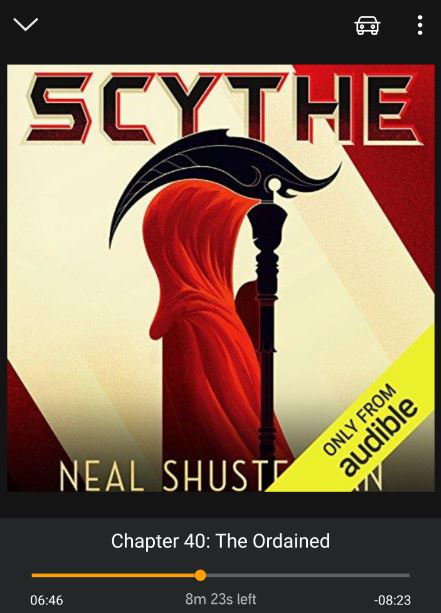
Micro Mention "Scythe"

Neal Shusterman


"Scythe" by Neal Shusterman is a young adult novel that deals with the usual YA concerns, first loves, first heartbreaks, coming of age, et cetera, but it's also wrapped around an interesting sci-fi question of: "what are humans like as functional immortals?"

The answer, somewhat predictably, is pretty awful. 

I don't exactly mean this as a criticism of the book because if everything was hunky-dory, then it would be pretty hard to tell a compelling story about the subject. After all, a story requires conflict in some form to be engaging. If there's no conflict, well, it's more of a recitation of events than a narrative.

Overall, if you like YA novels, "Scythe" will serve you well.


This preview is an Amazon Affiliate link; 
as an Amazon Associate, I earn from qualifying purchases.

Author’s Website: http://www.storyman.com/


Friday, September 17, 2021

"Fallen Angels" by Anna Mocikat--Fiction Review

Today Obscurists we’re returning to Anna Mocikat’s cyberpunk dystopian future in “Fallen Angels” book two of the “Behind Blue Eyes” series.


Anna Mocikat


***The Non-Spoiler part of this review*** 


What I love about this book:

I’ve said this before, elsewhere out in the interwebs, but “Fallen Angels” is really more of everything I loved about the first book in the “Behind Blue Eyes” series—with a few caveats.

Mocikat explores all new territory in the book, not just with locations but with seeing characters in different circumstances than we’re accustomed to. This isn’t really too much of a spoiler—but I never thought I would see a vulnerable Metatron. My paranoia is such with that character that I kept thinking, “this isn’t happening, not for real-real. This is all some elaborate miss direction.” It was right about when I was starting to think about saying something about a false flag that I had to stop myself and think, “wait a minute, what have I become? Now I’m the crazy conspiracist? Oh—fuck you, Metatron, you magnificent bastard.” I guess what I’m saying here is that I love to hate this guy, and he gave me plenty of opportunities to do that.

So in my review of the first book in this series, I mentioned that Nephilim was by far my favorite character. And without going too much further, let me say I still have a soft squishy organic part of my heart for her—but Detective Siro Ferreira-Nunes is my new favorite. I was surprised by this because typically, with any book series, I make my imaginary friends early on and am standoffish toward any new characters introduced. My internal wiring is very much—I have my friends, I don’t want new friends, which is probably a deep-seated character flaw of mine. 

In any case, Siro won me over quickly, sort of like Pedro Pascal did with his interpretation of Prince Oberyn Martell in “Game of Thrones.” Siro isn’t any less self-absorbed or constantly horny like any other Olympias citizen, but he is authentically who he is all the time. It’s not that Siro is above lying or deception—he isn’t. It’s that his motivations are clear, and he makes them clear to everyone around him. He loves his job, he moved to Olympias I for a better life, he likes coffee and getting laid. In a world full of duplicitous super assassins working all the angles, there’s blessed Siro, entirely out of his depth, doing the job of a homicide detective just because he loves doing it and being himself.


What I don’t love about this book:

This pains me to say this because she was my girl all of “Behind Blue Eyes,” but Nephilim 2.0, the good company girl of the Angel Corps, I just don’t like her as much. I loved Neph the rebel, the idealist, the freedom fighter—even though given this novel’s universe, that’s super impractical. But alas, the darlings grow up, and sometimes they become middle management at the cyborg assassin factory, and I guess that’s OK too. I still love Neph for all her exciting action scenes in this book, and even though she’s towing the company line more these days, she still finds little ways to remain loyal to those she cares about—even if that includes Metatron now.

There is some repetitiveness in this book, beats that repeat from the first book, which I’ll discuss in more detail in my analysis, but mainly I found it to be in the dialog between the characters. There are many “you’re super hot” or “incredibly sexy” and variations of that, and the first time a character expresses that about another, sure, valid. The second time OK, we’re cementing that point. The third time and on—we know. They’re hot. Can we get onto the next order of business, please? Also, there is an inordinate number of “are you OK?” questions even when not in battle or fresh from one—and I consider myself a caring individual—but she’s a killer cyborg! I love her to pieces, but she can’t possibly be that emotionally frail, or she wouldn’t be the best damn killer cyborg in the corps.


This preview is an Amazon Affiliate link; 
as an Amazon Associate, I earn from qualifying purchases

Author's Website: https://www.annamocikat.com/


***The Spoiler part of this review***
***Ye be warned to turn back now***


The quick and dirty synopsis:

“Fallen Angels” starts on a beat underscoring how literal the title is because someone is hunting, mutilating, and murdering members of the Angel Corps. We’re introduced to two human homicide detectives, Ferreira-Nunes and Spider—rare is it that I think spider and detective at the same time outside of “Along Came a Spider,” but I digress.

Wednesday, September 8, 2021

Micro Mention "Behind Blue Eyes"

Anna Mocikat


The scariest thing about sublime sci-fi books like Anna Mocikat's "Behind Blue Eyes" is the subject matter it addresses; the technological enhancement of humans, be it through mechanical or biological means, will have to be addressed—soon. And we dare not get it wrong.

I loved this story from the jump. As a long-term science fiction geek, I've always liked cyborgs. Plus, I'm always a sucker for rebels against a dictatorial regime, so Mocikat's protagonist Nephilim, who is both in this novel, had me drawn in pretty early. For me, in this particular character study, Neph is never more beautiful than toward the end of this book. It's then that she fights for what she wants and those people who she cares for, not for what she's told to care about or who—no matter how hard—no matter how impractical.

If you'd like to read my full review of this book you can find it here. Also, I recently finished the second book in this series so I will be putting up a full review of that here on WIO on a Friday coming soon. 


This preview is an Amazon Affiliate link; 
as an Amazon Associate, I earn from qualifying purchases.

Author's Website: https://www.annamocikat.com/


Monday, February 8, 2021

Micro Mention "The Handmaid’s Tale"

Margaret Atwood


"The Handmaid’s Tale" by Margaret Atwood is one of those dystopian novels that should make you uncomfortable and be required reading like "1984" and "Fahrenheit 451." Why this book is particularly sinister is it feels more plausible than the other two.

It especially feels real in light of the recent political unrest at the Capitol. After all, Gilead got its start after most of Congress was executed by a radicalized group of dissidents. If you can't see the parallels there, I don't know what to tell you. 

I would like to think that no American would actually want a totalitarian state for absolute control that allows the stripping away of women's agency as people. To reduce them to nothing more than babymaking factories or trophies. But I'm less certain of that today more than any time in the last decade. 


This preview is an Amazon Affiliate link; 
as an Amazon Associate, I earn from qualifying purchases.

Author's Website: http://margaretatwood.ca/


Friday, February 5, 2021

"Behind Blue Eyes," by Anna Mocikat--Fiction Review

Get ready for a fast-paced cyberpunk sci-fi adventure in today’s review of Anna Mocikat’s “Behind Blue Eyes.” The Angels of Olympias aren’t just perfect. They’re indestructible. 


Anna Mocikat


***The Non-Spoiler part of this review***


What I love about this book:

As a fan of the Deus Ex games and the cyberpunk subgenre, this novel has a lot in terms of my usual wheelhouse, and I appreciate it a lot for those qualities. I also enjoy a good romantic subplot in my sci-fi, and it doesn’t disappoint in that regard either.  

This is an odd thing to care about—I realize—but I really liked the verticality of some of the fight scenes. Since I was a kid reading R.A. Salvatore’s sword and sorcery fantasy novels, I’ve always been a fan of well-told fight scenes in books. Some people don’t go in for that sort of thing, but I do, and what I find—to commit to maximum nerdom—is most authors, like Kahn, in “The Wrath of Kahn” neglect the third dimension in their fight scenes. What I mean by this is all the action seems to take place on a flat plane, in two dimensions. Mocikat makes terrific use of up and down in her action scenes, especially when Nephilim utilizes her drone, but my favorite fight has to be the one underwater where Nephilim has to fight another cyborg at a disadvantage because of her heavier frame. 

I like that the arch-villain, the prime antagonist of the story, has motivations, that while not laudable, are understandable. Metatron as a character has a certain level of complexity to him and not a little pinch of hypocrisy, made evident by one of his favorite books, “Animal Farm,” from which he takes precisely the wrong lesson.  


What I don’t love about this book:

So everyone is so very horny nearly all the time. It’s a bit distracting because every scene for me becomes, and when does this scene take a turn into sexy time? A certain amount of this observation has to be moderated because the overemphasis of meaningless sex in Olympias is an intentional story beat. In fact, it’s precisely this beat that makes me feel like this is less a spiritual successor of “Nineteen Eighty-Four” and more closely related to “Brave New World.” 

Nephilim is by far my favorite character in this book, but that might be because I’m primed to like protagonists. I especially liked her banter and working relationship with her partner Adriel, but Adriel became conspicuously absent for most of the story’s middle. Instead, we end up getting a lot of a character called Finwick, who is less of a partner to Nephilim, so much as a mascot aspiring at being a sidekick. He’s fine, don’t get me wrong, but it’s like having BBQ potato chips. We’re having chips, which’s good—but we could have been having salt and vinegar chips, which are amazing.  


This preview is an Amazon Affiliate link; 
as an Amazon Associate, I earn from qualifying purchases.

Author's Website: https://www.annamocikat.com/


***The Spoiler part of this review***
***Ye be warned to turn back now***


The quick and dirty synopsis:

“Behind Blue Eyes” starts off with a bang with the Angels of Olympias—killer cyborgs—descending on a small settlement out beyond the fringe filled with dissidents. Nephilim—one of the angels—and her compatriots make short work of the unmodified humans, dispatching all of the adults. They take the children back to Olympias, though, after Nephilim promises one young girl a better life there within society.

Friday, April 3, 2020

"The Hunger Games," by Suzanne Collins--Fiction Review

I hope everyone is doing well this Friday, staying safe and social distancing and all that. Today we’re talking about “The Hunger Games” by Suzanne Collins, a dystopian YA science fiction. I brought this novel up in my earlier review for “Red Rising,” and that series revived my interest in these books.

Suzanne Collins


***The Non-Spoiler part of this review***


What I love about this book:

I love the main character of this novel, Katniss Everdeen. She’s pragmatic, tough, and devoted to her friends and loved ones—but she also feels like a real person because she has her flaws and blind spots. Katniss, while ultimately a caring person—lacks a lot of social grace and can be blunt to the point of unflattering, a real handicap since to survive, she has to learn to charm people to assist her in the hunger games.

Like all dystopian fiction, “The Hunger Games” is an extreme commentary on society and how it ossifies into something nasty when all the wealth collects in one segment of the population and social mobility is all but eliminated. 


What I don’t love about this book:

I know I already said that I love Katniss—but this is a novel written in the first person, so it’s hard for my dislikes to not also be about her. Katniss, for all of her interesting virtues and flaws, also has this annoying tendency to be so painfully slow on the uptake when it comes to people and their true feelings for her—especially when it’s amorous feelings. She honestly never puts it together that Peeta, her one constant ally through the hunger games, is in love with her until the end of the novel. I don’t find this flaw exciting or charming. It’s just eye rollingly annoying.

The villains of “The Hunger Games” aren’t developed as much as the characters designed to be sympathetic, and that’s disappointing. They’re all of what I call the mustache twirler class of villains. Why are they so evil? Because they just are for the sake of the plot. There might be more characterization and explanations of the motives of the antagonists in the later novels. But still, in this first novel, the capital citizens are all out of touch looneys—save a few rare exceptions—and the other tributes are all gleeful murderers—again sparing a few exceptions.


***The Spoiler part of this review***
***Ye be warned to turn back now***


The quick and dirty synopsis:

Katniss Everdeen, at the beginning of the novel, is doing what she does best, hunting, a skill that serves her well in the future. She has to hunt because her family is impoverished. After all, her father is dead, and in this future nation of Panem, there is no such thing as a social safety net other than the tesserae—additional food rationing—but it increases one’s chance of being selected for the hunger games.

The hunger games is a tournament to the death. Two tributes—one boy and one girl—from each of the twelve districts are selected to fight for the amusement of the capital. This is done yearly, reminding the districts of the capital’s domination. It’s also a punishment for a rebellion they had launched against the capital in the past. At this year’s reaping—the selection process for the hunger games—Katniss’s younger sister Primrose is selected for the games, but before she can be collected, Katniss volunteers to go in her place.

Katniss and Peeta—the boy selected from their district—are whisked off to the capital to begin their training before the games. It’s a time filled with pageantry and celebration. All of the tributes from the twelve districts are expected to go along with the pomp, with enthusiasm. The sinister thing is all though it’s for a game, only one of them can win, and the rest die, the point of playing along for the tributes is to gain sponsors. Sponsors, wealthy citizens of the capital, can directly impact the course of the hunger games by paying for advantages for their preferred tribute. These advantages can be anything, food, medicine, et cetera, and it’s just one more reminder that the hunger games isn’t about fairness. It’s a show—and it’s about power.

Once in the games, Katniss and Peeta are quickly separated, and the early part of the games is marked by Katniss’s efforts to go it alone. She nearly dies of dehydration and is often left vulnerable because she has no one but herself to look out for her. The career kids—tributes from the richer lower numbered districts—who always volunteer for the games for the money and glory of winning, hit on the strategy of allying with each other, at least until the loners are all dead. Katniss is dismayed to find that Peeta seems to have allied with the bloodthirsty careerists and seems to be helping them hunt her down.

The career tributes, and Peeta, manage to corner Katniss in a tree where they can’t get to her because they’re all too heavy and unskilled at climbing to risk going up after her. They decide to wait her out, but with the help of an unexpected ally—a younger girl from district eleven named Rue—who was hiding in a nearby tree, Katniss finds a nest of deadly killer wasps. Katniss drops the nest on the band of career tributes, but in the process is stung herself. When she gets to the ground, she flees but goes back to collect a bow from one of the dead tributes. The venom in her veins makes Katniss hallucinate, and she is nearly killed by the leader of the career tributes but is saved when Peeta intervenes and is grievously wounded in the leg for his trouble.

Katniss flees and spends at least one night in a pit in the throes of a hallucinatory nightmare, but eventually recovers and goes hunting in with her new bow and arrows. When she kills and cooks some meat, Rue appears again, and the two form an alliance. The two of them travel together for a while. Then eventually, they develop a plan to deprive the careers of their supplies. It’s a simple plan where Rue will distract the careers by setting a fire far away from the career tributes’ camp, and Katniss destroys the supplies.

Unfortunately, while their plan is successful, Rue is ultimately killed by the tribute from district one, who is then killed by Katniss when she shoots him in the neck. Katniss gives Rue a proper memorial and alone again, she heads off despondently by herself.

Then there is an announcement, for all the tributes to hear, a rule change stating that two tributes can win the hunger games provided they are from the same district. Katniss immediately sets off to find Peeta, who has been lying low because of his injuries. Katniss attempts to nurse Peeta back to health but ultimately finds that—against his wishes—she has to go out again and risk herself to recover medicine for him.

After obtaining the medicine to heal Peeta, and more tributes are killed, they find that they have to leave their hideout to confront the final tributes, and win the hunger games. Before they ever manage to face the last tribute, the capital unleashes a pack of mutant dogs on the three remaining tributes, mutants created from the corpses of all the other tributes who had died. In the end, Katniss kills the last tribute more out of mercy than anything because the mutant dogs savagely mauled him.

When it appears that Katniss and Peeta have won the hunger games, the capital makes another announcement, taking back their rule change, informing them that there can only be one winner of the hunger games. Katniss and Peeta choose to commit suicide instead—robbing the capital of the one thing the games were always about, the power over the lives and deaths of the district citizens. However, before the two of them can go through with it, the trumpets blare, and there is a third announcement stating that they’d won.

After returning to the capital, and recovering, Katniss finds out to her horror that the show isn’t over, and might never be, she is expected to play a new role, that of the grateful victor. The leaders of the capital are not pleased with her that she managed to outsmart their game. It’s then that she finally realizes that Peeta hasn’t been pretending to be in love with her for the audience’s sake, he is in love with her and believes she’s in love with him. It’s a colossal disappointment for him when he finds out that Katniss isn’t so sure.             


Analysis:

Writing in the first person is always a gamble. If your audience doesn’t like your main character, who you are presumably writing from the perspective of, then the rest of your work on the story doesn’t matter. People relate to people—not plots—and if your audience can’t get behind the character telling the story, then the story is dead in the water. So when an author, such as Suzanne Collins, pulls it off with stories like “The Hunger Games,” it’s incredibly impressive.

The first person perspective of experiencing “The Hunger Games” from Katniss’s point of view makes the horror of the games, and the capital, all the more intimate. All of the action sequences in the novel are immediate and brutal because the first-person perspective plays well with an active voice where the third person can often stumble, and where it’s easier to write in the past tense.

Collins, for the most part, deftly sidesteps a lot of the awkwardness that comes with first-person writing, which is a genuine talent I envy. When writing in the first person, since the character you’re writing from is the defacto storyteller, there are several traps the author can fall into and bring the narrative to a screeching halt. For instance, there is the over describing of actions problem. For example—I walk to the door, then I turn the doorknob slowly before opening it to the abandoned corridor and make my way down the hall. Vs.—Detective Miller opened the door slowly and then made his way down the abandoned corridor. First-person has a way of pulling us personally into the story, but doing it effectively, usually requires more words.


Parting thoughts:

So I’ve only read this first novel of “The Hunger Games” series, and my introduction to it was the movies. I remember loving the first movie—thought the second movie was okay and just never got around to watching movies three and four, which tell the story of the third novel. Which means my picture of the series is a bit incomplete. I think why I stalled on this series is because the second movie was my least favorite kind of movie, one that is just okay. Great things and good things are easy to explain why they’re worth watching/reading/listening to, and it may seem to be counter-intuitive, but I also enjoy things that are objectively bad—or terrible.

Terrible things had people who believed in those projects enough to get them out there for the world to consume—and some of the time, it isn’t that the idea behind them was terrible but just that the execution was all wrong. This creates the greatest opportunity to learn from their mistakes, which is why I like them. Consuming great works of art is enjoyable—necessary even—to know where the bar has been raised in the past. However, they don’t teach you a whole lot other than how to emulate them, which means that subsequent works following in the tradition of something, lose that elusive luster of originality. To demonstrate what I mean: no one can write “The Lord of the Rings” again. Even George R.R. Martin’s “A Song of Ice and Fire,” popularly known as “Game of Thrones,” lives in that shadow and is shaped by it, which of course, all literature is like this—shaped by earlier works. It’s rare, like one in a generation rare, to find a truly pathfinding piece of literature that has the potential to create a new genre or even subgenre.

Now I’m not saying every piece of bad writing is a failed original idea. More likely, the case is it’s a recycling of other ideas that are executed poorly. These are still valuable to read as well because if you’re aware of what something is trying to be like, then that contrast can allow you to compare the two things and better understand why the original worked so well and something failed to live up to that standard. The art of invention is a lot like this; hence the cliché failure is the mother of innovation. Knowing what doesn’t work can help guide you to something that will work. 

Friday, March 13, 2020

"Red Rising," by Pierce Brown--Fiction Review

It is Friday, my dear internet strangers, so, therefore, it’s time for a new review. Today we are talking about “Red Rising” by Pierce Brown.

“Red Rising” is the first book in the “Red Rising” series, and it’s a science fiction dystopian story in the same spirit as “The Hunger Games,” but set on Mars. It becomes clear early on that the premise of the story is we’ve colonized other planets in our solar system and are huge assholes about it. You know, like what would actually happen.

Pierce Brown


***The Non-Spoiler part of this review***


What I love about this book:

“Red Rising” is all passion, all heart, love, and rage. From the very first page of the story and onward, it strikes that exact tone, and never lets up. Brown’s style of writing involves short, punchy sentences, to the point of almost terseness, broken up by longer poetic descriptions, dialog, and metaphors. The effect that he creates is a world stark and beautiful—terrible, but also compelling.

Here is a perfect distillation of the tone from the back of the book jacket:

“I live for the dream that my children will be born free,” she says. “That they will be what they like. That they will own the land their father gave them.”

“I live for you,” I say sadly.

The second speaker says little, but so much is conveyed in that short sentence. This conversation reveals that these are two people in love who are tragically on different wavelengths.

The protagonist of the story, Darrow, is less a man and more a force of nature waiting to be unleashed, which lends an intensity to his every scene. This is, in fact, every scene, since the novel is written in the first person, from Darrow’s point of view. Darrow is a kindred spirit to Katniss Everdeen of “The Hunger Games.” Both characters are reluctant revolutionaries—both are intensely practical, capable, and motivated by love.

Darrow’s “education,” such as it is, is a school set up in nearly the same style as the hunger games competition. However, instead of twenty-four teenagers in the woods trying to kill each other, the institute in “Red Rising” involves hundreds of teenagers trying to conquer each other. Only a little over half of them are expected to die during it—so progress.

Since I’m a big audiobook fan, I’d feel remiss if I didn’t point out that the narrator, Tim Gerard Reynold’s Irish brogue is perfect for this book—can’t imagine it any other way.   


What I don’t love about this book:

Like “The Hunger Games,” this first book, in a series of books about a revolution, is a story wholly dedicated to prerevolutionary matters, and positioning for the eventual revolution—but it never actually starts up until the next story. The reason for this, as I see it, is that “Red Rising” is an intense character study of the creation of the revolutionary hero—or leader. To me, as much as I love this novel, I find myself a tad impatient for the start of the main event.

Another thing that is a small quibble for me is the author brings this otherwise fast-paced narrative to an absolute standstill to describe how afraid the protagonist is—in exquisite detail—at various points in the narrative. Which, is fair on some level, I couldn’t be Darrow after about one day in his boots. Brown is also good for the gratuitous torture scene, sprinkled liberally throughout the story. I get their function within the plot, but I always find myself a little bored, waiting for those scenes to end so that we can move on to the next thing.


***The Spoiler part of this review***
***Ye be warned to turn back now***


The quick and dirty synopsis:

The novel begins with an ominous monologue from Darrow describing his enemies, and we’re not entirely sure why he hates them at this point, but it’s so intense it’s nearly tangible. The only hint we’re given is they’ve brought him war, and he’s going to kill them all.

Then we jump into the early chapters and find out exactly why he hates them. He and all his family and friends were always told that they were colonists of Mars—the first colonists. As they are the earliest colonists, this is the excuse for their hard lives of toiling under the Martian surface to procure the necessary resources to terraform Mars. Society—or the society—as it’s called in the novel, is broken up into a rigid caste system. Every caste in the society is known for its color. Gold is at the top of the society, and Red is at the bottom.

Laws are strictly draconian, and punishment is swift and nearly always capital—or at least it is for the Reds. The first story Darrow tells us about his life is how his father was hanged as a traitor to the society because he danced a forbidden dance. The mayor of footloose has nothing on these people. Then we get to find out a terrible little detail about hanging on Mars, the gravity isn’t enough to break the neck, and it takes a long time to strangle to death in the reduced gravity. So as a mercy, someone has to pull on the condemned’s feet—in Darrow’s words, “they let the loved ones do it.”

Despite all of this nightmare, Darrow lives a happy life as a helldiver, a future mining profession exactly as dangerous as it sounds. Darrow, who is sixteen, is married, loves his wife Eo, and is excellent at his job.

Eo, however, isn’t content with their lives—or the lives all the other Reds are forced to live. She even reveals to Darrow that the other colors are hiding how much progress has been made on the surface by showing him a secret garden she’s found through a vent to a surface building. There they make love under the stars—the first time either of them has ever seen stars. The society, of course, hangs her for it—well technically they whip her for it and hang her because she sings a song—not a musical bunch these society types. Then they hang Darrow, for having the gall to take down her body to bury her.

Darrow doesn’t die after being hanged. His uncle had drugged him so he would only appear to be dead and then buries him. Then a resistance, known as the Sons of Aries, digs up Darrow and recruits him to their cause. He has ample motivation at this point, but the rebels give Darrow even more fuel for his hatred of the society. They reveal to him that Eo was always right about the society—mars had been successfully terraformed centuries ago. The Reds are just slaves for no better reason then that’s where they are born within the hierarchy of the society.

The Sons of Aries’ brutal plan is to use one of their surgeons—they call them carvers—to “remake” Darrow into a Gold. It’s not a pleasant process. Then after he barely survives that, with some clever hacking, and trickery they get Darrow admitted to the institute—the famous Gold school. From there, Darrow will learn, and infiltrate Gold society. The plan is one day he can destroy them from the inside and lead a revolution. Most of the novel takes place at the school, which is a gigantic hunger games style competition that Darrow is a natural at, and he eventually rises to the top of his class.     


Analysis:

This book, and the series it belongs to, is one of my absolute favorites. However, even I, who has something named after him—known as the Carlson Twist, an inside joke about sad endings—has to admit it’s real dark.

Brown has the enviable ability to take his readers on an emotional journey that can raise you to the highest peaks of vicariously living through love so passionate it hurts, to being emotionally waterboarded—and it’s mostly waterboarding. It isn’t a book that you so much read as it’s a book you feel in your bones. I’ve consistently had the experience of profound dread—like didn’t do my math class homework, while not wearing pants to school, for the second time this week—I don’t know exactly where that came from in my subconscious—of each next chapter. Then immediately read that next chapter anyway because I just have to know. I can’t not know.

And that’s “Red Rising.” There isn’t anything else I feel like I need to analyze here. 


Parting thoughts:

I admire the author, Pierce Brown. He’s a personal hero of mine because I’ve read about his difficulties securing an agent and finally getting this novel published—and the fortitude that took. Regrettably, something similar hasn’t worked out for me since I intend to self publish. However, it’s still nice to hear a story of someone persevering through over a hundred rejection letters and finally getting the work they believed in so much published.

This next bit is for my fellow aspiring writers.

Even though my experience with publishing has so far been very different from my biggest heroes, and I’m going the route of the indie author—I still feel it’s always worth trying to publish traditionally first, before self-publishing your first novel. Yes, it’s easy to get burned out after reading dozens upon dozens of rejection letters from literary agents and publishers, for months on end—if not years. I know. I’ve done it. The exercise is still worth it, and after all of that psychological battering, you will be a better writer for it. Like me, you might find no one at all willing to take your writing on. Fiction writing is immensely competitive, and sadly it’s also an industry where if you’re socially networked well, the wheels get greased even if you're not that good—just like everything. But at the end of everything, you’re still a writer because you believe you are, and if that isn’t enough, your ole’ pal Kevin from Pittsburgh, who writes a blog about writing in obscurity, believes in you. That absolutely requires you to read my blog religiously from this day forward, no take-backsies. 

So why am I telling you, you should still try to publish traditionally even though the barrier to entry is nightmarishly difficult and you’re guaranteed to take one of the most all-time ego bruisings of a lifetime?  I mean, you’re already armed with your self-belief and have the endorsement of Kevin, a random idiot you found on the internet. What more could you need? Why would you go through that torture, and not just skip ahead where you self-publish your stuff?

Because the adversity of it alone will help you grow as a writer, it will teach you discipline, perseverance, the ability not to freak the fuck out when someone tells you or implies heavily that your shit is terrible. Free advice: the response to a no is nothing, and if not that it’s always “thank you for considering my work.” Never—EVER—argue your point further after a rejection or write them an angry note because the stink of unprofessionalism takes a long, long time to wear off, and the publishing community is small. Reputation is everything.

Finally, I assure you, even if you get nothing but rejection—mostly of the form letter variety—there will be a few agents and acquiring editors who will take the time to give you some feedback. Even though it isn’t representation or a book deal, this is gold. It is an oasis in the middle of the literary obscurity desert, where I’ve set up a dome and write this blog. Learn from that feedback even if you don’t agree with it, turn it over in your head, sleep on it, but most of all, and for the second time, learn from it—then you will know how to improve anything you’ve written. Good luck, champ. You’ve always got me, or at least until the obscurity sandworms tear down the dome and eat me alive.