***The Non-Spoiler part of this review***
What I love about this book:
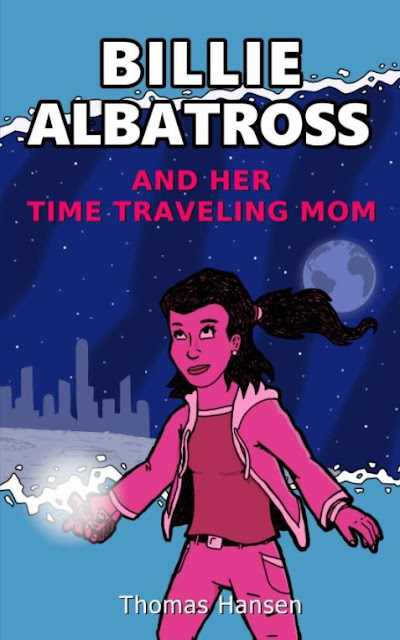
Hansen has a natural talent for bestowing his characters with the gift of gab. Dialogue is some of the hardest things to write and make believable, and when it isn’t, it risks being labeled with the dreaded descriptor of stilted. The tamber of banter between Billie and her mother Pandora especially shines with a Whedon-esque style with a touch of “Gilmore Girls.” This is such a valuable skill because if the dialogue sparkles, the audience will naturally be more forgiving about any other shortcomings a narrative might have.
Another thing I appreciated about this novel is that every element Hansen introduces, he used, nothing was wasted or was superfluous. It makes for a trim to the point plot, which for a book paced as quickly as this, I think this is the best tact to take. In a slower-paced narrative, story elements introduced for purely indulgent reasons can work atmospherically, but in quick-hitting stories, they tend to cause the reader to think, “well, what was the point of ‘X?’ It was introduced and then dropped.” The only possible exception I can think of right now is maybe a mystery with lots of red herrings.
Just as a short note, about a thing toward the end of the story, for practical reasons—assuming time travel was a thing, of course—the concept behind the Arcadia ship was clever. Once time travel is possible, going backward to create a staging ground—out of the way—that always exists throughout time is a practical solution for time travelers that I liked.
What I don’t love about this book:
So, this is soft science fiction, and that’s fine—I’m not down on soft sci-fi at all, and it might be the only way to do a time travel sci-fi because what does a hard sci-fi time travel story even look like? However, the easy to fall into trap soft sci-fi makes all the more likely is handwaving. What I mean by that is the tendency to address a hard to explain component of the story with basically, “and no one knows.” Ok, yeah, sure, there are many things we don’t know now, so I assume that would be true of this universe too, but surely someone must have theories, right?
You meet two characters, I’d say near the end of the beginning of this story, Tosh and Marty—the latter undoubtedly a “Back to the Future” reference—who are well-meaning but impractical idiots. That’s a fine character arc to explore. What I don’t get is Pandora’s reaction to them. She’s often annoyed by them and worried about their influence on her daughter—that part I get—but why she keeps dealing with them just because Billie likes them is beyond me. Personally, after facing the first life or death situation they subject Billie to, my reaction would be, “you two need to go and figure your shit out and leave my fourteen-year-old daughter out of it before you get her hurt, arrested, or killed.”
While I’m thinking about it—I understand the pop culture references. I even believe they are helpful to sprinkle into certain stories because it builds intimacy with the reader. Basically, it’s a freebie of goodwill, “you like X? Well, I like X!” That is—when people get the references. Now here is where I might lose some people, but pop culture references—like bacon—can be overdone. It’s possible to have too much of a good thing. Don’t believe me? Go eat a pound of bacon. I’m not entirely certain when “Billie Albatross and Her Time Traveling Mom” crosses that line precisely, but I just found them distracting by the end of the story.
This preview is an Amazon Affiliate link;
as an Amazon Associate, I earn from qualifying purchases.
***The Spoiler part of this review***
***Ye be warned to turn back now***
The quick and dirty synopsis:
The story starts with Billie, a fourteen-year-old girl—daughter of an eccentric single mother—going to school with her best friends. On this day, however, there is a really odd substitute teacher who only seems interested in asking just the girls really bizarre questions. Later, after school, the class bully tells Billie that the substitute teacher wants to meet with her specifically. Not believing him, Billie and her friends leave to go home. On the way, they’re chased by that substitute teacher who seems slightly ungrounded—like she doesn’t belong.