Showing posts with label memoir. Show all posts

Tuesday, April 18, 2023

Talking In Obscurity, "A Heart That Works" by Rob Delaney

 
Rob Delaney


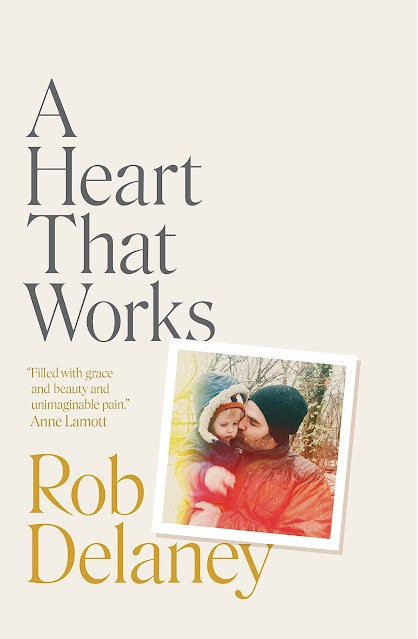
We're back after a little, okay, a long break. The point is Steven, and I are here for you. To help you get into a new book. What book? "A Heart That Works," by Rob Delaney. It is quite possibly one of the saddest things ever. Not just books. THINGS!


This preview is an Amazon Affiliate link; 
as an Amazon Associate, I earn from qualifying purchases.

Author's Website: https://www.robdelaney.com/

Saturday, June 11, 2022

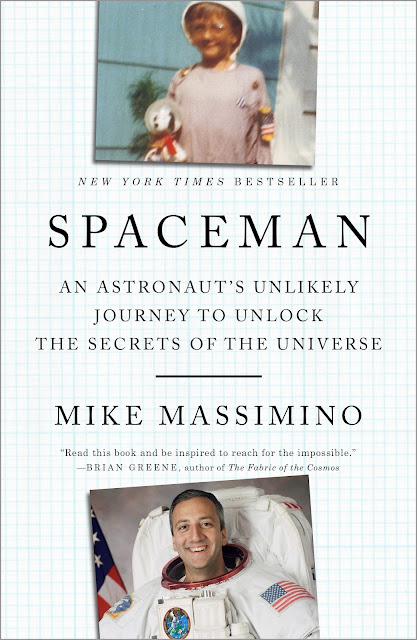
"Spaceman" by Mike Massimino--Nonfiction Review

So I’ve been pretty clear on this blog before about how much I love space, which is why today we’re talking about Mike Massimino’s “Spaceman.”


Mike Massiminio


What I love about this book:

Clearly, the space stuff is my top love for this book. Massimino was part of the tail end of the generation of astronauts who flew in the space shuttle, which I’m not too proud to admit I don’t know as much about as the earlier programs. So it was nice to get to know the names and missions that happened during his time at NASA.

Most of this book is about his journey to become an astronaut. I hadn’t realized this before he pointed it out, but, unlike most career paths, there are no well-known tracts to take to become an astronaut. So it’s nice that he put it down how he did it, for all the advice he provides.

Massimino is a charmingly warm and often funny guy. I went in for the audiobook version—per usual—and it’s read by him. I know I belabor this point a lot, but especially in this, hearing the tone of his voice as he relates some of his personal disappointments and some of the tragedies to befall NASA immeasurably adds to the experience.

Getting his first-hand account of what it was like to work on the Hubble telescope was endlessly fascinating to me. It cannot be adequately expressed how much that orbiting telescope has given us, so it’s incredibly important. Working on it in space sounded equally amazing as it was terrifying.


What I don’t love about this book:

There isn’t much I didn’t love about this memoir. It’s firmly in my wheelhouse, after all. If I had to say something, maybe an argument could be made that it dithers a little bit too much before getting into the meat of the NASA stuff. That isn’t too serious of a criticism, though, because I enjoyed Massimino’s journey becoming an astronaut almost as much as I enjoyed him as an astronaut.

The Space Shuttle Columbia disaster was hard to read about and thus relive. When the Challenger exploded during the launch, that disaster happened before I was born, but I was in middle/high school when Columbia happened. So the tragedy of that event when it happened still sticks in my mind, and the old feelings of disappointment that NASA, an organization I idolized, didn’t do enough to keep that crew safe resurfaced. That they dropped the ball on the dangers of free-falling foam debris from launch and how it could damage the orbiting vehicle.


This preview is an Amazon Affiliate link; 
as an Amazon Associate, I earn from qualifying purchases.

Author’s Website: https://www.mikemassimino.com/


Parting thoughts:

Space exploration is inherently dangerous and expensive. There are many solid arguments for why we shouldn’t bother with this exercise. How to justify the cost monetarily and, more importantly, in lives lost is tricky. Why spend billions of dollars on space exploration to send a handful of people to space while millions of people are starving right here on Earth.

What Space exploration is ultimately about is investing in the next step for our species, for the next generation’s future. It’s about the billions and billions of people yet to be born who could one day lead a better existence beyond the confines of the Earth. 

The Earth, as wonderful and beautiful as it is, is a closed system. We keep adding more and more humans to that closed system without increasing the fixed amounts of resources and livable area. The idea that we’re somehow going to collectively agree to stop creating too many people globally and then create rigidly sustainable utopias out of our various bickering and competing cultures in the near future demonstrates a lack of awareness of human history in my mind.

At this point in our societal and social evolution, we should do what we have always done collectively when faced with shortages of livable space, opportunity, and resources. We should move on and spread out.

Crossing the oceans at one point seemed like an impossible technical feat to our ancestors, yet, they eventually managed it. It wasn’t safe, and it wasn’t cheap. Many people died for the dream of seeing over that next horizon. But in the end, it was necessary.

Let’s be clear about this point: our shameful legacy of appalling poverty, sickness, famine, and war wasn’t caused by NASA’s budget. Our poorest citizens, again globally, are so poor because we’re still collectively beholden to a wealthy and privileged ruling caste. We might not call our billionaires princes, princesses, dukes, or duchesses anymore in the United States, but that doesn’t mean they don’t exist. 

Most of the world’s wealth belongs to a few individuals—a lot of it is inherited wealth that wasn’t earned in any meaningful way by the so-called elites of our various human societies but is merely passed down. That is the real insidious reason most of us toil from the cradle to the grave.

I wish that we were collectively wise enough to conserve the Earth and do so in a way that we could all live reasonably equitably on it and happily. But wishing reality was different doesn’t make it so, and realistically what I believe our next step is—is to chase that next frontier, the last and final one above us all. 

Monday, June 6, 2022

Micro Mention "Capital Gaines"

 
Chip Gaines


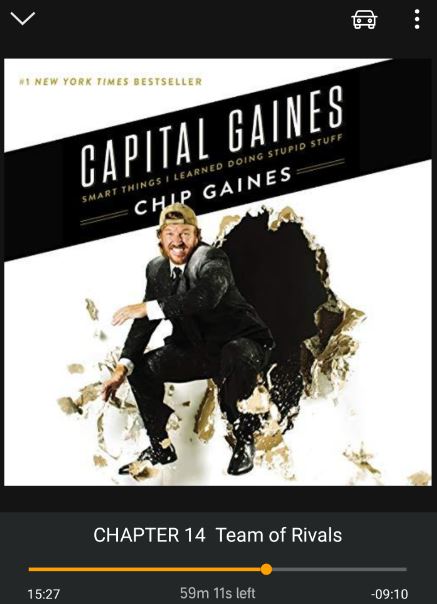
My favorite chapter of "Capital Gaines" by Chip Gaines is Team of Rivals—I really appreciate its sentiment and the clear reference to one of my favorite American Presidents, Lincoln.

With a little distance from my full review of this book, I still find myself thinking about it from time to time. I appreciate the messaging of this book, being willing to be open to new experiences while staying true to closely held values. I still don't think I see the world quite like Chip Gaines does, but that's fine; understanding and accepting others and their way of life doesn't require agreement.

I think somewhere along the line, we often forget that truth. We insist everyone, everyone, must agree with us, which just leads to directionless screaming matches.


This preview is an Amazon Affiliate link; 
as an Amazon Associate, I earn from qualifying purchases.

Author's Website: https://magnolia.com/


Saturday, May 7, 2022

"The Epitome of Grace" by Sharon Liotus--Play Review

Sharon Liotus


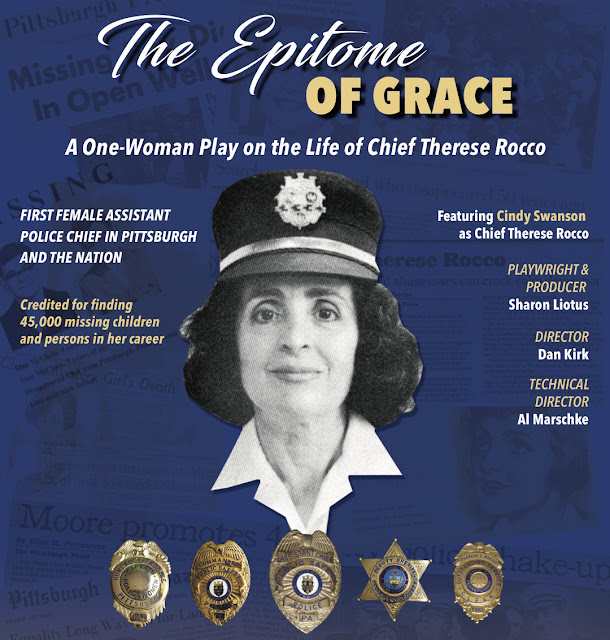
This is unusual for me because I don’t normally review anything other than books on this blog. Still, here we are, and today I’m talking about “The Epitome of Grace,” a one-woman play featuring Cindy Swanson as Chief Therese Rocco. The playwright & producer is Sharon Liotus, who is a personal friend of mine—full disclosure—and it was directed by Dan Kirk, with Al Marschke as Technical Director.

As for why I’m reviewing a play out of the blue—there are many reasons—certainly, because I was asked to and because I went to see it for myself last Saturday, April 30. 

Most of all, I agreed to do this review because I’ve met Chief Rocco, who is a real person by-the-by for you non-Pittsburgh natives. She’s an amazing woman. Therese Rocco started her career in law enforcement in the middle of the 20th century, and it stretched all the way to the new millennium. By the end of that illustrious career, she was Pittsburgh’s first female assistant chief of police—and the first in the nation, according to at least one local newspaper that I’ve not rigorously fact-checked on that point.

That, however, is straying from what I want to discuss. 

I want to talk about what it was like to experience this play. As a one-woman show, it’s cleverly written from the perspective of and very much in the voice of Chief Rocco herself, telling us the story of her life. Liotus achieved this through her own friendship with Therese and through exhaustive interviews with those who knew and worked with the Chief.

At the performance I was at, Chief Rocco was in attendance. So it was a bit of a sight gag to see her in the crowd watching a woman on stage portraying a younger version of her. Like everyone else in attendance, Chief Rocco laughed when the play was funny. The vignette about how she caught the fleeing theater pervert by pulling down his pants as he tried to run away comes to mind, which has a certain amount of poetic irony about it when you think about it.

Alas, though, like with all true stories about police work, there are always the more sorrowful moments. It would be cliché if it weren’t so heartbreakingly true that every detective, given sufficient time on the job, inevitably has that one case that doesn’t get solved and haunts them—even long into retirement. The case of Mary Ann Verdecchia is that case for Chief Rocco, and the pathos that Swanson infuses into her performance describing that hole in time and space where Mary Ann disappeared walking home one day rends the soul. Mary Ann didn’t have a traditional family—her mother and father weren’t around, and she was being raised by a relative. The world took even more from her, and so far, the quest for justice has been left unfulfilled. Still, hope holds out that answers will be forthcoming one day.

Watching and experiencing—however vicariously and fleeting—Therese Rocco’s rise through the ranks in the police department is an absolute joy that this play captures. It was a journey with its ups, the promotions, and support—and downs, the constant roadblocks put in her path by those who had no motivation other than they didn’t like the idea of a woman being in her role. When Chief Rocco was tapped to be on the shortlist of candidates to be recruited for the U.S. Marshals and then ultimately betrayed for craven political reasons and blocked, again, because she was a woman, the indignity was palpable in the theater.

The concluding implicit message of the play, however, I think is its most powerful; that you can’t control the world and how it reacts to you, only how you respond to it in turn, and even if speaking for the truth is the losing position it’s still the correct one. There were many times throughout her long life and long career where Chief Rocco could have given up, thought of giving up, and had doubts—because that’s human.

In the end, though, what makes her legendary around here isn’t that she never had doubts or always succeeded. No, it’s that despite those doubts, she took what life threw at her on the chin and kept fighting for what was right, no matter how hard. 

That’s grace


This preview is an Amazon Affiliate link; 
as an Amazon Associate, I earn from qualifying purchases.


Additionally, Chief Rocco also wrote her memoir "Therese Rocco: Pittsburgh's First Female Assistant Police Chief," which inspired the play. I plan to review it here on WIO at a later date when I finish reading the book. So far, I'm loving it as much as I enjoyed the play.


Monday, February 28, 2022

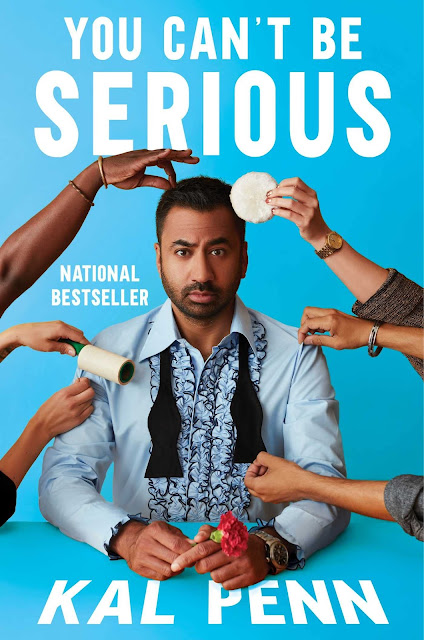
Talking In Obscurity, "You Can't Be Serious," by Kal Penn

Kal Penn


We're back, Obscurists! And we're talking about "You Can't Be Serious" by Kal Penn. It's a funny and poignant memoir about Penn's life as an actor and working for the Obama administration.


This preview is an Amazon Affiliate link; 
as an Amazon Associate, I earn from qualifying purchases.

Wednesday, January 26, 2022

Micro Mention "Personal Memoirs of Ulysses S. Grant"

Ulysses S. Grant


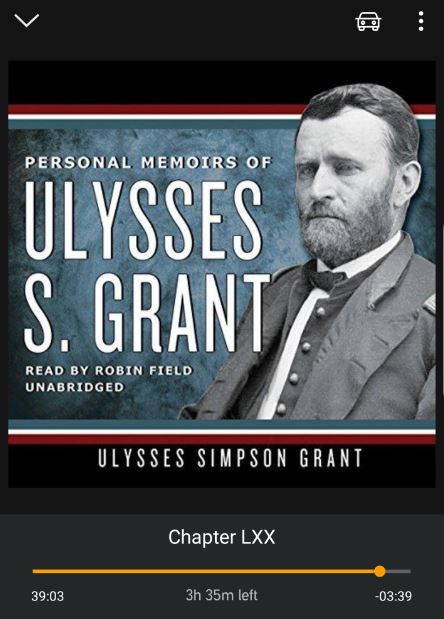
So, soon after starting Chernow's excellent biography, I decided that I wanted to get the story of Ulysses S. Grant straight from the man himself. "The Personal Memoirs of Ulysses S. Grant" are startlingly intimate and powerful, and every American should read them. 

Anyway, fun fact, the "S" in Ulysses S. Grant doesn't stand for anything. It certainly doesn't stand for Simpson, making it weird that this audiobook edition proudly displays it as his full name. How do I know this? I read Chernow's book. In fact, his name was actually Hiram Ulysses Grant, but he went by his middle name. When he was accepted to West Point, the military academy dubbed him U. S. Grant through a clerical error.

Also, of all weird things, the terrible movie "Wild Wild West" gets it right that President Grant went to West Point when Will Smith's character realizes that he's talking to Kevin Kline's character in disguise by noticing him wearing the wrong school ring. Quite a clever moment for an otherwise stupid movie. Of course, it loses all cleverness points because earlier in the scene, Kline's master of disguise character costumed as Grant offers Smith's character whiskey. Grant was incredibly sensitive about his drinking and the perception that he was an alcoholic. As president, he would have never been caught dead drinking in front of anyone in the White House.


This preview is an Amazon Affiliate link; 
as an Amazon Associate, I earn from qualifying purchases

Friday, December 24, 2021

"You Can't Be Serious" by Kal Penn--Nonfiction Review

Ok, Obscurists, it’s time for a memoir. Today we’re discussing “You Can’t Be Serious” by Kal Penn. It’s the story of a man trying to make it as an actor and serve his country in the government’s employ under the Obama administration.


Kal Penn


What I love about this book:

I remember hearing about when Penn started working for the White House, or the executive branch, or whatever. At the time, I was a bit upset because I was a big fan of the show “House,” which he was a main character at about the middle of the show’s run. You don’t get to work for the President and work on a television show simultaneously.

Anyway, after getting Penn’s story of how he ended up in the job and why—well, he reframed that experience for me, and I get his reasons. I’m at least willing to admit that maybe working for the Obama administration was slightly more important than playing a TV doctor—again, maybe. I liked that he didn’t sugarcoat the weaknesses of government, the division, and the mediocrity, which only excels at bureaucracy. Still, he also highlighted how effective government could positively impact people’s lives. 

Learning about Penn’s childhood and the stories that went with it—from the bullies to the early drama club experiences—was a lot of fun for me, but that’s because I like memoirs. For me, it’s fun to see the world through someone else’s eyes for a bit. This enjoyment extends into his stories as a young actor trying to make it in Hollywood.

A thing I didn’t expect to happen, much like the author, it seems, is how riveted I got when the NASCAR section came up. I can’t say that I’m a fan, but he reinforced one of my core tenants: the belief that when a large group of people loves a thing, there is always a reason for that adoration. You might disagree with it, or you might not respect it—or even get it. But that doesn’t mean that their experience and joy of a thing is any less valid. I liked that Penn got outside of himself for a bit to learn about and even appreciate the sport.


What I don’t love about this book:

So not to harp on the “House” thing—but continuing to harp on the “House” thing—Dr. Kutner committed suicide!? Surely there was a less terrible way to write him off the show so Penn could work in government.

Ok, back on focus. Anyway, this is just going to be one of those times where this section is more about things I just don’t like about the world that the book outlines.

In recent times it seems we talk a lot about voter suppression in this last election cycle and the upcoming ones. But Penn points out that even back in 2008, these Anti-American activities were in play. Phone campaigns called voters to remind Obama voters that election day had been “moved” to Wednesday. For those of you reading this outside of the United States, election day is always on a Tuesday here for—well, stupid and antiquated reasons that involve farming and church-going, and it should change, but that’s not the point. Election day is always Tuesday.

Outside of politics on another hot button issue—race—Penn is an American of Indian descent, not Indigenous American, but actual India. Regardless it shouldn’t matter one jot one way or the other, for as an American, and according to our supposed societal social contract, we’re all equal, forever, always. At least you’d think so, especially in liberal bastions such as Hollywood—but no, not so much. Having to listen to why a casting director couldn’t possibly cast Penn in a movie because, well, Denzel Washington is already in the film is tedious bullshit. That’s a thing a white actor never had to face. No producer was ever sweating bullets because someone cast Owen Wilson AND Vince Vaughn in “The Wedding Crashers.”  Also, having to listen to smirking dickheads talk about how they couldn’t possibly hire women to work at their production companies because they didn’t want “to get sued for their mouth” was equally unenjoyable. 

Standard disclosure here when I write a don’t like section like this; I’m in no way suggesting that any of this should have been left out. It’s just infuriating that we live in this endless cycle of knowing winks and hush-hush intolerance.


This preview is an Amazon Affiliate link; 
as an Amazon Associate, I earn from qualifying purchases.


Parting thoughts:

Initially, I didn’t like memoirs all that much. It isn’t that I disliked them—it’s just that they, and really all nonfiction, existed in a space outside of my wheelhouse of sci-fi, fantasy, and horror. I learned to love memoirs on my journeys through reading, like family dramas in fiction. That broadening of horizons is the superpower of being well-read. 

Stories, I believe, fundamentally don’t work on those who profoundly lack empathy, even as a concept. And it’s empathy that lets you go out, discover new modes of being and ways of thinking. To learn to love something different than what you grew up with initially, which for me was a lot of sci-fi, fantasy, and horror.

By the way, I still love those things, which is clear if you’ve read any part of this blog. 

But I thought a lot about how I’ve changed and grown over the past two decades while reading how Penn grew over the course of his book. I’ve gotten a lot more comfortable with ambiguity, I wouldn’t say I love it, but I accept it more. I say that because I think things like truth, understanding, and justice are concepts that refine with time. An idea that is rather alarming for most people, if I were to guess. I believe it’s human nature or a least a predisposition of ours to settle into a particular viewpoint and resist, violently sometimes, anyone’s attempt to move us out of our old modes of being or thinking.

I think we see a lot of that now, on the internet, in public, and worst in government. This reticence toward agreeing with stark reality and the bone-level belief that the reality we don’t like can be negotiated with or rationalized away. But we can’t, and it won’t go away.

We’re all in this pressure cooker together. So it would be nice if we could be a little kinder to each other instead of what we usually do.


Friday, October 1, 2021

"Capital Gaines" by Chip Gaines--Nonfiction Review

Today Obscurists, we’re fixing to read a book by one of the—Ok, I just realized how corny this sentence is now, and I’m going to abort. Today we’re talking about “Capital Gaines” by Chip Gaines.


Chip Gaines


What I love about this book:

This is the second book I’ve read written by Chip Gaines, the first being “The Magnolia Story,” which he wrote with his wife, Joanna. What surprises me—and continuously surprises me about these books and the Gaines family themselves is how much I genuinely enjoy them. Chip and Joanna’s main claim to fame is their show “Fixer Upper,” which typically isn’t the sort of show that should work for me. I loathe home repair or renovation—really anything that requires me to pick up a hammer or use a drill or saw. But I love their show which is all about exactly that.

What won me over about the show is that the two of them are incredibly charming people, and their dynamic together is sweet to watch. It’s really them as people that got me to love their show, and that’s what this book and the previous book are really about. While “The Magnolia Story” focused more on their early years as a family and business people who eventually got a show showcasing their talents flipping houses, “Capital Gaines” is more about Chip’s early story.

When he talks about his childhood and his baseball dreams, that story resonated with me because it wonderfully encapsulates that sometimes life just doesn’t go the way you thought. It doesn’t mean the pursuit was a waste of time—just an early, if painful, step that led to his next thing in life. It led him to become an entrepreneur where a lot of skills of perseverance and practice translated. There were some pitfalls—like his doomed trip to Mexico—but ultimately, he made it work with the woman who would become his wife, and they formed a family with an incredibly successful business. There’s no way you can argue that it all hasn’t turned out incredibly well.


What I don’t love about this book:

This book isn’t so different from “The Magnolia Story” that it couldn’t have all been combined into one longer book. The focus I get is more on Chip’s journey through life, but a big part of that life is Joanna, so it isn’t like she isn’t featured—a lot—which is good. Don’t get me wrong, I like her just as much as Chip. What I’m getting at is that when I moved on to this book after reading that first one, I felt like I was reading the same book. Part of this is unavoidable—reading a memoir written by the same person, of course, both sound the same because they’re written by the same person.

Chip puts himself into many physically perilous situations for little to no reason other than to see if he can pull something off or for a bet. Maybe it’s my inherent cautious nature, but often I find myself thinking—buddy, what are you doing? This goes for the show and the book, by the way. I’ve seen him eat a cockroach for fifty bucks. Champ, you’re a millionaire—and cockroaches’ exoskeletons can be home to fun things like Staphylococcus aureus or Streptococcus, which could present as strep throat or necrotizing fasciitis, aka FLESH EATING BACTERIA. One would think that after surviving bashing his face into the ground from an ATV accident would lead to a more sober, cautious appraisal on mortality and the chances of bodily harm, but I guess not.


This preview is an Amazon Affiliate link; 
as an Amazon Associate, I earn from qualifying purchases.

Author's Website: https://magnolia.com/

Parting thoughts:

There is something compelling about watching someone incredibly good at something be incredibly good at that thing. While it’s true that I personally am not particularly handy at any activity that requires me to use my anemic skills in that regard, I can appreciate results. Some of the things Chip and Joanna have pulled off are beyond impressive. Aesthetically they can create some beautiful homes, and there is an artistry to that which demands respect.

Coincidentally, I spent a lot of my time listening to this book while installing a self-adhering vinyl floor in a basement—and I hated every single moment of the exercise. I kept thinking to myself, I bet Chip could have done this in an afternoon while snapping yet another piece by accident. But even I have to admit after finally finishing the main room with it, that it did indeed look good. So I can understand why some people like this kind of work with their hands sort of life. Even if it would drive me insane.

This leads me to my concluding thought, and really just another thing that I loved about this book—I know I already did that section, but the balance must be observed. There is a section of this book where Chip talks about digging a hypothetical ditch with a stranger who is very different from himself. It’s my favorite part of the book because he imagines not agreeing with everything this stranger has to say or even completely understanding their worldview. Yet, they share a meal together and depart as friends. There is power in that because of the empathy it shows. I’ve said before in earlier posts that intelligence, while I value it greatly, isn’t the primary thing utilized to build the modern world. We are cohered into massive societies with numbers of people beyond what we can numerically understand because of a leap forward in empathy.

Hatred is incapable of building anything. It only tears down.


Tuesday, August 31, 2021

Talking In Obscurity, "A Crime in the Family," by Sacha Batthyany

Sacha Batthyany


Or Download This Episode Here:


It's podcast day Obscurists! Today Steve and I are talking about "A Crime in the Family," by Sacha Batthyany a memoir about the author's family and their actions and inactions during the worst times of WW2. I've already reviewed this book on the blog and you can check out that full review here. 


This preview is an Amazon Affiliate link; 
as an Amazon Associate, I earn from qualifying purchases.

Friday, August 20, 2021

"A Crime in the Family" by Sacha Batthyany--Nonfiction Review

We’re talking about Sacha Batthyany’s “A Crime in the Family,” which is a hard historical look at a small picture of WW2 in Hungary. It shines a light on the great question of the last century; how could normal people tolerate and abide such evil?


Sacha Batthyany


What I love about this book:

Often books about the holocaust and WW2 are broad in scope, fixated on the numbers of victims and the titans and tyrants of the day. And while that can be fascinating in its own right, I appreciate that this book is about individuals who lived through those times. I like the human scale Batthyany adheres to wherever possible.

I was especially taken with the excerpts taken straight from journal entries of people who lived through the events of Hungary’s participation in the war as a Nazi ally. The journals were from the perspectives of a Hungarian Jew and a minor noblewoman who wasn’t Jewish—both lost everything in their own turn. One when the Nazis came, and the other when the Russian Red Army steamrolled through Hungary.

There is something morbidly fascinating about Batthyany’s story of his great aunt. Maybe she didn’t directly participate in a massacre of Jews at Rechnitz—maybe—but she was still hostess to Nazis and threw the party that involved people getting drunk while casually murdering Jewish laborers. When discovering such a terrible secret about your family, what do you do? Writing a book about it and shining a light on it seems the only responsible thing to do, like Sacha Batthyany did with this book.

This book is unsparing and withering toward the Batthyanys, and it was written by a Batthyany. There is a certain amount of courage to admit the truth that Great Aunt Margit was flat out, stone-cold, evil—and the rest of the family carried that stain with them in their cowardice that also resulted in the deaths of more Jewish people through inaction.

This had to be an incredibly difficult book to write, and I admire Sacha Batthyany for doing it because he didn’t just summarize the past from journal entries. He really did the work, faced the past, went to all the places, talked to surviving family members of the Jewish family who were so entwined with his own. I can’t imagine how anxiety-ridden he must have been facing Agnes and her daughters to talk about the past and how his family failed them in varying degrees.


What I don’t love about this book:

I’ve said this before with nonfictions; I like a little distance between biographer and subject, which is impossible with this book because Batthyany is writing about his family, which obviously he is a member of that family. 

What I really don’t like about this book is when he deviates or creatively imagines what might have happened or how a thing was said when his source materials don’t provide the necessary detail. He imagines how certain family members interacted, sometimes in more than one way, down to their tone, and imagines motivations behind those actions. In my opinion, this is all naval gazing at its absolute worst, and every time he engaged in it, I understood he was trying to inject more character and life into the story. Still, the story didn’t need it—the journals and family stories spoke enough for themselves. They didn’t need his novelistic touches.

Batthyany also includes a lot of his conversations with his psychiatrist in this book, and while I was reading it, I wasn’t sure if I liked that aspect of this book or not. I’m still not sure—so it’s not a dislike per se, but I think my unease with it is, I feel, seeing a psychiatrist or psychologist is a very personal medical thing. Most people don’t talk about their regular doctor visits with strangers. It’s the same thing to me. To me, sharing your experiences with therapy or your doctor is your choice, but it’s odd to me to do it with strangers and not just with family and close friends. I wasn’t against hearing the details of his sessions with his therapist, but I was confused about why he’d want me, a stranger, to know this about him. Maybe the point is to show a ripple effect through the generations of his family from actions and inactions his family took in the past that has had a profound impact on him today.


This preview is an Amazon Affiliate link; 
as an Amazon Associate, I earn from qualifying purchases.


Parting thoughts:

Cowardice is important thematically in this book, and it’s something that is nearly universally disdained. Though, in the moment of crisis—if we’re all being honest—it’s hard to know whether or not we have the fortitude to rise to the challenge and stand up for what is right. I know I’ve struggled with this topic before. Sometimes, I’ve had occasion to be proud of my actions, others—not so much.

It’s a hard thing to realize you’re a coward. Admitting it to yourself is soul-wracking. But, what I’ve learned through personal experience is that just because you were a coward today doesn’t necessarily mean you have to be one tomorrow.

Bravery, like any skill, is something that can be practiced and improved. I have many social anxieties, not a shocking revelation—most introverts do, I imagine. Parties or really any social gathering greater than five people make me uncomfortable, as my starting position. I don’t know where to stand, what to do with my hands, how to engage in conversation with someone I don’t know very well, what to do when someone smiles, or even how to ask basic questions. In theory, I do. You just do it. But in practice, I find myself wandering the space aimlessly and wraith-like, not really interacting with anything or anyone just existing in this space.

That’s all just typical human interaction with nothing but a little embarrassment at stake. So when faced with the hypothetical of real consequences, like do I stand up to the Nazis who, for the most part, would think nothing about murdering me, I’m incredibly uncertain. I can understand why the Batthyanys were who they were. Also, why, they, for the most part, were universally against talking about the past. The answer is shame, pure and simple. 

It was vital to tell the story of that shame, though, as Sacha Batthyany did because it provides practice in the realm of the hypothetical for everyone who reads it. Shame can transcend the moment and pass like a stain from one generation to the next. It’s essential to learn that and know that—feel its weight and impact if only vicariously, for maybe that will be your only defense when faced with a test similar to the ones the Battyhanys collectively failed.


Wednesday, August 18, 2021

Micro Mention "A Very Punchable Face"

Colin Jost


The thing about this book is it implies injury right from the title, and in that regard, it lives up to its name—not really in the punching aspect, but Jost does get hurt. A lot. Every other chapter seems to feature some sort of accident or disaster that typically ends with Jost getting stitches or has something else bad happen to him medically.

In any case, like I mentioned in my full review, it's a very funny book.


This preview is an Amazon Affiliate link; 
as an Amazon Associate, I earn from qualifying purchases.


Author's Website: http://www.colinjost.com/


Wednesday, June 16, 2021

Micro Mention "Up From Slavery"

Booker T. Washington


"Up From Slavery" is one of those historical books, first published at the turn of the last century, that everyone should read at some point. The life and accomplishments of Booker T Washington are best first introduced in the man's own words.

The man had an optimistic view of the future for himself and his people in America, during a time where there was precious little to go on to vindicate him on that point. Still, there is something admirable about such stalwart optimism. Certainly, there are charges leveled against Booker T. Washington that he was more than a little bit naive, but I think that's an oversimplification of the man. After reading his book, I think he knew there were many challenges ahead, heartaches, and struggles, and maybe the work doesn't get done in a single generation—or ten. In the end, though, like any true American, he knew that our strength has never been through division but in unity.


This preview is an Amazon Affiliate link; 
as an Amazon Associate, I earn from qualifying purchases.

Friday, May 28, 2021

"A Very Punchable Face," by Colin Jost--Nonfiction Review

Review day obscurists! Let’s go with comedy this time. Today I’m talking about Colin Jost’s “A Very Punchable Face,” and much like his work on Saturday Night Live’s Weekend Update, I love it.


Colin Jost


What I love about this book:

Obviously, it’d be weird if I reviewed a comedy book and didn’t mention that I thought it was funny, so let me just say Jost’s book is hilarious. It’s arranged so that each chapter focuses on one topic or is a story about Jost’s life, and almost all of them are funny. Right off the bat, when he describes being a—non-vocal, child of the corn-esque little boy, he takes something that’s a bit upsetting and makes it funny, which is really the soul of comedy.

Funny enough—see what I did there—one of my favorite chapters in this book isn’t a particularly funny chapter at all. The chapter is about 9/11, so you know—not a really hilarious topic for non-sociopaths. I liked the chapter so much because Jost talks about his mother’s experience of the day. On, 9/11 she was a doctor that worked with the fire department to support first responders, and more importantly, she was on site when both of the towers collapsed, and she managed to survive. It’s an unexpectedly intense chapter and a snapshot of the day and a chronicle of a courageous woman. 

On a lighter note, Colin Jost’s life is far more slapstick in nature than I would have expected. It’s a slight exaggeration, but it feels like every other chapter, he’s getting stitches, or some other serious harm is befalling him. He once injured himself while in a virtual reality setting—think about that for a second. Sure it was set off by some shit-bird Google tech-bro, but still, Colin Jost suffered real-world injuries while in VR. I guess it is common for people to get hurt because they’re too immersed in the VR and neglect their real-world surroundings, but still, Jost went to Harvard.

Another of the more memorable near-death experiences the comedian faced was in the ocean, while surfing, where he was nearly drowned or alternatively smashed to pieces on some rocks until Jimmy Buffett—yes, that Jimmy Buffett—rescued him. It’s a surreal story and one of my favorites Jost talks about in this book.


What I don’t love about this book:

Jost should really see a doctor—or a specialist of some kind. No adult of good health and sound mind accidentally shits themselves that many times. Once or twice, okay, but five!?

I think that Colin Jost and Michael Che and their segment—the latest incarnation of Weekend Update—on SNL is the funniest thing going on that show right now. So, any talk of quitting the show, like in this book, upsets me. Terrible advice here—but never grow, just do this forever, for my selfish, selfish benefit. I’m sure when he does finally move on from SNL, he’ll be great, and whatever. Still, I’ll be sad.


This preview is an Amazon Affiliate link; 
as an Amazon Associate, I earn from qualifying purchases.

Author's Website: http://www.colinjost.com/

Parting thoughts:

The major thing this book, and books like it, make me think about is growth over time. I know I just joked about never growing, but I didn’t really mean it. How not just comedians and actors but any person develops over time is interesting to me. Experience, like water moving over stone, has a way of shaping a person in unexpected ways given enough time and exposure. 

Part of the reason I read so much is to vicariously glean as many experiences from as diverse a group of people as I possibly can. That way, when I form an opinion on something or think about a task or issue, I can draw from other’s experiences as well as my own—or that’s the theory.

In any case, I’ve found the more I read and the more I learn about people, the harder it is for me to hate them—even when I disagree with them. I think that’s probably one of the greatest boons of reading. When someone invites you into their world, and you get to see behind their mask down to what makes their mind tick, a little bit of empathy can go a long, long way down the road of understanding.


Friday, April 16, 2021

"American Philosophy: A Love Story," by John Kaag--Nonfiction Review

Ok, obscurists today, we’re getting introspective, philosophical, and a little romantic with John Kaag’s book “American Philosophy.” 


John Kaag


What I love about this book:

This book gave me a fantastic framework of the most prominent American philosophers and beyond via the frame story—well, really—Kaag’s memoir of discovering the Hocking library at West Wind and then restoring the rare books he found there. He describes numerous American luminaries and their personal philosophies on life and a variety of other topics. It all works as a survey of great American thinkers.

It was because of this book that I was first introduced to Henry David Thoreau’s work. Thoreau is a writer I can’t imagine I would have stumbled upon naturally by myself and someone I now greatly admire, despite him being a bit of a misanthrope. So this book did something that is one of my absolute favorite things about reading; it gave me a direction for further reading and the opportunity to discover new vistas outside of my view of the world. 

Kaag isn’t limited to just American philosophers. He mentions great thinkers of other countries and cultures and creates a web of ideas and counter ideas, painting a mental landscape for you of the different approaches and schools of philosophy. He’s even good for the occasional reference to classic up to modern-ish literature, making him a sort of one-man walking library. 

I found it interesting how Kaag developed and grew as a person—thankfully into a better person—as the book went on, and he and Carol restored and cataloged more and more of the books in the library. As it grew, too, their relationship was cute as well, and I rather enjoyed the romance between the two rival philosophy scholars. In fact, my favorite parts of the book were the bits with Carol, and while it’s a bit of a treacly cliché—I do feel she helped the author to be a better person.


What I don’t love about this book:

So Kaag is the protagonist of this narrative—it is his memoir after all—and while I appreciate him not sugar coating how insufferable he was as a young man, it doesn’t make him any less unbearable. This is especially true of him describing how his first marriage fell apart, which might not have been entirely his fault, but who sells their wedding band before they have the divorce conversation? Like—what was the plan there? This is really a thing I don’t like about the man, but a large part of this book is about him personally, so I feel it’s valid to bring up.

There is a certain amount of pretentiousness and angst in this book, especially in the early chapters—that Kaag mostly moves beyond as the Hocking library project progresses. Still, a spade is a spade, and I definitely rolled my eyes at the beginning of the book several times. 


This preview is an Amazon Affiliate link; 
as an Amazon Associate, I earn from qualifying purchases.

Author's Website: https://johnkaag.com/

Parting thoughts:

I find it to be a bit of an irony that Kaag’s love story with Carol is what honestly seems to turn him around as a person, and sure, I get that the title of this works with a double meaning. The title implies that it’s also a story of his love for philosophy, but he was well-read before his relationship with Carol, and it’s not like that made him a better person. It may have helped, but it doesn’t seem to have done the trick alone. It’s ironic because a lot of American philosophy revolves around independence, self-actualization, self-reliance, and so on and so forth to a possible over macho extreme. We Americans—past and present—have never been known for our gifts of subtlety.

That being said, I believe, despite some claims that we have no “real” culture of our own, I do feel that American culture has had a lot to offer the world. I credit this book with sparking my interest in the men and women who lived, thought, and wrote in America, especially in the 19th to early 20th century, which is a time often overshadowed by such concerns as war—both civil and world flavors—and economic depression. It’s easy to overlook that great American writers concerned themselves with more than just war and money, but with the entirety of the human experience. Typically, when one hears philosophy or ethics, it’s predictable to think of the Greeks or Europeans before America, but that doesn’t mean there weren’t erudite scholars here too.